Reviewed · VIENNA TOURS
Vienna: Imperial Crypt Entrance Ticket
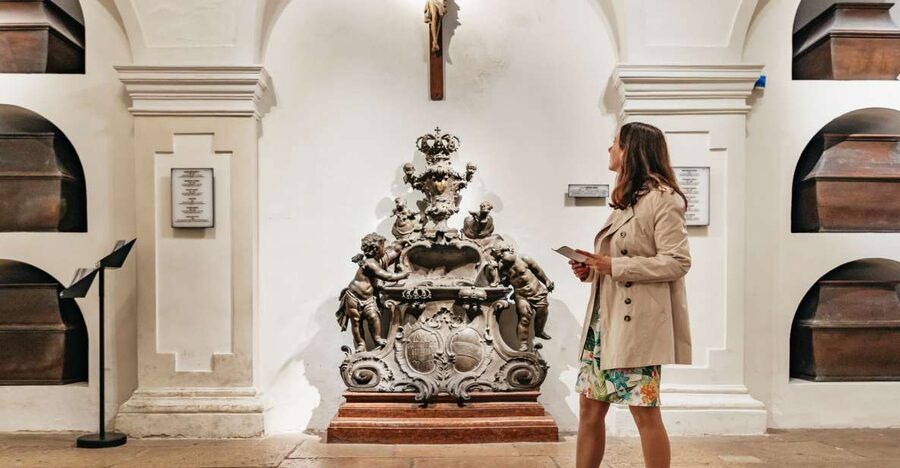
The Imperial Crypt puts 400 years of Habsburg power into a surprisingly small, quiet space beneath a plain Capuchin church. You pass from room to room among metal sarcophagi, urns, and funerary monuments, including the tombs of Emperor Franz Joseph, Empress Elisabeth, Maria Theresia, and their families. I like the remarkable craftsmanship, and I like that the visit feels solemn rather than theatrical. It is an unusually direct way to meet Austria’s imperial past.
I also like the freedom to set your own pace. You might spend 30 minutes here, or stay for 90 minutes reading every name and inscription. The main drawback is the limited interpretation: if you do not know Habsburg history or German, the basic information can leave you wanting an audio guide or a fuller tour.
Key points to know before you go
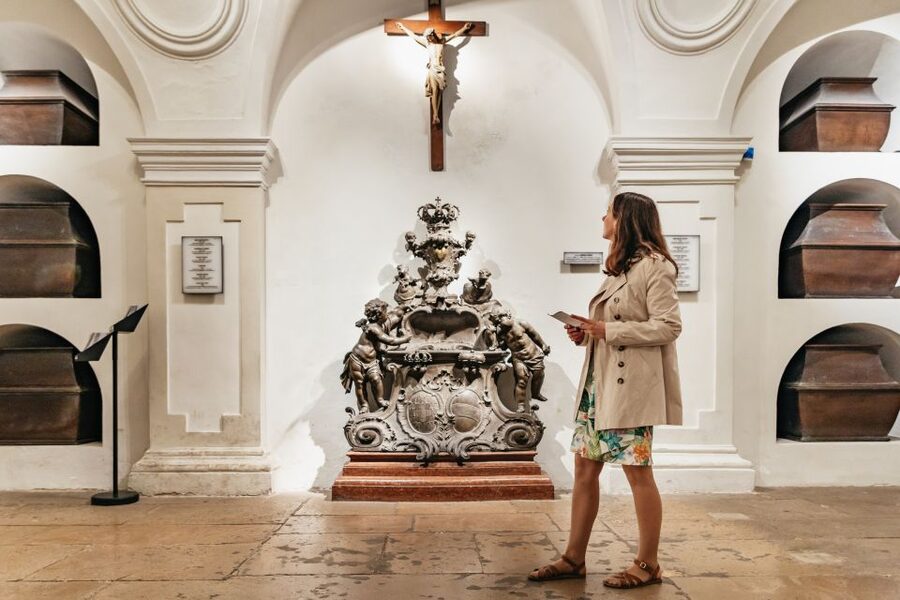
- 150 Habsburg family members: See the final resting places of emperors, empresses, archdukes, and other relatives.
- Ten connected vaults: The crypt grew through extensions and changes over more than four centuries.
- Famous tombs: Look for Franz Joseph, Empress Elisabeth, also known as Sisi, Maria Theresia, and their son Rudolph.
- Exceptional metalwork: The sarcophagi use tin, copper, bronze, silver, and gold, with elaborate decoration.
- Flexible visit length: A quick look takes about 30 minutes, while a careful visit can last 1 to 1.5 hours.
- Optional added context: A one-hour guided tour may be available directly from the ticket office for an additional €3.
Entering the Imperial Crypt beneath the Capuchin Church
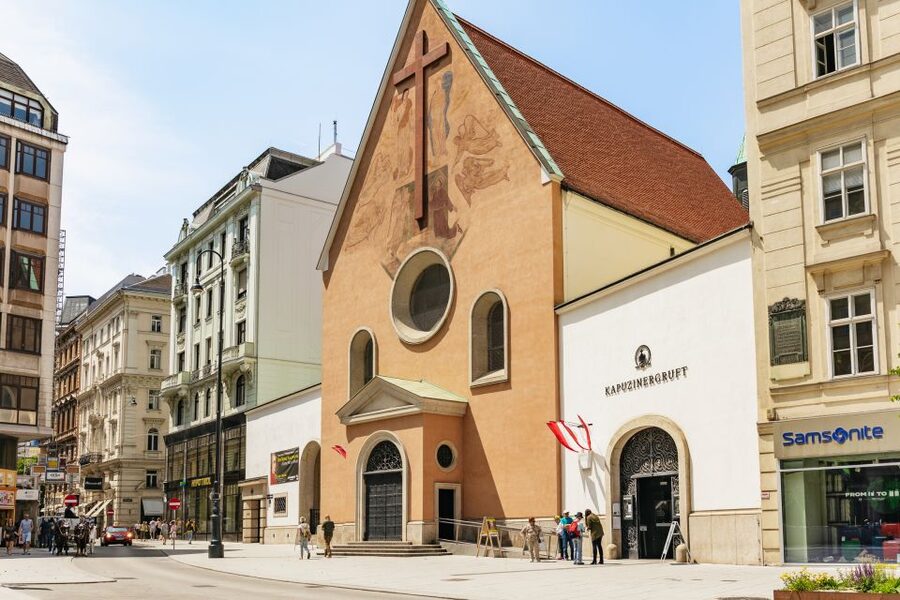
The Imperial Crypt, or Kaisergruft, is hidden under the Capuchin Church and monastery in central Vienna. The setting matters. Above ground, the church is modest. Below it, the burial place of one of Europe’s most powerful dynasties unfolds in a sequence of vaults.
I find that contrast useful. You do not enter a grand palace or a dramatic royal mausoleum. Instead, you step into a working religious setting that has cared for Habsburg burials for centuries. The Capuchin Order remains responsible for the crypt, which gives the place a quieter and more personal character than many imperial attractions.
The rooms were built and altered over a period of more than 400 years. The result is not one perfectly planned hall. It is a series of extensions that reflect changing tastes, periods, and burial needs. As you move through the crypt, you see how the dynasty’s public grandeur was carried into its memorial spaces.
The visit is self-guided with the standard entrance ticket. Small information booklets are available, and labels explain the people associated with the tombs. I would allow at least 45 minutes if you want to read carefully, though you can see the main rooms in around half an hour.
A few more Vienna half-days to weigh up
- Vienna: Vivaldi’s Four Seasons Concert in Karlskirche
★ 4.7 · 14,951 reviews - Vienna: Spanish Riding School Training
★ 3.9 · 9,281 reviews - Vienna: Skip-the-cashier-desk-line Giant Ferris Wheel Ride
★ 4.5 · 7,859 reviews
The ten vaults and the Habsburg family story
The crypt now contains ten vaults filled with sarcophagi, urns, and memorials. You are not simply looking at a row of graves. The arrangement shows the size and reach of the Habsburg family, which ruled Austria and held power across much of Europe for centuries.
The names can come quickly. There are emperors, empresses, children, spouses, and other members of the family. If you arrive without background knowledge, it can be hard to understand how each person fits into the dynasty. I suggest taking a few minutes before your visit to learn the basic family connections, especially the roles of Maria Theresia, Franz Joseph, Sisi, and Rudolph.
Maria Theresia is one of the most important figures here. Her large and highly decorated tomb reflects her political importance and long reign. Franz Joseph and Empress Elisabeth are also major points of interest. Sisi remains one of the best-known Habsburg figures, and her tomb often attracts visitors who know her through books, films, or Vienna’s popular royal stories.
Their son Rudolph is buried here as well. Seeing the family members together gives you a more human sense of the dynasty. Imperial titles and official portraits can make the Habsburgs seem distant. In the crypt, family relationships, early deaths, and personal memorials bring that history closer.
One detail worth knowing is that the Habsburgs traditionally separated parts of the body for burial. The hearts of many members of the monarchy are not in the Imperial Crypt, but in the monastery. That fact adds another layer to the visit, especially if you enjoy the less familiar customs behind royal funerals.
Ornate sarcophagi rather than plain stone graves
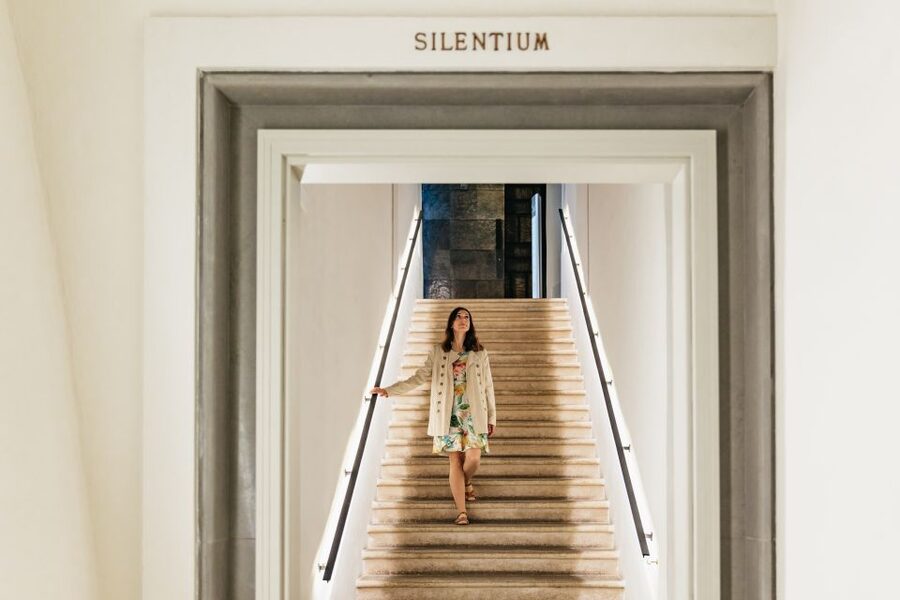
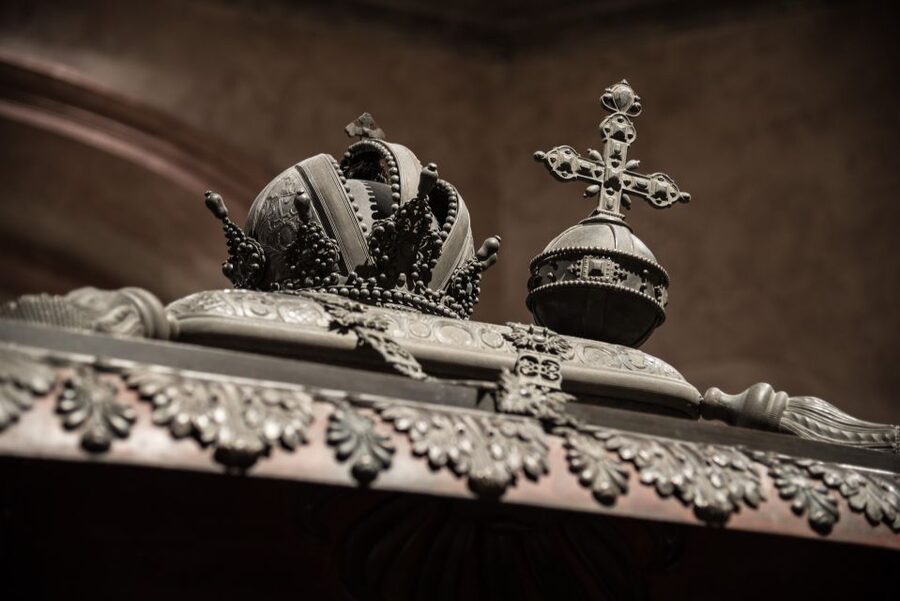
The artistic work is the main reason I would recommend the crypt even to people who are not devoted royal-history fans. Many of the coffins are extraordinary objects, made from materials including tin, copper, bronze, silver, and gold.
The designs vary in size and decoration. Some are restrained, while others are covered with sculptural details, symbols, figures, and ornamental metalwork. You can spend a surprising amount of time looking at the craftsmanship alone. The tombs are not identical, and the differences reveal how the family wanted status, faith, and memory represented.
I especially like the way the crypt combines personal remembrance with imperial display. These are burial places, so the mood is quiet and serious. At the same time, the tombs reflect a ruling family accustomed to ceremony and public power.
You may see flowers or notes left for particular family members. This keeps the space from feeling like a frozen museum display. It also means you should behave as you would in a church or active memorial site. Photography and video recording are not allowed, and the request has a clear purpose here. The crypt is a place of burial, not a backdrop for selfies.
Seeing Franz Joseph, Sisi, Maria Theresia, and Rudolph
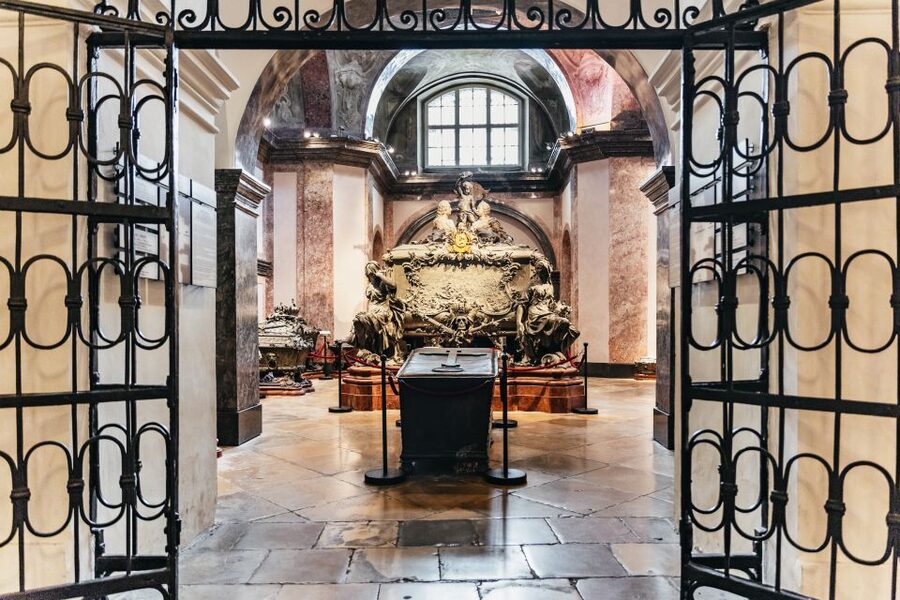
For many people, the most meaningful part of the visit is finding the tombs of famous Habsburg figures. Franz Joseph ruled Austria for decades and became one of the best-known emperors of the late Habsburg period. His wife, Empress Elisabeth, is better known as Sisi, a figure surrounded by both historical fact and romantic legend.
Their tombs offer an opportunity to separate the people from the polished stories told about them. The crypt cannot provide a full biography, but it gives you a physical point of connection. You see where these highly visible figures were laid to rest, surrounded by relatives from different generations.
Maria Theresia is another essential stop. Her memorial reflects the scale of her position and importance within Austrian history. Rudolph, her later family counterpart in public memory, reminds you that the dynasty’s story includes family tragedy as well as court ceremony.
I recommend reading the labels slowly instead of rushing toward the most famous tombs. The less familiar names help explain how the family grew, married into other royal houses, and maintained its political network. If you spend 1 to 1.5 hours here, you will have time to examine the objects and follow several of those connections.
A different way to spend an afternoon here:
- Vienna: Schönbrunn Palace & Gardens Skip-the-Line Tour
★ 4.7 · 7,739 reviews - Vienna: Light of Creation Votive Church Immersive Light Show
★ 4.8 · 6,779 reviews - Vienna Spanish Riding School Guided Tour
★ 4.7 · 6,765 reviews - Vienna: Classical Concert in the World-Famous Musikverein
★ 4.6 · 6,673 reviews
How much time should you allow?
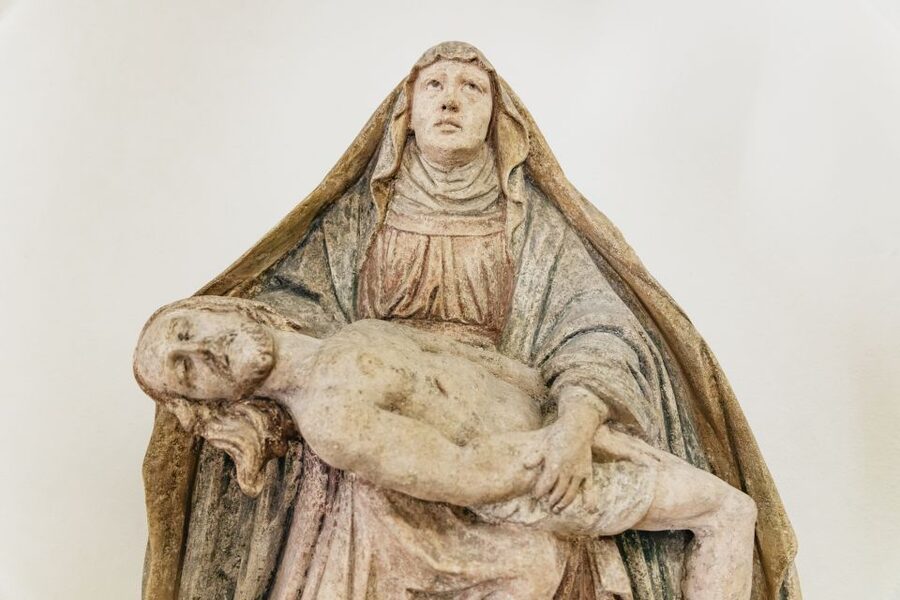
The Imperial Crypt is compact, but the right visit length depends on your interest and preparation.
A quick visit of about 30 minutes is enough to see the main vaults and the most famous sarcophagi. This works well if you are fitting the crypt between the Hofburg, St. Stephen’s Cathedral, or another central Vienna sight.
I would allow about an hour for a normal visit. That gives you time to move carefully through the rooms, read the available information, and pause at the larger tombs. History fans may stay closer to 90 minutes, especially if they want to inspect the metalwork and read about many of the 150 people buried here.
Your booked time slot is worth checking at the entrance. One practical experience indicates that the selected time was not treated as a strict admission time, and an earlier arrival allowed enough time before closing. Still, I would not rely on this without confirming directly on the day. The crypt is listed as valid for one day, but opening times and entry procedures can affect your plan.
The guide question: self-guided or added explanation?
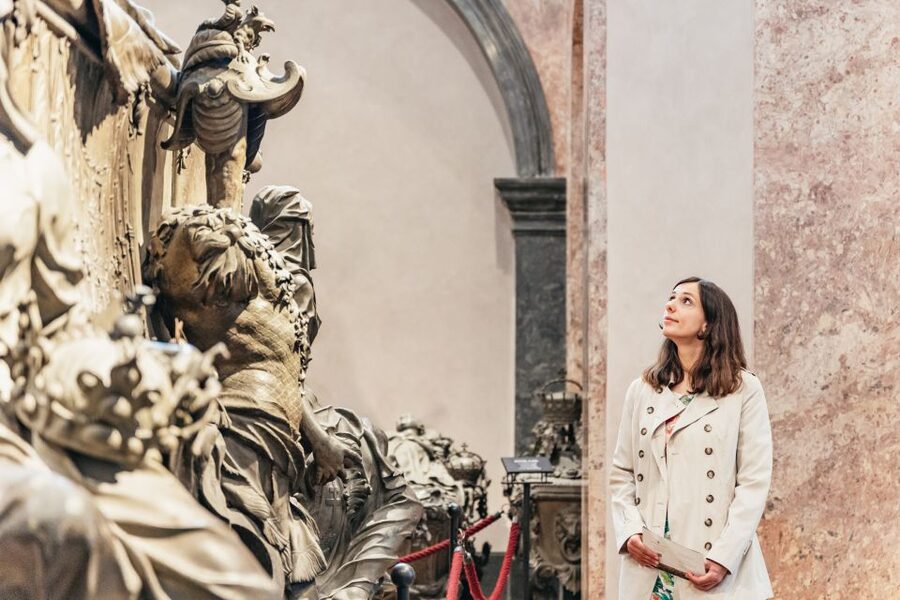
The basic ticket gives you entry, not a full guided experience. Booklets and signs provide useful starting points, but the amount of background may feel thin if you do not already know the Habsburg family.
This is the clearest weakness of the visit. I would have liked more information in English, particularly for visitors who do not know German. The tombs are visually impressive, but their meaning becomes much stronger when you understand who is buried there and why each person matters.
A one-hour guided tour may be available directly from the ticket office for an extra €3. That is a small addition compared with the entrance price, and I would seriously consider it if you want political and family context rather than only an architectural visit.
If no tour fits your schedule, do a little reading before arriving. Learn the basic story of Maria Theresia, Franz Joseph, Sisi, and Rudolph. That preparation will help you make sense of the names and notice the family connections instead of seeing only a sequence of elaborate coffins.
Is the $17 ticket good value?
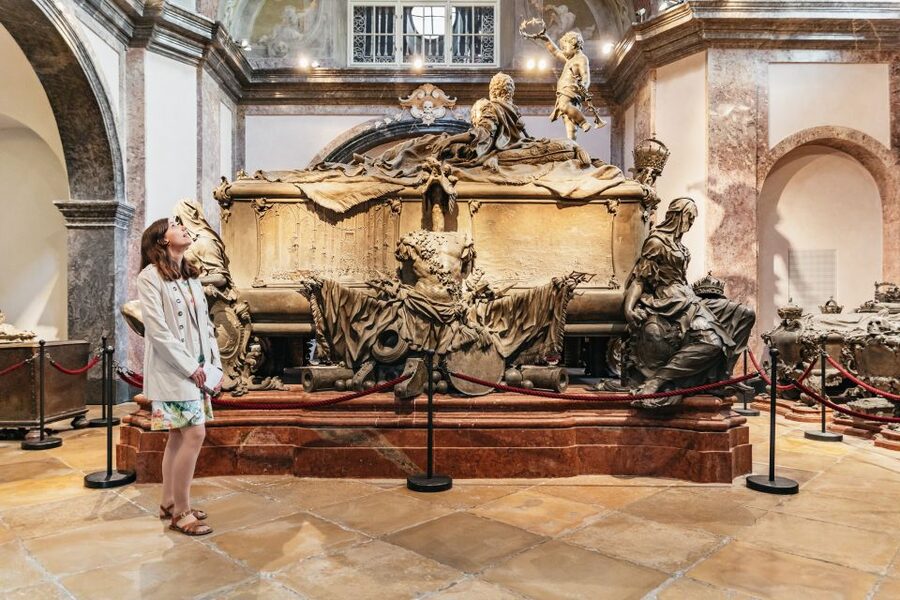
At $17 per person, the Imperial Crypt is reasonably priced for a central Vienna sight, particularly if you have an interest in history, architecture, royal families, or religious customs. The visit is not long in the way a major palace tour can be, but the objects you see are unique and difficult to compare with anything else in the city.
The value depends on how you visit. If you rush through in 20 or 30 minutes and read little, the price may feel high for the size of the space. If you take an hour, study the sarcophagi, and understand the family background, the ticket makes more sense.
The optional guided tour can improve the value further. An additional €3 for about an hour of explanation is modest, especially for anyone who feels the printed information does not go far enough.
You can also pair the crypt with the listed combo option for an A Little Night Music concert afterward. The combination may appeal if you want to connect Vienna’s imperial past with its musical tradition, though the crypt itself is worth visiting on its own.
Practical rules and comfort details
The crypt is wheelchair accessible, which makes it a useful addition to a central Vienna itinerary for many visitors. You should not bring pets, luggage, or large bags. Sleeveless shirts are also not allowed, so dress with the religious setting in mind.
Free toilets are available, and lockers can be used with €1 or €2 coins that are returned. This is handy if you are carrying a small day bag, but large luggage should not be brought to the entrance.
Video recording is forbidden, and photography is not allowed. Please treat this seriously. The ban is tied to the fact that the crypt remains a burial place, and the quiet atmosphere is part of what makes the visit effective.
The space can feel busy at times, especially when several people stop around the most famous tombs. The small-group listing is limited to nine participants, but a self-guided attraction can still have several groups moving through at once. If you want a calmer visit, arrive at a less crowded time and avoid lingering only at the first major tombs.
Who will enjoy the Imperial Crypt most?
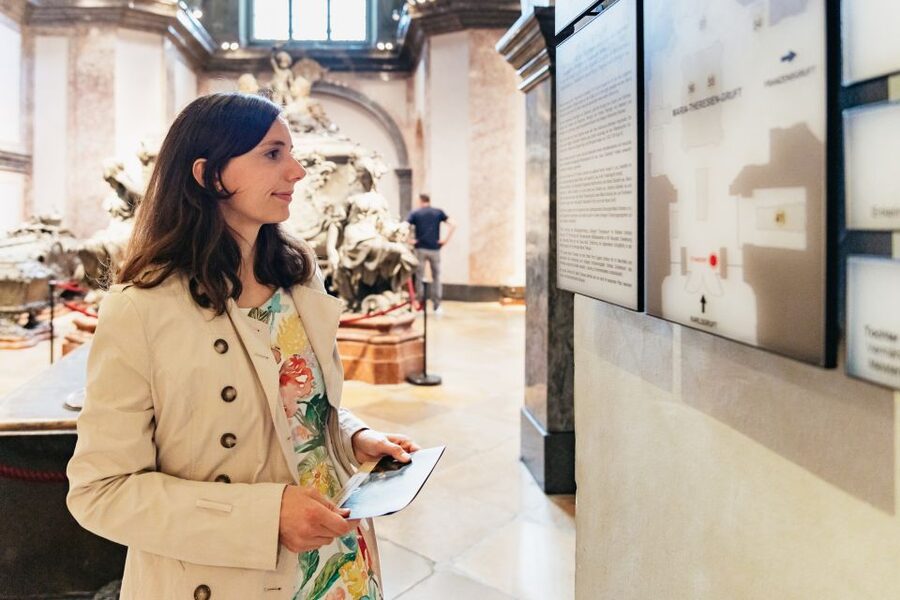
I would recommend the crypt most strongly to people who like European dynasties, funerary art, church interiors, or unusual historical sites. It is also a good choice if you have already seen Vienna’s grand palaces and want something more intimate and less polished.
Families with older children may find it worthwhile if the children can handle a quiet burial site and are interested in objects, names, and royal stories. Younger children may find the visit short and difficult to understand without preparation.
You do not need to be an expert. The tombs themselves are striking, and the visit can work as a short introduction to the Habsburgs. But I would not choose it as a major Vienna highlight if you have no interest in history and want a large, highly interactive museum.
The atmosphere may be the biggest surprise. Despite the number of burials and the subject matter, the crypt is not presented as a frightening attraction. It feels peaceful, solemn, and at times sad. The plain church above and the ornate vaults below create a memorable contrast.
Should you book the Imperial Crypt ticket?
Book it if you want to see where Austria’s imperial family was buried and you appreciate detailed metalwork. The tombs of Franz Joseph, Sisi, Maria Theresia, and Rudolph make the visit especially worthwhile, while the ten-vault layout gives you a compact look at centuries of Habsburg family history.
I would add the guided tour if you can arrange it, since the standard signs may not provide enough context in English. If you prefer a quick, flexible visit, the basic $17 ticket is still a fair choice. Plan on 30 minutes at minimum, closer to an hour if you want to read and look carefully, and arrive dressed respectfully with no large bags or camera plans.
FAQ
Where is the Imperial Crypt?
The Imperial Crypt is beneath the Capuchin Church and monastery in central Vienna, Austria.
Who is buried in the Imperial Crypt?
Around 150 Habsburg personalities are buried there, including emperors, empresses, and family members.
Can I see Emperor Franz Joseph’s tomb?
Yes. Emperor Franz Joseph is buried in the Imperial Crypt.
Is Empress Elisabeth, or Sisi, buried there?
Yes. Empress Elisabeth, widely known as Sisi, rests in the Imperial Crypt.
Is Maria Theresia buried in the crypt?
Yes. Maria Theresia is one of the major Habsburg figures buried there.
How long does a visit take?
A quick visit can take about 30 minutes. If you read the information and study the sarcophagi, you might spend 1 to 1.5 hours.
Is the ticket guided?
The entrance ticket is not described as including a guided tour. A one-hour guided tour may be available directly from the ticket office for an additional €3.
Is the Imperial Crypt wheelchair accessible?
Yes. The activity is listed as wheelchair accessible.
Are photography and video recording allowed?
No. Video recording is not allowed, and photography is also prohibited in the crypt.
Can I bring luggage or pets?
Pets and luggage or large bags are not allowed. Lockers are available for smaller items, using refundable €1 or €2 coins.
Can I cancel the ticket?
You can cancel up to 24 hours in advance for a full refund.
Can I reserve now and pay later?
Yes. The ticket allows you to reserve while keeping your plans flexible and pay nothing at the time of booking.
Is there a concert option after the crypt?
A combo ticket is available that pairs the Imperial Crypt with an A Little Night Music concert.
Recently added around Vienna
- Vienna: Private tour Mauthausen and Linz★ 4.1 · 3 reviews
- 2-Day Prague Tour from Vienna with private Transfers and Lunches★ 5.0 · 3 reviews
- Vienna Self Guided Sherlock Holmes Murder Mystery Game★ 4.5 · 3 reviews
- Vienna Private Schönbrunn Palace Tour, Extra Rooms and Gardens★ 5.0 · 3 reviews
- Salzburg and Lake Region Private Day Trip from Vienna★ 5.0 · 3 reviews
- Small-group Vienna Wine Tour★ 5.0 · 3 reviews
- True Crime mobile puzzle rally Vienna★ 4.0 · 3 reviews
- Vienna: Wachau Valley Private Kayak and Wine Tour★ 5.0 · 3 reviews
Vienna Tours, compared.
Vivaldi’s Four Seasons Concert in Karlskirche
Read our review →

Skip-the-cashier-desk-line Giant Ferris Wheel Ride
Read our review →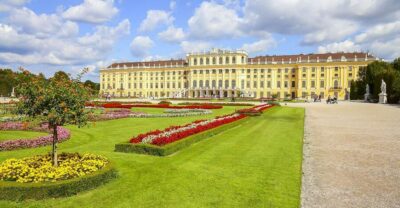
Schönbrunn Palace & Gardens Skip-the-Line Tour
Read our review →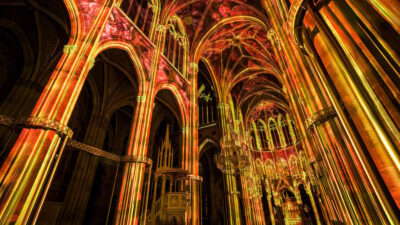
Light of Creation Votive Church Immersive Light Show
Read our review →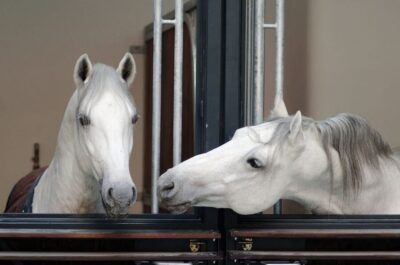

Skip-the-Line Sisi Museum, Hofburg and Gardens Tour
Read our review →