Reviewed · VIENNA TOURS
Vienna House of Music Entrance Ticket
The most surprising part of Vienna’s House of Music is how quickly a museum about composers turns into a hands-on science center. You can learn how sound works, build a strange digital creature in the Virtual Reality Sound Lab, and wave a baton at a video of the Vienna Philharmonic. I like the freedom to wander at your own pace, and I like that the exhibits give children something to do while adults explore the music and archives. The main thing to consider is timing: afternoon crowds can make the most popular stations less comfortable to use.
I also love the balance between playful technology and serious musical material. You can listen to the Vienna Philharmonic’s New Year’s Eve concert, then study Mozart, Beethoven, Schubert, Mahler, and the Strauss family in dedicated rooms. At $22.93 per person, it is a good-value indoor stop if you use the full 90 minutes to two hours, though classical music specialists may want even longer.
Key points about Vienna’s House of Music
- Conduct the Vienna Philharmonic: Wave a baton along with a filmed performance and receive feedback on your timing.
- Create a sound creature: Use the new Virtual Reality Sound Lab in the Sonotopia Universe on the second floor.
- Explore composer rooms: Learn about Mozart, Beethoven, Schubert, Mahler, and the Strauss family through interactive displays.
- Hear famous performances: Visit the Vienna Philharmonic archives and listen to its New Year’s Eve concert.
- Plan for a flexible visit: The ticket is unguided, and most people spend about 90 minutes to two hours.
- Use the free guide: Download the House of Music museum guide for your smartphone in eight languages.
Why this museum feels different from a standard music exhibit
Vienna has no shortage of grand concert halls, composer apartments, and classical-music memorials. The House of Music takes another route. It treats music as both an art and a physical force, so you are not limited to reading labels beside glass cases.
That makes the museum especially useful when you are traveling with children or with someone who enjoys music but does not want a long, quiet museum visit. You can listen, touch, watch, experiment, and then pause for more traditional material when something catches your attention.
The experience is self-guided. There is no live guide included, so you choose your own order and pace. That is a plus if you want to focus on Mozart, spend extra time with the sound experiments, or move quickly through sections that interest you less.
The ticket costs $22.93 per person. I see the price as reasonable if you stay for close to two hours and use the interactive stations, especially since the experience works for adults and children. It is less compelling if you plan to rush through in 30 minutes, since the museum’s value comes from trying the displays rather than simply walking past them.
A few more Vienna half-days to weigh up
- Vienna: Vivaldi’s Four Seasons Concert in Karlskirche
★ 4.7 · 14,951 reviews - Vienna: Spanish Riding School Training
★ 3.9 · 9,281 reviews - Vienna: Skip-the-cashier-desk-line Giant Ferris Wheel Ride
★ 4.5 · 7,859 reviews
Starting with the science of sound
The House of Music is dedicated not only to classical music but also to the science of sound. That opening idea shapes the visit. You are encouraged to think about how sound is made, how it travels, and how people and animals experience it.
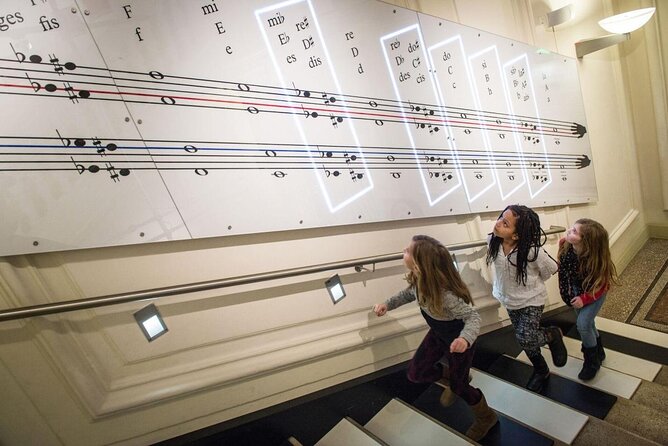
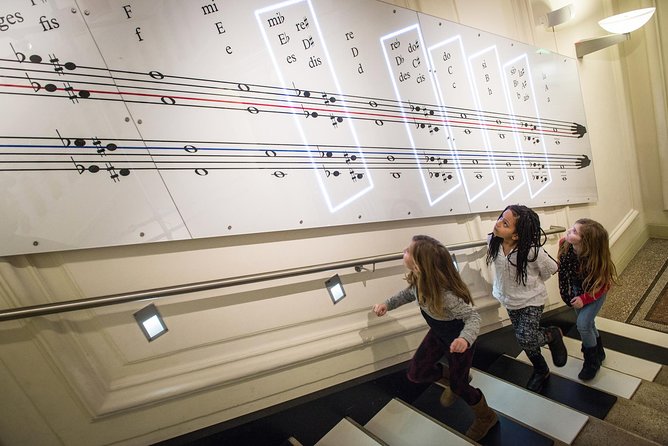
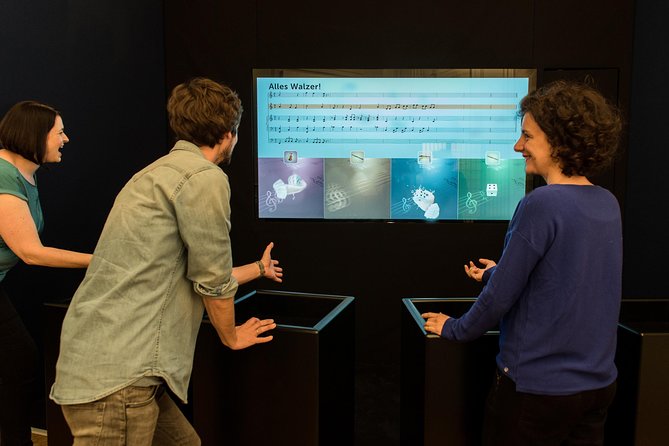
The interactive stations make abstract subjects easier to grasp. One area lets you explore how animals or even a fetus may experience noise and music. Another lets you build music through physical interaction. These displays give younger visitors a reason to stay engaged, while adults can take the time to understand what is happening.
One especially memorable activity involves hand movements and music. Your movements can create a motif that appears on the ceiling, turning a simple gesture into a visible musical pattern. It is the sort of exhibit that works best when you actually try it instead of watching someone else.
The museum is not only for people who can read music. You do not need special training to use the displays, and the family-friendly design gives you plenty of room to learn by trial and error. Some stations may be more appealing to children than adults, but that is part of the point. You can choose the level of attention that suits you.
Sonotopia Universe and the new VR Sound Lab
On the second floor, the Sonotopia Universe brings together exhibits about sound and perception. The newest feature is the Virtual Reality Sound Lab, where you can create your own sound creature.
This is one of the clearest reasons to visit now rather than treating the museum as only a composer memorial. The VR activity gives the visit a modern edge and lets you make something personal from sound. You are not simply hearing a lecture about acoustics. You are testing ideas through an activity.
The sound stations also help explain why music is more than a series of notes. They show how the world around you can be heard, shaped, and interpreted. If you are visiting with children, this floor may be the easiest place to keep everyone involved.
Allow enough time here. It is tempting to move on because the museum has several floors, but the hands-on activities can take longer than expected. If the building is busy, you may need patience while waiting for a station. That is why a morning visit can be useful, especially during a popular afternoon period.
The Vienna Philharmonic archives
The Vienna Philharmonic section adds weight to the playful exhibits. Here you can see historical archives connected with one of Vienna’s best-known musical institutions and listen to the orchestra’s famous New Year’s Eve concert.
This part of the museum gives you a direct link to Vienna’s concert tradition. The archive material helps explain why the city’s musical reputation is so strong, while the recording lets you hear the orchestra rather than just read about it.
I would not treat this section as a complete concert-history museum. The main strength is the way it fits into a larger visit. You move from the physics of sound to the making of music, then to the institutions and performances that shaped Vienna’s identity.
It is also a welcome pause between the more active exhibits. If you are visiting with family, adults may want to spend extra time here while younger members of your group try another display. If you come alone or with a music enthusiast, this may be one of the sections worth reading carefully.
A different way to spend an afternoon here:
- Vienna: Schönbrunn Palace & Gardens Skip-the-Line Tour
★ 4.7 · 7,739 reviews - Vienna: Light of Creation Votive Church Immersive Light Show
★ 4.8 · 6,779 reviews - Vienna Spanish Riding School Guided Tour
★ 4.7 · 6,765 reviews - Vienna: Classical Concert in the World-Famous Musikverein
★ 4.6 · 6,673 reviews
Composer rooms on the third floor
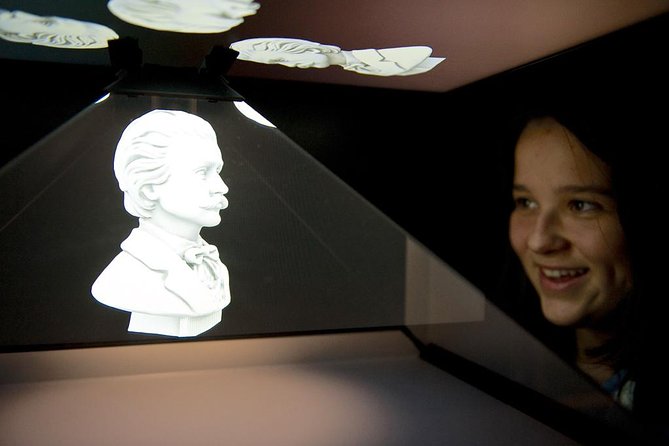
The third floor focuses on musicians connected with Vienna, including Mozart, Beethoven, Schubert, Mahler, and the Strauss family. These rooms explain their lives in the city and the music they created.
The appeal is not just the names. The displays use more than one way to present information, so you can read, listen, and interact rather than stand in front of a single biography. That helps put the composers into a city setting. You begin to see them not only as figures in a textbook but as people whose lives and work were tied to Vienna.
Mozart’s area is likely to be a favorite if his music is the main reason you are visiting. The composer rooms also give you a useful introduction before attending a classical concert. A visit to the House of Music can work well before a Vivaldi or Mozart performance because it gives the music some context without requiring a full lecture.
The exhibits are suitable for adults and children, but the amount of reading may vary in appeal. Younger children may move quickly through the biographies and spend more time with the interactive parts. That is fine. You can make the visit as serious or as playful as your group prefers.
If you want to learn about every composer, do not underestimate the time required. The advertised visit length is about 90 minutes to two hours, but a careful reader could easily stay longer. One hour and a half is enough for a satisfying overview. Two hours gives you a better chance to try the activities and read the composer material.
The virtual conductor on the fourth floor
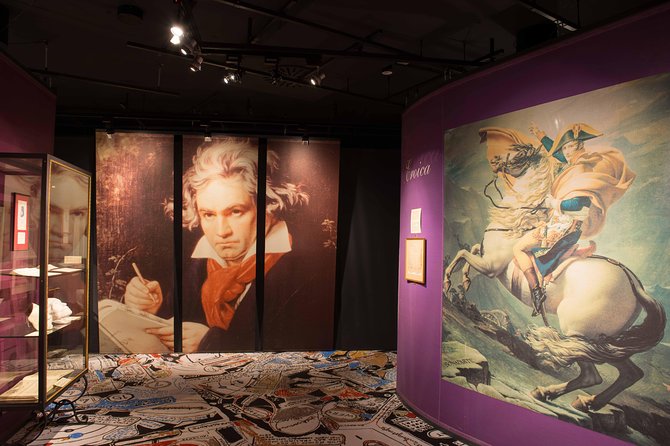
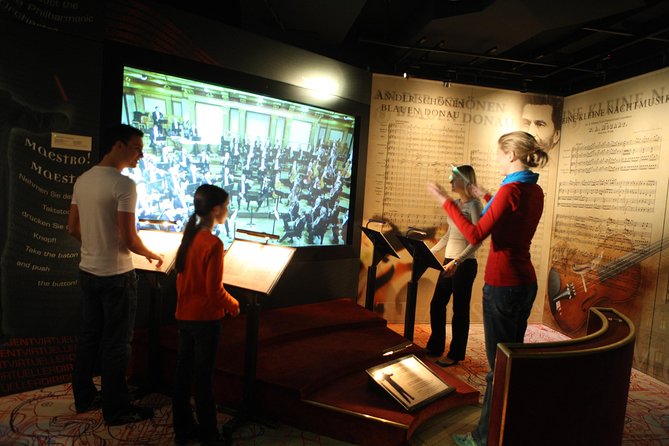
The virtual conductor exhibit is the museum’s natural finale. You pick up a baton and conduct along with a video of the Vienna Philharmonic. Afterward, the display gives you feedback on your attempt.
This is more than a photo opportunity. It asks you to pay attention to tempo, movement, and the relationship between your gestures and the orchestra. Even if your conducting career ends at the museum, the activity shows how much control and precision goes into leading a performance.
The feedback makes the station especially entertaining. You can try to improve rather than simply wave the baton once and leave. If your group includes children, this is likely to become a friendly contest. Adults often find it just as appealing, particularly if they have attended concerts but never thought about what the conductor is doing.
The practical drawback is that popular hands-on stations can become crowded. You may need to wait, and a busy room can make it harder to concentrate. Visiting earlier in the day is the best tip available for getting more time with the interactive displays.
How long should you spend there?
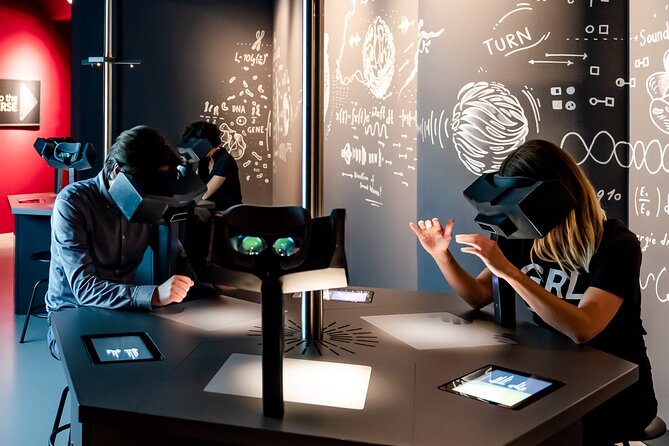
The experience lasts about one hour and 30 minutes to two hours, but your ideal timing depends on your interests. I would allow two hours if you want to try the VR Sound Lab, explore the science exhibits, listen to the archives, and read about the composers.
A shorter visit can still work. You could focus on the Vienna Philharmonic material, select one or two sound stations, and visit the composer floors without trying every activity. But the ticket makes more sense when you treat the museum as a substantial stop rather than a quick gap filler.
The House of Music is open from 10:00 a.m. to 10:00 p.m. on most listed dates from May 5 through December 23, 2025, and from December 25 through December 31, 2025. On December 24, 2025, the listed hours are 10:00 a.m. to 6:00 p.m. These broad hours make it easy to fit the museum before a concert, after sightseeing, or during a rainy evening.
The best practical choice is often morning. The museum can attract more people in the afternoon and later, and the interactive stations are more enjoyable when you are not waiting for every turn.
The smartphone guide and language options
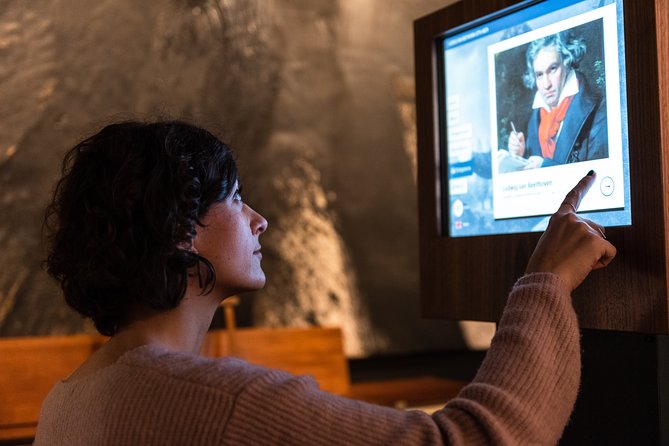
A free House of Music museum guide is available for download to your smartphone. It comes in eight languages, with a family version available in German and English.
Because no guide is included, this download is worth using if you want more direction. It can help you understand the displays without committing to a fixed tour. You still have the freedom to skip sections or return to activities that interest you.
The experience itself is offered in English, so English-speaking visitors can plan to use the museum without arranging a separate interpreter. The guide’s wider language options are helpful for mixed-language groups, while the family version may be the best choice if children are with you.
Remember that the guide is a download rather than a live person accompanying you. If you prefer a guide who explains each room and answers questions, this ticket will not provide that format.
Who will enjoy this House of Music ticket?
I would recommend it most strongly to families, curious first-time visitors, and anyone who wants a change from traditional museums. The combination of touchable displays, sound experiments, VR, and composer rooms gives different ages something to do.
It also suits classical-music fans. You can connect the museum’s composer material with concerts you attend elsewhere in Vienna, and the Vienna Philharmonic archives add a meaningful institutional link.
Couples and solo visitors can enjoy it too, particularly if they like learning through experiments. The museum is not only a children’s attraction. Adults can spend time with the archive, composer biographies, sound physics, and conducting feedback.
I would be more cautious if you dislike interactive technology or want a quiet collection of original manuscripts and instruments. The museum does include historical material, but its main character is active and modern. You should come ready to use the exhibits.
The venue is near public transportation, and most people can participate. Service animals are allowed. Food, drinks, hotel pickup, and hotel drop-off are not included, so plan this as an independent museum visit in central Vienna.
Is the $22.93 price good value?
At $22.93 per person, the ticket is priced like a major museum visit, so the value depends on how you use it. For a family, the ability to entertain both adults and children can make the cost worthwhile. You are also paying for several different kinds of material: science exhibits, digital activities, archive recordings, composer rooms, and the virtual conductor.
The strongest value comes from staying for the full two hours. Try the sound stations rather than treating them as decoration, and leave time for the composer floors and the conductor exhibit.
The price may feel high if you are only interested in one composer or want a conventional museum. In that case, a focused composer site may suit you better. But for a broad introduction to Vienna’s music culture, the House of Music offers more variety than its name first suggests.
Free cancellation is available if you cancel at least 24 hours before the experience start time. Changes or cancellations made less than 24 hours before the start time are not accepted for a refund.
Should you book the House of Music?
Book this ticket if you want an active, flexible museum visit that works for adults and children. The best reasons are the virtual sound creature, the orchestra-conducting station, the Vienna Philharmonic archives, and the clear links to Mozart, Beethoven, Schubert, Mahler, and Strauss.
Go in the morning when possible, download the smartphone guide, and allow close to two hours. If classical music is central to your Vienna plans, visit before a concert to give the music some context.
Skip it only if you want a strictly traditional museum or have little interest in sound experiments. For most visitors who enjoy music, technology, or family-friendly attractions, the House of Music is a smart indoor stop with enough substance to justify the ticket.
FAQ
Where is the House of Music?
The House of Music is in central Vienna, Austria.
How long does the visit take?
The visit takes approximately one hour and 30 minutes to two hours.
Is the ticket guided?
No. A guide is not included. You can explore independently and download the free House of Music museum guide to your smartphone.
Is the museum guide available in English?
Yes. The smartphone guide is available in eight languages. A family version is available in German and English.
What can I do in the Virtual Reality Sound Lab?
You can create your own sound creature in the new Virtual Reality Sound Lab.
Can I conduct an orchestra at the museum?
Yes. The virtual conductor exhibit lets you wave a baton along with a video of the Vienna Philharmonic. You receive feedback after trying it.
Which composers are featured?
The composer areas include Mozart, Beethoven, Schubert, Mahler, and the Strauss family.
What are the opening hours?
From May 5 through December 23, 2025, and from December 25 through December 31, 2025, the listed hours are 10:00 a.m. to 10:00 p.m. On December 24, 2025, the listed hours are 10:00 a.m. to 6:00 p.m.
Can I cancel for a full refund?
Yes. You can cancel for a full refund if you cancel at least 24 hours before the experience start time. Cancellations or changes made less than 24 hours before the start time are not accepted for a refund.
Recently added around Vienna
- Vienna: Private tour Mauthausen and Linz★ 4.1 · 3 reviews
- 2-Day Prague Tour from Vienna with private Transfers and Lunches★ 5.0 · 3 reviews
- Vienna Self Guided Sherlock Holmes Murder Mystery Game★ 4.5 · 3 reviews
- Vienna Private Schönbrunn Palace Tour, Extra Rooms and Gardens★ 5.0 · 3 reviews
- Salzburg and Lake Region Private Day Trip from Vienna★ 5.0 · 3 reviews
- Small-group Vienna Wine Tour★ 5.0 · 3 reviews
- True Crime mobile puzzle rally Vienna★ 4.0 · 3 reviews
- Exploring the Gutenstein Alps★ 5.0 · 3 reviews
Vienna Tours, compared.

Vivaldi’s Four Seasons Concert in Karlskirche
Read our review →

Skip-the-cashier-desk-line Giant Ferris Wheel Ride
Read our review →
Schönbrunn Palace & Gardens Skip-the-Line Tour
Read our review →
Light of Creation Votive Church Immersive Light Show
Read our review →

Skip-the-Line Sisi Museum, Hofburg and Gardens Tour
Read our review →