Reviewed · VIENNA TOURS
Vienna: Hidden Gems near St. Stephen’s & Old University
Vienna’s center is full of grand sights, but this walk is most interested in what sits between them: courtyards, narrow lanes, and passages that are easy to miss while you hurry toward St. Stephen’s Cathedral. Along the way, you get stories about Mozart, Prince Eugene, wartime destruction, old scandals, and modern Viennese life.
I like the tour for two clear reasons. First, the Old University Quarter and its Baroque church add a strong architectural stop beyond the usual palace and cathedral circuit. Second, the local advice is useful: you can ask where to eat schnitzel, find a good coffeehouse, stop for ice cream, or grab a sausage after the walk.
The main consideration is the word hidden. This is still a central-city tour, and one part of the route follows familiar Vienna sights. If you want only secret corners with no standard landmarks, this may feel too conventional. Also, one recorded booking ended with the guide not appearing at the meeting point, so confirm the arrangements before setting out.
Key points to know before booking
- Albertina Square to Schwedenplatz: The route crosses central Vienna on foot and ends near the Danube Canal area, giving you a useful starting point for an evening meal or further exploring.
- A private group of up to eight: The $353 price covers the group, not each person, so the value improves sharply when shared by several people.
- Mozart without the usual myths: The guide explains Mozart’s life in Vienna and points out stories that are commonly repeated but not fully true.
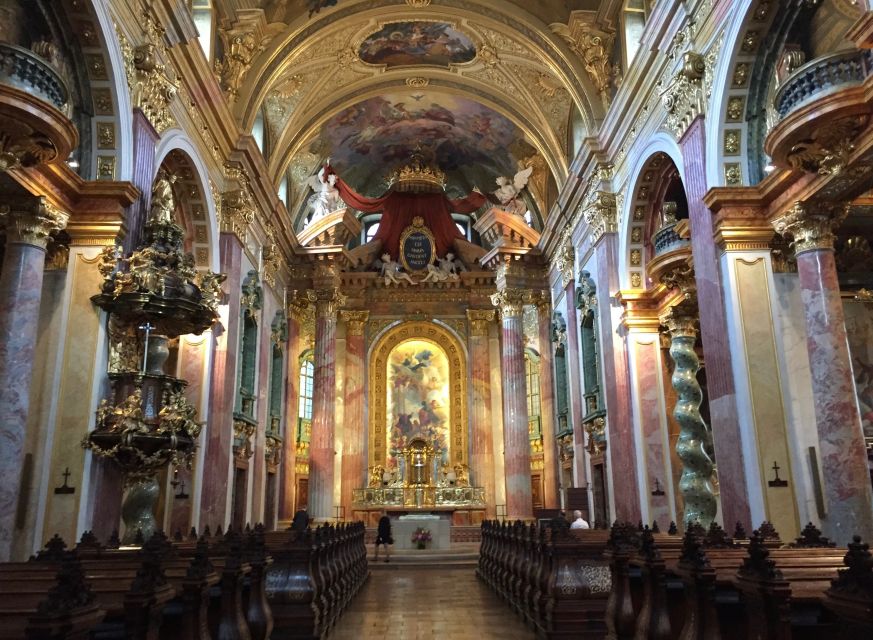
- The Old University church: Expect an impressive Baroque interior and a lesson in how war damage changed this part of the city.
- Practical food and drink advice: You can ask about Viennese restaurants, coffeehouses, bars, sausage stalls, and ice cream shops.
- English, German, or Polish guiding: The tour is offered with a live guide in one of these languages.
Starting at Albertina Square
The meeting point is in front of the Tourist Information at Albertina Square. This is a sensible place to begin because you are already in the middle of Vienna’s historic center, close to major cultural sights and grand imperial streets.
The tour is a two-hour private walk, so you should expect a steady route rather than a long stop at every building. Wear comfortable shoes. There are no included entrance fees, and food and drinks are extra, so the focus stays on streets, stories, views, and explanations from your guide.
A private group can make a real difference here. With up to eight people, you can ask questions without trying to catch a guide’s voice across a large crowd. The $353 group price is expensive for one or two people, but it becomes more reasonable for a family or small group of friends. At eight people, it works out to just over $44 each before any optional tips or purchases.
A few more Vienna half-days to weigh up
- Vienna: Vivaldi’s Four Seasons Concert in Karlskirche
★ 4.7 · 14,951 reviews - Vienna: Spanish Riding School Training
★ 3.9 · 9,281 reviews - Vienna: Skip-the-cashier-desk-line Giant Ferris Wheel Ride
★ 4.5 · 7,859 reviews
Courtyards and passages in the city center
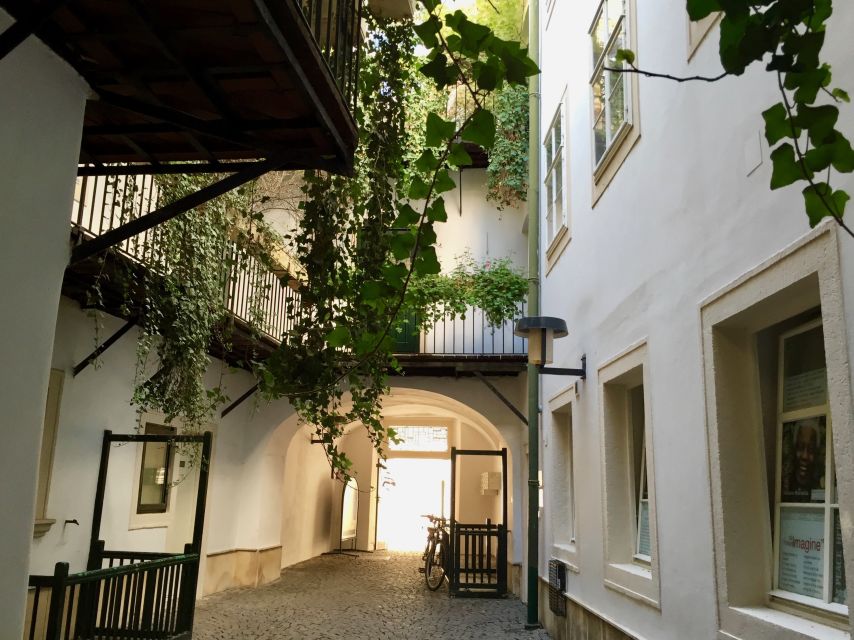
Vienna’s main streets can make the center feel easy to understand. You see a palace, turn a corner, find a church, and move on. The more interesting part is often just behind the public facade, where courtyards and short passages reveal how the city was arranged for residents, merchants, religious communities, and working people.
Your guide points out places that you could pass without noticing on your own. That does not mean every corner is completely unknown or far from the main sightseeing route. It means you get help reading the city at a slower, more observant level.
This is one of the strongest reasons to book the walk early in your Vienna stay. You begin to recognize the difference between a decorative facade and a place with a story. You also get a better sense of how compact the center is, which helps when you plan later visits to museums, churches, restaurants, and coffeehouses.
The tour’s subject matter is broad. You may move from architecture to biography, then from war damage to food customs within a few minutes. That variety should suit you if you enjoy getting a general feel for a city rather than spending two hours on one narrow theme.
The Old University Quarter and its Baroque church
The Old University Quarter is a major stop, and its Baroque church gives the route a strong visual centerpiece. Its ornate design offers a clear contrast with the quieter lanes and courtyards visited earlier.
The guide also explains how this district suffered during World War II. That context matters because Vienna can look almost perfectly preserved at first glance. In reality, parts of the city had to be repaired or rebuilt, and the results are not always obvious when you are focused on imperial architecture.
You will hear about the postwar reconstruction of the area and the choices made to restore, adapt, or replace damaged buildings. This is a useful part of the walk because it keeps Vienna from becoming a simple story of palaces and old churches. The city you see today is partly historic survival and partly careful rebuilding.
There is a practical limit here. The activity does not include entrance fees, so you should not assume that every interior on the route is open for a full visit. The listed church stop is described as part of the walking experience, but the tour information does not promise a separate paid admission or extended interior tour. Ask your guide what you will be able to enter on your date.
Mozart’s Vienna, with a few myths corrected
Mozart is woven into the route through locations connected with his life in Vienna. The useful feature is not simply seeing another Mozart-related address. Your guide also discusses the stories that have been exaggerated or repeated incorrectly over time.
That approach is welcome. Mozart’s name appears on signs, souvenirs, concerts, and restaurant promotions across Vienna, so it is easy to collect a blur of half-remembered facts. A good explanation helps you separate documented events from popular storytelling.
You can ask questions about Mozart’s working life, his place in Viennese society, and the way his reputation developed after his death. The information provided for this tour does not promise a visit to a specific Mozart residence or museum, so think of this as a contextual city walk rather than a dedicated Mozart museum tour.
The subject also fits the route well. Vienna’s lanes and courtyards are not just pretty backgrounds. They help you picture a city where musicians, aristocrats, students, clergy, merchants, and laborers lived close together. That wider setting gives the Mozart stories more meaning than a quick photograph at a famous address.
A different way to spend an afternoon here:
- Vienna: Schönbrunn Palace & Gardens Skip-the-Line Tour
★ 4.7 · 7,739 reviews - Vienna: Light of Creation Votive Church Immersive Light Show
★ 4.8 · 6,779 reviews - Vienna Spanish Riding School Guided Tour
★ 4.7 · 6,765 reviews - Vienna: Classical Concert in the World-Famous Musikverein
★ 4.6 · 6,673 reviews
Prince Eugene and the palace on the route
Prince Eugene of Savoy provides another thread. He was a major military leader, and the tour points out his breathtaking palace. This adds an aristocratic counterpoint to the Mozart section.
The palace is a reminder of how much of Vienna’s historic center was shaped by powerful individuals who used architecture to display rank and wealth. Your guide can help you read the building as more than a handsome facade, connecting it to Prince Eugene’s role and to the way elite life influenced the city.
The information does not promise entry into the palace, so plan to appreciate it from the route unless your guide tells you otherwise. That is not a major flaw for a two-hour walk, but it is worth knowing if you want a full palace interior visit. You would need to arrange that separately if an admission is required.
I like this mix of famous names and overlooked spaces. Mozart and Prince Eugene are recognizable, but the tour uses them to lead you through less obvious parts of central Vienna rather than treating them as isolated photo stops.
Greek Quarter and Vienna’s Bermuda Triangle
The walk also includes the Greek Quarter and the area known locally as the Viennese Bermuda Triangle. These names give the route a more playful side.
The Greek Quarter offers a different view of central Vienna from the better-known imperial story. Your guide explains the area and its character, helping you see how communities and businesses added their own marks to the city.
The Bermuda Triangle is associated with nightlife, bars, and stories of people disappearing into the evening and losing track of time. The tour does not present it as a supernatural attraction. Instead, it uses local legends and urban tales to show how Viennese people talk about their own neighborhoods.
This section should appeal to you if you enjoy a city’s odd details as much as its official history. Expect stories about scandals, myths, and legends alongside facts about buildings. The tone is likely more conversational here, and a private format gives you room to ask which stories have a basis in fact and which belong to local folklore.
Food advice that remains useful after the tour
A strong walking tour should leave you with more than a list of buildings. This one ends with advice about Viennese cuisine, restaurants, coffeehouses, bars, sausage stalls, and ice cream shops.
That advice is especially handy because central Vienna has plenty of places aimed at short-term visitors. A guide who knows the city can help you think about what kind of stop fits your budget and mood. You might ask for a traditional meal, a quick bite, a classic coffeehouse, or a relaxed drink near the end of the route.
The guide does not provide food or drinks, so budget for your own stop. The tour ends at Schwedenplatz, a practical place to continue your evening, but the supplied details do not identify a particular restaurant or bar as an official final stop. Treat the recommendations as personal guidance, not included reservations.
If you are planning meals around this experience, take notes on the way. Two hours can pass quickly, especially when the guide moves between history and local suggestions. A phone note with the names of places is more useful than assuming you will remember everything later.
What the guides add to the experience
The walk is offered in English, German, or Polish. It is led by a live guide, and the private format should make it easier to adjust the pace and ask about subjects that interest you.
Evelin received particular praise for making the walk informative and lively, answering questions, and showing places that felt surprising to the group. Other strong feedback focused on the guides’ broad knowledge and the amount learned during the two hours.
That said, guiding quality can vary from one date to another. The overall score is 4.7 from 153 reviews, which points to a strong record, but it is not a guarantee of a perfect match with every guide or group. One verified booking from December 2025 recorded that no guide appeared at the agreed meeting point. Because of that, I would arrive a few minutes early, keep the booking contact details available, and confirm the meeting point before the walk.
The languages are clearly listed, but the available guide may depend on the date you choose. Check that your preferred language is offered when you select a start time.
Timing, cost, and who gets the best value
At two hours, this is a compact introduction rather than a full-day history lesson. I think that length works well for a first afternoon in Vienna, a short city break, or a day when you have museum and concert plans later.
The $353 cost covers a private group of up to eight people. For one person or a couple, that is a serious outlay. For a family or group of friends, the cost can make sense because you are buying a private guide and a tailored conversation rather than individual places on a large group tour.
The tour does not include hotel drop-off, entrance fees, food, or drinks. Hotel pickup is included only if you select the private option, although the activity is already described as a private group experience, so check the exact booking choice and pickup conditions before paying.
You can cancel up to 24 hours in advance for a full refund, and the reserve-now, pay-later option keeps you from paying immediately. Those policies reduce some planning risk, but they do not change the need to check the date, language, meeting point, and pickup details.
Who should book this Vienna walk
I would recommend this to you if you have already seen the main center or want a guide to connect the major sights with smaller details. It also suits first-time visitors who want practical food advice and a quick orientation before exploring alone.
History fans will appreciate the links between Mozart, Prince Eugene, the Old University Quarter, and World War II reconstruction. Architecture lovers will enjoy the Baroque church, palace facade, courtyards, and the contrast between older buildings and postwar repairs.
It may be less suitable if you want long interior visits, a museum ticket, or a food tasting. It is also not the right choice if you define hidden very strictly. Most of the route remains in central Vienna, and one piece of feedback judged it similar to a standard city sightseeing walk, even while crediting the guide for doing a good job.
Should you book Hidden Gems near St. Stephen’s?
Book it if you value a private guide, enjoy stories that mix fact with local legend, and want help finding good places to eat and drink after the walk. The Old University church, Mozart corrections, Greek Quarter, Bermuda Triangle, and wartime rebuilding give the two hours more range than a basic monument checklist.
Skip it if you want guaranteed palace or church interiors, included food, or a route made only of remote corners. Before booking, make sure the $353 group price fits your party size, select the language you want, and confirm the meeting point and guide arrangements. For a small group sharing the cost, this can be a useful and entertaining way to get your bearings in Vienna without spending half a day on a formal sightseeing tour.
FAQ
How long does the Vienna walking tour last?
The tour lasts two hours.
Where does the tour begin?
It begins in front of the Tourist Information at Albertina Square.
Where does the tour end?
The walking tour ends at Schwedenplatz.
Is the tour private?
Yes. It is offered for a private group of up to eight people.
Which languages are available?
The live guide can provide the tour in English, German, or Polish.
Are food, drinks, and entrance fees included?
No. Food, drinks, and entrance fees are not included. Hotel drop-off is also not included, while hotel pickup is available if the private option is selected.
Recently added around Vienna
- Vienna: Private tour Mauthausen and Linz★ 4.1 · 3 reviews
- 2-Day Prague Tour from Vienna with private Transfers and Lunches★ 5.0 · 3 reviews
- Vienna Self Guided Sherlock Holmes Murder Mystery Game★ 4.5 · 3 reviews
- Vienna Private Schönbrunn Palace Tour, Extra Rooms and Gardens★ 5.0 · 3 reviews
- Salzburg and Lake Region Private Day Trip from Vienna★ 5.0 · 3 reviews
- Small-group Vienna Wine Tour★ 5.0 · 3 reviews
- True Crime mobile puzzle rally Vienna★ 4.0 · 3 reviews
- Vienna: Wachau Valley Private Kayak and Wine Tour★ 5.0 · 3 reviews
Vienna Tours, compared.
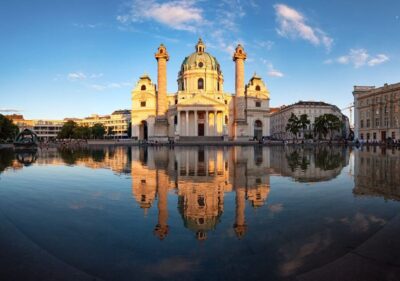
Vivaldi’s Four Seasons Concert in Karlskirche
Read our review →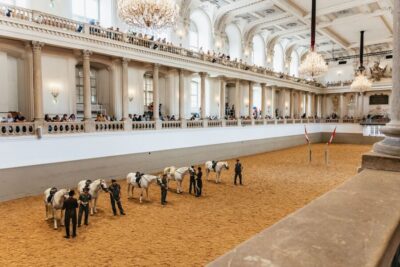
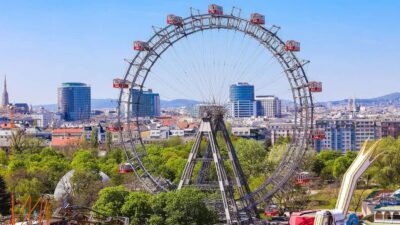
Skip-the-cashier-desk-line Giant Ferris Wheel Ride
Read our review →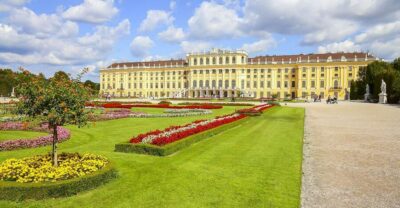
Schönbrunn Palace & Gardens Skip-the-Line Tour
Read our review →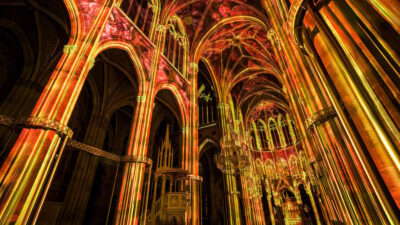
Light of Creation Votive Church Immersive Light Show
Read our review →
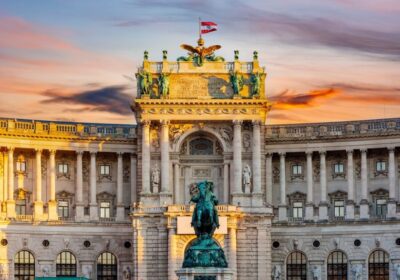
Skip-the-Line Sisi Museum, Hofburg and Gardens Tour
Read our review →