Reviewed · VIENNA TOURS
The best of Vienna on foot
Vienna reveals its character best on foot, and this route brings you straight into the city’s imperial center. In 150 minutes, you pass grand baroque buildings, the Hofburg, the Capuchin Crypt, the Albertina, the State Opera, Heldenplatz, the Plague Column, and St. Stephen’s Cathedral.
I like the large number of central sights covered in one walk, and I like the practical advice about restaurants, cultural life, and public transport. The main consideration is that this is a long outdoor walk, and the tour runs in rain or shine, so cold weather or limited mobility may make it a poor fit.
Key points at a glance
- Starts at the Maria Theresa fountain: Look for the red, white, and green Italian-colored umbrella.
- Covers more than 10 major sights: The route focuses on Vienna’s most important central monuments and buildings.
- Finishes at St. Stephen’s Cathedral: You end beside Vienna’s best-known landmark, right in the heart of the city.
- Italian-speaking official guide: Guides named Raffaele and Mara have led particularly well-received tours.
- Includes time for photos and questions: You are not pushed from one sight to the next without a pause.
- Good practical orientation: You receive advice on restaurants, public transport, and Vienna’s cultural life.
Why this walk works as a first look at Vienna
Vienna can feel grand to the point of confusion. Palaces, churches, museums, monuments, and broad squares are packed into the center, but their meaning is not always clear when you first arrive. This walking tour gives you a useful frame for the city before you spend time inside individual museums or palaces.
The route links the imperial story with ordinary Viennese life. You hear about the Habsburg monarchs, but you also talk about the city’s residents, popular culture, food, and daily habits. That balance matters. Vienna is more than polished stone and royal apartments.
The walk lasts two and a half hours, long enough to cover a strong set of sights without taking your entire day. I would consider it especially useful on your first day, when you want to get your bearings before choosing which museums, cafés, or concert venues deserve more time.
The guide speaks Italian, which makes this a natural choice for Italian-speaking visitors. The tour also includes time for questions, so you can ask about a building you plan to visit later or get help with a practical matter such as public transport.
A few more Vienna half-days to weigh up
- Vienna: Vivaldi’s Four Seasons Concert in Karlskirche
★ 4.7 · 14,951 reviews - Vienna: Spanish Riding School Training
★ 3.9 · 9,281 reviews - Vienna: Skip-the-cashier-desk-line Giant Ferris Wheel Ride
★ 4.5 · 7,859 reviews
Meeting Maria Theresa in the grand museum quarter
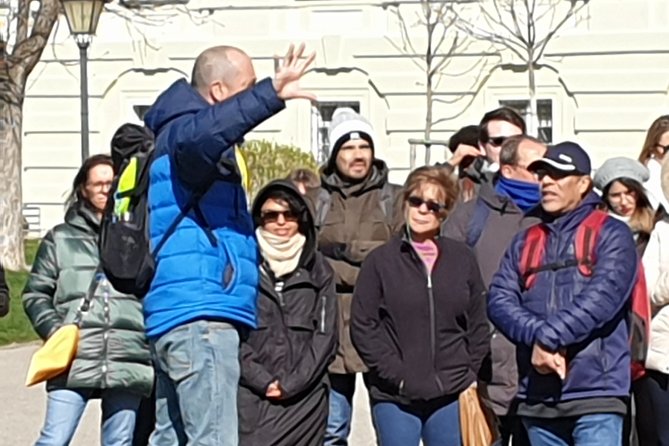
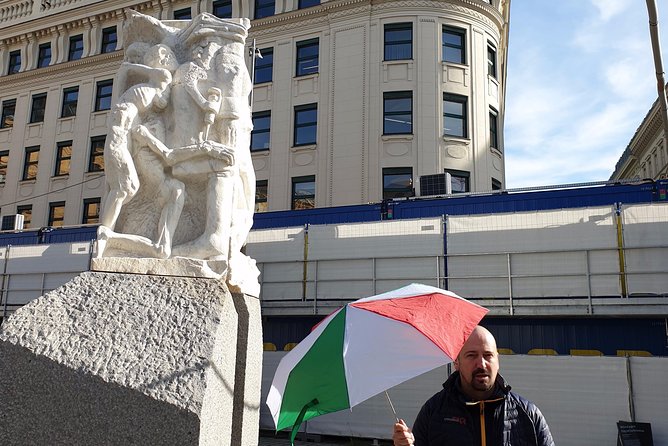
The tour begins at the Maria Theresa fountain on the square beside the Maria Theresa Memorial. Look for an umbrella in the colors of the Italian flag: red, white, and green. That detail is simple but helpful, especially in a busy open space where several groups may gather.
The starting point places you among some of Vienna’s most impressive public buildings. Maria Theresa was one of the major Habsburg rulers, and her memorial sets the right tone for a walk centered on imperial Vienna. The surrounding buildings make an immediate visual impression, with formal facades and broad spaces designed to express power and order.
Your guide uses this area to introduce Vienna’s political and cultural importance. Do not expect a full museum lecture here. The value is in learning how the different buildings fit together, then seeing them again as you continue toward the old city center.
This is also a convenient starting point for a first-day orientation because the walk moves toward the city’s core rather than sending you out to a distant district. You can continue exploring from St. Stephen’s Cathedral after the tour.
The Albertina and Vienna State Opera
The route continues toward the Albertina and the Vienna State Opera. Both are famous, but they represent different sides of the city.
The Albertina is associated with fine art and one of Vienna’s most notable museum collections. On this walk, you see the building from outside and learn about its place in the city rather than spending time in the galleries. That is an important distinction. If you want an art-filled afternoon, you will need a separate admission and visit.
The State Opera brings Vienna’s performance culture into the picture. The building is a reminder that music is not a side note here. It is part of the city’s public identity. Your guide discusses cultural life and can give you useful context if you are planning to attend an opera, concert, or other event during your stay.
These stops are also good photo points. The tour includes time for pictures, so you can frame the grand architecture without feeling that you must choose between listening and taking out your camera. Still, you should think of the stops as exterior sightseeing unless your booking information says otherwise.
The Capuchin Crypt and the Habsburg burial place
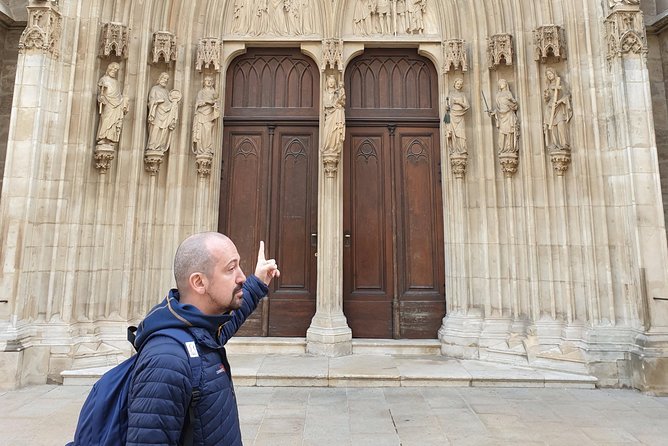
One of the more distinctive stops is in front of the Capuchin Crypt, the burial place of the Habsburg monarchs. This adds a more personal and solemn note to the route.
The crypt is not just another ornate building. It connects the large imperial story with the people who ruled from Vienna for centuries. The tour explains its importance from outside, but the experience does not include food, drinks, or any separate interior admission. If you want to go inside, plan that as another activity and check the current entry details yourself.
I like this stop because it gives the palace story a human edge. Monarchs may appear distant when you see their grand residences, but a dynastic burial place makes the succession of rulers easier to understand.
It is also a reminder that central Vienna is compact. Within a short walking distance, you move from art and opera to royal burial traditions, then on to the Hofburg and its ceremonial spaces.
A different way to spend an afternoon here:
- Vienna: Schönbrunn Palace & Gardens Skip-the-Line Tour
★ 4.7 · 7,739 reviews - Vienna: Light of Creation Votive Church Immersive Light Show
★ 4.8 · 6,779 reviews - Vienna Spanish Riding School Guided Tour
★ 4.7 · 6,765 reviews - Vienna: Classical Concert in the World-Famous Musikverein
★ 4.6 · 6,673 reviews
The Hofburg, Franz Josef, and Empress Sissi
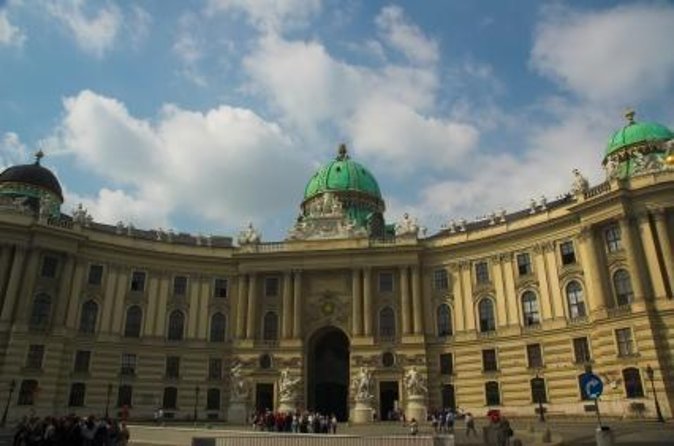
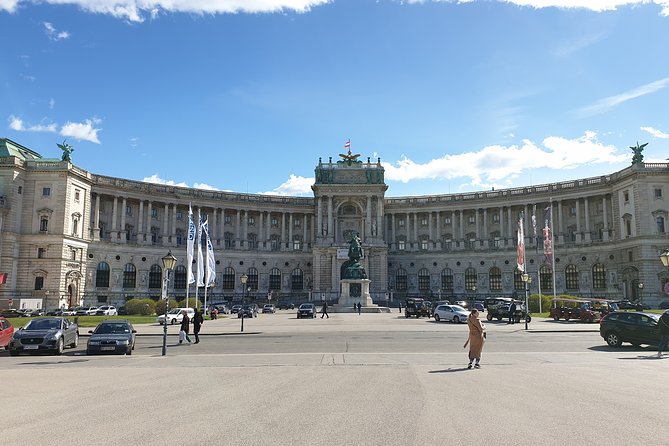
The Hofburg is the main imperial centerpiece of the walk. This was the palace of Franz Josef and Empress Sissi, and it remains one of the city’s defining places.
The tour takes you through the palace area rather than presenting a full palace visit. You learn how the Hofburg functioned as an imperial residence and why its courtyards and public spaces matter. The guide also brings in stories and specific facts, helping you see more than an imposing collection of facades.
Sissi, or Empress Elisabeth, is a major part of Vienna’s popular image. Her life has attracted plenty of romantic attention, but a good city walk can place her story in a broader setting. Here, her connection to Franz Josef and the Habsburg court becomes part of Vienna’s political and social past rather than a stand-alone celebrity tale.
This is one of the places where the guide makes a real difference. Italian-speaking guides Raffaele and Mara have both been specifically praised for clear explanations, humor, and keeping the walk interesting. Mara, in particular, led a nearly three-hour walk that remained enjoyable despite very cold weather and strong wind. That is useful evidence of her ability to keep a group engaged, though winter conditions can still be hard on you.
Heldenplatz and the public face of empire
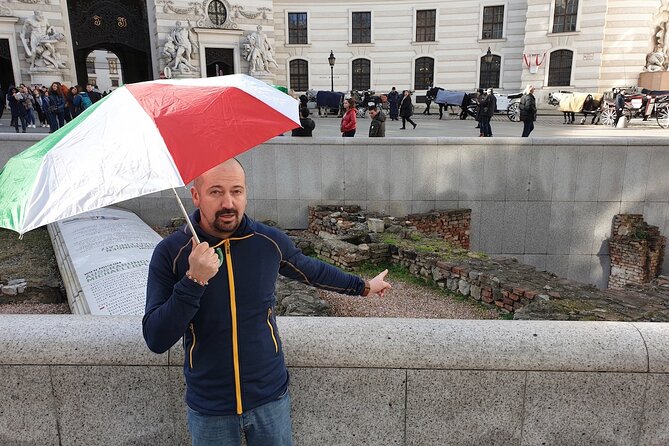
From the Hofburg, the route reaches Heldenplatz, one of Vienna’s grand ceremonial squares. Its scale helps explain how the Habsburg court presented itself to the public.
This is a place to look beyond individual statues and buildings. The open space, formal architecture, and palace setting work together to create a public stage for the monarchy. A guide can point out the relationships between these structures, which is harder to grasp when you walk through alone with only a map.
Heldenplatz also connects imperial Vienna to later chapters in the city’s story. The tour is designed to provide historical context, specific facts, and stories, so this is a natural point for discussing how the meaning of public spaces can change over time.
You will have opportunities to stop for photographs. Keep in mind that this remains a walking tour, not a dedicated photography outing. The time for pictures is welcome, but the guide must also keep the route moving.
The Plague Column and Vienna’s religious landmarks
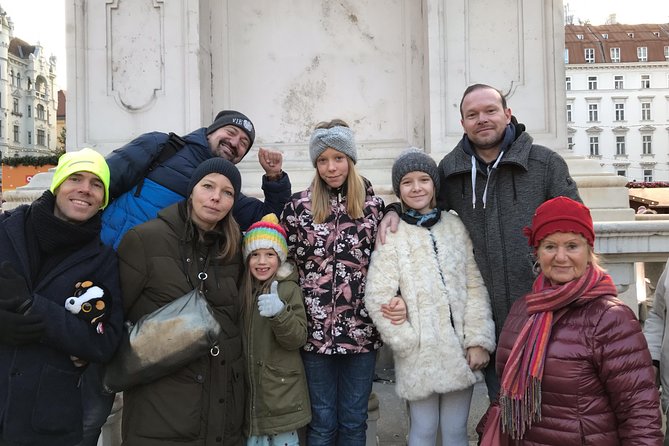
The Plague Column is another major sight on the route. It recalls the plague that affected Vienna and reflects the religious atmosphere of the period. Its elaborate form fits the city’s baroque character, but its purpose was tied to fear, faith, and survival.
This stop gives the tour another useful contrast. The Hofburg and Heldenplatz present political power, while the Plague Column reflects a public response to disaster. You see how Vienna’s streets record more than royal events.
The city center is full of monuments that can blur together if you rush. I appreciate that this walk gives them a story and a place in the larger picture. You are not only collecting photographs. You are learning why a monument was built and what it meant to the people who lived through the period.
The route includes other impressive buildings and baroque sights along the way. Since the exact pace can depend on the group and the conditions, you should expect a guided overview rather than a detailed stop at every facade.
Finishing at St. Stephen’s Cathedral
The walk ends at St. Stephen’s Cathedral, Vienna’s landmark and one of the clearest points of orientation in the city. Its tall presence makes a fitting finish after the imperial squares and palace buildings.
Ending here is practical. You are in the central pedestrian area, surrounded by shops, restaurants, cafés, and public transport connections. After the tour, you can continue independently, return to a place you passed earlier, or arrange a separate visit inside the cathedral.
The cathedral also helps you understand Vienna’s layout. The tour begins near the Maria Theresa Memorial and moves toward the historic center, ending at the city’s best-known church. You get a simple mental map of the central area instead of a series of disconnected stops.
Allow time for a final photograph, since the cathedral is one of the most useful images from the walk. The guide can also answer questions about what to do next, which is especially helpful if this is your first afternoon in Vienna.
Stories, questions, and useful city advice
The strongest part of this experience is not simply the number of buildings. It is the chance to ask questions while the city is in front of you.
You can ask about restaurant visits, public transport, cultural events, and other details that affect the rest of your stay. This advice is often more useful at the start of a trip than at the end, when your plans are already fixed.
The guides are expected to share facts, dates, stories, and anecdotes. The praise for Raffaele describes him as prepared, friendly, and never boring. Another high rating highlights complete explanations, amusing anecdotes, and precise historical context from Mara. Those details suggest a tour that aims for both information and personality.
The Italian language is the central limitation. If you do not understand Italian, this is not the right booking. If you do, the language can make complex history and local customs easier to follow than a tour conducted in a language you only partly understand.
Is $40 a fair price?
At $40 per person, the value depends on how you use the walk. You are paying for 150 minutes with a certified official guide, the chance to ask questions, and a structured route through more than 10 central sights.
That is reasonable if you want context and orientation rather than simply a list of addresses. A self-guided walk costs less, but you would need to plan the route, read about each monument, and manage the timing yourself. The tour saves that preparation and gives you a person to ask when something catches your attention.
The price does not include food or drinks. One group asked Mara to stop at a punch kiosk, and she was happy to accommodate the request, but that was an extra purchase and should not be treated as a standard included feature.
I see the best value for first-time visitors who want to understand Vienna quickly. If you already know the center well, or prefer to spend two and a half hours inside one museum, the price may feel less useful.
Weather, walking, and accessibility
This tour runs in rain or shine and is canceled only in the event of an environmental disaster. Bring weather protection and wear shoes suited to a long city walk. The cold-weather experience described above shows that conditions can affect comfort even when the guide keeps the tour enjoyable.
The activity information says the tour is wheelchair accessible, but it also says it is not suitable for people with mobility impairments. Those statements do not fully agree, so you should contact the provider before booking if you need step-free access, frequent rests, or a route adapted to a mobility aid.
Large bags and luggage are not allowed, and pets are not allowed. Audio recording is also prohibited. These rules make sense for a moving city walk, but you should leave substantial luggage elsewhere before meeting the group.
The meeting point is outdoors at the Maria Theresa fountain. Arrive prepared to identify the Italian-colored umbrella and to remain outside while the guide gathers the group.
Who will get the most from this Vienna walk?
I would choose this tour if you are visiting Vienna for the first time, want an Italian-speaking guide, and prefer a broad introduction before tackling museums and palace interiors.
It suits couples, families with adults, and independent visitors who like asking questions. It is also useful for anyone who wants immediate advice about restaurants, public transport, and cultural activities.
I would think twice if you dislike walking for 150 minutes, need a fully confirmed accessible route, or want extensive time inside the Albertina, Hofburg, Capuchin Crypt, or cathedral. This is an outdoor sightseeing tour, not a collection of interior visits.
The cancellation policy offers useful flexibility: you can cancel up to 24 hours before the tour for a full refund, and you can reserve now while paying later. Check the available start times when choosing your date.
Should you book The Best of Vienna on Foot?
Book it if you want a clear, story-led introduction to Vienna’s center and can follow an Italian-language walk in changing weather. The route covers the Hofburg, royal burial traditions, baroque monuments, opera, public squares, and St. Stephen’s Cathedral in one well-shaped outing.
I would book it early in your stay, ideally before making detailed plans for the rest of the city. The combination of history, photographs, questions, and practical advice can help you decide what deserves a longer visit.
Skip it if you need a short, indoor activity or a tour in another language. Also confirm the accessibility details before paying if walking ability is a concern. For Italian-speaking visitors who want the city to make sense quickly, the 4.8 rating from 126 reviews and the strong praise for Raffaele and Mara point to a solid use of $40.
FAQ
Where does the tour begin?
It begins at the Maria Theresa fountain on the square by the Maria Theresa Memorial. Look for an umbrella in red, white, and green, like the Italian flag.
Where does the tour finish?
The tour finishes at St. Stephen’s Cathedral, Vienna’s central landmark.
How long does the tour last?
The tour lasts 150 minutes, or two and a half hours.
What language is the tour conducted in?
The live tour guide speaks Italian.
What is included in the price?
The price includes a certified official tour guide, the opportunity to ask questions, and time to take photographs.
Are food and drinks included?
No. Food and drinks are not included. Any purchase, such as a drink from a punch kiosk, costs extra.
Can I cancel for a full refund?
Yes. You can cancel up to 24 hours in advance for a full refund.
Can I reserve now and pay later?
Yes. The reserve-now, pay-later option lets you hold your place without paying immediately.
Does the tour operate in bad weather?
Yes. The tour takes place in rain or shine and is canceled only in the event of an environmental disaster.
Are luggage, pets, and audio recording allowed?
No. Large bags and luggage, pets, and audio recording are not allowed.
Recently added around Vienna
- Vienna: Private tour Mauthausen and Linz★ 4.1 · 3 reviews
- 2-Day Prague Tour from Vienna with private Transfers and Lunches★ 5.0 · 3 reviews
- Vienna Self Guided Sherlock Holmes Murder Mystery Game★ 4.5 · 3 reviews
- Vienna Private Schönbrunn Palace Tour, Extra Rooms and Gardens★ 5.0 · 3 reviews
- Salzburg and Lake Region Private Day Trip from Vienna★ 5.0 · 3 reviews
- Small-group Vienna Wine Tour★ 5.0 · 3 reviews
- True Crime mobile puzzle rally Vienna★ 4.0 · 3 reviews
- Vienna: Wachau Valley Private Kayak and Wine Tour★ 5.0 · 3 reviews
Vienna Tours, compared.
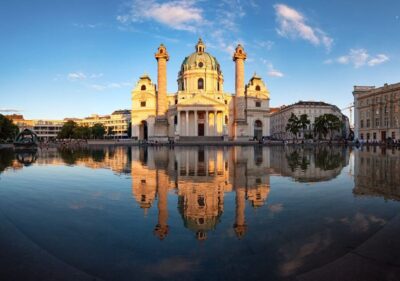
Vivaldi’s Four Seasons Concert in Karlskirche
Read our review →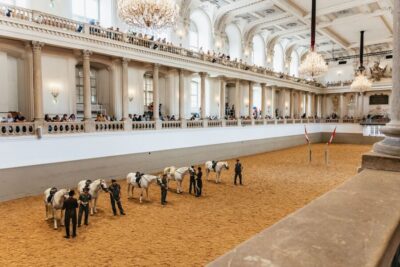
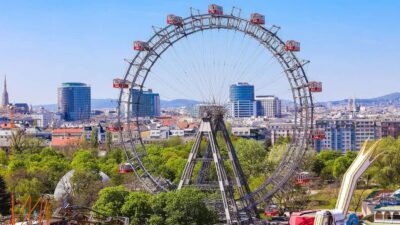
Skip-the-cashier-desk-line Giant Ferris Wheel Ride
Read our review →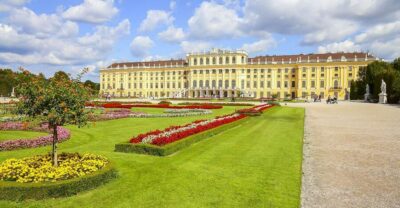
Schönbrunn Palace & Gardens Skip-the-Line Tour
Read our review →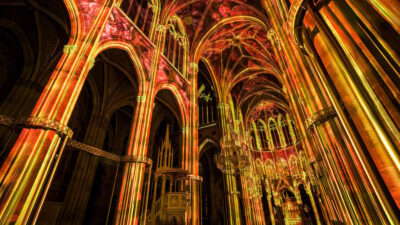
Light of Creation Votive Church Immersive Light Show
Read our review →
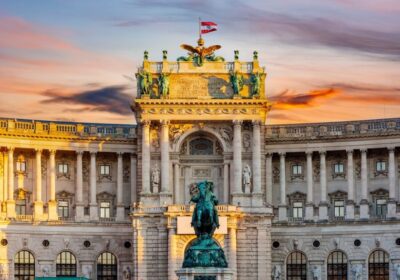
Skip-the-Line Sisi Museum, Hofburg and Gardens Tour
Read our review →