
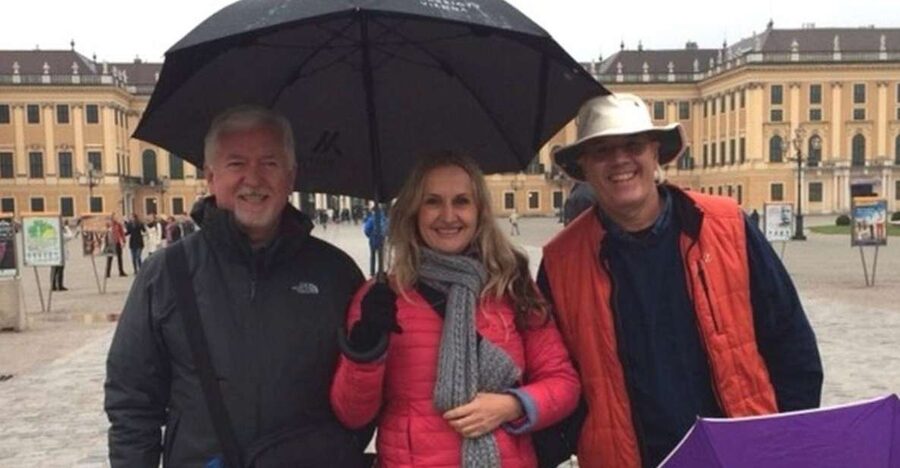
Reviewed · SCHONBRUNN PALACE TOURS
Schönbrunn Palace & Gardens Tour
Schönbrunn is more than a grand palace tour. It is a look at how the Habsburgs used architecture, gardens, ceremony, and even public access to project power. The most memorable detail may be Empress Sisi’s private staircase, built so she could escape her official rooms and reach the gardens without passing through court.
I like the strong historical storytelling, especially the way Maria Theresa’s reign, Franz Joseph’s duties, and Sisi’s dislike of court ritual are tied to the rooms you see. I also like the small-group and private options, with guides such as Katharina and Katarina offering room for questions and taking care to find quieter spots in crowded areas.
The main drawback is cost. At $176 per person, this is not a budget palace visit, and the Schönbrunn entrance fee is not included. You are paying for a historian-led experience, help with the ticket process, and a more focused visit rather than simply admission.
Key points to know before booking
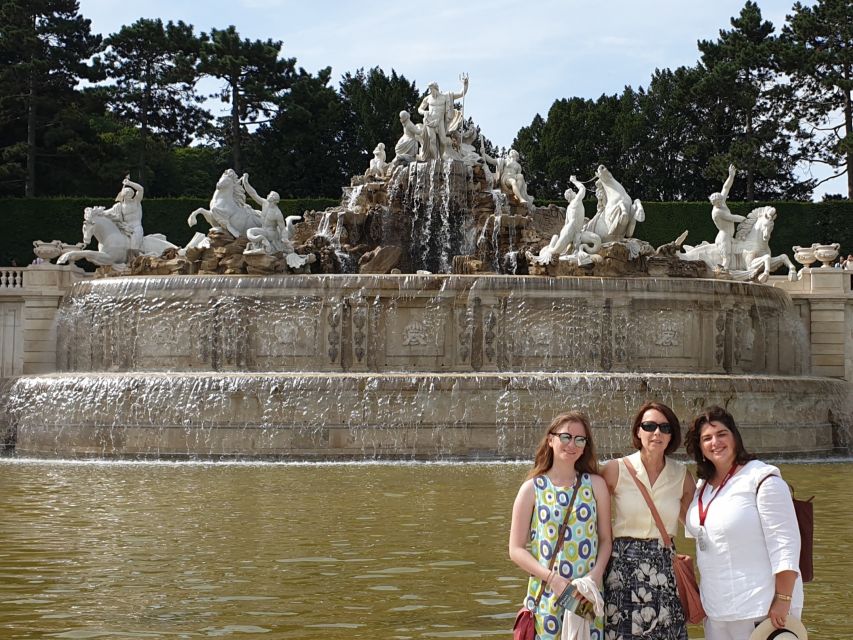
- The tour lasts 150 minutes, with about 30 minutes in the gardens and two hours inside the palace.
- The Millions Room is the decorative star, combining Indo-Persian miniatures with carved rosewood from the Antilles.
- Maria Theresa’s Porcelain Room was her office, giving the space a more personal purpose than a simple ceremonial room.
- The Gloriette provides broad views toward Vienna’s woods, but reaching it involves walking uphill.
- Guides are historians, professors, doctoral students, journalists, art critics, or published authors, depending on the assignment.
- The palace entrance fee is extra, so calculate the full cost before you reserve.
Why Schönbrunn tells Vienna’s imperial story so well
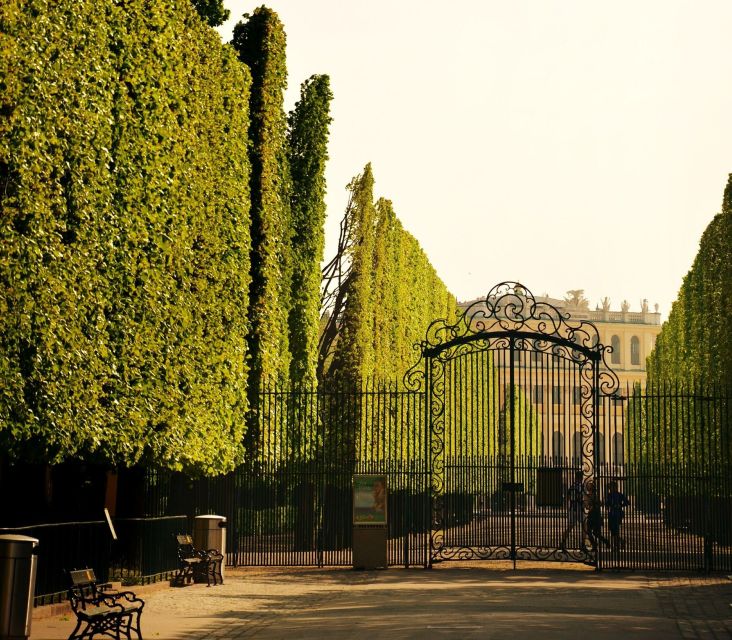
Schönbrunn was built as Austria’s answer to Versailles. That comparison helps explain the scale, but the palace becomes more interesting when you see it as a working center of power rather than just a pretty royal residence.
Maria Theresa made Schönbrunn the heart of court life and imperial policy. The palace also served as the summer home of a reigning family with 16 children, so the building carried both public ceremony and private family pressures. You will move through rooms designed to impress foreign visitors, support government business, and display the wealth of the dynasty.
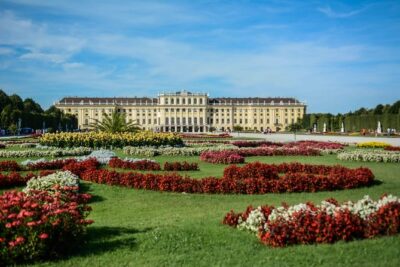
I like that the tour begins outside. The gardens give you the setting before the palace rooms begin competing for your attention. You see how long views, clipped greenery, fountains, pathways, and buildings were planned together according to Baroque ideas about the relationship between nature and architecture.
That approach also helps you understand why Schönbrunn feels so large. The palace was never meant to be viewed as an isolated building. Its terraces and formal gardens were part of the political message.
More ways into Schonbrunn Palace:
- Vienna: Schönbrunn Palace & Gardens Skip-the-Line Tour
★ 4.7 · 7,739 reviews - Vienna: Skip-the-Line Schönbrunn Palace & Gardens Tour
★ 4.8 · 5,411 reviews - Vienna: Bus & Schönbrunn Palace Skip-the-Line Guided Tour
★ 4.3 · 2,802 reviews
The first 30 minutes: Schönbrunn’s formal gardens
The garden portion takes about 30 minutes. Your guide leads you through the formal grounds and explains how the gardens were arranged to direct the eye toward important buildings and viewpoints.
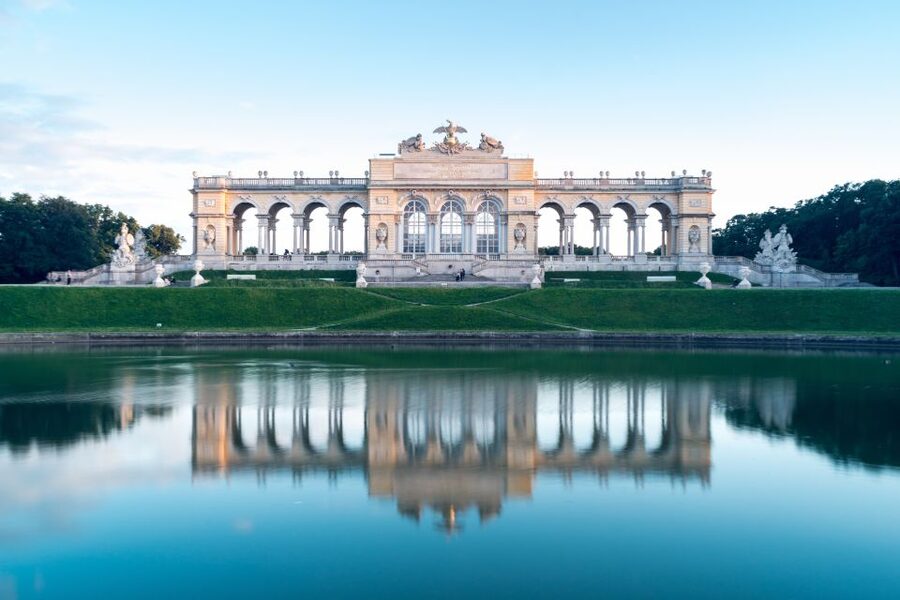
The main target is the Gloriette, a large triumphal arch on a hill above the palace. It commemorates military victories associated with Maria Theresa’s reign and offers views across the grounds toward Vienna’s wooded surroundings.
The walk is valuable because it gives you a sense of scale. From the higher ground, Schönbrunn’s design becomes easier to read. The palace sits below, the formal gardens stretch outward, and the Gloriette completes the composition.
The uphill walk is also the one physical point to keep in mind. The tour is not a long hike, but the Gloriette sits above the palace, so you should wear comfortable shoes and allow yourself time to walk at a steady pace.
One detail I find especially revealing is the park’s opening to the public in 1779. It was a clever political gesture. Maria Theresa presented access to this imperial setting as a gift, allowing ordinary people to see part of the world usually reserved for the court.
Your guide can turn that detail into a larger story about image-making. The Habsburgs were not only building rooms and gardens. They were shaping how the public saw the monarchy.
Inside the palace: ceremony, family, and daily pressure
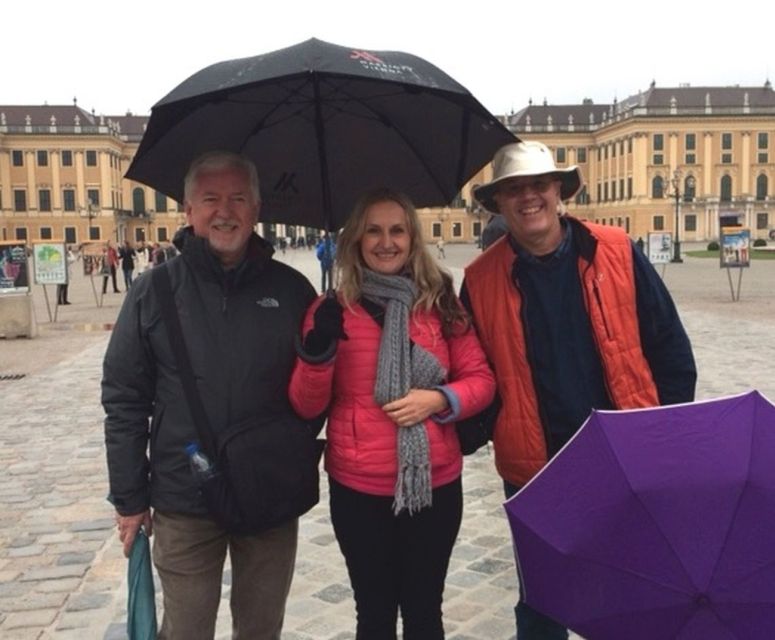
The indoor visit lasts about two hours. You move through a sequence of lavish rooms, with the guide explaining who used them and what they reveal about court life.
This is where having a historian matters. Without context, a palace can become a parade of gilded frames, furniture, mirrors, and decorated walls. With a guide, each room can answer a more useful question: Who needed this room, what happened here, and what did its design say about rank?
The tour places particular attention on Maria Theresa, Franz Joseph, and Elisabeth. Their lives show three different sides of imperial power.
Maria Theresa turned Schönbrunn into a major center of government and court activity. Her role was not simply ceremonial. The palace reflected the practical work of ruling a large European empire, along with the public image she wanted to project.
Franz Joseph and Elisabeth, known as Sisi, offer a later and more personal story. Franz Joseph married the Bavarian princess in 1854, but the marriage was strained by court obligations and the emperor’s responsibilities.
Sisi disliked formal court rituals and the ornate environment surrounding her. The palace rooms help you see the contrast between the image expected of an empress and the private person who wanted to get away from it all.
Her spiral staircase is one of the tour’s most human details. It connected her official rooms with a private exit toward the gardens. That small architectural choice says more than another formal portrait might. Even inside one of Europe’s grandest residences, Sisi needed a route out.
Maria Theresa’s Porcelain Room
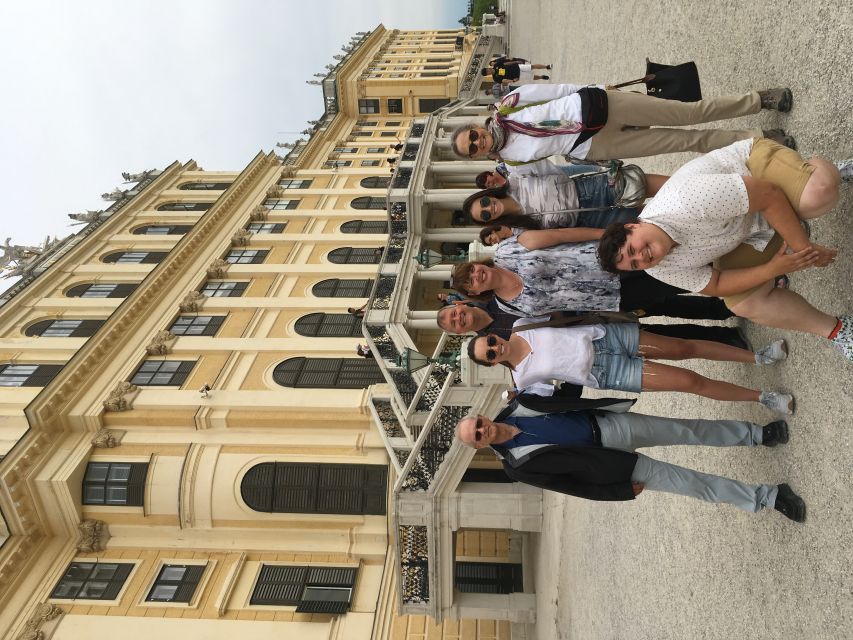
The Porcelain Room served as Maria Theresa’s office. That purpose gives it extra interest, since it was not merely a room for display or royal entertaining.
You can look at the decoration with a practical question in mind: how did an empress conduct business in a room like this? The surroundings are ornate, but the space also belonged to the working side of monarchy.
The room helps balance the palace experience. Schönbrunn can easily seem like an endless display of luxury. Knowing that Maria Theresa used this room for work connects the decoration to administration, correspondence, decisions, and the demands of ruling.
I would pay close attention here rather than rushing through to the more dramatic rooms. A guide can explain how the room functioned and place it within Maria Theresa’s larger role at Schönbrunn.
A few more Vienna half-days to weigh up
- Vienna: Vivaldi’s Four Seasons Concert in Karlskirche
★ 4.7 · 14,951 reviews - Vienna: Spanish Riding School Training
★ 3.9 · 9,281 reviews - Vienna: Skip-the-cashier-desk-line Giant Ferris Wheel Ride
★ 4.5 · 7,859 reviews - Vienna: Light of Creation Votive Church Immersive Light Show
★ 4.8 · 6,779 reviews
The Rococo Millions Room
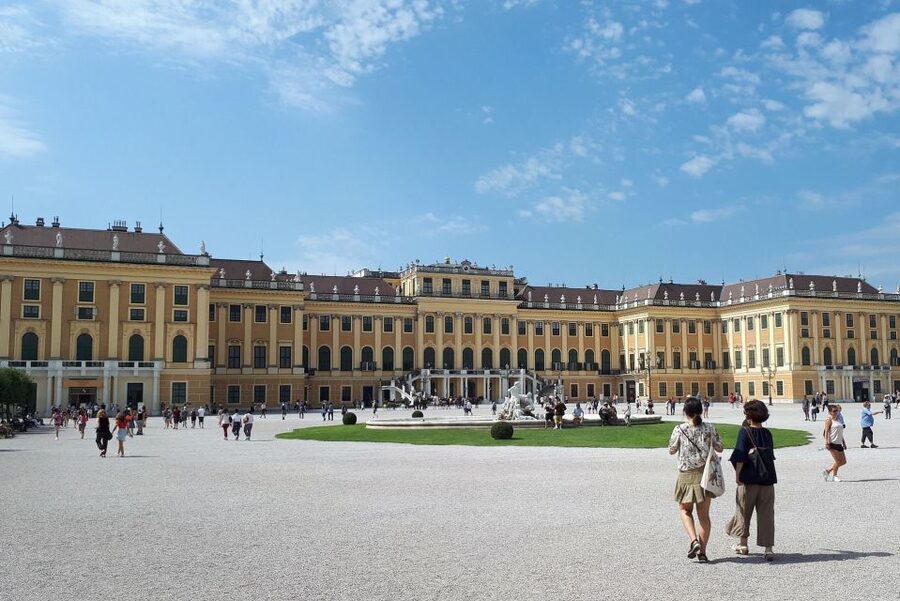
The Millions Room is the palace’s most unusual decorative highlight. Its name refers to its enormous cost, and you can see why once you learn what went into it.
The room combines antique Indo-Persian miniatures with Rococo frames and wall panels made from carved rosewood brought from the Antilles. It is an unusual blend of European Rococo decoration and Asian-inspired materials and images.
This is not simply a room covered in expensive objects. Its design shows how the Habsburg court collected, adapted, and displayed items from far beyond Austria. The result is a meeting of artistic traditions within one small space.
I like this stop because it gives you something specific to look for. Instead of hearing only that the palace is luxurious, you can study the materials, the miniatures, the carved wood, and the way the different elements were brought together.
It is also a good example of why a live guide improves the visit. A plaque may identify the Millions Room, but a historian can explain the source of its name and why the decoration mattered in the Rococo period.
The Franz Joseph and Elisabeth Apartments
The apartments associated with Franz Joseph and Elisabeth shift the mood from imperial display to marital and personal strain.
Franz Joseph was tied closely to the rituals of government. Sisi found those rituals suffocating. The contrast is important because the palace can otherwise give the impression that royal life was one long sequence of banquets, receptions, and fine rooms.
The apartments show how much of imperial life was built around obligation. Franz Joseph’s position demanded routine and public duty. Sisi’s response was to seek privacy and distance, even within a palace designed to control movement and behavior.
The story also gives you a useful way to read the rooms. Look for the difference between official spaces and private areas. The staircase leading from Sisi’s rooms to a garden entry is the clearest example of that divide.
The guide may be particularly helpful if you enjoy biographical history. Katharina, who led several highly praised departures, is described as bringing the palace and its people to life with anecdotes and a clear account of Vienna’s wider past. Katarina is also noted for meeting a group in central Vienna and accompanying them to Schönbrunn, adding historical background during the journey.
The Jewish Quarter and the tour’s changing focus
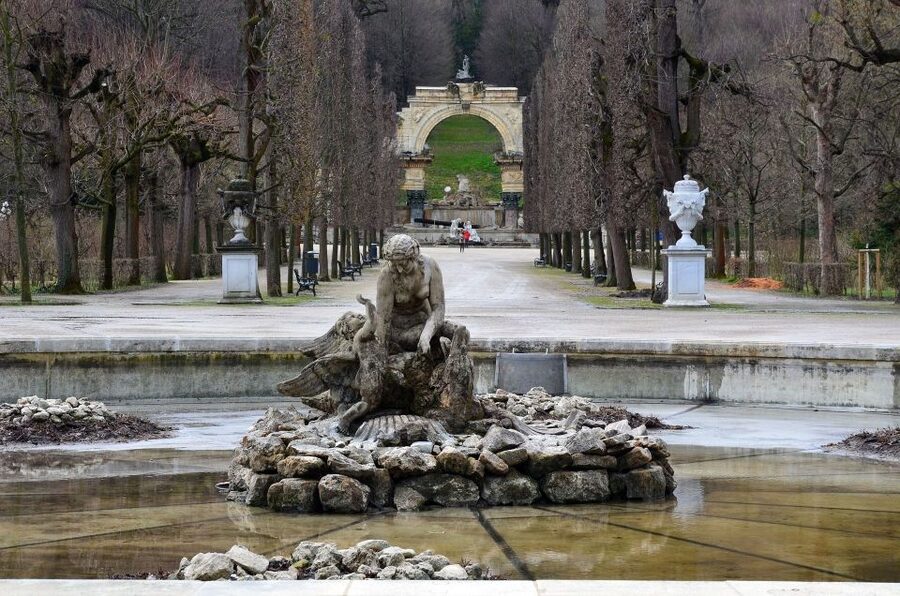
The experience information also refers to a visit to Vienna’s Jewish Quarter and stories from the period of the Jewish ghetto. This is a very different subject from Schönbrunn’s imperial rooms, and it could add an important social and political dimension to the day.
However, the detailed schedule provided for this experience lists only the Schönbrunn Gardens and Schönbrunn Palace. It does not give a separate duration or route for the Jewish Quarter.
That means you should confirm exactly what your selected option includes before booking. The Jewish Quarter may belong to a particular version, private itinerary, or broader city tour option. Do not assume the 150-minute palace visit automatically includes a separate neighborhood walk.
If it is included in your chosen tour, the subject can add needed balance. Schönbrunn presents monarchy from the viewpoint of the court. Stories from Vienna’s Jewish Quarter would shift attention toward the people and communities affected by the city’s political and religious history.
Meeting point, pickup, and how the day works
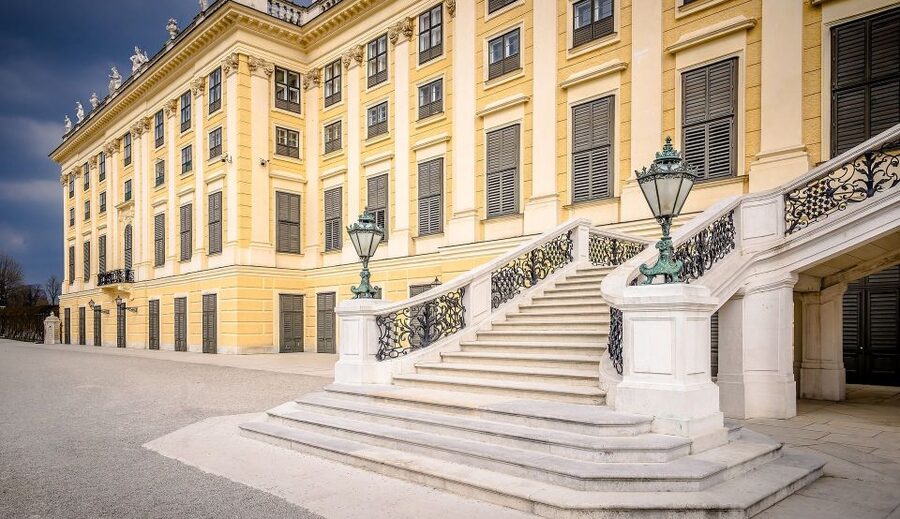
The standard meeting point is the Schönbrunn Arrival Centre at Schönbrunner Schloßstrasse 50. Your guide waits in front of the Group Centre Building, directly across from the palace’s main entrance.
That location is useful because it removes guesswork. You are not asked to search around the palace grounds for a guide. Still, arrive with enough time to identify the Group Centre Building and get oriented before the start.
The tour finishes at the Group Centre in Schönbrunn. This is not a central Vienna finish, so plan your next activity around the palace area or allow time to return to the city center.
Private tour bookings can include pickup from a central hotel, holiday flat, or another meeting point. In that case, the guide accompanies you to Schönbrunn using Vienna’s metro system. This option can be useful if you want help with the route or prefer not to begin the day navigating public transport.
The standard tour is in English. Private and small-group formats are available, but the exact group size depends on the option you choose.
What the $176 price means in practice
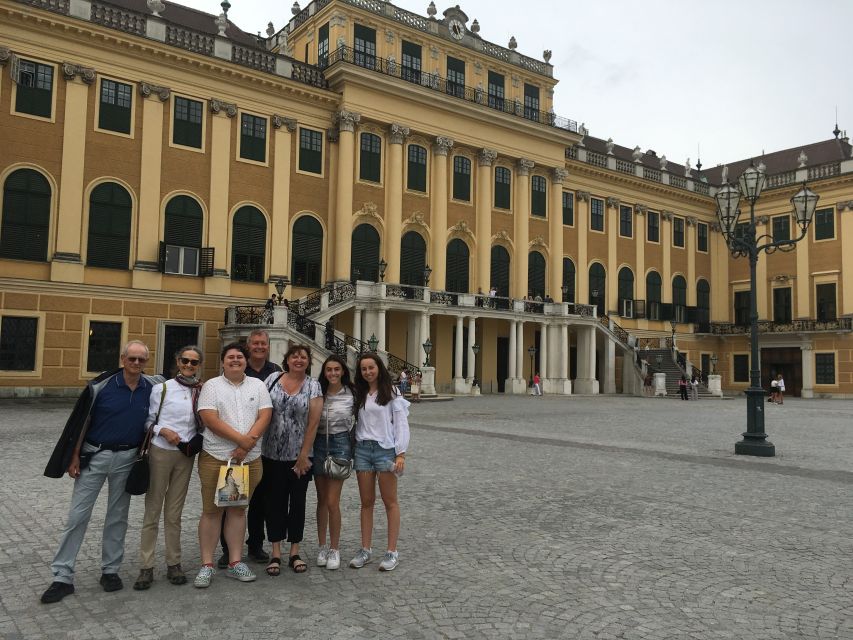
At $176 per person, this is a premium tour. The palace entrance fee is not included, so the final cost is higher than the headline price.
The value depends on how you like to visit major sights. If you are happy to read signs, follow the public route, and manage tickets yourself, this experience may feel expensive. If you want a historian to connect the rooms, explain the Habsburg family, guide you through the crowds, and answer questions, the fee becomes easier to justify.
The guides are described as professors, doctoral students, historians, journalists, art critics, and published authors. That is a stronger academic profile than you get from a basic orientation walk, though the exact guide is not guaranteed.
The practical benefit is not just facts. One June booking with Katharina included meeting in central Vienna, traveling to the palace together, explaining the family and city as they went, and finding small places to pause while moving through busy rooms. A private booking in February allowed a guest to ask many questions and hear anecdotes at a relaxed pace.
You should still keep expectations realistic. Skip-the-line access does not mean the palace will be empty. Schönbrunn is a major Vienna attraction, and the guide’s value is partly in helping you keep moving and make sense of the rooms despite other groups nearby.
Who will get the most from this tour?
I would recommend it most strongly to first-time visitors who want Schönbrunn explained rather than simply photographed.
It also suits you if:
- You enjoy political and family history.
- You want a guide who can connect Maria Theresa, Franz Joseph, Sisi, and Vienna.
- You prefer a private or small-group setting.
- You want help with the palace ticket process.
- You like asking questions as you go.
- You want both outdoor views and decorated interiors in one visit.
Families and mixed-age groups may appreciate the stories about Sisi’s private escape route and Maria Theresa’s large household. Those details give younger visitors something concrete to follow.
Art and design fans should make time for the Millions Room and Porcelain Room. The tour is also a good fit for anyone who wants to understand how Baroque gardens and palace architecture were designed as one grand statement.
You may want a different arrangement if you have already studied Schönbrunn closely or prefer exploring at your own speed. Two hours inside with a guide means less freedom to linger wherever you choose.
Booking details worth knowing
You can cancel up to 24 hours before the tour for a full refund. A reserve-now, pay-later option is also available, which helps if your Vienna plans are still shifting.
Your guide helps you purchase the palace tickets, but you should budget for that separate charge. Check the starting time for your selected date, since the 150-minute duration does not identify one fixed daily departure.
The tour is offered with live English guidance. If you want central pickup, choose the private option and confirm the pickup point when booking.
Should you book the Schönbrunn Palace and Gardens Tour?
Book it if you want the palace to make sense as a place of power, family duty, and personal escape. The formal gardens, Gloriette views, Porcelain Room, Millions Room, and Sisi’s staircase create a well-shaped visit, and a strong guide can tie them into one story.
I would be more cautious if price is your main concern. At $176 per person before admission, this is a costly way to see Schönbrunn. Its value rests on the historian guide, the small-group or private format, help with tickets, and the chance to ask questions.
Before paying, confirm whether your selected option includes the Jewish Quarter, since the detailed 150-minute schedule centers on the gardens and palace. If the scope suits you and you want depth rather than a quick royal-house visit, this is a thoughtful, well-supported choice.
FAQ
How long does the Schönbrunn Palace and Gardens Tour last?
The tour lasts 150 minutes, or two and a half hours.
What does the tour include?
It includes a guided tour with a live English-speaking guide who is described as a historian or another academic or cultural professional.
Is the Schönbrunn entrance fee included?
No. The Schönbrunn Palace and Park entrance fee is not included. Your guide helps you purchase the required tickets.
Where does the tour meet?
Meet at the Schönbrunn Arrival Centre at Schönbrunner Schloßstrasse 50. The guide waits in front of the Group Centre Building across from the palace’s main entrance.
Where does the tour finish?
The tour finishes at the Group Centre in Schönbrunn.
How much time is spent in the gardens?
The scheduled garden visit takes about 30 minutes.
How much time is spent inside the palace?
The guided palace visit takes about two hours.
Is the tour available in English?
Yes. The listed live tour language is English.
Are private tours available?
Yes. Private and small-group options are available. Private tours can include pickup from a central hotel, holiday flat, or another meeting point.
Can I cancel or pay later?
You can cancel up to 24 hours in advance for a full refund. A reserve-now, pay-later option is also available.
Recently added around Vienna
- Vienna: Private tour Mauthausen and Linz★ 4.1 · 3 reviews
- 2-Day Prague Tour from Vienna with private Transfers and Lunches★ 5.0 · 3 reviews
- Vienna Self Guided Sherlock Holmes Murder Mystery Game★ 4.5 · 3 reviews
- Vienna Private Schönbrunn Palace Tour, Extra Rooms and Gardens★ 5.0 · 3 reviews
- Salzburg and Lake Region Private Day Trip from Vienna★ 5.0 · 3 reviews
- Small-group Vienna Wine Tour★ 5.0 · 3 reviews
- True Crime mobile puzzle rally Vienna★ 4.0 · 3 reviews
- Exploring the Gutenstein Alps★ 5.0 · 3 reviews
Schonbrunn Palace Tours, compared.

Schönbrunn Palace & Gardens Skip-the-Line Tour
Read our review →
Skip-the-Line Schönbrunn Palace & Gardens Tour
Read our review →
Bus & Schönbrunn Palace Skip-the-Line Guided Tour
Read our review →
Skip the Line Schönbrunn Palace and Gardens Guided Tour
Read our review →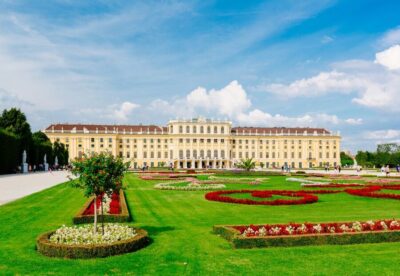
Schönbrunn Palace & Garden Skip-the-Line Guided Tour
Read our review →
Panorama Train Tickets to explore Schönbrunn Palace
Read our review →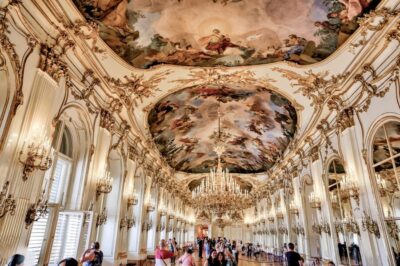
Skip-the-Line Schönbrunn Palace and Gardens Tour
Read our review →Browse the lists this tour appears in