
Reviewed · WALKING TOURS IN SALZBURG
Salzburg Private Walking Tour
Salzburg’s story begins with salt, the valuable mineral that helped pay for churches, palaces, and political power. This private walk then follows the city’s best-known characters and sights, from Mozart’s birthplace to the prince-archbishops’ grand Residenz and the musical world of the Von Trapp family.
I like the private format, since your group of up to 15 can ask questions and set the pace with its own guide. I also like the mix of music, architecture, religion, and politics. You are not getting only a Mozart walk or only a Sound of Music stroll. The main drawback is the short two-hour length: entrance fees are not included, and some interiors may need a separate visit.
- Salt shaped Salzburg’s wealth: Learn how the mineral helped the city grow in power and beauty.
- Mozart’s Birthplace anchors Getreidegasse: See where Wolfgang Amadeus Mozart was born on January 27, 1756.
- Mirabell Palace adds a human story: The palace was built by Prince-Archbishop Wolf Dietrich for Salome Alt.
- The Residenz explains political Salzburg: See where the prince-archbishops ruled their city-state.
- The cathedral links music and faith: Mozart was christened at its bronze baptismal font.
- Private guiding keeps the walk personal: English and German tours are available for your group alone.
A Salzburg Walk That Starts With Salt
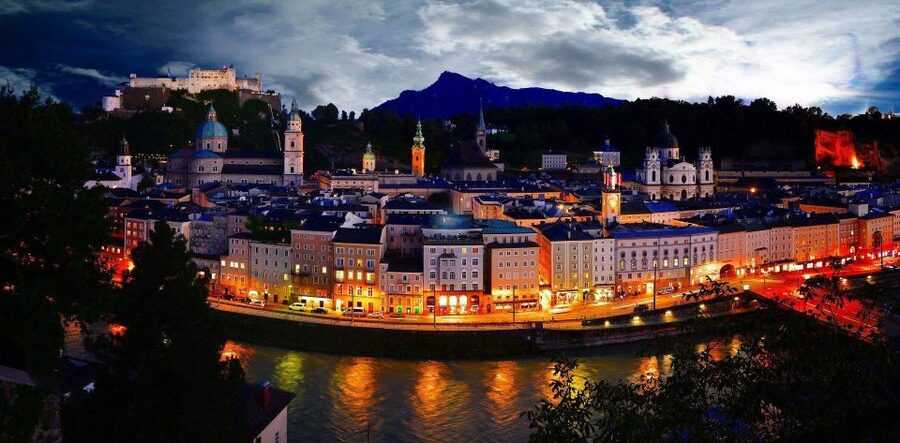
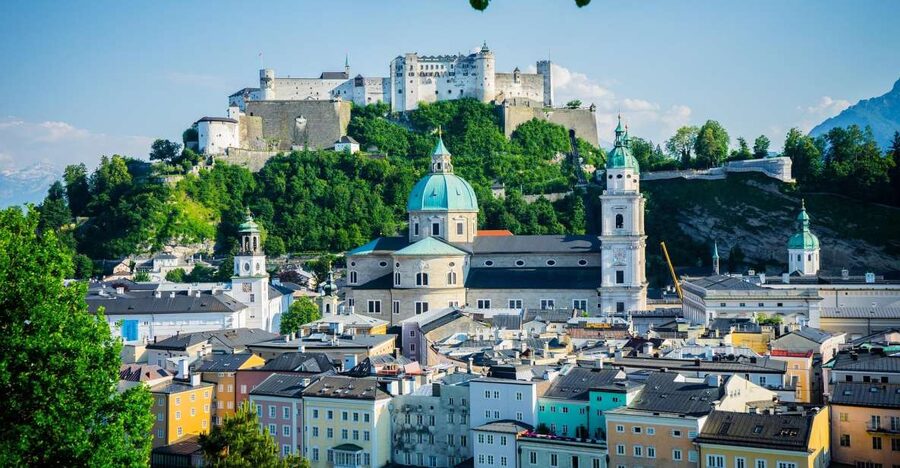
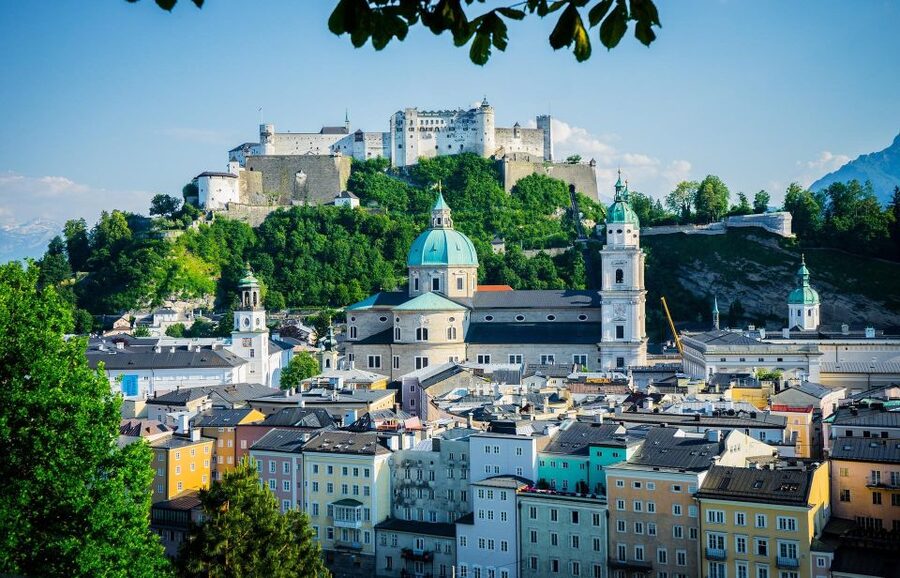
Salzburg can look like a city built for pretty photographs: pale buildings, grand churches, a fortress above the rooftops, and the river cutting through the center. The salt story gives those sights a practical backbone.
The city’s name points to its connection with salt. On this walk, you learn how that resource helped Salzburg gain money and influence. That context matters because the city’s grand architecture did not appear by accident. Salt helped support the religious and political leaders who shaped the old center.
I find this a better way to see Salzburg than treating each monument as an isolated stop. A palace becomes part of a power story. A cathedral becomes more than a beautiful church. Mozart becomes part of a city culture that had already gathered wealth, ceremony, and artistic ambition.
Your guide leads the group on foot through the central sights. The tour lasts two hours, so the focus is on orientation and the main landmarks rather than a long series of interior visits. That makes it a useful first look, especially if you want to decide later which sites deserve more of your time.
Mirabell Palace and a Story Behind the Marble
Mirabell Palace is one of the tour’s most appealing early stops. It was built by Prince-Archbishop Wolf Dietrich for his beloved courtesan, Salome Alt, a detail that gives the formal building a surprisingly personal beginning.
The palace helps explain Salzburg’s old political order. The prince-archbishops were not simply church officials. They ruled the city-state, controlled land and resources, and used architecture to display authority. Mirabell’s polished appearance makes more sense once you know that it was tied to both private life and public power.
You will also get a chance to appreciate Salzburg’s architectural character here. The city’s beauty is not just a matter of one famous viewpoint. It comes from the relationship between grand buildings, church towers, formal spaces, and the surrounding views.
The tour does not include entrance fees, so treat Mirabell Palace as a guided exterior highlight unless your guide confirms otherwise. If you want to explore an interior, ask about the admission cost and whether your schedule allows a return visit.
More Walking Tours in Salzburg
- Salzburg 2.5-Hour Walking Tour: Mozart, Old Town & More
★ 4.2 · 987 reviews - Salzburg: Old Town, Mozart, & Mirabell Gardens Walking Tour
★ 4.8 · 461 reviews - Salzburg Oldtown: Sightseeing Walking Tour with Licensed Local Guide
★ 5.0 · 392 reviews
Getreidegasse and Mozart’s Birthplace
Getreidegasse is the Old Town’s best-known shopping street and one of the city’s essential walks. Its signs, historic facades, and narrow urban setting create the atmosphere most people expect from central Salzburg.
Here, you see Mozart’s Birthplace, where Wolfgang Amadeus Mozart was born on January 27, 1756. The building gives the Mozart story a physical address. Instead of hearing only about a famous composer in the abstract, you connect his early life to a real place in the center of the city.
The guide explains Mozart’s life and musical talent as part of Salzburg’s wider culture. That is useful because Mozart can easily take over the entire city story. This walk keeps him central without ignoring the rulers, churches, and social structures that made Salzburg what it was.
Admission to Mozart’s Birthplace is not included. If the museum is a priority, plan for an additional ticket and ask your guide how much time remains after the walk. The two-hour schedule is enough for an introduction, not a leisurely museum study.
The Residenz and the Prince-Archbishops
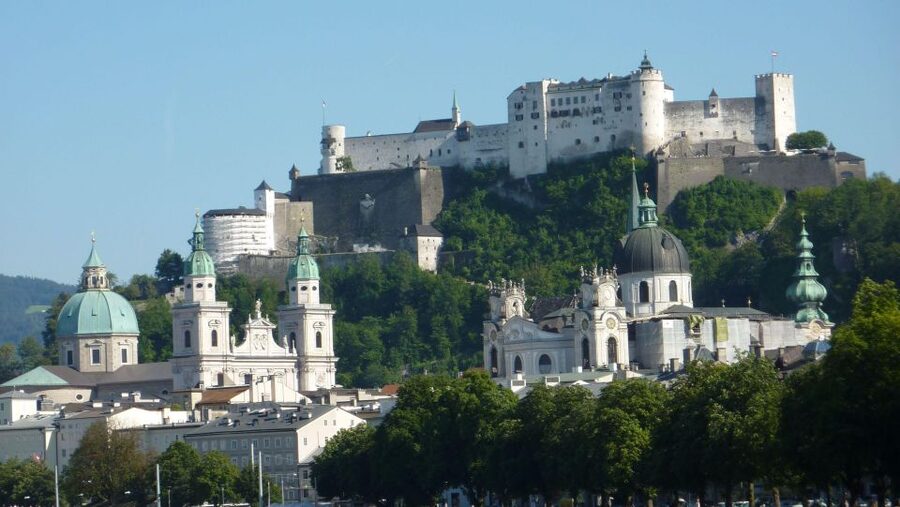
The Residenz shows where Salzburg’s prince-archbishops held court. This is the stop that most clearly explains the city’s political past before Salzburg became part of the Habsburg Empire in the 19th century.
You can expect the guide to connect the building with the old city-state system. Salzburg was not simply a small town living in the shadow of larger powers. Its rulers governed locally and used religious authority, wealth from salt, and ceremonial architecture to make their position clear.
I like this part of the walk because it adds needed balance. Mozart and The Sound of Music are the city’s easy selling points, but the Residenz shows how much of Salzburg’s identity came from government and church power.
The Residenz is also one of the places where the limits of the tour matter. A two-hour walk can introduce the building and its role, but it cannot replace a full interior visit. Entrance fees are separate, so you can choose to return later if you want rooms, art, and collections in greater detail.
Salzburg Cathedral and Mozart’s Baptism
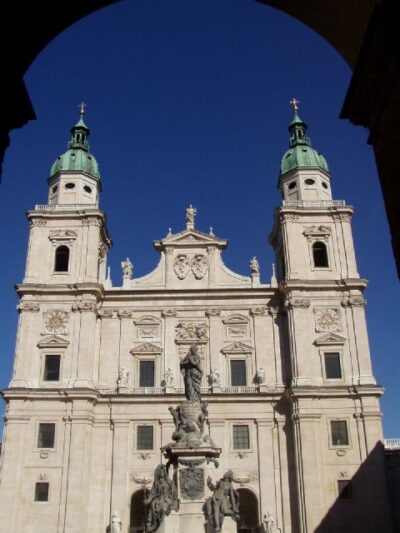
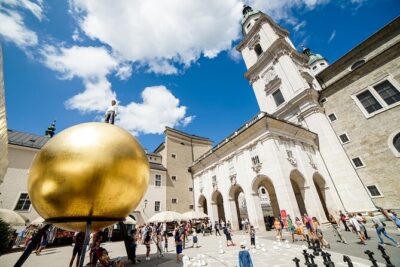
Salzburg Cathedral, or Salzburger Dom, is one of the tour’s strongest architectural stops. Its monumental Early Baroque design gives you a clear sense of the scale and ambition of the city’s religious leadership.
The cathedral also links Salzburg’s spiritual life with Mozart’s biography. Inside is a bronze baptismal font with lions at its base, and Mozart was christened there. That small physical detail makes the Mozart story feel more immediate than a list of dates and famous works.
Your guide can help you read the cathedral as both a place of worship and a public statement. The building reflects the authority of the prince-archbishops and the resources available to them. It also helps explain why Salzburg feels so grand for a city that is compact enough to explore on foot.
Access and admission details are not specified for this experience, so ask your guide about entering the cathedral on your date. Even if your time inside is limited, the exterior and surrounding Old Town setting remain central parts of the walk.
A different way to spend an afternoon here:
- The Original Sound of Music Tour in Salzburg
★ 4.5 · 6,129 reviews - Salzburg: Original Sound of Music Tour
★ 4.8 · 5,059 reviews - From Salzburg: Half-Day Tour to Hallstatt
★ 4.6 · 3,596 reviews - Salzburg: Mozart Concert at Mirabell Palace
★ 4.8 · 3,498 reviews
Mozart, Music, and Salzburg’s Cultural Personality
Music is not a decorative extra in Salzburg. It is part of the city’s public identity, and Mozart is the figure most closely tied to that identity.
The guide covers Mozart’s life and genius while placing him within the city where he was born and raised. You will not get a full biography in two hours, but you should come away with a clearer sense of why Salzburg claims him so strongly.
The music story also broadens into the city’s cultural character. Salzburg combines religious ceremony, formal architecture, performance, and historic streets in a way few places can match. The result is a city that feels elegant without being only a museum piece.
If you already know Mozart well, use your private format to ask focused questions. You might want to ask about his early years, his connection to Salzburg, or the city’s role in shaping his career. The guide’s answer will make the difference, and recent guide feedback has specifically praised the enthusiasm and architectural detail offered by Thomas L. and Frau Eisl.
The Sound of Music Connection

The Sound of Music gives Salzburg a second musical identity. The walk discusses the Von Trapp family and the real story behind the musical, helping you separate the popular film from the city’s actual past.
You should not expect a full countryside filming tour from this activity. This is a central walking tour, and its Sound of Music content fits alongside Mozart, architecture, religion, and politics. That makes it a good choice if you want the connection without giving the entire day to film locations.
The topic works best as part of the larger Salzburg story. The city’s famous music associations range from an 18th-century composer to a 20th-century family story that became known around the world. Your guide can show how both subjects shape the way Salzburg presents itself today.
If The Sound of Music is your main reason for coming, check your expectations. This two-hour route covers the story, not a dedicated visit to every film setting.
What a Private Group Changes
The price is $289 for a group of up to 15 people. That is a high total for one or two people, but the value improves as the group grows. At 10 people, the cost works out to about $29 per person. At the full 15-person limit, it is about $19 per person.
That calculation makes this most attractive for a family, a group of friends, or a small organized party. You are paying for a professional local guide who is with your group alone, not for admissions or transportation.
The private setup also gives you more control than a large public walk. You can ask for extra explanation about Mozart, salt, church architecture, or The Sound of Music. You can also tell the guide which subjects matter most to your group, although the fixed two-hour length still puts a limit on how far the discussion can go.
For two people, the cost is much harder to justify unless privacy and a custom conversation are especially important. A larger group gets the better deal.
Guide Style and Language Choices
Tours are offered in English or German. That simple choice matters in a history-heavy walk, since names, political titles, and religious details are easier to follow in the language you use most comfortably.
The guide is the main value of the experience. The strongest guide feedback points to warmth, humor, clear historical explanation, and close attention to architecture. Thomas L. has been praised for making the city’s history and buildings interesting while keeping the mood fun. Frau Eisl has been described as highly enthusiastic and full of information.
You cannot select a particular guide from the details provided, so treat those names as examples of the standard you may encounter, not a promise about your assigned guide. Still, the overall rating is 4.6 from 48 ratings, which supports choosing this experience for the human explanation rather than simply following a map.
Timing, Pace, and What to Plan For
Two hours is enough to cover the main Old Town highlights at a steady pace. It is not enough to examine every palace room, museum display, or cathedral treasure in detail.
I would use this tour near the start of your Salzburg stay. The guide can help you understand the city’s layout and point out the sights worth revisiting. You then have the rest of your visit to return to Mozart’s Birthplace, the Residenz, or other interiors at your own speed.
Wear comfortable shoes and keep your schedule flexible around the walk. The activity is entirely focused on exploring the city on foot, and the information does not include transport. Starting times vary, so check availability when booking.
You can reserve now and pay later, which is useful if your plans are still taking shape. Free cancellation is available up to 24 hours before the tour for a full refund. Keep in mind that the price does not cover entrance fees, so budget separately for any interiors you choose to visit.
Who Will Get the Most From This Walk
This tour suits you best if you want a broad first look at Salzburg with a guide who can connect the major themes. It works particularly well for:
- Families who want one private explanation instead of several separate museum visits
- First-time visitors who need help getting oriented in the Old Town
- Mozart fans who also want politics, religion, and architecture
- The Sound of Music fans who want the Von Trapp story without booking a dedicated film-location outing
- Groups large enough to spread the private price across several people
- English or German speakers who prefer a live guide
It is less suitable if you want a long museum visit, a countryside excursion, or a highly specialized Mozart lecture. Those require more time and, in some cases, a different type of tour.
Should You Book the Salzburg Private Walking Tour?
Book it if you want Salzburg’s major sights explained as one connected story. The salt trade, the prince-archbishops, Mozart, the cathedral, Mirabell Palace, and The Sound of Music all fit together here, and the private format gives your group room to ask questions.
The value is strongest for groups of five or more, especially if you appreciate a guide’s local context and want a sensible introduction before exploring on your own. For a couple on a tight budget, the $289 price may feel steep, particularly since entrance fees are extra.
I would choose this as an opening activity, not as your only Salzburg experience. It gives you the city’s framework, then leaves you free to return to the places that catch your attention.
FAQ
How long does the Salzburg Private Walking Tour last?
The tour lasts two hours.
How much does the private tour cost?
The price is $289 per group of up to 15 people.
Is the tour private?
Yes. A local professional guide accompanies your group only, and the group can include up to 15 people.
Which languages are available?
The tour is offered in English and German.
Are entrance fees included?
No. Entrance fees are not included in the tour price.
Can I cancel for a full refund?
Yes. You can cancel up to 24 hours in advance for a full refund.
What main sights and subjects are covered?
The walk covers Mirabell Palace, Getreidegasse, Mozart’s Birthplace, the Residenz, and Salzburg Cathedral. It also discusses salt’s role in Salzburg’s growth, Mozart, the Von Trapp family, The Sound of Music, and the city’s religious and political past.
Recently added around Salzburg
- From Vienna: Austrian Lakes and Salzburg Private Tour★ 5.0 · 3 reviews
- Salzburg On the Traces of Mozart Private Tour★ 4.5 · 3 reviews
- Salzburg & “The Sound of Music” Full Day Driver-Guided Tour★ 5.0 · 3 reviews
- Salzburg “Sound of Music” Private Driver-Guided Tour★ 5.0 · 3 reviews
- Salzburg für Salzburger★ 5.0 · 3 reviews
- Private Tour: Discover Salzburg and the Stunning Lake District★ 5.0 · 3 reviews
- Private Bavarian Mountain Tour★ 4.3 · 3 reviews
- Zell am See Alpine Village Private Day Trip from Salzburg★ 5.0 · 3 reviews
Walking Tours in Salzburg, compared.
Salzburg 2.5-Hour Walking Tour: Mozart, Old Town & More
Read our review →
Old Town, Mozart, & Mirabell Gardens Walking Tour
Read our review →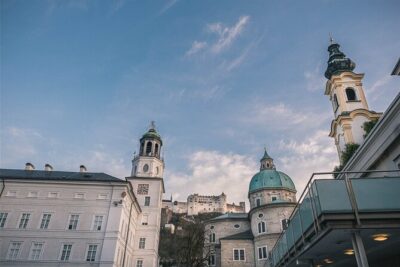
Salzburg Oldtown: Sightseeing Walking Tour with Licensed Local Guide
Read our review →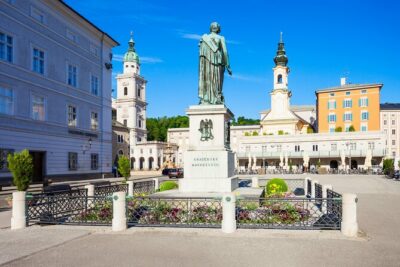
Salzburg Old Town Walking Tour, Mozart, Mirabell Gardens
Read our review →
Salzburg Old Town Highlights Private Walking Tour
Read our review →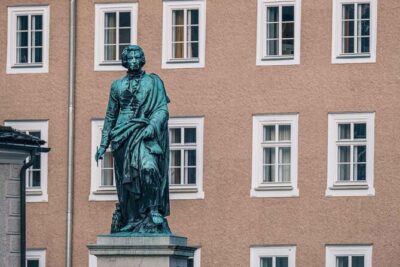
Salzburg Old Town, Fortress, Cathedral Private Walking Tour
Read our review →
Browse the lists this tour appears in