

Reviewed · WALKING TOURS IN SALZBURG
Salzburg Introduction Walking Tour
Salzburg’s old town makes the most sense when someone connects its medieval lanes, archbishop’s squares, Mozart stories, salt trade, and Sound of Music locations into one clear tale. This walking tour does that on foot, with guides such as Lisa, Liza, Claudia, and Astrid bringing local knowledge and personal perspective.
I like the small-group format, which can become nearly private when few people book. I also like the blend of major sights and less obvious details, from passageways in Getreidegasse to Salzburg’s old medical traditions and the real von Trapp family story.
The main caution is the tour’s length and group size description. It is presented as about 2.5 hours, while the included details call it a 3-hour walk, and the maximum is described as either six or eight people. Confirm the current details when booking.
Key points at a glance
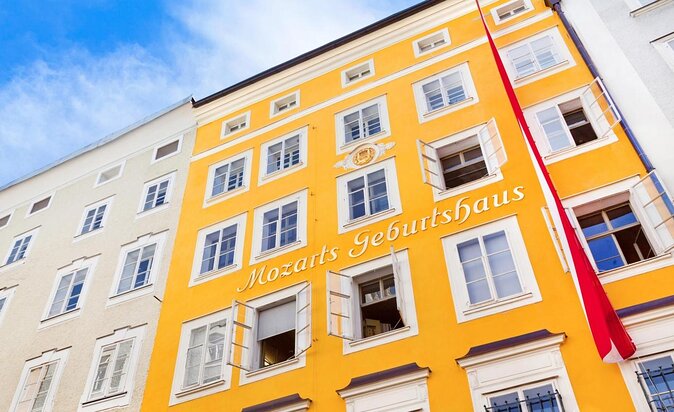
- Getreidegasse and the Burgher Town: Walk Salzburg’s crooked lanes, old passageways, and historic shopping street.
- Mozart beyond the famous name: See his birthplace and learn about Wolfgang, his sister Nannerl, and composer Michael Haydn.
- Baroque Salzburg: Cross the broad squares shaped by the city’s ruling archbishops and visit the area around the Residence.
- St. Peter’s Abbey: See one of Salzburg’s oldest religious foundations, dating to 696.
- Sound of Music with local context: Hear the true story of the von Trapp family, not just the movie version.
- Expert-led and flexible: Guides include professors, doctoral students, historians, journalists, art critics, and published authors.
Why this walk is a smart first look at Salzburg
Salzburg can seem almost too pretty at first. Church domes rise behind tidy squares, horse carriages pass through the center, and the Alps frame the city beyond. It is easy to admire the scenery without understanding why the city looks this way.
This tour gives you that framework. You move from the medieval commercial quarter into the spacious baroque center, then connect religion, politics, music, commerce, and film. That sequence matters because Salzburg’s character comes from the tension between its narrow merchant streets and the grand spaces built by powerful archbishops.
I would place this walk near the beginning of a Salzburg visit. It helps you decide which churches, museums, courtyards, and Mozart sites deserve a second look. One guide also offered practical suggestions for snacks, ice cream, and good places to return later, which is exactly the sort of help that turns an orientation walk into a useful part of your trip.
The meeting point is at Linzer Gasse 39, near public transportation, with a listed start time of 9:30 a.m. Morning departures are especially useful if you want the rest of the day free for a fortress visit, a museum, or a trip into the surrounding area. Afternoon departures are also available, according to the tour details.
More Walking Tours in Salzburg
- Salzburg 2.5-Hour Walking Tour: Mozart, Old Town & More
★ 4.2 · 987 reviews - Salzburg: Old Town, Mozart, & Mirabell Gardens Walking Tour
★ 4.8 · 461 reviews - Salzburg Oldtown: Sightseeing Walking Tour with Licensed Local Guide
★ 5.0 · 392 reviews
Getreidegasse and the medieval commercial quarter
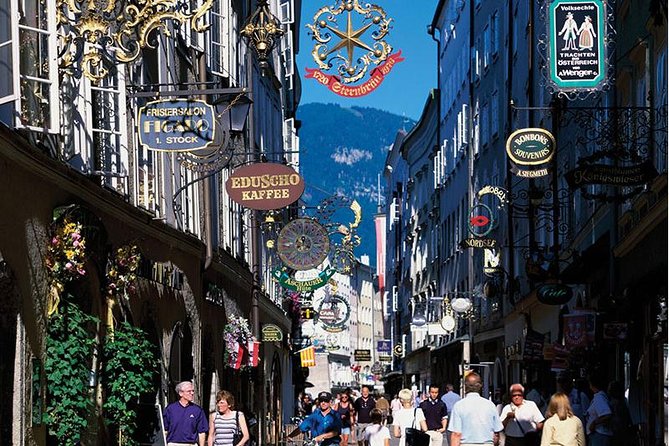
The walk begins in Salzburg’s Burgher Town, where narrow streets and small passageways create a very different mood from the grand squares nearby. Getreidegasse remains the commercial heart of the old town, but its historic shape has survived despite the modern shops.
Look up as you walk. The street is famous for its wrought-iron signs and tightly packed buildings, but the real pleasure is noticing the little connections between the main street and the lanes behind it. Your guide explains how this part of Salzburg worked as a town of merchants, craftspeople, and residents rather than simply as a postcard backdrop.
The discussion also reaches Salzburg’s salt commerce. Salt helped shape the city’s wealth and influence, so this is an important piece of the story. You begin to see that Salzburg’s elegance was not created by music alone. Trade helped pay for the buildings and institutions that still define the center.
The walking pace is generally comfortable, but you should expect a substantial amount of time on your feet. One person recorded more than 10,000 steps during the visit. The pace was described as manageable, yet good shoes remain a sensible choice, particularly on older paved streets.
Baroque squares and the power of the archbishops
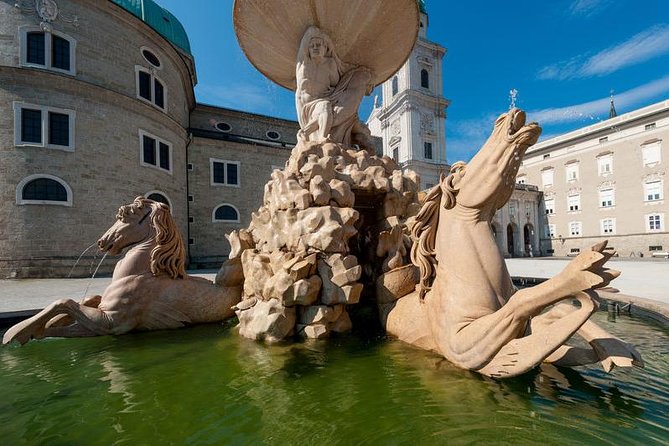
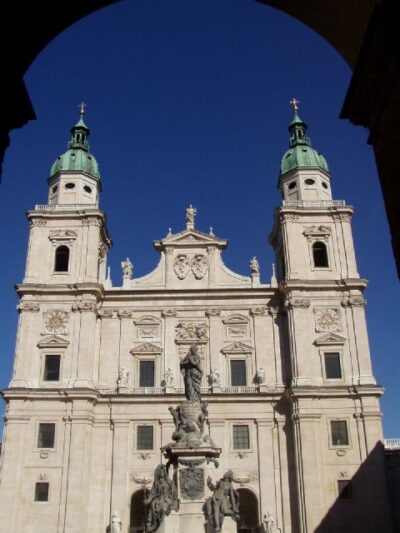
After the tight lanes, Salzburg opens into broad baroque squares. These spaces were shaped during the centuries when archbishops ruled the city as both religious and political leaders.
This change in scale is one of the tour’s strongest visual lessons. In Getreidegasse, buildings press close together and the streets feel practical and medieval. In the baroque center, the spaces feel planned, theatrical, and authoritative. Your guide helps you read that difference as a statement of power.
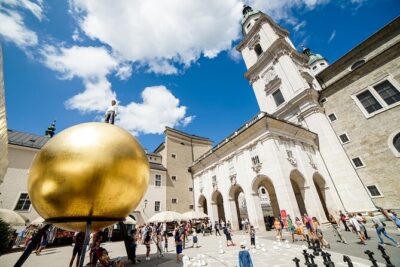
You pass the Archbishop’s Residence and the grand churches and buildings around the central squares. Several guides have focused on the city’s churches, architecture, and changing political life, so this part should suit you if you like buildings with a story behind them.
The tour does not include admission to the Mozart Residence, so this is mainly an exterior and neighborhood orientation. That is not a major problem if your goal is to understand the old town, but you will need a separate ticket if you want to go inside the residence.
Mozart’s birthplace and the city’s musical family
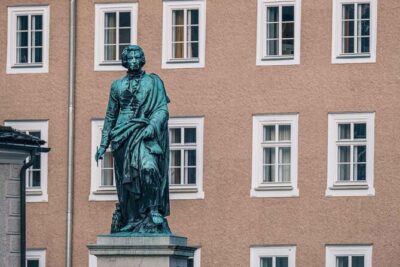
Mozart’s birthplace is one of the obvious stops, but the useful part is the wider story around it. You hear about Wolfgang Mozart’s childhood in Salzburg and about his sister Nannerl, whose role is often reduced when the family story is told too quickly.
The tour also brings in Michael Haydn, another major composer connected with Salzburg. This gives you a broader view of the city’s musical life rather than treating Mozart as the only important figure in town.
I like this approach because Salzburg’s connection with music is more than a single museum and a famous name. The guide links composers to the city’s institutions, churches, patrons, and daily life. You gain a better sense of why music took such a strong hold here.
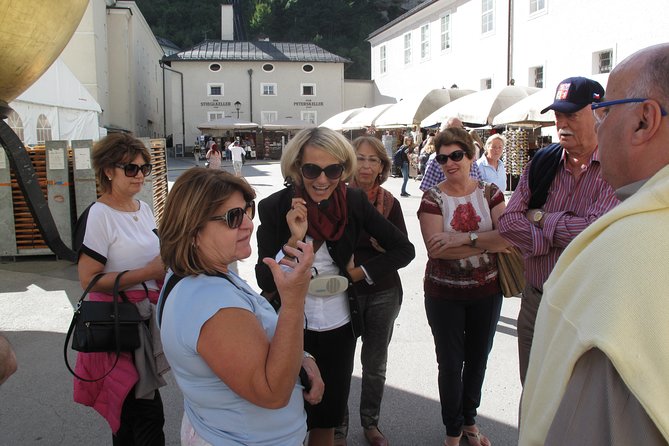
Guides have used photographs and local stories to make these subjects easier to follow. Liza, Lisa, Claudia, and other guides are described as able to combine formal history with personalities and local lore. That mix is helpful when you want facts that you can remember after the tour, not just a stream of dates.
A different way to spend an afternoon here:
- The Original Sound of Music Tour in Salzburg
★ 4.5 · 6,129 reviews - Salzburg: Original Sound of Music Tour
★ 4.8 · 5,059 reviews - From Salzburg: Half-Day Tour to Hallstatt
★ 4.6 · 3,596 reviews - Salzburg: Mozart Concert at Mirabell Palace
★ 4.8 · 3,498 reviews
Festival Halls and the city’s performance tradition
The walk passes Salzburg’s Festival Halls, an important stop for understanding the city’s continuing musical identity. You see where the performance tradition fits within the older city, rather than treating the festival as an isolated modern attraction.
Your guide can place the halls alongside the churches, archbishop’s buildings, and Mozart sites you have already seen. That creates a useful through line from courtly music and sacred performance to Salzburg’s role as a major cultural destination today.
This is also a good place to ask questions. The tour is offered in English, and the guides are selected from academic and publishing backgrounds. Their professional experience should appeal to you if you want more than a basic list of dates and photo stops.
Still, the experience depends on the individual guide. Most of the available feedback praises guides for clear explanations, humor, patience, and strong English. One less favorable experience found the narration fragmented and wished for a better overall outline. If you prefer a tightly chronological lecture, tell your guide early. If you like questions and conversation, the small format should work well.
St. Peter’s Abbey and Salzburg’s older roots
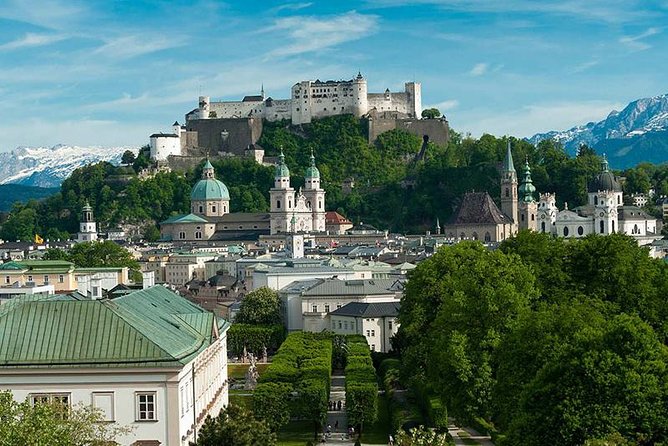
The route continues toward St. Peter’s Abbey, the Benedictine monastery founded in 696. This is one of the places where Salzburg’s age becomes tangible.
The abbey helps explain the city before its later baroque makeover. Religious communities played a major role in education, culture, medicine, and public life, and the guide discusses Salzburg’s medical innovations as part of the wider story.
You will likely spend time around the abbey and its surrounding buildings rather than treating this as a full indoor museum visit. The value is in seeing how the monastery fits into the old town and how its long history connects with Salzburg’s religious identity.
One particularly memorable account involved entering the chapel at Nonnberg Abbey while a choir rehearsed. That specific moment cannot be promised, and Nonnberg is not presented as a guaranteed stop, but it shows the sort of local detail that may appear when conditions and timing allow. Ask your guide about nearby religious sites if that subject interests you.
The real von Trapp story behind The Sound of Music
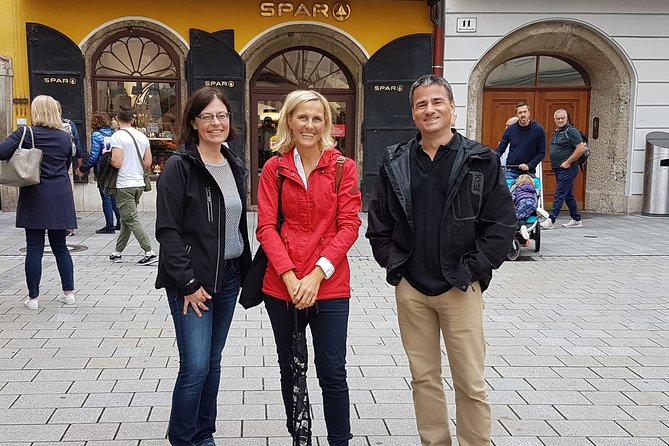
You will hear about the von Trapp family and the real events behind The Sound of Music. This is not simply a film-location checklist. The guide explains the family’s life and their status as refugees during the Second World War, giving the story a serious historical frame.
That distinction is valuable because the movie is central to Salzburg’s image, yet the real family story is more complicated than the polished musical version. A local Austrian perspective can help you separate filmed scenes, popular myths, and historical fact.
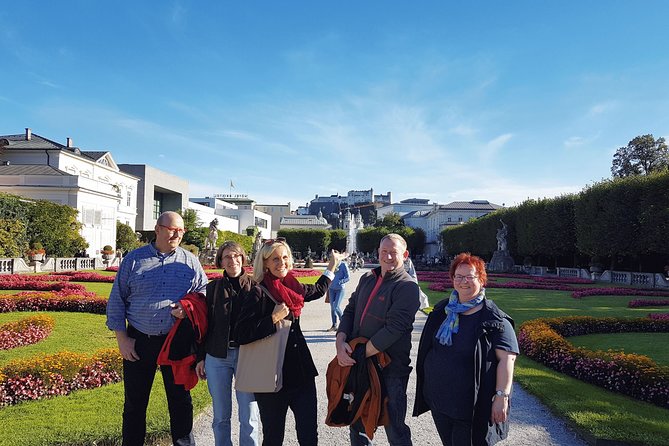
You may also hear about filming locations in the old town and receive suggestions for places to revisit. One guide even showed the best places to stand in a garden, while another pointed out locations that became useful stops later in the visit.
If The Sound of Music is your main reason for visiting Salzburg, this walk gives you a solid introduction but is not a substitute for a dedicated movie-location tour. If you want a wider understanding of Salzburg, the film material is nicely balanced with architecture, politics, commerce, and music.
What the small group changes
The advertised format is limited, with information describing a maximum of six people in one place and up to eight in another. That discrepancy is worth checking before you pay, but either figure is far smaller than a typical city walking group.
Small numbers matter here. You can ask why a building looks a certain way, stop for clarification, and request more Mozart, more architecture, or more Sound of Music material. Several guides adjusted the walk around the group’s interests, and some departures turned into tours for only two people.
A small group also makes the pace feel less rigid. Guides have stopped in shaded areas during hot weather and found places to sit while explaining a site. That is a real advantage in Salzburg’s summer heat, when bright squares can become tiring.
Do not mistake small-group touring for effortless sightseeing. You still walk for several hours, and the route covers much of the historic center. If you have limited stamina, tell the guide at the start so the pace and stopping points can be handled sensibly.
Guide quality and the value of expert explanation
The tour provider presents its guides as professors, doctoral students, historians, journalists, art critics, and published authors. The names that appear in guide feedback include Lisa, Liza, Claudia, Astrid, Natalie, Gabe, and Peter.
The strongest pattern is clear: guides explain Salzburg with warmth and personality. They answer questions, add local customs, and connect major figures to ordinary city life. Several guides were also praised for excellent English, humor, patience, and thoughtful attention to weather and comfort.
The most useful guide may not be the one who gives the most facts. A good guide gives you a structure, then adapts it. Natalie tailored the walk to the group’s interests, while another guide worked around a train delay and still completed a strong introduction. Those details suggest flexibility, though you should not assume a delayed start can always be accommodated.
There is one fair limitation. Scholarly guides can sometimes provide many details before giving the larger picture. If you need a clear map of Salzburg’s timeline, ask for that overview at the beginning. It can make the later stories easier to place.
Is $180.21 a fair price?
At $180.21 per person, this is not a budget walk. The price makes the most sense when you value a highly informed guide and a genuinely small group rather than a quick orientation with a large crowd.
The value improves if two or three people book together and the group remains small. You are paying for about 2.5 hours, though the included description also says 3 hours, plus a guide with an academic or professional background. For a private-feeling experience, especially when only two people book, that can be reasonable.
The price does not include food, drinks, hotel pickup, hotel drop-off, or admission to the Mozart Residence. You should budget separately for those items. Since the tour stays in the historic center, the lack of hotel transport is less troubling than it would be for a countryside excursion.
The most practical way to judge the cost is to ask what you want from your first Salzburg morning. If you want context, questions answered, and a route that helps you plan the rest of the stay, the fee may be worthwhile. If you mainly want quick photographs of the main sights, you can see much of the old town without paying for a guide.
Timing, comfort, and booking advice
The listed start time is 9:30 a.m., with morning and afternoon departures available. I would choose the morning if you want cooler conditions and a full afternoon afterward. An afternoon start may suit you better if you arrive late or prefer a slower morning.
Wear comfortable shoes and bring water, since the walk can reach 10,000 steps. Guides have been attentive to heat, moving explanations into shaded areas or offering places to sit, but weather planning remains your responsibility.
Confirmation is provided at booking, and most people can take part. The meeting point is near public transportation. Free cancellation is available up to 24 hours before the start time, but changes or cancellations inside that window are not accepted for a refund.
Who should book the Salzburg Introduction Walking Tour?
I would choose this walk if you are visiting Salzburg for the first time, enjoy history, or want to understand why the old town looks the way it does. It is also a good fit if Mozart and The Sound of Music interest you but you want both subjects placed in a wider local setting.
Families with older children may appreciate the mix of composers, movie stories, churches, and narrow streets. Couples and small groups can benefit most from the flexible format, especially if the booking produces a tour for only two to four people.
I would hesitate if you dislike extended walking, want extensive interior visits, or need a strictly timed itinerary. The tour is primarily an outdoor orientation, and the exact length and maximum group size should be confirmed before booking.
Should you book it?
Book this Salzburg walking tour if you want an expert-led introduction with room for questions and a serious look at the city behind the pretty façades. Its best features are the small group, the mix of medieval and baroque Salzburg, and the guides’ ability to connect Mozart, Michael Haydn, the von Trapp family, religion, commerce, and politics.
Skip it if your main goal is a low-cost stroll or a dedicated Sound of Music filming tour. For most first visits, though, this is a useful way to get your bearings fast and make the rest of Salzburg easier to understand.
FAQ
Where does the Salzburg Introduction Walking Tour start?
The listed meeting point is Linzer Gasse 39, 5020 Salzburg, Austria.
Where does the tour finish?
The end point is listed as Salzburg, Austria. A more precise finish location is not provided.
What time does the tour start?
The listed start time is 9:30 a.m. Morning and afternoon departures are available.
How long does the walking tour last?
The tour is described as approximately 2.5 hours. The included details also describe it as a 3-hour walk, so confirm the current duration when booking.
What language is the tour offered in?
The tour is offered in English.
How large is the group?
The tour is described as a small-group experience, with one description listing a maximum of six people and another listing a maximum of eight travelers. Confirm the current limit before booking.
Is hotel pickup included?
No. Hotel pickup and drop-off are not included.
Is admission to the Mozart Residence included?
No. Admission to the Mozart Residence is not included.
Are food and drinks included?
No. Food and drinks are not included in the tour price.
Can I cancel for a full refund?
Yes, if you cancel at least 24 hours before the experience start time. Cancellations or changes made less than 24 hours before the start time are not refunded.
Recently added around Salzburg
- From Vienna: Austrian Lakes and Salzburg Private Tour★ 5.0 · 3 reviews
- Salzburg On the Traces of Mozart Private Tour★ 4.5 · 3 reviews
- Salzburg & “The Sound of Music” Full Day Driver-Guided Tour★ 5.0 · 3 reviews
- Salzburg für Salzburger★ 5.0 · 3 reviews
- Salzburg “Sound of Music” Private Driver-Guided Tour★ 5.0 · 3 reviews
- Private Tour: Discover Salzburg and the Stunning Lake District★ 5.0 · 3 reviews
- Private Bavarian Mountain Tour★ 4.3 · 3 reviews
- MONDSEE: The Strudelgirl – bake your Apple Strudel Dream★ 5.0 · 3 reviews
Walking Tours in Salzburg, compared.
Salzburg 2.5-Hour Walking Tour: Mozart, Old Town & More
Read our review →
Old Town, Mozart, & Mirabell Gardens Walking Tour
Read our review →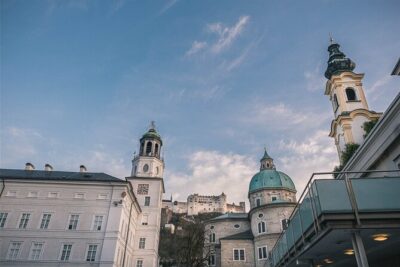
Salzburg Oldtown: Sightseeing Walking Tour with Licensed Local Guide
Read our review →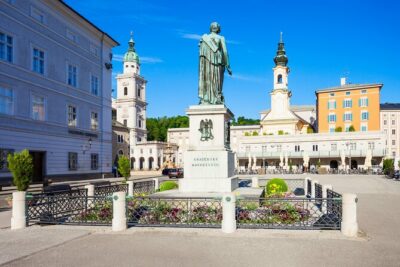
Salzburg Old Town Walking Tour, Mozart, Mirabell Gardens
Read our review →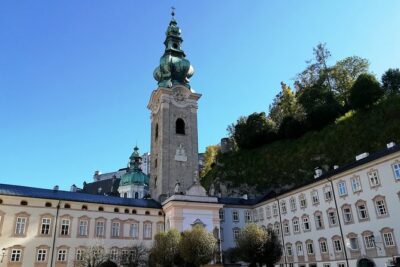
Salzburg Old Town Highlights Private Walking Tour
Read our review →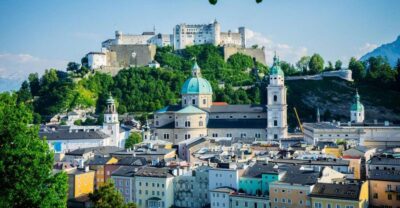
Salzburg Old Town, Fortress, Cathedral Private Walking Tour
Read our review →Browse the lists this tour appears in