
Reviewed · VIENNA TOURS
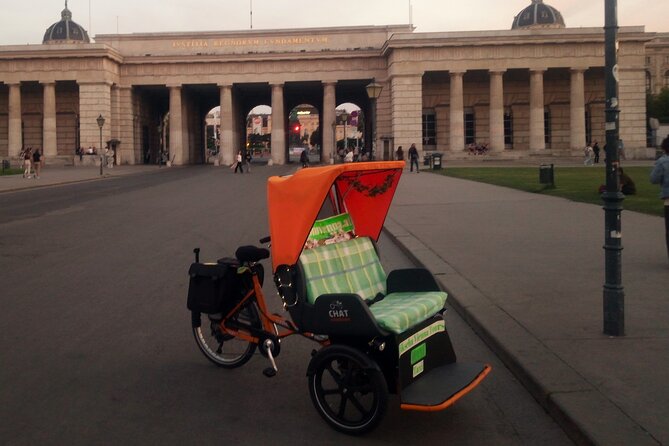
RAXI (E-Rickschaw) big private Vienna tour
Vienna is a grand city, but its sights are spread across busy streets, broad avenues, parks, and river districts. This private RAXI electric rickshaw tour gives you a relaxed way to connect the famous center with less expected corners, without committing to a long walking route.
I like the freedom to shape the route around your interests, and I like the personal service: guide Nicole can pick you up at your hotel and leave you wherever you wish. The main caution is the ride itself. Vienna has construction zones and uneven patches, so the bumps may be uncomfortable for older backs and hips.
Key points at a glance
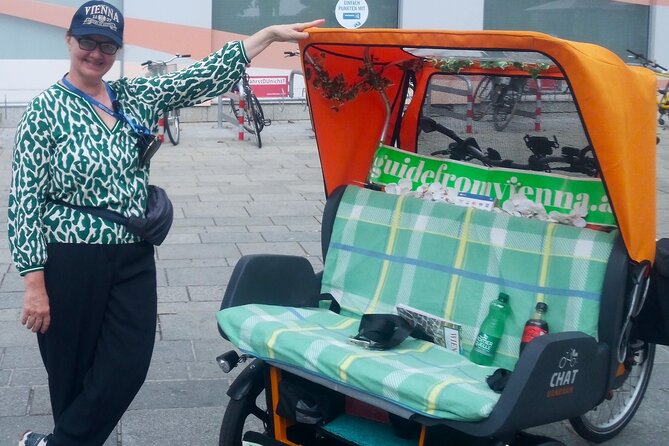
- Private for two people: The RAXI carries a maximum of two passengers with a combined weight limit of 180 kilograms.
- A route built around you: Focus on imperial Vienna, architecture, local stories, the Danube, or a mix of all four.
- Hotel pickup and drop-off: You can start at your hotel and choose a final drop-off point instead of returning to the Hofburg.
- More than central Vienna: The route can include the Prater, Hundertwasserhaus, the Old Danube, and Danube Park.
- Clear guided commentary: Headsets let you hear the historical explanations while the rickshaw moves through traffic.
- Good weather matters: The tour can be rescheduled or refunded if poor weather makes the ride impractical.
Why a RAXI is a useful way to see Vienna
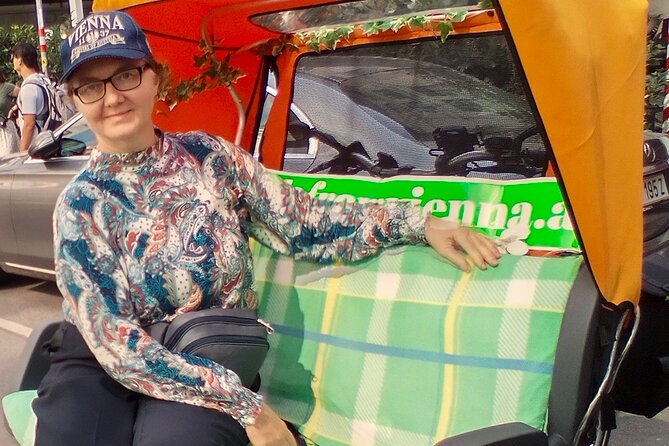
The appeal here is simple: you see Vienna at street level, but you do not have to cover the city on foot. An electric rickshaw moves slowly enough for you to take in façades, parks, monuments, and passing streets, while saving your legs for museums and evening meals.
That makes the tour especially useful early in a Vienna visit. You can get a broad sense of the city, learn which districts deserve more time, and ask Nicole to adjust the route as your interests become clearer. It is also a sensible option if you are tired after a long arrival day or prefer not to manage several tram and subway connections.
This is not a fixed sightseeing circuit with a large group and a loud guide. Only your party participates. Before departure, you discuss the route, either in advance by email or shortly before setting off. You can request architecture, history, classic landmarks, or less familiar places. If you have no firm plan, Nicole can suggest a route.
The listed price is $195.81 per group of up to two people. That is not cheap for 90 minutes, but it is easier to justify when two people share the cost and use the hotel pickup, private routing, and personal commentary. You are paying for convenience and flexibility, not simply transport between monuments.
A few more Vienna half-days to weigh up
- Vienna: Vivaldi’s Four Seasons Concert in Karlskirche
★ 4.7 · 14,951 reviews - Vienna: Spanish Riding School Training
★ 3.9 · 9,281 reviews - Vienna: Skip-the-cashier-desk-line Giant Ferris Wheel Ride
★ 4.5 · 7,859 reviews
From the Hofburg to Vienna’s imperial center
The stated meeting point is Hofburg, in central Vienna, though hotel pickup is included. Starting near the Hofburg places you close to the city’s ceremonial heart, with grand buildings, formal squares, and streets leading toward the Ringstraße.
The Hofburg area is a strong opening because it quickly shows you the scale of Vienna’s former imperial center. A RAXI can bring you past major sights without asking you to walk from one end of the district to the other. You can also ask for more time around the places that interest you most, though the short tour means the guide must balance stops with driving.
The Vienna State Opera and Ringstraße fit naturally into a classic city route. The Ringstraße is not one single attraction, but a broad boulevard lined with major public buildings and monumental architecture. From a slow-moving rickshaw, you get a useful street-level view of the city’s proportions and façades.
You should think of this part as an introduction rather than a full architectural study. The tour lasts about an hour and a half, and travel time counts toward the experience. If you want detailed discussion of every building, you will need a longer walking tour or a separate museum visit.
Herrengasse, Griechenbeisl, and the old city
A private route can also take you deeper into central Vienna, including Herrengasse and smaller historic streets that are easy to miss when you follow only the broad tourist avenues.
Griechenbeisl is one of the more distinctive suggested stops. It is associated with the figure of Augustin, the musician and entertainer linked to Vienna’s old tavern culture. This gives the tour a different tone from a parade of palaces. You are hearing about a place tied to music, local memory, and everyday city life.
The nearby Greek cathedral adds another layer. It is a reminder that Vienna has long been shaped by communities and traditions beyond the imperial court. You may find this section most rewarding if you ask for stories about the people and neighborhoods behind the grand architecture.
Narrow central streets can also be where the RAXI’s limits become clear. Vienna’s historic center includes paving, traffic, and occasional building work. The vehicle has shock absorbers, but it will not feel as smooth as a tram or car on every surface. If you have a sensitive back, tell Nicole before departure so the route can favor smoother streets where possible.
The Prater and Hundertwasserhaus
The green Prater offers a change from Vienna’s formal center. This large recreational area is closely linked with the city and can form part of the route toward Hundertwasserhaus.
The Prater section is useful because it shows you a more open side of Vienna. Instead of palace fronts and crowded central streets, you get trees, paths, and a more relaxed setting. The tour only promises a small part of the Prater, so do not expect a complete visit to the entire park.
Hundertwasserhaus brings a sharp change in architectural style. Its irregular forms and colorful surfaces are far removed from the measured lines of the Ringstraße. The building is associated with Friedensreich Hundertwasser and is one of the city’s most memorable modern sights.
The tour also refers to an early ecological building in Europe. The supplied information does not specify the exact site or how long you stop there, so ask Nicole to clarify which building is included in your chosen route. That small conversation matters because the tour is customized rather than locked to one guaranteed sequence.
If architecture is your main interest, say so clearly when booking. You can ask for more time around Hundertwasserhaus and related modern buildings, while giving up some of the river or imperial stops. The private format makes that trade-off possible.
A different way to spend an afternoon here:
- Vienna: Schönbrunn Palace & Gardens Skip-the-Line Tour
★ 4.7 · 7,739 reviews - Vienna: Light of Creation Votive Church Immersive Light Show
★ 4.8 · 6,779 reviews - Vienna Spanish Riding School Guided Tour
★ 4.7 · 6,765 reviews - Vienna: Classical Concert in the World-Famous Musikverein
★ 4.6 · 6,673 reviews
The Old Danube by electric rickshaw
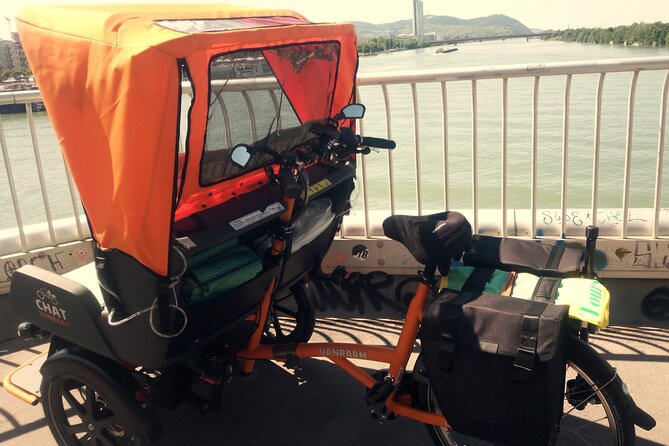
The Old Danube gives the ride a quieter, more natural pause. You can see part of the still naturally preserved waterway from a newer cycle path, a setting that feels far removed from the Hofburg and State Opera.
This is one of the tour’s most useful contrasts. Vienna is often presented through imperial buildings, but the city also includes waterways, parks, and open recreation areas. The Old Danube helps you see that broader picture without adding a demanding walk.
The exact amount of time beside the water depends on the route you agree on. Since the tour also covers central sights and Danube Park, you should not treat this as a full river excursion. It is a scenic part of a city overview.
The cycle path setting may also bring more uneven surfaces or shared movement with cyclists. For most people, that is part of the street-level appeal. If a smooth ride is your top concern, ask about road conditions before committing to a longer outer-city section.
Danube Park and the ship dock
Danube Park lies on the opposite bank of the ship dock and provides another open-air section of the ride. The RAXI offers an effortless way to pass through the park, which can be welcome after several central-city stops.
This part is less about checking off a single famous monument and more about seeing how Vienna uses its public spaces. You get a sense of the city beyond the old center, with room to breathe and a different view of the Danube area.
The tour description calls this an effortless journey through the park, but keep the 90-minute limit in mind. The more time you spend in the Danube districts, the less time remains for Herrengasse, the Hofburg, or the Ringstraße. A customized tour is always a matter of choosing priorities.
If you are staying near the center and want to finish somewhere other than the Hofburg, ask for drop-off at the end of the ride. The ability to choose your final point can save you a return trip and make the tour fit neatly before dinner or another appointment.
Commentary, headsets, and the personal guide
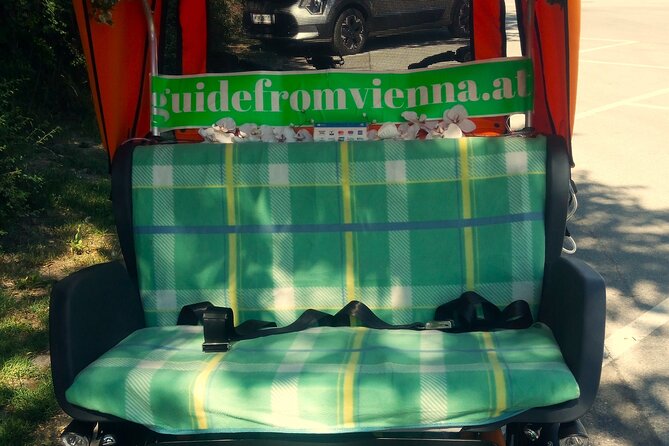
The headsets are a practical feature, not a gimmick. Vienna traffic can make ordinary conversation difficult, especially when the rickshaw is moving through larger roads. With the headset, you can follow the historical explanations without constantly asking the guide to repeat herself.
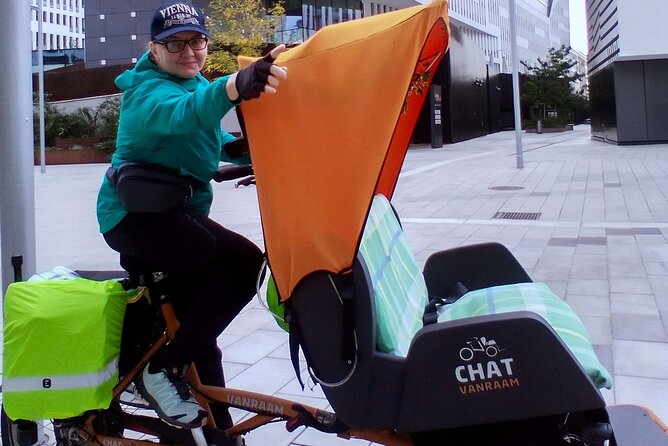
Nicole receives particular praise for her warm, personal approach. One evening tour began with hotel pickup and became such an enjoyable outing that she extended the ride. You should not assume an extension is guaranteed, but the detail suggests that the experience can feel personal rather than mechanically timed.
The guide’s role matters even more because the route is flexible. A fixed route needs only a standard script. Here, Nicole must connect your interests with the available time, explain why a place matters, and decide when to keep moving.
The best way to get more from the commentary is to arrive with two or three clear interests. You might ask for imperial history plus modern architecture, or central Vienna plus the Danube. A broad request such as show us everything can lead to a rushed ride.
Comfort, weather, and the practical limits
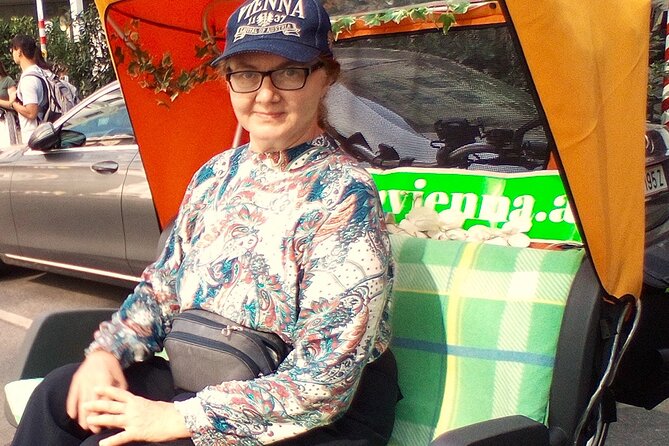
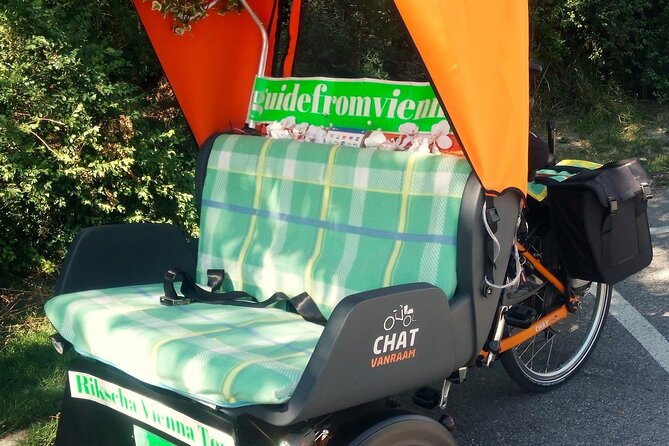
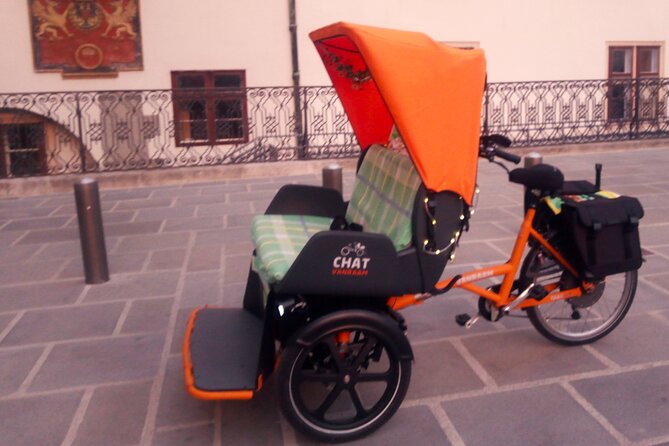
The RAXI is designed for two people, with a combined passenger weight limit of 180 kilograms. That limit applies to both passengers together, so check it before booking if needed.
Most people can participate, and the tour is near public transportation. Still, the supplied details do not promise a special accessibility setup beyond avoiding a long walk. The vehicle can handle the sightseeing route, but the bumps of Vienna’s streets may matter if you have mobility or comfort concerns.
One person specifically found the ride hard on old bones over bumps. That is a fair warning, even though the vehicle has shock absorbers. Construction sites can change the route and surface conditions, and neither the guide nor the rickshaw can control every temporary road problem.
Good weather is required. If the tour is canceled because of poor weather, you can choose a different date or receive a full refund. If you cancel yourself, you need to do so at least 24 hours before the start time for a full refund. Changes or cancellations inside that window are not accepted.
The tour does not provide food or drinks. Plan accordingly, particularly if you choose an evening departure or expect the route to run close to the full time. Museum admission is also separate, with tickets listed at about 10 to 15 euros. You should buy those tickets directly from the museum.
Who will get the most from this tour
I would consider this tour for couples, first-time visitors, older adults who want to limit walking, and anyone who enjoys a private conversation rather than a large group. It can also work well for a short Vienna stay because it links central landmarks with places you might not reach on your own.
It is a good fit if you want to see the city from outside and get oriented. It is less suitable if you want long indoor visits, detailed museum guiding, or a perfectly smooth ride.
Families should check the two-person limit carefully. This is not a group vehicle, and the experience is built for one party of two. Solo visitors can also book it, but the price is still charged per group rather than per seat.
The tour is especially appealing if you already know what you want. Ask for architecture and you can emphasize Hundertwasserhaus and the ecological building. Ask for history and you can focus on the Hofburg, Herrengasse, Griechenbeisl, and the Greek cathedral. Ask for a broad overview and you can combine the central district, Prater, Old Danube, and Danube Park, though each stop will receive less time.
Should you book the Vienna RAXI tour?
Book it if you value private routing, hotel pickup, and easy sightseeing more than a low per-person price. At $195.81 for two people, it is a premium short tour, but the cost includes a dedicated vehicle, a route shaped around your interests, a map, commentary through headsets, and drop-off flexibility.
Skip it if you dislike open-air rides, need a very smooth journey, or want to spend most of your time inside museums. The bumps are a real consideration, and the weather can cancel the outing.
For the right visitor, this is a smart way to connect Vienna’s famous center with its parks, waterways, and modern architecture. Tell Nicole what you care about, keep your route realistic, and treat the ride as a personal city introduction rather than a substitute for every museum and walking tour.
FAQ
How long does the Vienna RAXI tour last?
The tour lasts approximately 1 hour and 30 minutes. Travel time is added to the total duration, so you should confirm the exact timing when arranging your route.
How many people can ride in the RAXI?
The electric rickshaw carries two people. The combined weight of both passengers cannot exceed 180 kilograms.
Can the tour pick me up at my hotel?
Yes. Hotel pickup and drop-off are included. You can also choose a final drop-off point instead of returning to the Hofburg.
Where does the tour start?
The listed starting point is Hofburg, 1010 Vienna. Guests can also arrange a different end point.
Can I choose the sights and route?
Yes. You can discuss your wishes before departure or send them by email. The route can focus on architecture, history, classic sights, lesser-known places, or a combination.
Are museum tickets included?
No. Museum admission is not included. Museum tickets are listed at approximately 10 to 15 euros, and you should obtain them directly from the museum.
Are food and drinks provided?
No. The tour does not provide food or drinks, so plan your own refreshments before or after the ride.
What happens if the weather is poor?
The experience requires good weather. If it is canceled because of poor weather, you can choose another date or receive a full refund. You can cancel for a full refund if you do so at least 24 hours before the start time.
Recently added around Vienna
- Vienna: Private tour Mauthausen and Linz★ 4.1 · 3 reviews
- 2-Day Prague Tour from Vienna with private Transfers and Lunches★ 5.0 · 3 reviews
- Vienna Self Guided Sherlock Holmes Murder Mystery Game★ 4.5 · 3 reviews
- Vienna Private Schönbrunn Palace Tour, Extra Rooms and Gardens★ 5.0 · 3 reviews
- Small-group Vienna Wine Tour★ 5.0 · 3 reviews
- Salzburg and Lake Region Private Day Trip from Vienna★ 5.0 · 3 reviews
- True Crime mobile puzzle rally Vienna★ 4.0 · 3 reviews
- Exploring the Gutenstein Alps★ 5.0 · 3 reviews
Vienna Tours, compared.

Vivaldi’s Four Seasons Concert in Karlskirche
Read our review →

Skip-the-cashier-desk-line Giant Ferris Wheel Ride
Read our review →
Schönbrunn Palace & Gardens Skip-the-Line Tour
Read our review →
Light of Creation Votive Church Immersive Light Show
Read our review →

Skip-the-Line Sisi Museum, Hofburg and Gardens Tour
Read our review →