
Reviewed · AUSTRIA
From La Paz: Austria Peak One-Day Climbing Trip
Austria Peak is a serious one-day climb, not a gentle mountain walk. From Chira Khota Lake, you climb to 17,388 feet, where the reward is a wide view of the Cordillera Real, glacier-covered peaks, and, on a clear day, Lake Titicaca. I like that this trip gives you a close look at Bolivia’s high Andes without requiring technical climbing skills. I also like its value: transport, a professional guide, clothing, trekking poles, lunch, and hotel transfers are included.
The catch is the altitude. You may be fit and still feel sick above 16,000 feet. One couple had to skip the summit because of nausea, but enjoyed a lower hike around the lake instead. This is a long, demanding day, and you need two to three days of prior acclimatization between 9,840 and 16,400 feet.
Key points to know before you book
- The summit reaches 17,388 feet: Austria Peak is high enough to test your breathing, legs, and altitude preparation.
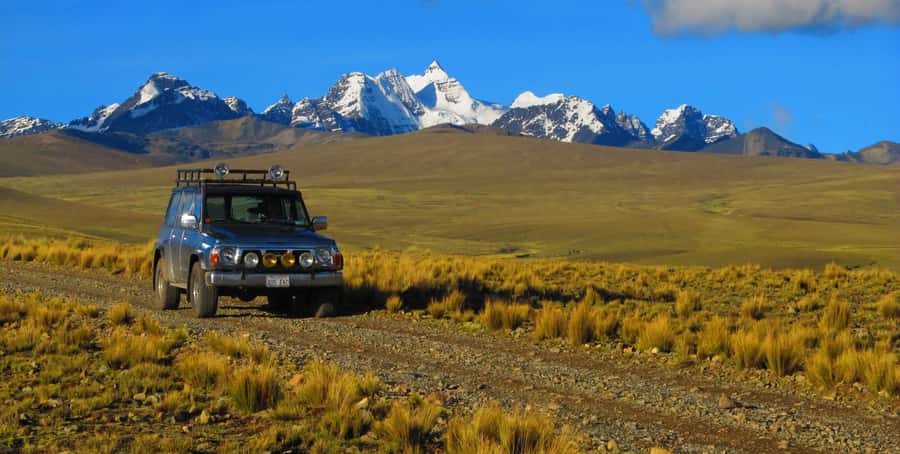
- The setting is the Condoriri range: Expect mountain lakes, ice, glacier views, llamas, sheep, and broad Cordillera Real scenery.
- No technical climbing skills are required: You need a good fitness level, but this is a trekking ascent rather than a rope-and-ice climb.
- The day is physically long: Allow six to eight hours on foot, plus a substantial drive from La Paz and back.
- The guide controls the pace: Patricia and Andrés have led successful climbs, with patience and steady timing noted as especially useful.
- A lower-altitude alternative may be possible: If the height catches up with you, the area around Chira Khota still offers a worthwhile hike.
What you are really signing up for
At $188 per person, this is not a cheap sightseeing outing, but it covers many costs that can quickly add up on a high-altitude day. You get transport from central La Paz, a professional guide, a boxed lunch with drinks, outer clothing, trekking poles if needed, and a first-aid kit.
That package matters here. You are not simply paying for a trail transfer and a walk. You need a vehicle capable of reaching the mountain road, equipment suited to cold conditions, and a guide who can judge pace and altitude symptoms. The trip can also be arranged as a private or small-group experience, which is useful when everyone in the party has a similar fitness level.
I see this excursion as most useful for three kinds of people. You might use it as a preparation climb before Huayna Potosí or another higher summit. You might want a first 5,000-meter mountain experience without technical climbing. Or you may simply want a demanding day in the Cordillera Real, with the option of stopping below the summit if your body says no.
That last point is important. Reaching the top is not the only measure of a good day here. At these heights, turning around is sensible mountain judgment, not failure.
Other Austria half-days people book on the same trip:
- Vienna: Vivaldi’s Four Seasons Concert in Karlskirche
★ 4.7 · 14,951 reviews - Vienna: Spanish Riding School Training
★ 3.9 · 9,281 reviews - Vienna: Skip-the-cashier-desk-line Giant Ferris Wheel Ride
★ 4.5 · 7,859 reviews
Leaving La Paz for the Condoriri mountains
Pickup is provided in or near the city center, with the stated meeting point at Av. Felipe Reque L 127. You should wait in your hotel lobby 10 minutes before the scheduled time. Pickups outside the central area cost extra.
The drive first crosses La Paz and heads through El Alto. The city is known for fast growth, and the roadside view is filled with new, unfinished brick construction. It is a rough-edged urban scene, but it gives you a quick look at how the high plateau is changing.
Beyond El Alto, the view opens toward the Cordillera Real. That shift is one of the pleasures of the morning. Dense city streets give way to wide mountain country, and the snow and ice of the range become easier to see. After Palcoco, the route leaves the main road and follows dirt tracks toward the Condoriri valley.
The exact driving time depends on conditions, but the day includes a lengthy road transfer. The advertised total drive is two to three hours, while one account described roughly six hours of driving across the complete out-and-back day. Either way, you should expect a long time in the vehicle, often on rough roads, before and after the climb.
This is not dead time. It is part of the trip’s geography. You watch La Paz disappear, pass through the high plateau, and reach a mountain area that feels far removed from the capital.
Chira Khota Lake and the first climb
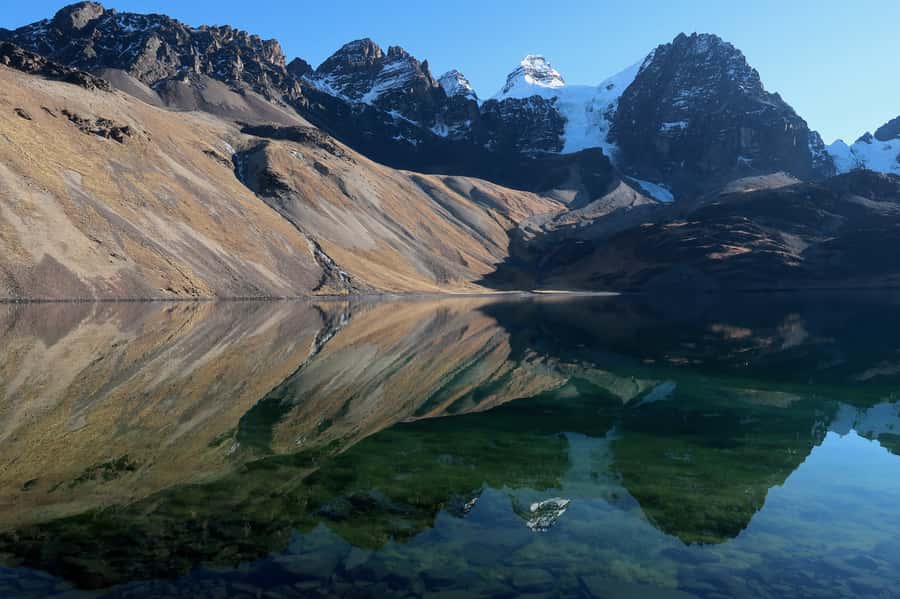
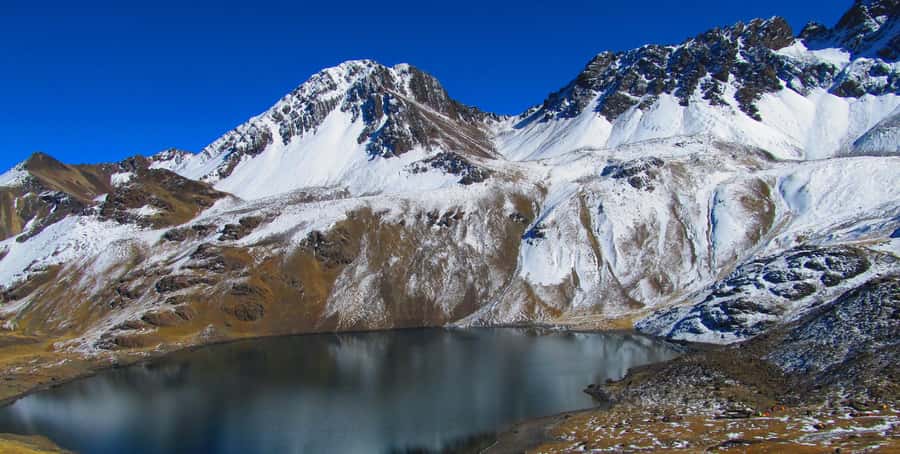
The vehicle takes you toward Laguna Chira Khota, the starting point for the hike. From there, the route turns onto a trail leading up toward Austria Peak.
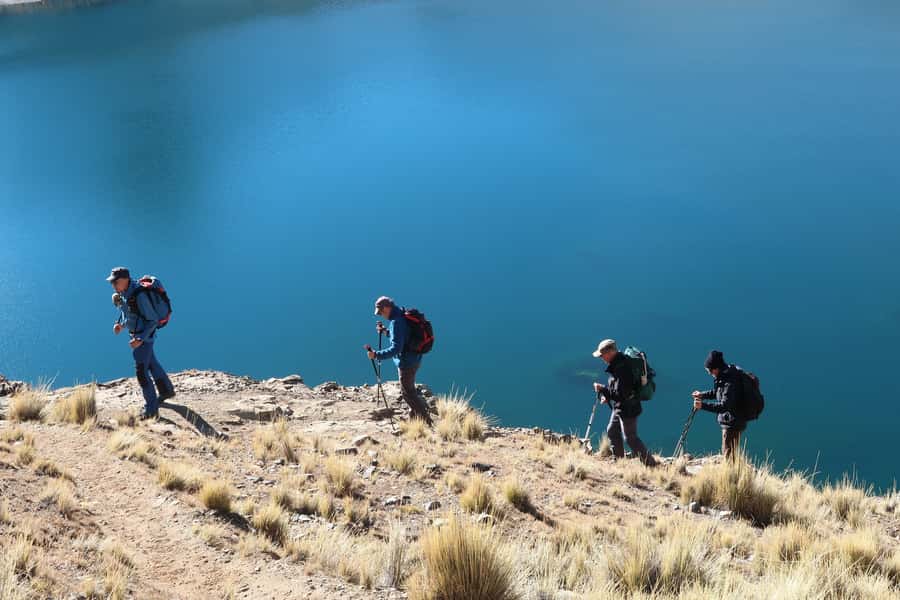
The lake gives you an attractive starting scene, but do not let the calm water fool you. You are already at serious altitude, and the summit rises far higher. The first stage is a gradual test of how your breathing responds. You may feel strong for the first part and then notice the height more sharply as the trail gains ground.
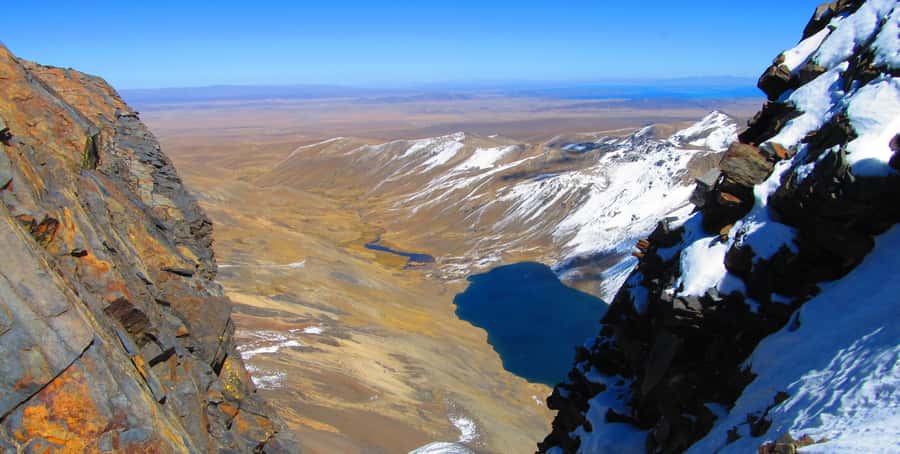
The setting changes as you climb. Condoriri’s lakes and peaks appear in different shapes and colors, while icy slopes and glacier views come closer. The route provides plenty of scenic stops, so your guide can set a pace that allows you to keep moving without burning through your strength too early.
A good pace matters more than speed. Patricia has guided this route with a measured rhythm, and Andrés has been praised for staying patient and calm when the altitude became difficult. You should expect your guide to make the key decisions about pace, rest, and whether continuing makes sense.
The trip includes clothing such as a jacket and pants, along with trekking poles if needed. That is helpful, especially if you are packing light in La Paz. Still, you should bring your own warm base layers and personal essentials. Included clothing is a practical safety net, not a substitute for preparing for cold, wind, and a full day outdoors.
The push toward 17,388 feet
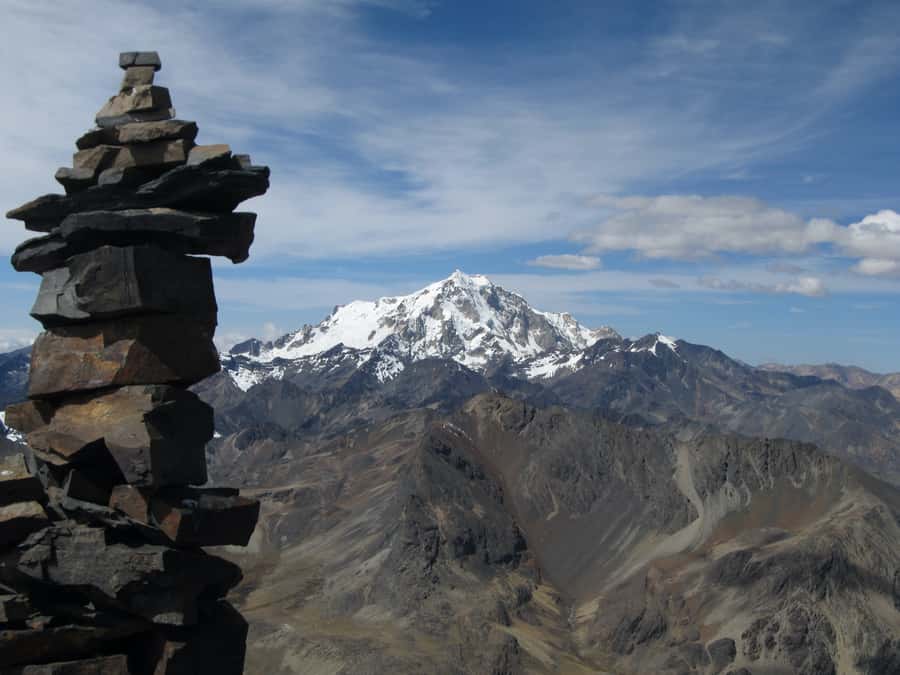
Austria Peak is often called Pico Austria. At 17,388 feet, it gives you a genuine high-mountain summit without requiring technical climbing skills. You do not need ropes or specialist mountaineering ability according to the supplied trip details, but you do need stamina and a head that responds well to altitude.
The final ascent is where the day becomes most demanding. Every step takes more effort at this height, and the cold can make your body feel slower. A good level of physical fitness is required, but fitness alone cannot predict your altitude response.
That uncertainty is the main risk. One physically fit couple had already spent five nights between 11,800 and 13,450 feet, yet one person became too nauseous to continue after reaching about 16,400 feet. The other felt fine. They stopped the summit attempt and completed a beautiful hike around the lake at about 14,100 feet instead.
This is a useful way to think about the tour. The guide can help you manage the climb, but no guide can guarantee that your body will accept the height. If you develop a severe headache, nausea, unusual weakness, or other altitude symptoms, tell the guide at once. The mountain will still be there, and the lower route can turn a failed summit attempt into a worthwhile day.
Some participants have needed close to nine hours of walking, especially when the descent and slow altitude pace are included. The stated hiking time is six to eight hours, but you should leave room for a longer day. The return can feel harder than the ascent because your energy is lower and the trail is still demanding.
A different way to spend an afternoon here:
- Vienna: Schönbrunn Palace & Gardens Skip-the-Line Tour
★ 4.7 · 7,739 reviews - Vienna: Light of Creation Votive Church Immersive Light Show
★ 4.8 · 6,779 reviews - Vienna Spanish Riding School Guided Tour
★ 4.7 · 6,765 reviews - Vienna: Classical Concert in the World-Famous Musikverein
★ 4.6 · 6,673 reviews
The summit views and what you can see
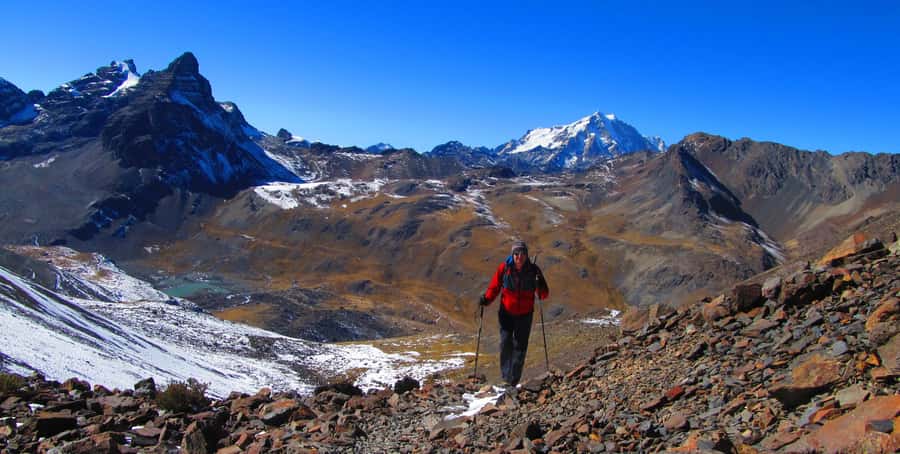
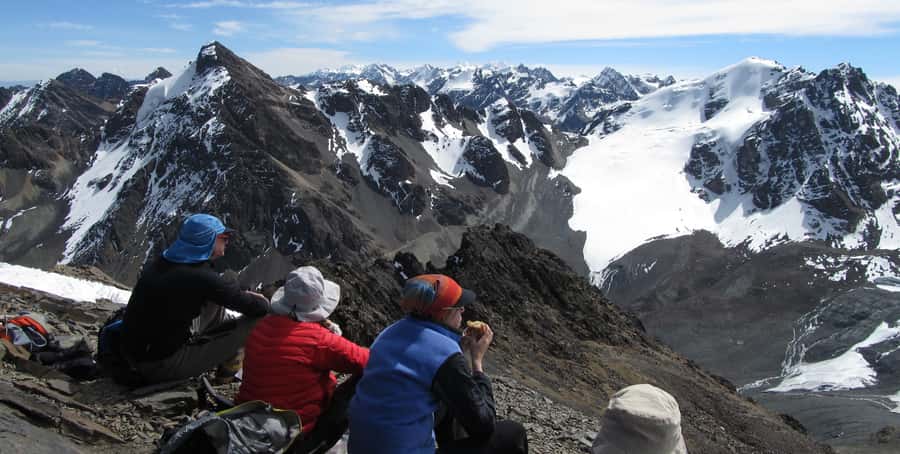
On a clear day, the summit gives you a 360-degree view over the surrounding mountains. You look across the Cordillera Real, with snowy summits, ice, high lakes, and wide open plateau scenery spread below.
The views are the trip’s great payoff, but they are not limited to the summit. Cascades, changing lake colors, icy peaks, llamas, and sheep can appear along the route. The scenery keeps shifting as you gain height, so even the slower sections have something to look at.
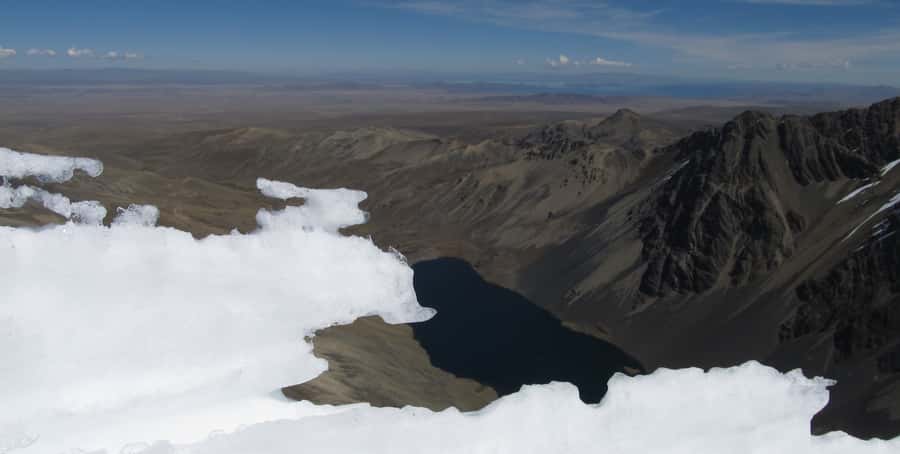
Lake Titicaca may be visible from the high viewpoints when conditions are clear. Do not book this solely for one guaranteed sightline, since mountain weather can obscure distant views. The closer scenery around Condoriri is reason enough to make the trip.
The quiet is another part of the appeal. The mountain route offers a calmer setting than the city, and the high peaks feel close and immediate. One successful ascent described the area as quiet, which fits the character of this excursion: it is a demanding outing in open mountain country, not a busy attraction with a constant stream of stops.
The descent is not an afterthought
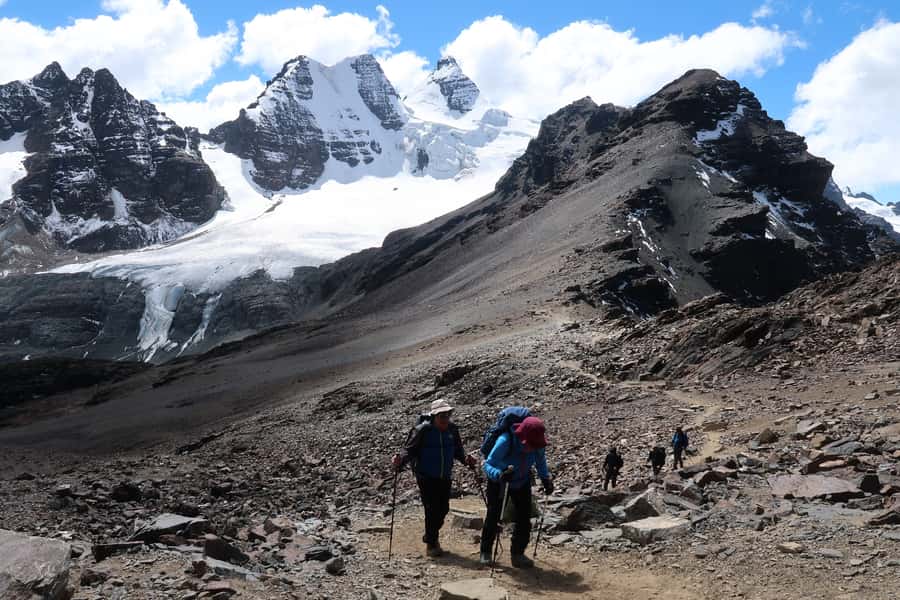
Many people focus on getting to the summit and underestimate the way down. Here, that would be a mistake. After you have spent your strength climbing, you still have to descend to the vehicle, often on tired legs and with a headache if the altitude has affected you.
Trekking poles can help with balance and reduce strain on the descent. They are included if needed, but you should ask the guide early rather than waiting until your legs are exhausted. Eat the boxed lunch and drink regularly, even if your appetite is low.
The descent also gives you a different view of the route. Peaks that seemed distant on the way up can now frame the trail, and the lakes become easier to appreciate when you are no longer concentrating on every uphill step.
At the end, the vehicle returns you to La Paz for hotel drop-off in the central area. After six to eight hours of hiking, you may be ready for a shower and bed rather than evening plans. One account described the full experience as physically draining but deeply satisfying, with the scenery providing a lasting reward.
Acclimatization is the deal breaker
You should not treat this as your first high-altitude activity after arriving in Bolivia. The operator advises two to three days between 9,840 and 16,400 feet before the climb. That preparation range is broad because people adjust at different rates, but the basic message is clear: arrive in the mountains gradually.
The fact that you can walk at 13,000 feet does not mean you will feel fine at 17,000 feet. Altitude illness is not a simple test of athletic ability. A fit person may struggle, while someone less athletic may manage the height better.
Acetazolamide, commonly known as Diamox, is listed as an option before the climb, with 125 milligrams in the morning and 125 milligrams in the evening given as the suggested pattern. Speak with a qualified medical professional before taking it, especially if you have any medical condition or take other medication.
This activity is not suitable for pregnant women, people with heart problems, people with high blood pressure, or people with mobility impairments. You also need to carry your passport or ID card, and a visa if your nationality requires one.
Is $188 a fair price?
I consider $188 reasonable if you need the full package. The price removes several practical headaches: finding transport to a remote trailhead, arranging a mountain guide, hiring warm clothing, sourcing trekking poles, and carrying lunch and basic first aid.
The value is strongest for visitors who do not already have local mountain contacts or suitable clothing. If you own all your gear and can arrange safe transport independently, the price may feel less attractive. The private or small-group option can also make the cost easier to justify if you want a personal pace and close attention from the guide.
A backpack is not included, though you can rent one as an add-on. Hotel pickup outside the city center also costs extra. Check those points before booking so the final cost matches your plans.
The tour includes free cancellation up to 24 hours before departure and a reserve-now, pay-later option. There is no refund for bad weather, so you should understand that the mountain schedule carries some weather risk.
Who should book this climb?
I would recommend Austria Peak to you if you have already spent several days at altitude, enjoy strenuous hiking, and want a first 5,000-meter summit without technical climbing. It is also a strong training day if Huayna Potosí is coming soon. One participant used it as preparation three days before that climb, which is a sensible way to use the outing.
You should think twice if you have just arrived in La Paz, dislike long vehicle transfers, or want a relaxed day of sightseeing. The route is physically demanding, the air is thin, and the total day can stretch well beyond the advertised hiking time.
You also need to be comfortable with a flexible definition of success. Some days end at the summit. Some end beside a lake at a lower altitude. Both can be good mountain days if you respect the conditions and listen to the guide.
My take on booking Austria Peak
Book this tour if you want a real high-altitude test, not a scenic stroll, and you can build in two to three days of acclimatization first. The Condoriri setting, glacier views, quiet trails, and broad views toward the Cordillera Real make the day memorable, while the included gear and transport keep the planning simple.
Skip it if your schedule leaves no room for altitude preparation or recovery. At $188, the trip is a fair buy for a properly prepared hiker, but it is not a bargain if you are hoping to reach the summit through determination alone. Your best chance of enjoying Austria Peak is to start slowly, dress warmly, eat and drink along the way, and let the guide decide when the mountain has asked enough of you.
FAQ
How high is Austria Peak?
Austria Peak reaches 17,388 feet, or about 5,300 meters.
How long does the hike take?
The trek is expected to take six to eight hours. One account described a nine-hour walking day, so you should allow extra time if the pace is slow or altitude symptoms appear.
Do I need technical climbing skills?
No technical skill is required, but you do need a good level of physical fitness and prior acclimatization.
How much acclimatization is recommended?
Two to three days between 9,840 and 16,400 feet is stated as sufficient preparation before the climb.
What equipment and food are included?
The tour includes a jacket, trekking pants, trekking poles if needed, a boxed lunch with drinks, transport, a first-aid kit, and a professional guide. A backpack is available to rent separately.
Is hotel pickup included?
Pickup and drop-off are included for hotels in or near central La Paz. Pickup outside the city center is available for an additional charge.
What languages can the guide speak?
Guides are available in English and Spanish.
Recently added around Austria
- From Vienna: Austrian Lakes and Salzburg Private Tour★ 5.0 · 3 reviews
- Vienna: Private tour Mauthausen and Linz★ 4.1 · 3 reviews
- Salzburg On the Traces of Mozart Private Tour★ 4.5 · 3 reviews
- 2-Day Prague Tour from Vienna with private Transfers and Lunches★ 5.0 · 3 reviews
- Private Transfer from Munich to Salzburg, English-speaking driver★ 3.5 · 3 reviews
- Scenic Adventure Private Day Tour to The Konigssee Salzburg★ 4.5 · 3 reviews
- Vienna Self Guided Sherlock Holmes Murder Mystery Game★ 4.5 · 3 reviews
- In-depth private tour through every corner of Klagenfurt★ 5.0 · 3 reviews