
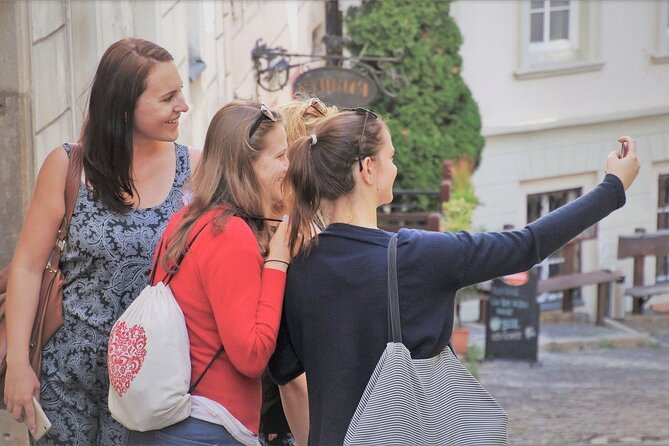
Reviewed · VIENNA TOURS
Freud – Inside the mind of a Genius
Sigmund Freud’s Vienna was not just a backdrop to his work. The university, medical quarter, friends, neighbors, and family home all help explain how the famous psychotherapist formed his ideas. This small walking tour follows that trail from the University of Vienna to Berggasse 19, where Freud lived and worked before fleeing Austria.
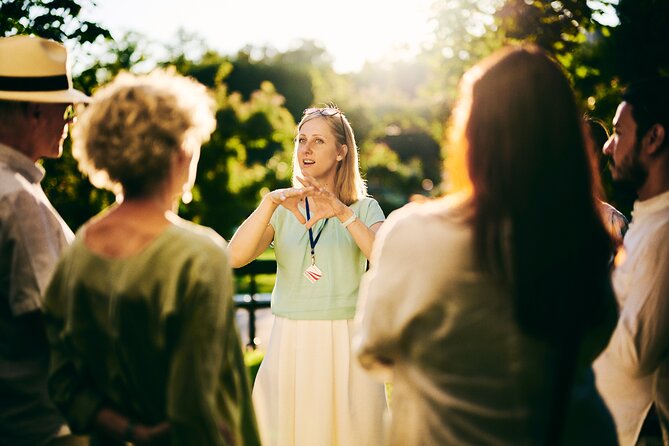
I like the small group limit of 10, which gives a guide such as Lisa Marie room to explain difficult ideas without turning the walk into a lecture. I also like the route’s focus on places tied to Freud’s daily life, not just famous plaques and broad biographical facts.
The main catch is that the Freud Museum ticket is extra, so the $45.38 price is not the final cost. Also, the published timing for the museum stop says 20 hours, which conflicts with the advertised two-hour tour and is clearly something to confirm before booking.
Key points about Freud’s Vienna walk
- Starts at the University of Vienna: Begin in the university courtyard and connect Freud’s education to the medical world of late-19th-century Vienna.
- Follows Freud’s intellectual neighborhood: Votivkirche and the surrounding streets provide the setting for stories about his friends and fellow thinkers.
- Explains old medical practice: The Old University Quarter helps you consider the medicine Freud encountered before psychoanalysis.
- Ends at Berggasse 19: Freud’s former home is now the Sigmund Freud Museum, with admission paid separately.
- Keeps groups personal: A maximum of 10 people makes it easier to ask questions and hear the guide clearly.
- Adds a different side of Vienna: This is a good choice if you want ideas, biography, and local streets instead of another palace-only tour.
Why Freud makes a good Vienna walking subject
Freud can be difficult to approach through books alone. His theories are famous, controversial, and often reduced to a handful of familiar terms. In Vienna, though, his story becomes more concrete. You can connect his work to the university where he studied, the medical culture around him, and the apartment where several generations of his family lived.
That setting gives the tour a useful order. You begin with institutions, move into the neighborhood around them, then finish at Freud’s private and professional world. I find that structure more helpful than a simple list of dates because it shows how a person’s surroundings can shape his thinking.
The focus is not only on Freud as a celebrated thinker. The walk also considers the troubled parts of his life and the people around him. His friends, colleagues, and neighbors become part of the story, giving you a fuller picture than the lone-genius version often presented in popular culture.
The tour is also a window into Belle Époque Vienna, the period around the late 19th and early 20th centuries when the city was a major center for medicine, art, music, literature, and new ideas. You will not get a general tour of all those subjects, but you will see how they form the setting for Freud’s development.
A few more Vienna half-days to weigh up
- Vienna: Vivaldi’s Four Seasons Concert in Karlskirche
★ 4.7 · 14,951 reviews - Vienna: Spanish Riding School Training
★ 3.9 · 9,281 reviews - Vienna: Skip-the-cashier-desk-line Giant Ferris Wheel Ride
★ 4.5 · 7,859 reviews
Starting at the University of Vienna
The walk begins at Universität Wien Studienzulassung, at Universitätsring 1. The meeting point is near the University of Vienna on the Ringstrasse, and the stated start time is 2:00 pm. Since this is a city-center location near public transport, it should be fairly practical to reach, but you will want to allow enough time to find the exact university entrance.
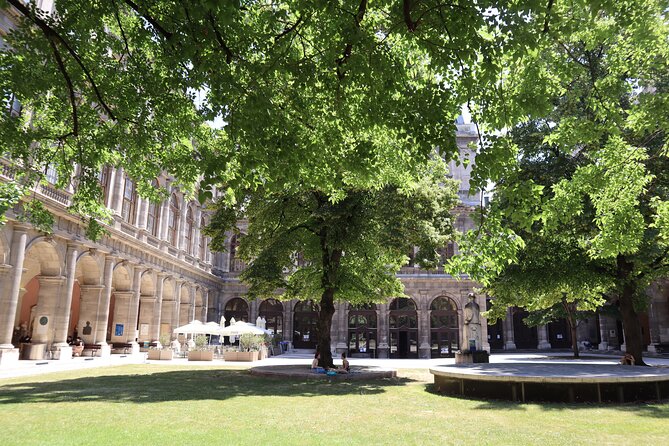
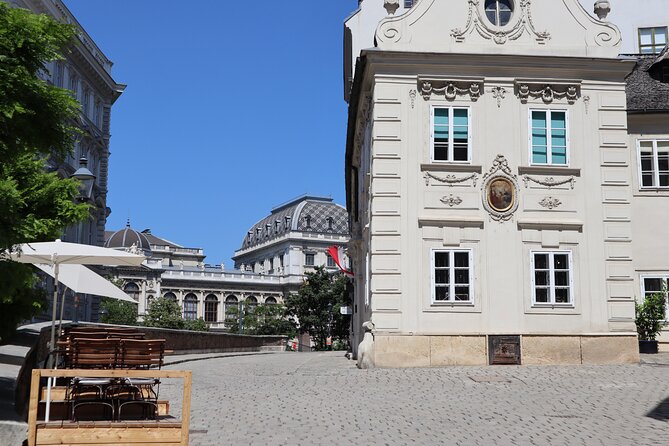
The first stop lasts about 15 minutes and takes place in the university courtyard. Admission is free. The value here is not a long architectural tour, but a quick shift in time and place as the guide introduces Vienna’s academic and medical world during Freud’s student years.
This opening can be especially useful if you know Freud mainly as a psychologist. Before he became associated with psychoanalysis, he trained in medicine and worked within the medical culture of his day. The stop gives the guide a natural way to explain what doctors studied, what medicine could and could not treat, and why Freud’s later ideas challenged established thinking.
I would not book this tour expecting a full university visit. The courtyard stop is brief, and the main point is context. Still, it gives the rest of the walk a firm starting point instead of dropping you straight into Freud’s home without explaining how he got there.
Votivkirche and Freud’s circle of friends
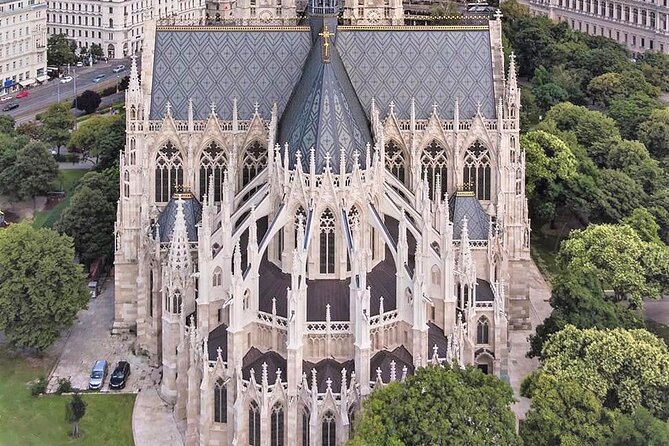
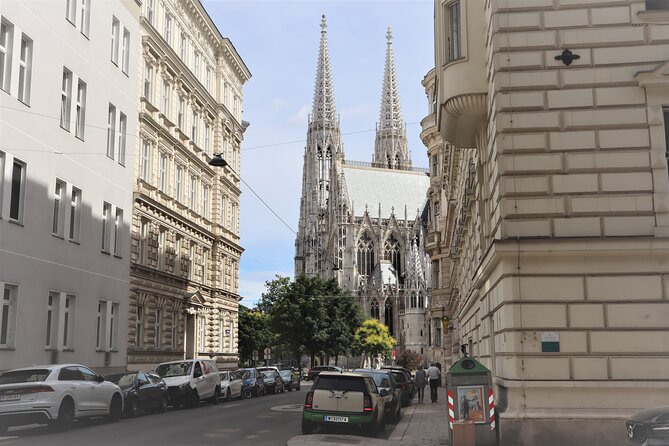
The route then moves to Votivkirche, with about 10 minutes set aside for this stop. Admission is free, and the emphasis is on the surrounding neighborhood rather than a detailed church tour.
This part asks an important question: who were the people around Freud when he was building his career and ideas? The tour uses the neighborhood to introduce friends and bright minds connected to Freud’s life. That personal angle helps correct the impression that his work appeared in isolation.
The stop is short, so do not expect a full account of every friendship or professional connection. Instead, think of it as a bridge between Freud the student and Freud the established figure. You will hear about the social and intellectual setting that gave him support, challenge, and material to think about.
I like this portion because it gives the walk a human scale. Streets tell you where a person lived, but relationships often tell you more about how that person worked. If you are interested in the history of ideas, this may be one of the most rewarding sections of the route.
The Old University Quarter and late-19th-century medicine
The Old University Quarter is the next major stop, with about 15 minutes devoted to it. Again, there is no admission fee. Here, the guide turns more directly to the medicine Freud encountered during his education and early career.
This is where the tour’s subject becomes more than biography. You get a chance to think about the limits of 19th-century medicine and the problems Freud was trying to understand. The walk does not simply present psychoanalysis as a finished answer. It places Freud’s theories within a period when doctors were still wrestling with conditions they could not easily explain or treat.
That context matters. Freud’s work grew from a medical background, yet it also pushed beyond conventional physical explanations. Understanding that tension can make his ideas easier to assess, even if you remain skeptical of parts of psychoanalysis.
The stop is not designed as a technical medical seminar. If you are a psychologist or already familiar with Freud, you may appreciate the way the guide links his theories to the pressures and limits of his training. If you are new to the subject, the explanation should help you follow the story without requiring a background in psychology.
The walking itself should be manageable for anyone with a moderate level of fitness. The route passes through central Vienna streets and neighborhoods, and the tour lasts about two hours overall. Wear comfortable shoes, especially if you plan to continue exploring after the museum.
A different way to spend an afternoon here:
- Vienna: Schönbrunn Palace & Gardens Skip-the-Line Tour
★ 4.7 · 7,739 reviews - Vienna: Light of Creation Votive Church Immersive Light Show
★ 4.8 · 6,779 reviews - Vienna Spanish Riding School Guided Tour
★ 4.7 · 6,765 reviews - Vienna: Classical Concert in the World-Famous Musikverein
★ 4.6 · 6,673 reviews
Berggasse 19 and Freud’s former home
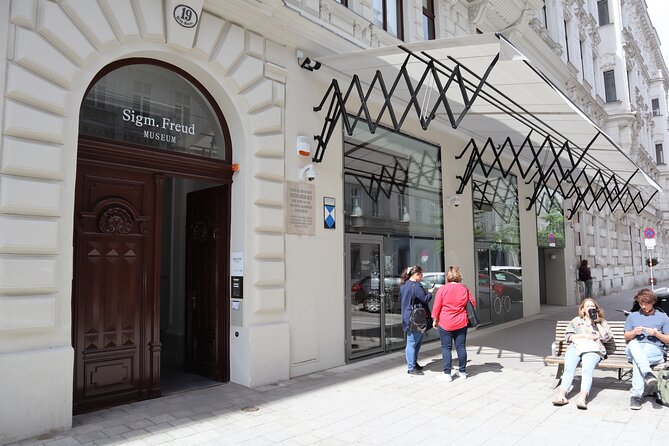
The route ends at Berggasse 19, the address of the Sigmund Freud Museum. Freud and his family lived there for many years, and the address became closely tied to his professional life. This is the point where the walking tour meets the physical remains of Freud’s private world.
The guide explains why Freud had to leave Vienna and what happened to his family. That story gives the final stop a serious edge. The address is not simply the home of a famous thinker. It is also connected to the political pressure that forced Freud and his family out of Austria.
Museum admission is not included in the tour price. You pay for the walking tour separately, then purchase your own ticket to enter. That arrangement gives you some flexibility, but it also means you need to budget for the museum and allow enough time if you want to see it properly.
There is a major timing issue to note. The overall tour is advertised as approximately two hours, yet the museum stop is listed as 20 hours. That cannot be a literal stop length, so treat it as a likely data error and confirm the planned museum visit when booking. The walk may finish at the museum with entry afterward, or the guide may allow time for a brief visit. Do not assume that a long museum session is included.
The museum is the logical place to continue the story because the tour ends at Freud’s home rather than at a random city landmark. If you are particularly interested in Freud, the extra ticket should be part of your plan from the start. If you mainly want a short introduction to Freud and Vienna, you may choose to finish at the address without spending additional time inside.
What the guide adds to the experience
A good guide matters more on a Freud tour than on a simple sightseeing walk. The subject includes psychology, medicine, family life, politics, and personal controversy. A guide has to keep those threads clear without turning the walk into either a dry academic talk or an overly simple portrait.
Lisa Marie is specifically associated with this experience, and her approach is described as well-informed and entertaining. That combination suits the subject. Freud’s story needs accurate explanation, but it also benefits from a lively presentation that keeps you alert as you move between short stops.
The small group size helps here. With no more than 10 people, you should have a better chance of hearing the guide on city streets and asking a question when a point needs clarification. Small groups also make it easier to discuss Freud’s more controversial ideas without holding up a large crowd.
The current score is 3.9 out of 5 from seven ratings, which is a modest sample rather than a firm verdict. The strongest praise centers on the guide’s presentation, the amount of research brought into the walk, and the way the tour helps connect Freud’s background to his theories.
One particularly useful perspective comes from a participant with a psychology background who wanted to see where Freud lived and practiced. That is a good clue about the tour’s appeal: it can help people who already know Freud place his theories in a real social and medical setting, rather than simply repeat basic textbook facts.
Is $45.38 a fair price?
At $45.38 per person, this is not the cheapest way to see central Vienna. You are paying for a guided walk of about two hours, a limited group of up to 10, and a focused subject rather than broad city coverage. GST is included, but the Freud Museum ticket is not.
I think the value depends on your interest. If Freud, psychology, medical history, or intellectual Vienna is high on your list, the price is reasonable for a specialist walk with a small group. The guide’s research and interpretation are the main product, while the streets and university spaces provide the setting.
If you are only mildly curious about Freud, the cost may feel high once you add museum admission. You can see the university area and walk toward Berggasse 19 on your own, but you would miss the organized story about Freud’s education, friends, medical training, and forced departure from Vienna.
The tour is also a better value for someone who wants a focused afternoon activity rather than a full-day city tour. At 2:00 pm, it fits neatly after morning sightseeing. You can also use the finish at Berggasse 19 as a starting point for exploring another part of Vienna afterward.
Free cancellation is available if you cancel at least 24 hours before the local start time. Changes or cancellations made within 24 hours are not accepted for a refund, so keep that deadline in mind when planning your afternoon.
Who should book this Freud walking tour?
I would recommend it most strongly to people with a real interest in Freud, psychology, medicine, or the cultural life of Vienna around 1900. It also suits anyone who has already seen the city’s grand imperial sights and wants a more personal subject tied to ordinary streets and a single historical figure.
Students and professionals in psychology may find the background especially useful. The walk can connect Freud’s education and social circle to the theories you may already know, while the museum gives you a chance to see his former home afterward.
It is less suitable if you want a general introduction to Vienna. The route does not focus on the Habsburg court, major palaces, or the city’s full artistic story. It is also not the best pick for someone who wants to spend most of the time inside the Freud Museum, since the museum ticket is separate and the exact timing of the visit needs clarification.
Children can attend, but the subject matter is more intellectual and biographical than playful. The moderate fitness requirement means you should be comfortable walking between several central stops.
Should you book Freud: Inside the Mind of a Genius?
Book this tour if you want to understand Freud through the places and people that shaped him. The strongest reasons are the maximum group size of 10, the route from the University of Vienna to Berggasse 19, and the guide’s focus on Freud’s friends, medical training, family, and departure from Vienna.
Think twice if you are looking for a low-cost sightseeing walk or if museum entry must be included in the advertised price. Before booking, confirm how the final museum stop works and resolve the strange 20-hour timing shown for that section.
For the right audience, this is a thoughtful two-hour addition to a Vienna visit. It will not explain everything about Freud, and it should not be treated as an unquestioning tribute. Its value is in showing you the city around a controversial thinker and giving you a clearer sense of how his private and professional worlds met.
FAQ
Where does the Freud walking tour start?
It starts at Universität Wien Studienzulassung, Universitätsring 1, 1010 Vienna, Austria.
What time does the tour begin?
The stated start time is 2:00 pm.
Where does the tour end?
The tour ends at the Sigmund Freud Museum, Berggasse 19, 1090 Vienna, Austria.
Is admission to the Freud Museum included?
No. The museum ticket is not included and must be paid for separately.
How long does the tour last?
The tour lasts approximately two hours. The published museum-stop timing says 20 hours, which conflicts with the overall duration, so confirm the exact arrangement before booking.
How many people can join the tour?
The group is limited to a maximum of 10 people.
Recently added around Vienna
- Vienna: Private tour Mauthausen and Linz★ 4.1 · 3 reviews
- 2-Day Prague Tour from Vienna with private Transfers and Lunches★ 5.0 · 3 reviews
- Vienna Self Guided Sherlock Holmes Murder Mystery Game★ 4.5 · 3 reviews
- Vienna Private Schönbrunn Palace Tour, Extra Rooms and Gardens★ 5.0 · 3 reviews
- Salzburg and Lake Region Private Day Trip from Vienna★ 5.0 · 3 reviews
- Small-group Vienna Wine Tour★ 5.0 · 3 reviews
- True Crime mobile puzzle rally Vienna★ 4.0 · 3 reviews
- Exploring the Gutenstein Alps★ 5.0 · 3 reviews
Vienna Tours, compared.

Vivaldi’s Four Seasons Concert in Karlskirche
Read our review →

Skip-the-cashier-desk-line Giant Ferris Wheel Ride
Read our review →
Schönbrunn Palace & Gardens Skip-the-Line Tour
Read our review →
Light of Creation Votive Church Immersive Light Show
Read our review →

Skip-the-Line Sisi Museum, Hofburg and Gardens Tour
Read our review →