
Reviewed · VIENNA TOURS
Esterhazy Palace Entrance Ticket
Esterházy Palace gives you two very different stories under one roof: the polished world of princes and the working life of Joseph Haydn, who served the Esterházy family for more than 40 years. The palace rooms bring the ceremony, while the exhibits about Haydn explain how a court musician became one of Europe’s great composers.
I like the audio guide, since it lets you move through the rooms at your own pace, and I like the mix of grand interiors with personal objects, instruments, and documents. The palace chapel, the old wine cellar, and the Haydnsaal add welcome variety. The main drawback is that the visit may feel quiet and self-directed if you prefer a live guide, and access to the Haydnsaal can sometimes be restricted during events.
Key points to know before you go
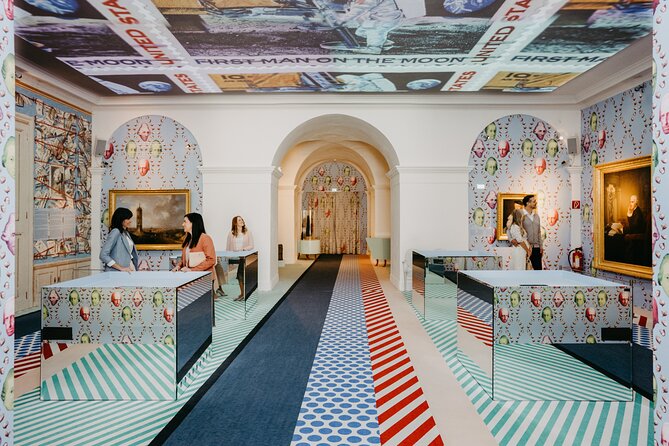
- Two stories in one visit: Explore princely rooms first, then follow Haydn’s life and work through multimedia displays.
- A striking Empire-style hall: The gilded Empiresaal was once a banquet room, with chandeliers and formal 19th-century decoration.
- Chinese salons with hand-painted wallpaper: These smaller rooms offer a more intimate contrast to the grand public spaces.
- A substantial wine collection: The 300-year-old cellars contain more than 700 objects linked to wine and viticulture.
- Good for families: Interactive stations and unusual exhibits make the Haydn section easier for children to follow.
- Check the grounds: The rose garden and hedge maze have been especially praised, although the supplied ticket details focus mainly on the palace visit.
Why Esterházy Palace is more than a quick room-to-room tour
At first glance, this looks like a straightforward palace admission ticket. In practice, it covers several layers of local history. You see how the Esterházy princes presented themselves, how Melinda Esterházy shaped the palace story, how Haydn worked within the court, and how wine production supported life on the estate.
That range makes the visit more satisfying than a palace filled only with portraits and furniture. You are not simply walking through decorated rooms. You are moving between court ceremony, religious objects, music, and the practical business of wine.
The audio guide is central to the experience. Recorded commentary gives you context as you enter each room, so you can pause, look closely, and continue when ready. I find that format useful in a palace because it avoids being tied to a group schedule. It also suits families, since you can keep your own pace when attention starts to wander.
Allow about one to two hours for the palace and exhibits. You may need more time if the wine museum, grounds, rose garden, or hedge maze are open and you want to see them properly. Since the visit is self-guided, your timing depends on how closely you listen and how much time you spend with the displays.
A few more Vienna half-days to weigh up
- Vienna: Vivaldi’s Four Seasons Concert in Karlskirche
★ 4.7 · 14,951 reviews - Vienna: Spanish Riding School Training
★ 3.9 · 9,281 reviews - Vienna: Skip-the-cashier-desk-line Giant Ferris Wheel Ride
★ 4.5 · 7,859 reviews
The bel étage and the world of Melinda Esterházy
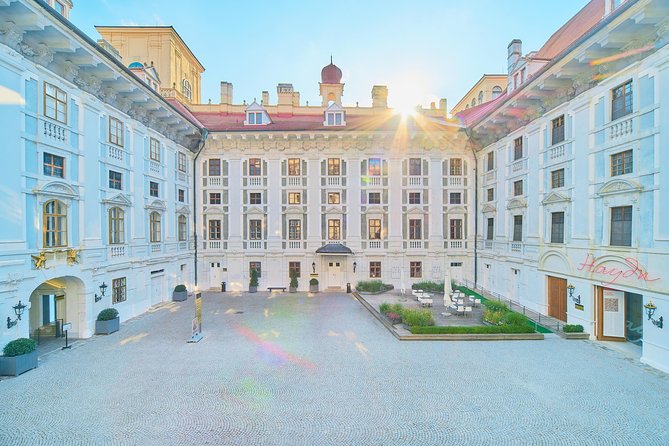
The first-floor rooms, or bel étage, present the palace at its most formal. This is where you encounter the art-historical objects and the rooms designed to impress. The setting tells you how the Esterházy family used architecture, decoration, and ceremony to present power.
The Empiresaal is the major showpiece. This former banquet hall has a gilded 19th-century Empire-style interior, with elegant chandeliers adding to its ceremonial feel. The room is built for grand occasions, not quiet domestic life, so take a moment to imagine it filled with guests, music, and formal meals.
The scale and decoration can make the Empiresaal the easiest room to remember. It also gives the audio commentary a useful starting point. You learn to read the palace not just as a beautiful building, but as a place designed around rank and public display.
The tour also includes the small and large Chinese salons. Their hand-painted Chinese wallpaper makes them a strong contrast to the gold and formal symmetry of the banquet hall. These rooms are smaller and more personal in feel, and the change of style keeps the palace tour from becoming a long procession of similar interiors.
The palace’s first-floor story also focuses on Melinda Esterházy. The visit presents her as a strong and important personality, giving the tour a human focus beyond male aristocrats and famous composers. That part is especially useful if you want more than a standard dynastic timeline.
The palace chapel and its changing styles
The palace chapel adds a religious chapter to the visit. Its design contains several styles, so it does not have the single, unified look of the Empiresaal. Instead, you see how a sacred space can change over time as tastes, traditions, and the needs of its owners shift.
The chapel contains the reliquary of Saint Constantine. That object gives the room a direct connection to religious devotion and ceremony. It is a small detail compared with the grand halls, but it helps explain the different roles a palace had to serve.
I suggest listening to the chapel commentary before moving on. Without context, you might simply note the decoration and continue. With the audio guide, the room becomes part of the palace’s wider story: a place for worship, display, and family identity.
Haydn’s four decades with the Esterházy princes
The second major part of the visit turns from architecture to music. Joseph Haydn served the Esterházy princes for more than 40 years, and the palace presents that long relationship through interactive displays, installations, and unusual objects.
The exhibits follow Haydn from his early life toward his rise as a musical genius. You can see personal artifacts, documents, and instruments connected with his work. These items help put a human face on a composer whose name is often familiar even to people who do not know his full story.
This section is more active than the formal palace rooms. Multimedia stations and project installations give families something to do, while the audio narration connects the objects to Haydn’s career. If you are visiting with children, this is likely to be the most approachable part of the tour.
The exhibits also explain the practical side of a composer’s life at court. Haydn was not simply writing music in isolation. He served a powerful household for decades, working within the Esterházy system and producing music for its events and spaces.
That makes the palace setting important. You are learning about Haydn in the place where his professional life was tied to the princes. The building and the exhibits reinforce each other, which is more useful than seeing a composer’s name on a wall without context.
A different way to spend an afternoon here:
- Vienna: Schönbrunn Palace & Gardens Skip-the-Line Tour
★ 4.7 · 7,739 reviews - Vienna: Light of Creation Votive Church Immersive Light Show
★ 4.8 · 6,779 reviews - Vienna Spanish Riding School Guided Tour
★ 4.7 · 6,765 reviews - Vienna: Classical Concert in the World-Famous Musikverein
★ 4.6 · 6,673 reviews
The Haydnsaal and the limits of event access
The Haydnsaal is one of the most meaningful stops because it is an elegant salon where many of Haydn’s pieces were first heard. The room links the composer’s music to a physical setting, giving you a clearer idea of the court world for which he worked.
It is worth slowing down here. Consider the room not only as a decorated salon, but as a performance space with a direct connection to Haydn’s career. The audio guide should help you make that connection as you look around.
There is one important qualification. Ongoing events can occasionally restrict access to the Haydnsaal. If this room is the main reason you are booking, keep that possibility in mind. The rest of the palace and Haydn displays still provide a worthwhile visit, but a temporary restriction could change the experience you expect.
The 300-year-old wine cellars
The wine museum adds a practical and regional side to the palace story. Located in cellars more than 300 years old, it contains over 700 objects connected with wine and viticulture under the Esterházy princes.
The collection includes historic barrels and Burgenland’s oldest Baumpresse, a wooden wine press. These are the kinds of objects that can be easy to overlook in a grand palace, yet they explain how the estate functioned beyond banquets and music.
I like this part because it broadens the visit. A palace can seem detached from ordinary work, but wine production connects the ruling family to land, labor, storage, and trade. The cellar collection shows the material side of estate life.
Give the wine museum time if you have an interest in food, farming, or local industry. It may not hold the same visual drama as the Empiresaal, but it makes the overall visit more grounded. The grand rooms show how the family lived and entertained. The cellar helps show how the estate operated.
Gardens, the rose garden, and the hedge maze
The strongest praise connected with the wider palace visit concerns the grounds. The rose garden and hedge maze have been singled out as especially worthwhile, and the setting is described as romantic with plenty to see.
The ticket information clearly describes admission to the palace, interior audio tour, Haydn displays, and wine museum. It does not spell out the exact conditions for every garden area, so check what is open when you arrive rather than assuming every outdoor feature is included.
If the gardens are accessible, plan extra time for them. A palace visit can become a steady sequence of rooms, and outdoor space gives you a chance to reset. The rose garden offers a softer contrast to the formal interiors, while a hedge maze can make the stop more appealing for children.
The grounds may also be the best reason to avoid rushing through the visit. The indoor portion can fit into one or two hours, but the gardens can turn the outing into a longer half-day stop, especially in good weather.
Price, timing, and practical value
The listed price is $22.83 per person. That is a reasonable price if you make use of the full visit: the palace rooms, audio commentary, Haydn displays, Haydnsaal when available, and wine museum.
The value is weaker if you only want a fast look at one famous hall. This is not a short photo stop. Its appeal comes from the number of connected subjects covered by one admission. You are paying for a self-guided cultural visit rather than a single viewpoint or brief monument entry.
The experience is generally booked about 41 days in advance. That suggests you should plan ahead if it is an important part of your schedule, especially since the published opening period is limited. For February 21 through March 31 in the listed years, the stated hours are Saturday and Sunday from 10 a.m. to 4 p.m.
Those hours matter. A weekend-only visit with a 4 p.m. closing time leaves little room for a late arrival, gardens, and a full audio tour. Arrive early enough to enjoy the palace without racing through the last rooms.
You make your own way to Esterházy Palace. Transportation to and from the attraction is not included, but the site is near public transportation. Admission and taxes are included, while food and drinks are not.
A mobile ticket makes entry simple. You receive confirmation at booking and present the voucher for admission and the audio guide. Children must be accompanied by an adult, and most people can take part.
Who will enjoy this palace visit most
I would recommend Esterházy Palace to anyone who likes the combination of architecture and biography. The palace rooms appeal to people interested in aristocratic interiors, while the Haydn section gives music lovers a clear reason to visit.
Families may find the interactive displays easier to manage than a palace tour made entirely of paintings and furniture. The hedge maze, if available, adds another point of interest for younger children. Still, children who dislike audio tours may need some help staying engaged during the formal rooms.
This also suits independent visitors. You do not have to follow a live guide or keep pace with a group. You can spend longer in the Chinese salons, move quickly through a room that interests you less, or give extra time to Haydn’s instruments and documents.
It is less suitable if your schedule allows only a few minutes, if you require transportation as part of a package, or if entry to the Haydnsaal is essential on a particular date. The occasional event restriction is worth remembering.
Cancellation and booking advice
You can cancel for a full refund up to 24 hours before the experience starts. Changes or cancellations made less than 24 hours before the start time are not accepted for a refund, and the cut-off follows local time.
That policy gives you useful flexibility while plans are still changing. It does not protect a last-minute cancellation, so check your weekend schedule before booking.
Should you book Esterházy Palace?
Book this ticket if you want more than a grand interior. The combination of imperial rooms, hand-painted Chinese wallpaper, a changing-style chapel, Haydn’s personal materials, the Haydnsaal, and the old wine cellars gives you a varied visit for the price.
I would make the palace a priority for a weekend in the stated opening period, arriving early enough to see the rooms and exhibits without pressure. If the grounds are open, add time for the rose garden and hedge maze, which can make the visit feel more relaxed and romantic.
Skip it only if you need a live guide, have a very tight schedule, or would be disappointed by a possible Haydnsaal restriction. For everyone else, this is a well-rounded cultural stop with enough music, architecture, and local life to justify the admission cost.
FAQ
Where is Esterházy Palace?
Esterházy Palace is in Vienna, Austria, according to the supplied tour details.
How long does the visit take?
The visit takes approximately one to two hours. You may need additional time if you also explore the available gardens, rose garden, hedge maze, or wine museum in detail.
What is included in the ticket?
The ticket includes admission to Esterházy Palace, an audio guide, and all fees and taxes.
Is transportation included?
No. You make your own way to the palace, and transportation to and from the attraction is not included. The palace is near public transportation.
Is the ticket mobile?
Yes. The experience provides a mobile ticket, and you present your voucher for admission and the audio guide.
What can I see inside the palace?
You can see the Empire-style Empiresaal, the small and large Chinese salons, the palace chapel, Haydn exhibits, the Haydnsaal when access is available, and the wine museum in the historic cellars.
Can I always enter the Haydnsaal?
Access to the Haydnsaal may occasionally be restricted because of ongoing events.
Is the experience suitable for children?
Yes. The experience is family-friendly, and most people can participate. Children must be accompanied by an adult.
What are the listed opening hours?
For February 21 through March 31 in the listed years, the stated opening hours are Saturday and Sunday from 10 a.m. to 4 p.m.
Can I cancel for a refund?
Yes. You can cancel at least 24 hours before the experience starts for a full refund. Cancellations or changes made less than 24 hours before the start time are not accepted for a refund.
Recently added around Vienna
- Vienna: Private tour Mauthausen and Linz★ 4.1 · 3 reviews
- 2-Day Prague Tour from Vienna with private Transfers and Lunches★ 5.0 · 3 reviews
- Vienna Self Guided Sherlock Holmes Murder Mystery Game★ 4.5 · 3 reviews
- Vienna Private Schönbrunn Palace Tour, Extra Rooms and Gardens★ 5.0 · 3 reviews
- Salzburg and Lake Region Private Day Trip from Vienna★ 5.0 · 3 reviews
- Small-group Vienna Wine Tour★ 5.0 · 3 reviews
- True Crime mobile puzzle rally Vienna★ 4.0 · 3 reviews
- Exploring the Gutenstein Alps★ 5.0 · 3 reviews
Vienna Tours, compared.

Vivaldi’s Four Seasons Concert in Karlskirche
Read our review →

Skip-the-cashier-desk-line Giant Ferris Wheel Ride
Read our review →
Schönbrunn Palace & Gardens Skip-the-Line Tour
Read our review →
Light of Creation Votive Church Immersive Light Show
Read our review →

Skip-the-Line Sisi Museum, Hofburg and Gardens Tour
Read our review →