
Reviewed · VIENNA TOURS
Alternative Tour in Vienna Off the tourist track
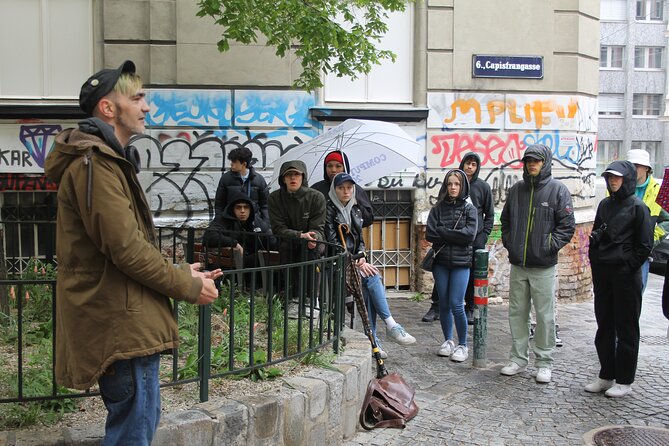
Vienna’s grand palaces and polished boulevards tell only part of the story. This two-hour walking tour with Martin, who once lived on Vienna’s streets, takes you through places connected to homelessness, addiction, squatting, and punk life. It is personal, direct, and often unexpectedly funny.
I like the way the tour uses real city spaces rather than a lecture room, especially Alfred-Grünwald-Park, where Martin explains why he slept there and what made the spot workable or unsafe. I also like the mix of social history and anarchist lore, including the extraordinary story of the Anarchia pizzeria evacuation.
The main consideration is the subject matter. Stories about drug addiction, rough sleeping, and eviction can be painful, and this is not a light sightseeing walk. The route also involves walking between stops, so come ready for an honest experience rather than Vienna’s usual postcard views.
Key points to know before you book
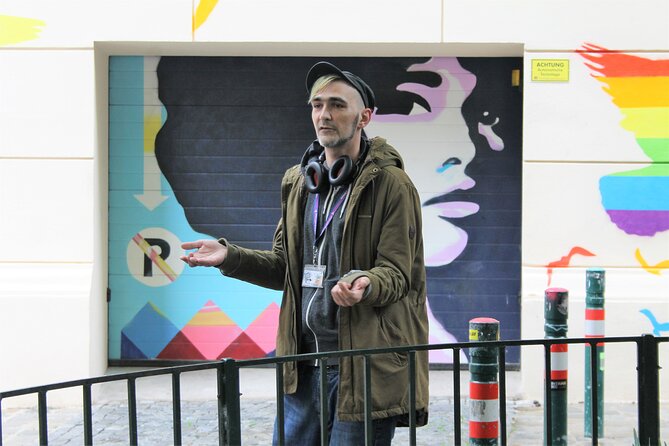
- Martin’s firsthand account: Your guide speaks from personal experience of homelessness and drug addiction in Vienna.
- A different city route: The walk moves from Karlsplatz through a subway passage and past the Secession before reaching places tied to Martin’s past.
- Alfred-Grünwald-Park stop: Sit down while Martin explains why the park became a sleeping place and why sleeping on the open meadow is a bad idea.
- Squat and punk history: At Ilse-Pisk-Stiege, hear about Vienna’s squatting scene and the evacuation of the Anarchia pizzeria.
- Small-group format: The maximum group size is 20, which gives you a reasonable chance to hear Martin and ask questions.
- Good value for a serious subject: At $46 for about two hours, the price pays for a focused personal account, not a long list of standard sights.
A very different way to see Vienna
Most city walks in Vienna move from church to palace to museum. This one asks you to look at the city from ground level, through the experience of someone who once depended on public spaces for shelter and survival.
That change in viewpoint is the point. Martin connects streets, stairways, parks, and passages with his own life. You are not simply told that homelessness exists in Vienna. You hear how particular places functioned, what choices mattered, and how difficult ordinary tasks could become.
The tone is serious but not grim from start to finish. Martin’s story includes moments of humor, and his ability to make people laugh helps keep the subject human. The comedy does not erase the harder parts. Instead, it gives the group a way to listen without becoming frozen in discomfort.
This is also a social history walk. You hear about addiction and rough sleeping, but also about squats, punks, police operations, tolerance, judgment, and the systems that quietly shape daily life. The strongest reason to book is the chance to question quick assumptions about people you might otherwise pass without thinking.
A few more Vienna half-days to weigh up
- Vienna: Vivaldi’s Four Seasons Concert in Karlskirche
★ 4.7 · 14,951 reviews - Vienna: Spanish Riding School Training
★ 3.9 · 9,281 reviews - Vienna: Skip-the-cashier-desk-line Giant Ferris Wheel Ride
★ 4.5 · 7,859 reviews
Starting at Karlsplatz and leaving the usual route
The meeting point is the Police Inspectorate Vienna at Kärntnertorpassage in Karlsplatz. That location is near public transportation, making it a practical starting point if you are already exploring central Vienna.
The route begins in the subway passage at Karlsplatz. You then leave through the exit beside the Secession, the famous white exhibition building with its distinctive dome. The Secession is not presented as the main attraction here, but passing it creates a useful contrast. One moment you are beside a familiar Vienna landmark, and soon after you are following a route shaped by much less polished parts of city life.
Do not expect a traditional introduction to Vienna’s architecture. You may pass important buildings, but Martin’s attention stays on people, places, and personal memory. That is useful if you have already seen the Ringstrasse sights or want an experience that does not repeat the usual city-tour script.
The route is about two hours in total. The listed stops include seating, but you should still wear comfortable shoes and be prepared to walk between locations. The exact amount of walking is not presented as a strenuous hike, yet this is not a sit-down talk either.
Alfred-Grünwald-Park and the practical reality of sleeping outside
Alfred-Grünwald-Park is the first major stop described in detail. The park has comfortable seating for the group, which matters because Martin spends time explaining why it became one of his sleeping places.
This stop is valuable because it moves the discussion away from general statements. Martin talks about the practical side of sleeping outdoors and why choosing a patch of grass is not as simple as it appears. A park may offer cover, benches, or a place to rest, but it also brings exposure, safety concerns, and the possibility of being moved along.
You get a more grounded picture of homelessness here. The subject is not treated as a dramatic prop. Instead, the park becomes a place where Martin can explain what daily decisions looked like when he had few safe options.
The seating also makes this a good point for questions. People who have never faced homelessness often have basic things they want to ask but do not know how to raise. Martin’s open manner allows the conversation to become more direct and less judgmental.
For school groups and teenagers, this stop can be especially useful. Several people who took the tour with students found it educational and thought-provoking, and the short format keeps the subject from becoming too difficult to follow. Parents and teachers should still consider the content carefully, since addiction and street life are discussed openly.
Ilse-Pisk-Stiege and Vienna’s squat history
The penultimate station is Ilse-Pisk-Stiege, a staircase connected with the Capistran ascent. It offers a final place to pause before the tour ends, though it is a different setting from the park. You may want to use this break to take in the route and prepare for one of the tour’s more striking historical stories.
Here Martin explains the world of squats and punks, drawing on firsthand experience rather than presenting the subject as a museum exhibit. The focus is on how these communities operated and what they meant to the people involved.
The most memorable episode is the evacuation of the pizzeria Anarchia. According to the account shared on the tour, a building occupied by 19 people was cleared by 1,700 police officers. The scale of that operation is startling, and it gives the discussion a concrete example of the conflict between occupied buildings, residents, authorities, and public opinion.
This section also brings humor into a tense subject. The story is not simply a list of police numbers and political arguments. Martin’s storytelling makes room for the strange and sometimes absurd details of anarchist history, while still showing the serious consequences for the people involved.
If you have an interest in Vienna beyond imperial history, this may be the most distinctive part of the route. It offers a look at a city shaped not only by emperors and composers, but also by protest, alternative communities, and disputes over who gets to occupy urban space.
A different way to spend an afternoon here:
- Vienna: Schönbrunn Palace & Gardens Skip-the-Line Tour
★ 4.7 · 7,739 reviews - Vienna: Light of Creation Votive Church Immersive Light Show
★ 4.8 · 6,779 reviews - Vienna Spanish Riding School Guided Tour
★ 4.7 · 6,765 reviews - Vienna: Classical Concert in the World-Famous Musikverein
★ 4.6 · 6,673 reviews
What Martin brings to the experience
Martin is the central reason this tour works. He speaks about his former homelessness and drug addiction with unusual openness, giving you access to experiences that most city guides could only describe from the outside.
His style appears to balance warmth with bluntness. He answers questions, adds explanations when the group needs them, and uses humor without turning his past into entertainment. That balance is important. A tour about homelessness can easily become voyeuristic, but Martin’s role as the person telling his own story gives the experience more dignity and control.
You should also expect a personal account, not a complete academic history of Vienna’s housing policy or drug services. Martin’s memories are the foundation. They provide insight and raise questions, but the tour is not advertised as a statistical or institutional briefing.
That is not a weakness for most people booking this experience. Personal testimony can make social issues easier to understand than a stack of figures. Still, if you want detailed information about current shelters, government programs, or citywide trends, you may need another source as well.
The tour has received a perfect five-star rating from 25 published evaluations, with 100 percent recommending it. More important than the numbers is the consistent pattern in the response: people value Martin’s honesty, his ability to hold attention, the chance to ask questions, and the way the tour encourages them to rethink fast judgments.
Is $46 a fair price?
At $46, this is more expensive than a basic free walking tour, but the comparison is not quite fair. You are not paying for a standard overview of Vienna’s landmarks. You are paying for a small-group experience built around Martin’s personal history and a carefully chosen route.
For a maximum of 20 people, the price is reasonable if you care about authentic social history and personal storytelling. The group limit should help you hear the guide and take part in the discussion, though a full group may still feel less intimate than a private walk.
The two-hour length also works in the tour’s favor. It is long enough to develop a real story but short enough to fit beside museum visits, a concert, or an afternoon in the city. You are unlikely to feel trapped in a heavy subject for an entire day.
I would be more cautious if your main goal is sightseeing value. This tour does not promise major palace interiors, panoramic views, or a long list of attractions. Its value is measured in perspective, not monuments.
Group discounts are available, making it worth checking the price if you are booking for a school class, youth group, workplace, or larger party. The tour has been particularly well received by teenagers and school groups because it is direct, compact, and leaves room for questions.
Who should book this walk?
I would recommend it to adults who want to understand Vienna through the lives of people who are often left out of standard city tours. It also suits older teenagers, students, educators, and anyone interested in addiction, homelessness, squatting, punk culture, or urban politics.
It is a strong choice if you have already covered the Hofburg, Schönbrunn, St. Stephen’s Cathedral, and the Ringstrasse. After the grand sights, this walk adds a social side of Vienna that you cannot get from palace rooms.
You should think twice if you want an easygoing sightseeing stroll with light commentary. The subject matter includes personal trauma, drug use, rough sleeping, and forced eviction. You may find the tour moving, funny, uncomfortable, or all three in the same hour.
It is also worth noting that dogs are allowed, and service animals are welcome. Most people can participate, but the experience does require moving between stops and taking part in an outdoor walking route.
Practical details that affect your day
You receive confirmation when you book, and mobile tickets make it easy to keep the reservation on your phone. The tour starts at Karlsplatz and finishes at Esterhazypark, beside the Haus des Meeres in Esterhazypark G, 1060 Vienna.
That finish is useful for planning. You can continue toward the Haus des Meeres, explore the Mariahilf area, or make your way elsewhere by public transportation. Since this is a point-to-point walk, do not plan to return to Karlsplatz immediately after the final stop unless you have allowed time for the journey.
The experience has free cancellation if you cancel at least 24 hours before the scheduled start. A cancellation within 24 hours is not refunded, and changes made in that period are not accepted. The tour also requires a minimum number of participants. If that minimum is not met and the experience is canceled, you are offered another date or experience, or a full refund.
My call: book it for perspective, not sightseeing
Book this tour if you want Martin’s candid account, a look at Vienna’s squat and punk history, and a chance to examine your own assumptions about homelessness and addiction. The Alfred-Grünwald-Park stop and the Anarchia story give the walk specific places and events, while Martin’s humor keeps it from becoming a purely solemn talk.
Skip it if you want a classic introduction to Vienna’s art, imperial buildings, or major attractions. This is a focused social-history experience with some walking and emotionally difficult material.
For the right audience, $46 buys something unusual: not another view of Vienna from a palace balcony, but a chance to listen to a person who knows the city from its least secure edges.
FAQ
How long does the tour last?
The tour lasts approximately two hours.
How much does the tour cost?
The listed price is $46.
Where does the tour begin?
The tour begins at the Police Inspectorate Vienna in Kärntnertorpassage at Karlsplatz, 1010 Vienna.
Where does the tour finish?
It finishes at Esterhazypark G in 1060 Vienna, next to the Haus des Meeres.
Who leads the tour?
The tour is led by Martin of Wiener Nimmerland. He speaks about his own experience of living on the streets and dealing with drug addiction.
What subjects does Martin discuss?
The tour covers homelessness, addiction, squatting, punk culture, and personal experiences connected with life on Vienna’s streets.
Is this a walking tour?
Yes. The route includes walking from Karlsplatz through the subway passage, past the Secession, and between the listed stops.
What happens at Alfred-Grünwald-Park?
Martin explains why the park became a place where he slept and why sleeping on the open meadow is not advisable. Seating is available for the group.
What is discussed at Ilse-Pisk-Stiege?
Martin discusses squats and punks and tells the story of the evacuation of the Anarchia pizzeria, where 19 occupants were removed by 1,700 police officers.
How large can the group be?
The tour has a maximum of 20 participants. Group discounts are available.
Are dogs and service animals allowed?
Yes. Dogs are allowed, and service animals are permitted.
Can I cancel for a refund?
You can receive a full refund if you cancel at least 24 hours before the experience begins. Cancellations or changes made less than 24 hours before the start are not refunded or accepted.
Recently added around Vienna
- Vienna: Private tour Mauthausen and Linz★ 4.1 · 3 reviews
- 2-Day Prague Tour from Vienna with private Transfers and Lunches★ 5.0 · 3 reviews
- Vienna Self Guided Sherlock Holmes Murder Mystery Game★ 4.5 · 3 reviews
- Vienna Private Schönbrunn Palace Tour, Extra Rooms and Gardens★ 5.0 · 3 reviews
- Salzburg and Lake Region Private Day Trip from Vienna★ 5.0 · 3 reviews
- Small-group Vienna Wine Tour★ 5.0 · 3 reviews
- True Crime mobile puzzle rally Vienna★ 4.0 · 3 reviews
- Vienna: Wachau Valley Private Kayak and Wine Tour★ 5.0 · 3 reviews
Vienna Tours, compared.

Vivaldi’s Four Seasons Concert in Karlskirche
Read our review →

Skip-the-cashier-desk-line Giant Ferris Wheel Ride
Read our review →
Schönbrunn Palace & Gardens Skip-the-Line Tour
Read our review →
Light of Creation Votive Church Immersive Light Show
Read our review →

Skip-the-Line Sisi Museum, Hofburg and Gardens Tour
Read our review →