Reviewed · VIENNA TOURS
Vienna: Tickets to Haus der Musik
Haus der Musik turns music into something you can touch, test, and play with. You can conduct the Vienna Philharmonic on screen, hear the orchestra’s New Year’s Concert in HD, and make a Mozart-style composition from your own name. It is part museum, part science center, and part very good family activity.
I especially like the link between music history and sound science, and the way the exhibits give adults something to think about while children press buttons and experiment. The main drawback is that the museum offers a lot to absorb across four floors, so a quick visit can feel rushed and a full visit may take several hours.
Key things to know
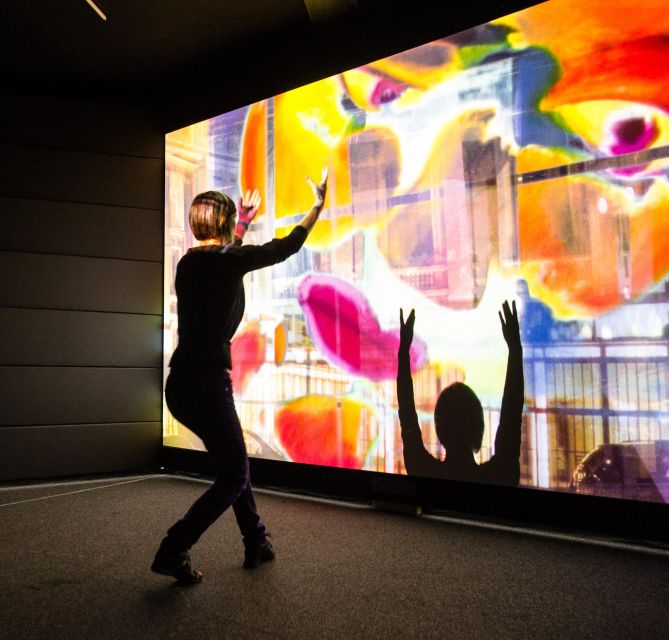
- Conduct the Vienna Philharmonic: Follow the conductor’s role in an interactive challenge and see how the orchestra responds.
- Meet seven major composers: Haydn, Mozart, Beethoven, Schubert, Strauss, Mahler, and Schönberg appear through documents, costumes, models, and personal objects.
- Try the Namadeus Game: Hear your name transformed into an original Mozart-style composition. A certificate costs extra.
- Build a waltz by chance: Roll dice to assemble your own Viennese waltz.
- Explore how sound works: Hands-on instruments and displays explain noise, hearing, acoustics, and musical structure.
- Plan for more than a quick stop: The museum is large enough for a couple of hours, and some visitors spend four hours without seeing everything.
A musical museum in the former Palais of Archduke Charles
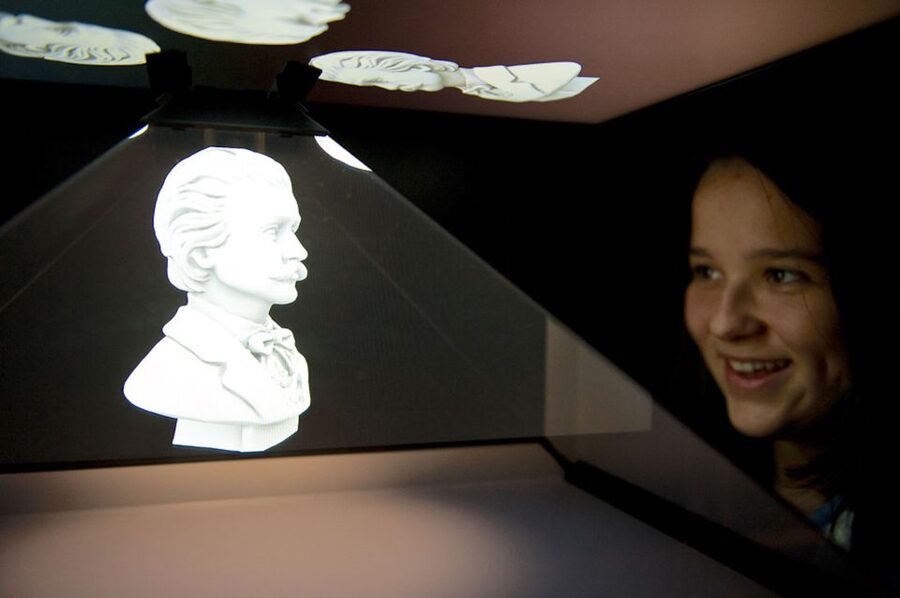
Haus der Musik sits at Seilerstätte 30 in Vienna’s first district, making it easy to add to a day of central Vienna sightseeing. The setting matters. This was once the Palais of Archduke Charles, and Otto Nicolai lived here when he founded the Vienna Philharmonic in 1842.
That story gives the museum a useful starting point. You are not entering a collection of random music gadgets. The building connects directly with one of Vienna’s most important musical institutions, and the Museum of the Vienna Philharmonic displays documents and keepsakes from the orchestra’s past.
The museum then moves beyond the orchestra and opens into the wider world of sound. Four floors cover composers, music-making, acoustics, instruments, and the ways people hear. The result feels less like a quiet hall of framed portraits and more like a place where you are expected to take part.
That approach works well if you do not consider yourself a classical music expert. You can read about composers at your own pace, then switch to an exhibit that lets you make noise or test your sense of rhythm. Families can split up for a while without losing the main thread of the visit.
A few more Vienna half-days to weigh up
- Vienna: Vivaldi’s Four Seasons Concert in Karlskirche
★ 4.7 · 14,951 reviews - Vienna: Spanish Riding School Training
★ 3.9 · 9,281 reviews - Vienna: Skip-the-cashier-desk-line Giant Ferris Wheel Ride
★ 4.5 · 7,859 reviews
The Vienna Philharmonic floor connects place and orchestra
Begin with the museum’s Vienna Philharmonic material. The displays focus on the orchestra’s beginnings and its long musical life, using historic documents and mementos to give the institution a human face.
The most effective way to understand this section is to keep the building in mind. Otto Nicolai established the orchestra in 1842 while living here, so you are seeing the origin story in the same former palace connected with that moment.
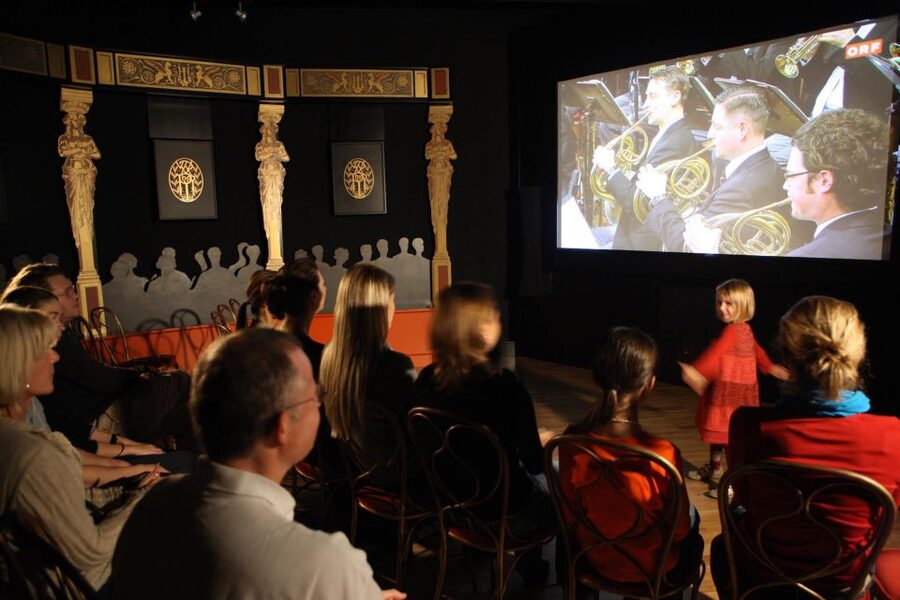
The museum also lets you listen to the Vienna Philharmonic’s New Year’s Concert in HD quality. This is a useful stop for anyone who has seen images of the concert but has never understood why it matters so much to Vienna. It also gives you a polished contrast to the noisier, more playful exhibits elsewhere in the museum.
If you prefer traditional museum displays, spend time with the documents and objects. If you are with children, you may want to move through this area quickly and return later. The material is important, but the hands-on floors are likely to hold their attention longer.
Seven composers, seven different Vienna stories
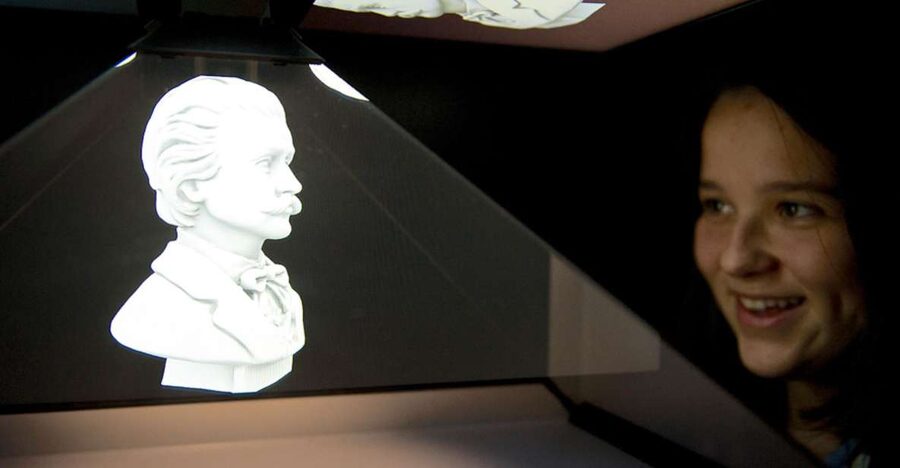
The history level introduces Haydn, Mozart, Beethoven, Schubert, Strauss, Mahler, and Schönberg. These are not presented as names in a timeline only. The exhibits place them in their own periods with historic papers, models, costumes, modern installations, and personal items.
That variety helps you see how Vienna’s music changed. Haydn and Mozart belong to the world of the Viennese Classical tradition, while Beethoven, Schubert, Strauss, Mahler, and Schönberg lead you toward later styles and new musical ideas.
Mozart receives particular attention, including a room that many people find especially memorable. The room offers a closer look at his life and work, and the nearby Namadeus Game adds a lighter touch. Type or select your name, then hear it shaped into a Mozart-style composition.
The Namadeus experience is a good example of the museum’s tone. It takes a famous composer and makes the subject personal without requiring you to understand musical notation. If you want a printed Namadeus certificate, note that it is not included with admission and costs extra.
You should not expect a scholarly archive where every detail is presented in depth. The displays aim to give you a clear feel for the composers and their surroundings, then send you back to the interactive sections. For a first introduction to Vienna’s musical tradition, that balance works well.
The conductor challenge is the museum’s big crowd-pleaser
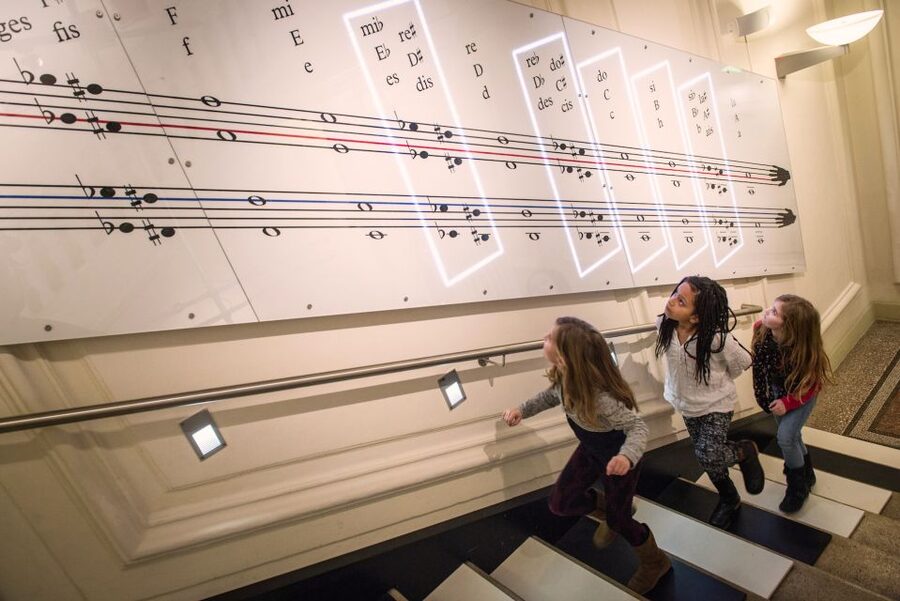
The virtual orchestra conducting activity is one of the strongest reasons to visit. You take the conductor’s position and try to guide the Vienna Philharmonic through a performance on screen.
This is not just a film you watch. Your timing and movement affect the experience, which makes the role of the conductor easier to understand. You quickly learn that keeping an orchestra together requires more than waving your arms with confidence.
The activity works for people with musical training and for those who cannot read a note. A couple can take turns, and families can make it a friendly contest. It also explains why this museum suits adults who might otherwise skip a children-focused science exhibit.
Expect some waiting at popular interactive stations if the museum is busy. The supplied information does not give a fixed visit schedule or queue system, so allow spare time rather than planning to race through every activity.
A different way to spend an afternoon here:
- Vienna: Schönbrunn Palace & Gardens Skip-the-Line Tour
★ 4.7 · 7,739 reviews - Vienna: Light of Creation Votive Church Immersive Light Show
★ 4.8 · 6,779 reviews - Vienna Spanish Riding School Guided Tour
★ 4.7 · 6,765 reviews - Vienna: Classical Concert in the World-Famous Musikverein
★ 4.6 · 6,673 reviews
Sound science takes music out of the concert hall
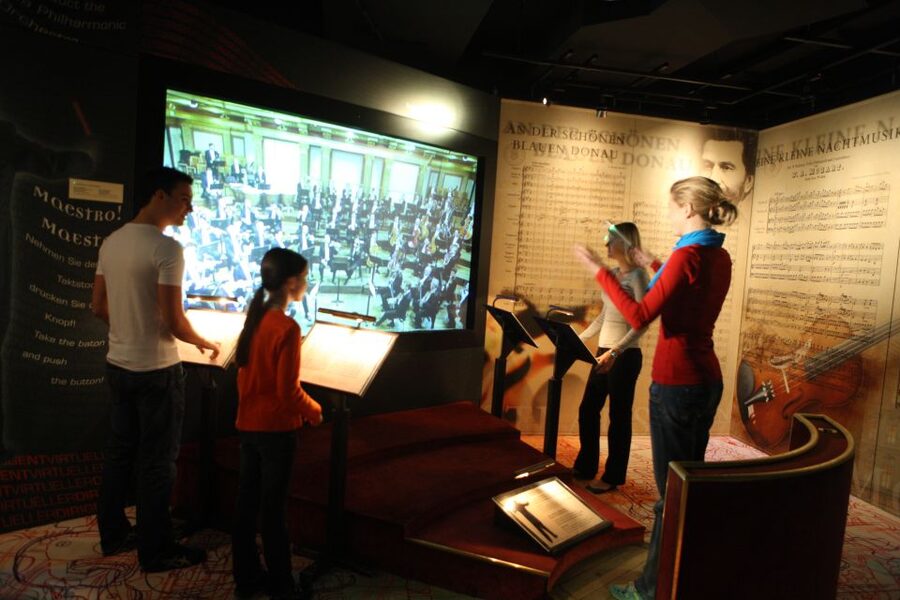
One of the museum’s most useful ideas is that music is also physics and physiology. The sound-focused floors let you experiment with noises, instruments, acoustics, and hearing instead of treating music as something that only happens on a stage.
You can take an acoustic journey through displays designed to show how sound behaves and how people receive it. The point is not to turn you into a scientist. It is to make familiar experiences, such as pitch and noise, easier to understand through direct testing.
This section gives the visit some balance. The composer rooms appeal to history lovers, while the sound exhibits give you a reason to stay even if you know little about classical music. A visitor who dislikes long written displays can still find plenty to do.
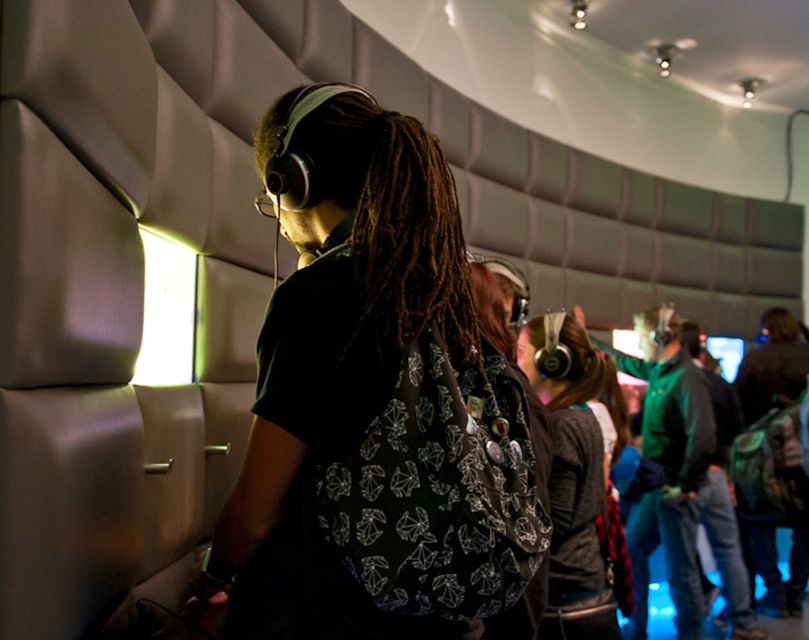
Bring headphones. They are specifically recommended, and you will get more from audio-based exhibits if you can listen clearly without relying on the surrounding room. The free smartphone guide is available in eight languages, with a children’s app in two languages, so your own phone can add context without requiring a paid guide.
Roll the dice and make your own Viennese waltz
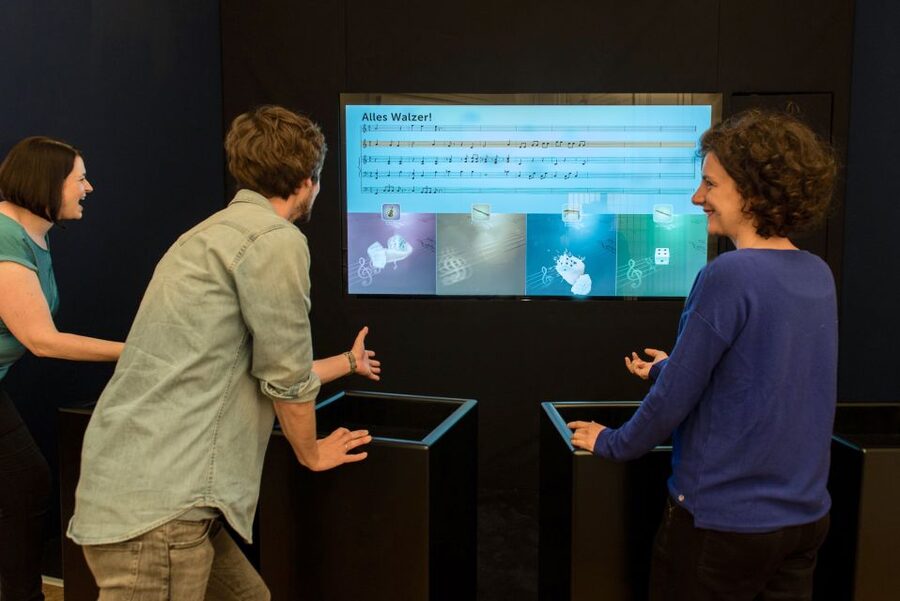
The waltz activity takes a playful route into composition. You roll dice to determine parts of a waltz, then hear how the pieces fit together.
It is a simple idea, but it explains something important: a musical work can be built from choices, patterns, and structure. You do not need to write notes on a staff or know the names of chords. Chance gives you a way into the process.
This is a particularly good activity for families and couples because it encourages you to compare results. The museum does not demand a serious face from you at every exhibit, and the waltz station makes that clear.
The playful displays can also become busy and noisy. If you want to read every composer label and try every sound experiment, you will need patience. I would treat the visit as an open-ended museum stop, not a fast checklist.
How long should you spend inside?
Your ticket is valid for one day from first activation, so you do not need to squeeze the experience into a short timed slot. The practical question is how much of the museum you want to explore.
For a quick introduction, plan on a couple of hours. That should give you time for the main composer displays, the conductor activity, and several sound experiments. If you read closely and try most of the interactive stations, four hours is realistic.
One visitor with an arts teaching background spent more than four hours inside without noticing the time. That tells you something useful about the museum’s scale: the exhibits are not filler between two headline attractions.
I would allow extra time if you are visiting with children. They may want to repeat the same activity, and the museum’s hands-on design makes repetition part of the fun. If your family has different interests, the four-floor layout lets one person read about composers while another tests the sound displays.
There is a coat check, which helps if you are carrying bags during a day in central Vienna. Food and drinks are not included, so plan your break outside the museum rather than expecting a café stop inside the ticket.
Is the $22 admission good value?
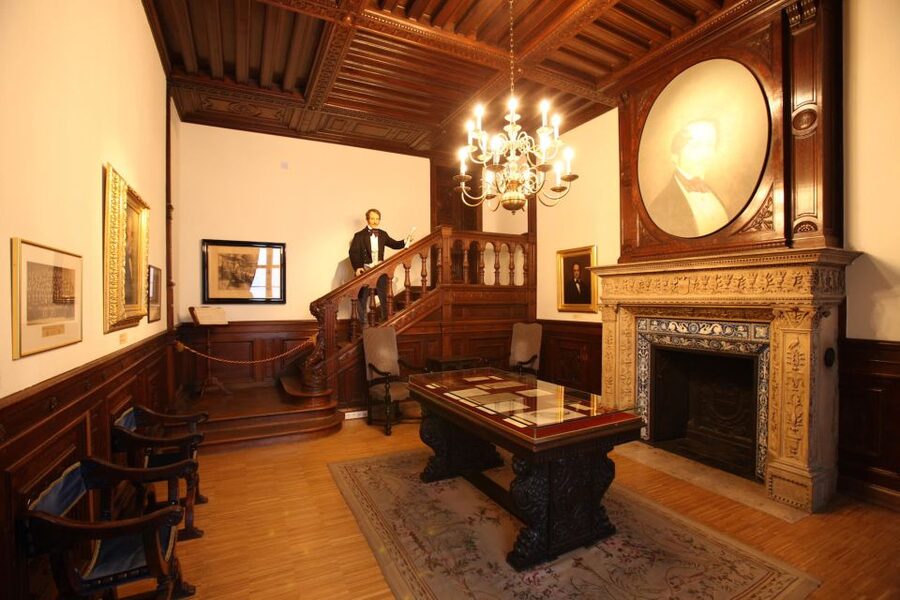
At about $22 per person, the ticket is fair if you plan to stay for at least two hours. You are paying for several connected subjects: the Vienna Philharmonic, composer history, the science of sound, interactive music games, and audio material.
The value improves for families because adults and children can use the same museum in different ways. A child may care most about the conductor challenge or Namadeus, while you may spend longer with Mozart, Mahler, or the orchestra documents.
The ticket is less attractive if you want only a traditional classical music collection. In that case, parts of the museum may feel too playful or technologically focused. It is also not the best choice for someone who wants a short, quiet stop with only paintings and historic objects.
Compared with a single concert ticket, the price is modest, but this is not a substitute for hearing an orchestra perform live. Think of it as an activity that explains music from several angles and gives you control over the experience.
Who will enjoy Haus der Musik most?
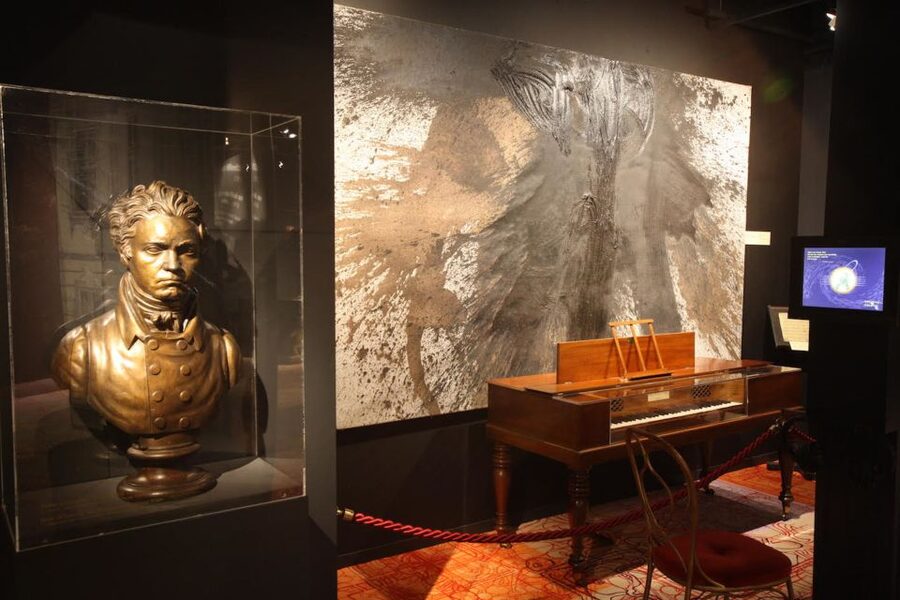
I would recommend this museum to families with school-age children, couples looking for a light cultural activity, and adults who enjoy science as much as history. It also works well for music lovers who want something more active than a standard composer exhibition.
The museum is especially useful on a day when the weather is poor, since you can spend several hours indoors without running out of material quickly. It can also fill a gap in a central Vienna itinerary because of its first-district location.
You do not need musical training. The interactive displays explain themselves through action, and the app guide can supply more information if you want it. A person who thinks they dislike classical music may still enjoy the physics, games, and virtual orchestra.
The museum may be less suitable if you need a tightly timed visit or dislike digital exhibits. Some of the most memorable material asks you to press, listen, move, or experiment. That is the point, but it will not suit every museum style.
Access, language, and practical details
Haus der Musik has step-free access at the main and side entrances, automatic sliding doors, and wheelchair-accessible elevators. Wheelchair-accessible toilets are in the inner courtyard and on the top floor.
A person accompanying a visitor with a visual impairment or a wheelchair user enters free of charge. Guide dogs are permitted, and admission is free for children under three.
You can pick up free floor plans at the ticket office in the same languages offered for the museum information. The downloadable e-guide works in eight languages, while the children’s app is available in two.
There is no transfer included, so you make your own way to Seilerstätte 30. There is no food or drink included either. The ticket allows free cancellation up to 24 hours before the visit, and you can reserve now and pay later if you want to keep your plans flexible.
The best way to approach your visit
I would start with the orchestra section and composer floor, then move to the sound experiments. That order gives you the cultural setting before the museum turns fully hands-on.
Save the conductor challenge and Namadeus for moments when you have enough time to wait and play with them. If you are visiting with children, let them choose a few stations rather than trying to control every minute.
Use the smartphone guide when you want more detail, but do not feel obliged to listen to everything. The museum works best when you alternate between reading and doing.
Finally, bring headphones and keep your schedule loose. The museum’s main strength is the mix of serious material and playful exhibits, and you will enjoy it more if you can linger at the activities that catch your attention.
Should you book Haus der Musik?
Book it if you want a museum that explains Vienna’s musical tradition without requiring a formal background. The conductor challenge, Mozart name game, waltz activity, and sound displays give you clear reasons to participate, while the composer rooms and Philharmonic collection provide substance.
I would be cautious only if you want a quiet, traditional museum or have less than an hour available. For most families, music lovers, science fans, and curious first-time visitors, the $22 admission offers enough variety to justify several hours in central Vienna.
FAQ
Where is Haus der Musik located?
Haus der Musik is at Seilerstätte 30 in Vienna’s 1010 district, in the heart of the city.
How long is the ticket valid?
The ticket is valid for one day from the time you first activate it.
What languages are available for the museum guide?
The free smartphone e-guide is available in eight languages. A children’s app is available in two languages, and free floor plans are available at the ticket office in the same languages.
Is Haus der Musik wheelchair accessible?
Yes. The museum has step-free access at the main and side entrances, automatic sliding doors, and wheelchair-accessible elevators. Accessible toilets are located in the inner courtyard and on the top floor.
Are children admitted free?
Children under three enter free. A person accompanying a visitor with a visual impairment or a wheelchair also enters free.
Is the Namadeus certificate included?
No. The Namadeus Game is part of the museum experience, but the certificate is not included in admission.
Recently added around Vienna
- Vienna: Private tour Mauthausen and Linz★ 4.1 · 3 reviews
- 2-Day Prague Tour from Vienna with private Transfers and Lunches★ 5.0 · 3 reviews
- Vienna Self Guided Sherlock Holmes Murder Mystery Game★ 4.5 · 3 reviews
- Vienna Private Schönbrunn Palace Tour, Extra Rooms and Gardens★ 5.0 · 3 reviews
- Salzburg and Lake Region Private Day Trip from Vienna★ 5.0 · 3 reviews
- Small-group Vienna Wine Tour★ 5.0 · 3 reviews
- True Crime mobile puzzle rally Vienna★ 4.0 · 3 reviews
- Exploring the Gutenstein Alps★ 5.0 · 3 reviews
Vienna Tours, compared.

Vivaldi’s Four Seasons Concert in Karlskirche
Read our review →

Skip-the-cashier-desk-line Giant Ferris Wheel Ride
Read our review →
Schönbrunn Palace & Gardens Skip-the-Line Tour
Read our review →
Light of Creation Votive Church Immersive Light Show
Read our review →

Skip-the-Line Sisi Museum, Hofburg and Gardens Tour
Read our review →