
Reviewed · VIENNA TOURS
Vienna: Tickets for Mozarthaus Vienna with Audio Guide
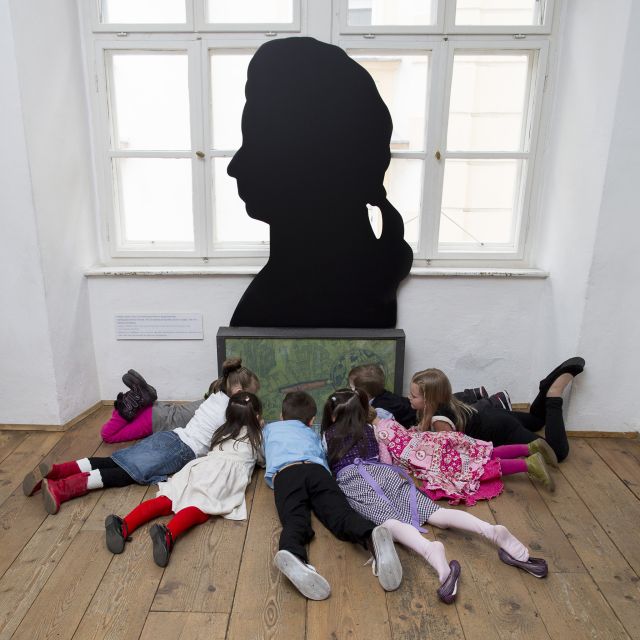
Mozart’s only preserved Vienna apartment is the heart of this visit. You walk through the rooms where he lived from 1784 to 1787 and composed more music than anywhere else, including Figaro. I like the self-guided format, which lets you set your own pace, and the audio guide in many languages, including a separate version for children.
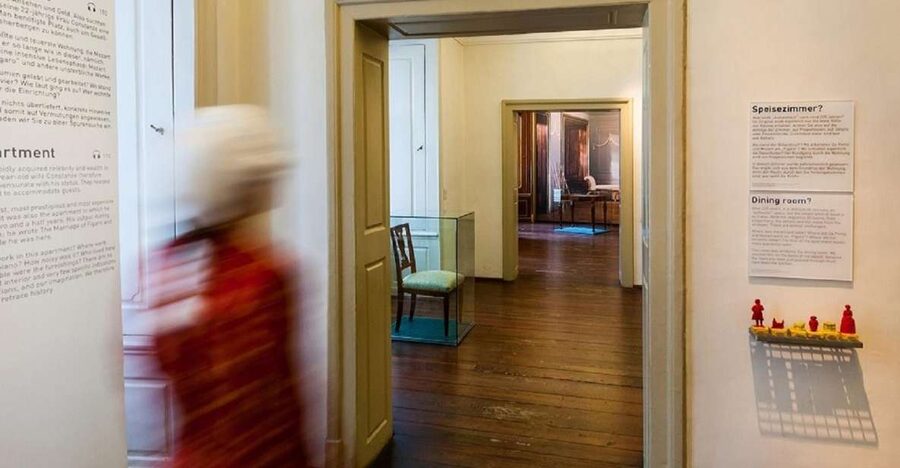
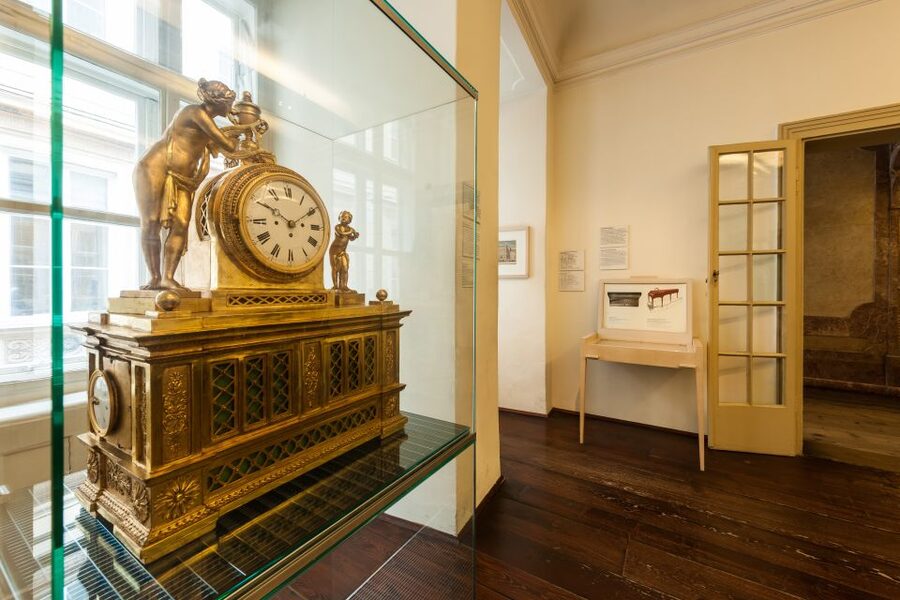
The main caution is that this is more of an information-rich museum than a furnished home. You will see the layout of Mozart’s apartment, displays, pictures, and a few original items, but not a room-by-room recreation filled with his furniture and instruments.
Key points at a glance
- Mozart’s only preserved Vienna apartment: See the rooms connected with the composer’s most productive Vienna years.
- Three exhibition levels: Learn about Mozart’s life, his work, and the Vienna of his time.
- Audio guide included: Adult commentary is offered in 13 languages, with a children’s version in 8 languages.
- A self-paced visit: You can spend longer on the music and exhibits that interest you most.
- Optional Haus der Musik ticket: Add Vienna’s interactive sound museum with the Mozart and More combination.
- Plan for a phone-based audio tour: Bring earphones, since some ticket holders use their own mobile phone for the commentary.
Why Mozart’s Vienna apartment matters
Mozart lived in several places during his life, but this is the only one of his Vienna apartments that remains. He stayed here from 1784 to 1787, a key period when his career and creative work were at their height.
That fact gives the visit a strong sense of place. You are not simply looking at a general Mozart display. You are entering the building connected with the part of his life that the museum explores most closely.
The apartment also has a direct link with Figaro. Knowing that Mozart composed this famous work here gives the rooms a special pull, even though the interiors are not presented as a fully furnished reconstruction.
I find the setting most rewarding when you treat it as a place of context rather than a preserved time capsule. The building helps you picture where Mozart worked and lived, while the exhibition explains the people, music, and Vienna circumstances around him.
More self-guided routes in Vienna:
- Vienna: New Hofburg Palace Audio-Guided Tour & Entry Ticket
★ 4.1 · 566 reviews - Vienna: Schlumberger Wine Cellar Guided or Self-Guided Tour
★ 4.8 · 285 reviews - Vienna: Scavenger Hunt Self-Guided Tour
★ 4.7 · 83 reviews
The apartment, rooms, and missing furniture
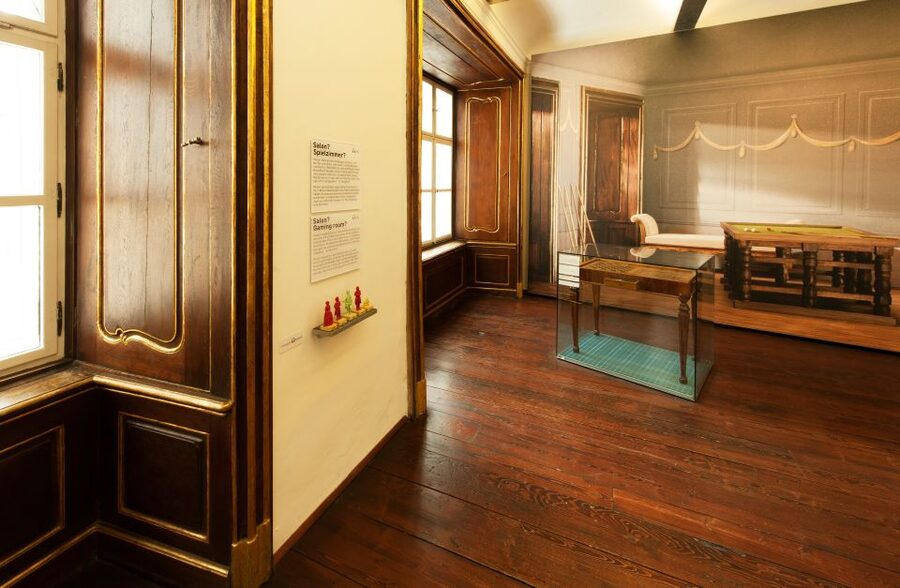
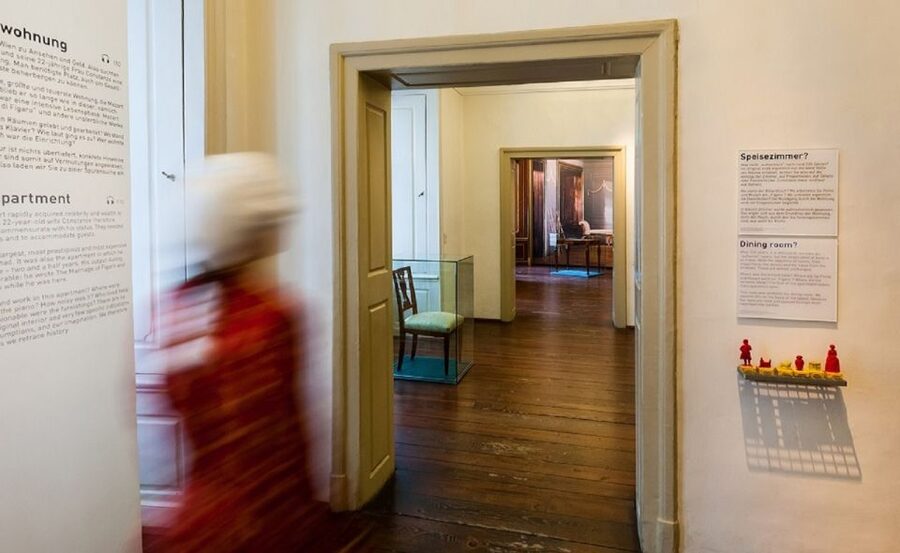
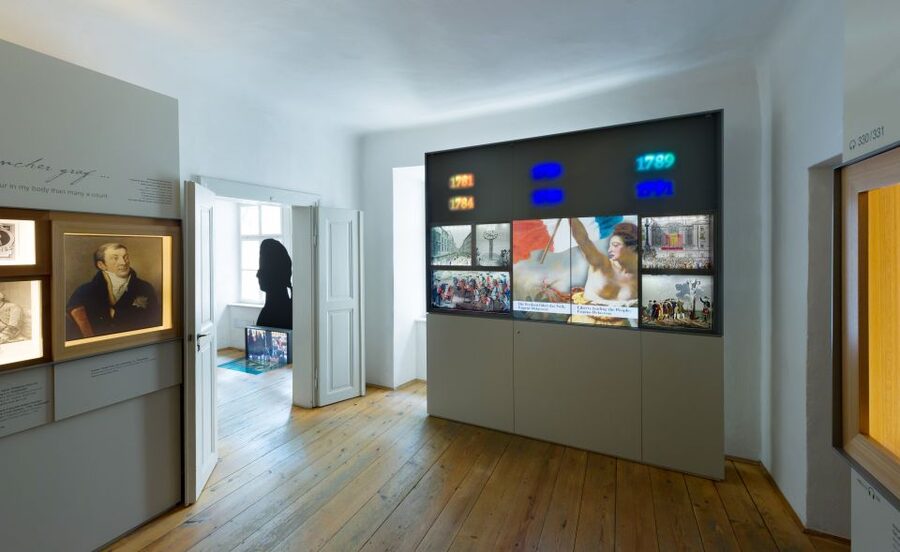
The apartment is not large, and the museum does not pretend that every object belonged to Mozart. Some rooms are largely empty, with displays and information panels doing much of the work.
That can surprise you. If you expect to see Mozart’s desk, bedroom, instruments, and personal belongings arranged just as he left them, you may find the visit spare. Very few objects connected directly to Mozart have survived, and some displays focus on copies, projections, or later material rather than original possessions.
Still, the layout gives you a useful idea of the property and how people lived in the period. Walking through the rooms is more meaningful once you listen to the audio commentary, since the bare walls alone cannot tell you much.
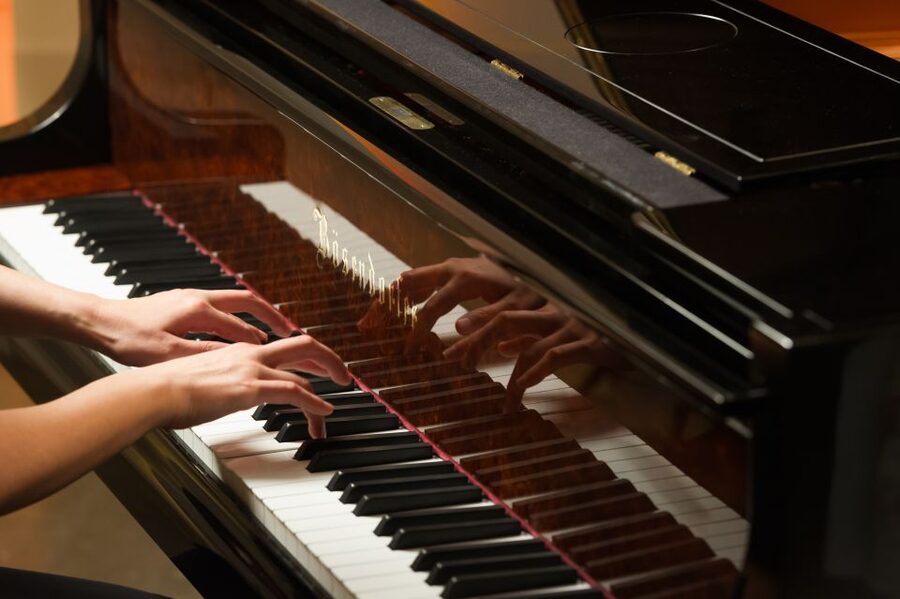
One display includes an authentic piano associated with the museum presentation, an object that can make you wish the rules allowed you to play it. Photography and video are not permitted inside, so keep your camera in your bag and enjoy the rooms without trying to document every panel.
Three floors of Mozart and Vienna
The exhibition spreads across three levels. The main focus is Mozart’s Vienna period, not a full account of every stage of his life from childhood onward.
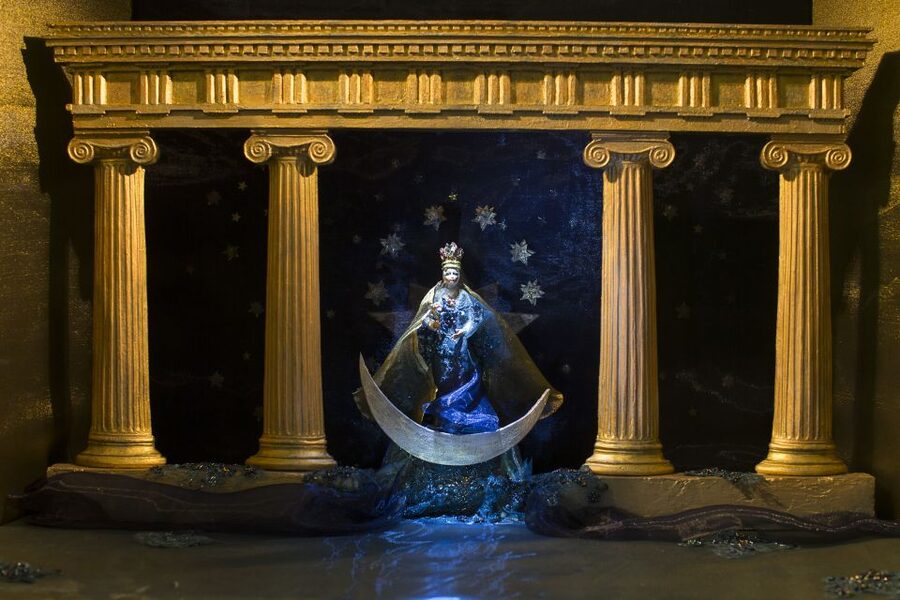
You will find information about his work, the era in which he lived, and the important pieces connected with his creative achievement. Pictures, written panels, projections, and small-scale models add visual material, but the museum remains more text-based than hands-on.
I recommend using the audio guide as your main thread. It adds explanation to the rooms and helps you decide which displays deserve extra time. Without it, the museum can feel like a series of panels to read rather than a visit built around a clear story.
The audio is available in English, German, Slovak, Spanish, French, Hungarian, Italian, Polish, Russian, Chinese, Czech, Japanese, and Korean. A children’s audio guide is offered in eight languages, making the visit more workable for families, although younger children may still find the amount of reading and listening demanding.
The audio guide and how to use it well
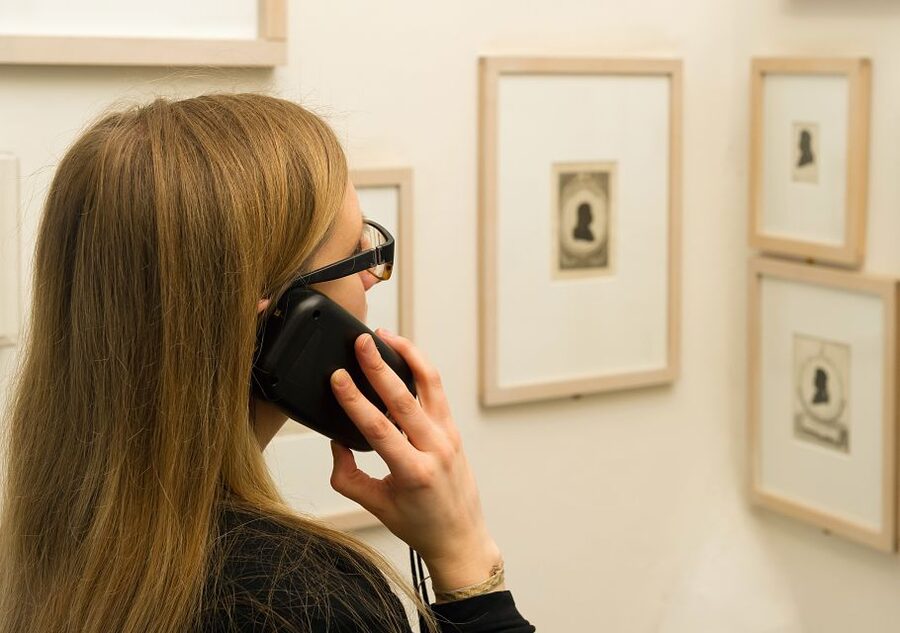
The audio guide is free with admission and is one of the most useful parts of the ticket. It gives structure to a self-guided visit, so you are not tied to a scheduled group or a live guide’s pace.
There is an important practical detail. Some ticket holders use their own phone to access the audio tour, rather than receiving a separate traditional handset. Bring your phone charged and pack earphones. Headphones keep your hands free and make it easier to listen while moving between rooms.
The commentary can take time, especially if you listen to every section. In places, you may find yourself standing near a display until the audio finishes before moving on. If you want a shorter visit, select the tracks that interest you most instead of treating every stop as compulsory.
I like that the audio lets you choose your level of detail. A Mozart enthusiast can linger over the musical material, while a casual visitor can focus on the apartment and the main events of his Vienna years.
A few more Vienna half-days to weigh up
- Vienna: Self-Guided Audio Walking Tour on Your Phone
★ 3.8 · 33 reviews - The Heart of Vienna: A Self-Guided Audio Tour
★ 4.0 · 29 reviews - Vienna Scavenger Hunt and Highlights Self Guided Audio Tour
★ 4.5 · 13 reviews - Palais Lobkowitz Audio Guide Tour
★ 4.0 · 3 reviews
What the museum does well
The museum’s strongest quality is its direct connection to Mozart’s daily life in Vienna. You can stand in the same rooms where he lived during a highly productive period, and that physical link is difficult to reproduce through a concert or a biography alone.
The exhibition also places the composer in his period. It is not only a room with a famous name attached to it. You get information about the city, the era, and Mozart’s work, which gives the apartment more meaning.
The independent format is another advantage. You can pause, replay the audio, move at your own speed, or spend extra time with the music. That works especially well for couples or families whose interests do not line up perfectly.
The staff and ticket process are described as friendly and orderly, and the cloakroom is included. That is useful in Vienna, where you may be carrying a coat or day bag as you move around the city.
Where expectations need adjusting
This visit suits a person who enjoys context, music, and historic rooms more than someone looking for a theatrical recreation. The apartment is not decorated as a complete home, and the museum has only a small number of Mozart artifacts.
Some displays that were once physically present may change over time. For example, material once shown as an original note has been presented as a projection instead. That is worth keeping in mind if you are hoping to see a large collection of handwritten scores or personal objects.
The museum also has limited interactivity. You will see information panels, images, models, and audiovisual material, but much of the visit involves listening and reading. Seats are not available everywhere, so you may spend part of the audio tour standing.
Temperature has also been uncomfortable at times, with reports of rooms feeling too warm. Conditions can vary, but if you are sensitive to heat or prefer to sit while listening, plan for a slower and less active visit.
Adding Haus der Musik with the Mozart and More ticket
If you want more than a traditional museum visit, consider the combined Mozarthaus and Haus der Musik ticket. Haus der Musik is a modern, interactive sound museum in Vienna’s historic center, set across four floors of a former palace.
The two venues offer different experiences. Mozarthaus concentrates on Mozart’s apartment, life, work, and Vienna setting. Haus der Musik lets you try making music and interact with sound in a more hands-on way.
That combination is especially sensible for families and mixed-interest groups. One person can enjoy the historical material at Mozarthaus, while another may prefer the practical sound displays at Haus der Musik.
The combo also gives your music day more range. You get the quiet, reflective side of Mozart’s life alongside a museum built around participation and experimentation. Just check the option carefully when booking, since Haus der Musik admission is included only with the combined choice.
Who will enjoy this most
I would choose this visit if Mozart’s music already means something to you, or if you want a focused introduction to his Vienna years. It is also a good stop for anyone interested in how historic homes can reveal a composer’s working life.
Families can use the children’s audio guide, but I would set expectations before entering. The subject matter is presented through listening, reading, and displays, so children who need constant hands-on activity may prefer the Haus der Musik addition.
Casual classical-music listeners can still enjoy the apartment and the major musical references. You do not need to know every opera or concerto, but the experience becomes more rewarding when you take time with the audio rather than simply walking through the rooms.
If you mainly want original objects, a furnished residence, or a large collection, this may feel underwhelming. The attraction is the surviving apartment and the story built around it, not a room packed with Mozart possessions.
Price, timing, and practical value
At $18 per person, the standard ticket is reasonably priced for a central Vienna museum, especially because admission includes the audio guide, cloakroom, and any temporary exhibition running at the time. The value depends on your expectations.
For a Mozart fan, the price is easy to justify because the apartment is unique in Vienna. You are paying for access to a specific place tied to his most productive years, supported by a substantial audio and exhibition program.
For a casual visitor, the value is less automatic. The museum is not very large, and the apartment itself can be seen fairly quickly. You get more from the ticket if you listen to the commentary and take time to understand the Vienna setting.
The experience is valid for one day, with starting times based on availability. There are no transfers, food, or drinks included, so you will arrange your own way there and plan your refreshments separately.
The booking terms are flexible: you can cancel up to 24 hours before the visit for a full refund, and the reserve-now, pay-later option lets you hold the plan without paying immediately. The venue is wheelchair accessible. Bring a student card if you plan to use student status, along with a passport or other identity card.
How long should you allow?
No fixed tour length is given, so your time depends on how much of the audio you hear and how carefully you read. A quick visit will focus on the rooms and main displays, while a full visit takes longer because the commentary contains substantial detail.
I would avoid squeezing this into a rushed gap between major sights. The audio works best when you can stop, listen, and look at the display in front of you. If you have limited time, choose the most important tracks and accept that you will not absorb every panel.
The one-day validity gives you useful flexibility, but it does not turn the museum into an all-day attraction. Think of it as a focused cultural stop, then pair it with Haus der Musik or another central Vienna sight if you want a fuller music-themed outing.
My booking advice
Book Mozarthaus Vienna if you want to stand in Mozart’s only preserved Vienna apartment and learn how his Vienna years shaped his work. The audio guide, broad language choice, and self-paced format make the visit easy to adapt to your interests.
Go in expecting a thoughtful museum with empty or lightly furnished rooms, not a perfect reconstruction of Mozart’s home. Bring earphones, allow time to listen, and choose the Haus der Musik combination if you want more interactive music after the apartment.
For dedicated Mozart fans, this is a strong choice. For everyone else, it is best as a compact, focused visit rather than Vienna’s only music attraction.
FAQ
Where is Mozarthaus Vienna located?
Mozarthaus Vienna is in Vienna, Austria. The exact meeting point can vary depending on the ticket option booked.
What is the price of admission?
The listed price is $18 per person for admission to Mozarthaus Vienna with the audio guide.
How long is the ticket valid?
The ticket is valid for one day. Starting times depend on availability.
Is an audio guide included?
Yes. Admission includes an audio guide for adults and a children’s audio guide.
Which languages are available for the adult audio guide?
The adult audio guide is available in English, German, Slovak, Spanish, French, Hungarian, Italian, Polish, Russian, Chinese, Czech, Japanese, and Korean.
Is there an audio guide for children?
Yes. A children’s audio guide is available in eight languages.
Can I add Haus der Musik?
Yes. You can select the Mozart and More combination, which includes admission to Haus der Musik as well as Mozarthaus Vienna.
Is Haus der Musik included with every ticket?
No. Haus der Musik admission is included only if you select the combined ticket option.
Can I take photographs or record video inside?
No. Photography and video recording are not allowed inside the museum.
What should I bring?
Bring a student card if relevant, plus a passport or identity card. Earphones are also practical if your audio tour is accessed through your own mobile phone.
Can I cancel my booking?
Yes. You can cancel up to 24 hours in advance for a full refund.
Is payment required at the time of booking?
The reserve-now, pay-later option lets you book without paying immediately.
Is Mozarthaus Vienna wheelchair accessible?
Yes. The activity is wheelchair accessible.
Are food, drinks, or transfers included?
No. Transfers, food, and drinks are not included.
Recently added around Vienna
- Vienna: Private tour Mauthausen and Linz★ 4.1 · 3 reviews
- 2-Day Prague Tour from Vienna with private Transfers and Lunches★ 5.0 · 3 reviews
- Vienna Self Guided Sherlock Holmes Murder Mystery Game★ 4.5 · 3 reviews
- Vienna Private Schönbrunn Palace Tour, Extra Rooms and Gardens★ 5.0 · 3 reviews
- Salzburg and Lake Region Private Day Trip from Vienna★ 5.0 · 3 reviews
- Small-group Vienna Wine Tour★ 5.0 · 3 reviews
- True Crime mobile puzzle rally Vienna★ 4.0 · 3 reviews
- Vienna: Wachau Valley Private Kayak and Wine Tour★ 5.0 · 3 reviews
Vienna Tours, compared.

Vivaldi’s Four Seasons Concert in Karlskirche
Read our review →
Skip-the-cashier-desk-line Giant Ferris Wheel Ride
Read our review →
Schönbrunn Palace & Gardens Skip-the-Line Tour
Read our review →
Light of Creation Votive Church Immersive Light Show
Read our review →

Skip-the-Line Sisi Museum, Hofburg and Gardens Tour
Read our review →
Hallstatt & Alpine Peaks Day Trip with Skywalk Lift
Read our review →Browse the lists this tour appears in