
Reviewed · SPANISH RIDING SCHOOL TICKETS
Vienna Spanish Riding School Guided Tour
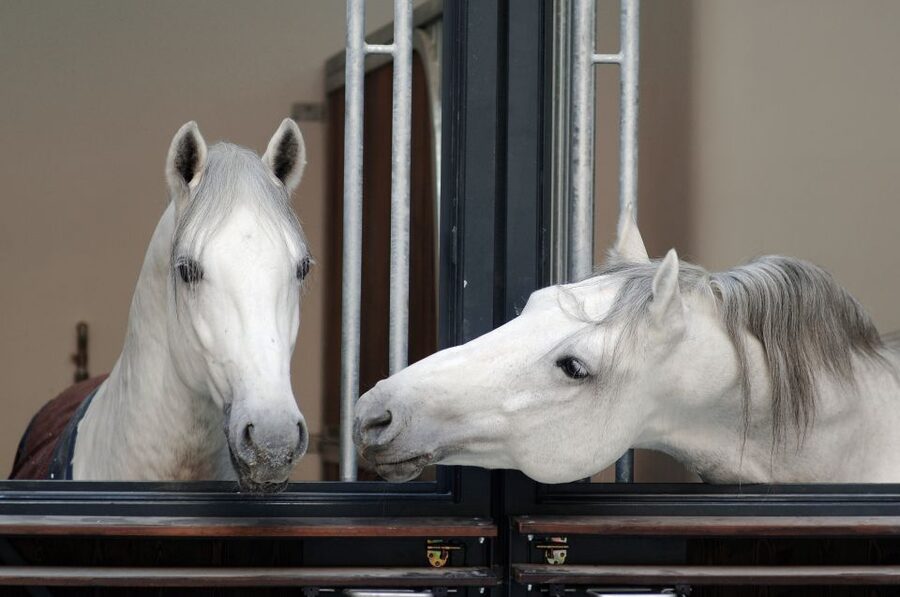
Vienna’s Spanish Riding School is not simply a place to see beautiful horses. It is a working institution with more than 450 years of continuous operation, where riders still train in the classical Renaissance tradition of Haute Ecole. This guided tour takes you into the Winter and Summer Riding Schools, the Stallburg stables, and the rooms behind the polished public image. I especially like the close look at the Lipizzaner stallions and the way the guides explain daily training, breeding, tack, and rider selection.
I also like that the 55-minute length gives you a solid introduction without taking half a day from your Vienna sightseeing. The main consideration is that this is not a performance or morning exercise ticket. You see the buildings, equipment, and horses, but you may not see them perform, and photography, video, and touching the horses are not allowed.
Key points to know before you go
- The stallions are the stars: See Lipizzaners in their historic stables, sometimes close enough to study their markings and calm manner.
- Two riding schools are included: Visit the ornate Winter Riding School and the Summer Riding School with its world’s largest oval horse walker.
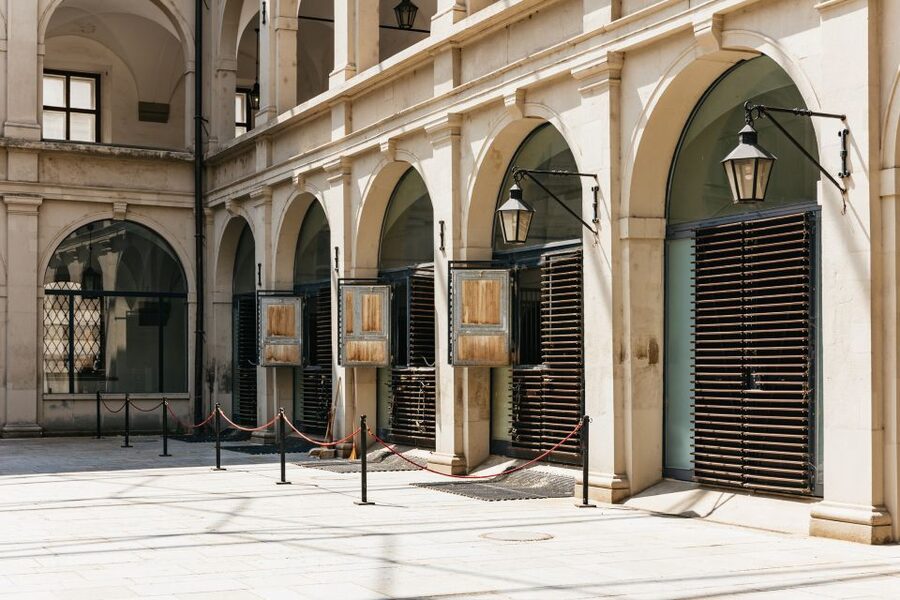
- The Stallburg is part of the story: Walk through Vienna’s most significant Renaissance building, including its arcade courtyard and working stables.
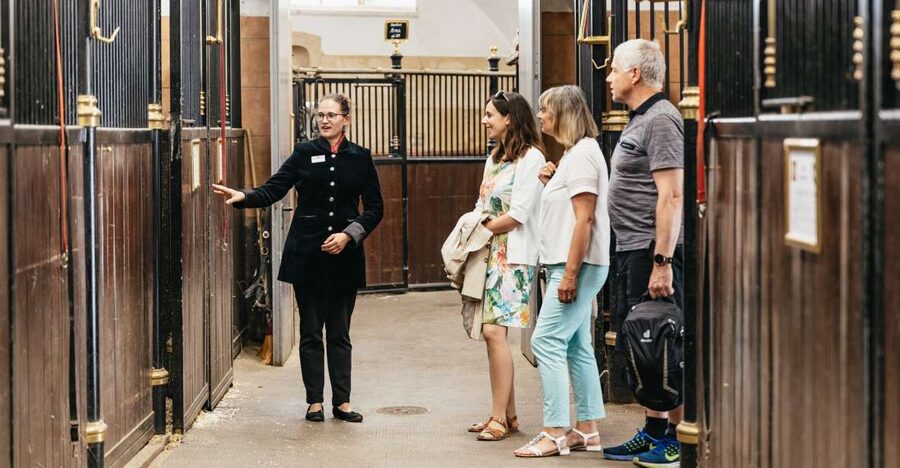
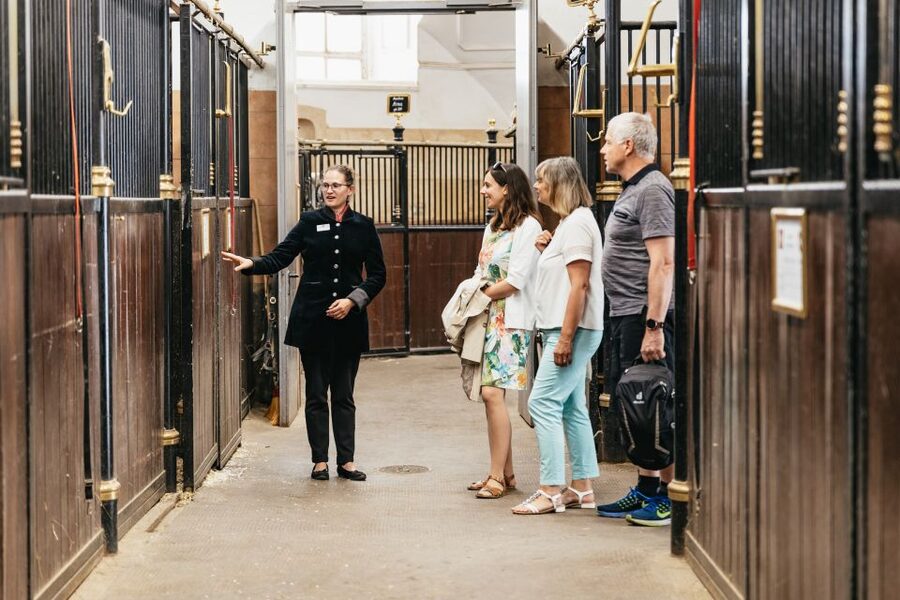
- The guides make the difference: English and German guides explain training, lineage, naming, equipment, and the school’s daily routine.
- No performance is included: The tour is a behind-the-scenes visit, not a ticket for morning exercise or a public show.
- Plan for practical limits: Exchange your mobile voucher at the cashier, collect the ticket no more than one hour before the tour, and note that the route is not wheelchair accessible.
Why this 55-minute tour is more than a stable visit
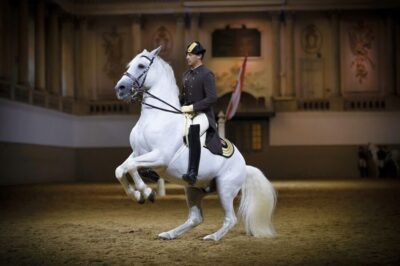
The Spanish Riding School can be easy to misunderstand from the outside. Many people know it for white Lipizzaner stallions performing precise movements in a grand hall. The guided tour gives you the institution behind those famous scenes: the buildings, training spaces, stables, tack, and long process that turns young horses and riders into performers.
I find the tour especially useful if you cannot fit in a performance. It gives you the setting and the vocabulary to understand what you would be seeing in the arena. Even if you know little about horses, the explanations make the school less mysterious. One visitor who booked mainly to see the building ended up enjoying the history and current practices despite having no horse experience.
The price is about $28 per person. That is fair for a central Vienna attraction lasting nearly an hour, especially since the tour reaches areas you would not experience by simply looking at the exterior. It is less appealing if your main goal is to watch a horse execute the famous school movements. For that, you need a separate performance or morning exercise ticket.
More Spanish Riding School tickets:
- Vienna: Spanish Riding School Training
★ 3.9 · 9,281 reviews - Performance Of The Lipizzans At Spanish Riding School
4,190 reviews - Vienna: Spanish Riding School 45-Minute Performance Show
★ 3.9 · 731 reviews
Entering the Winter Riding School
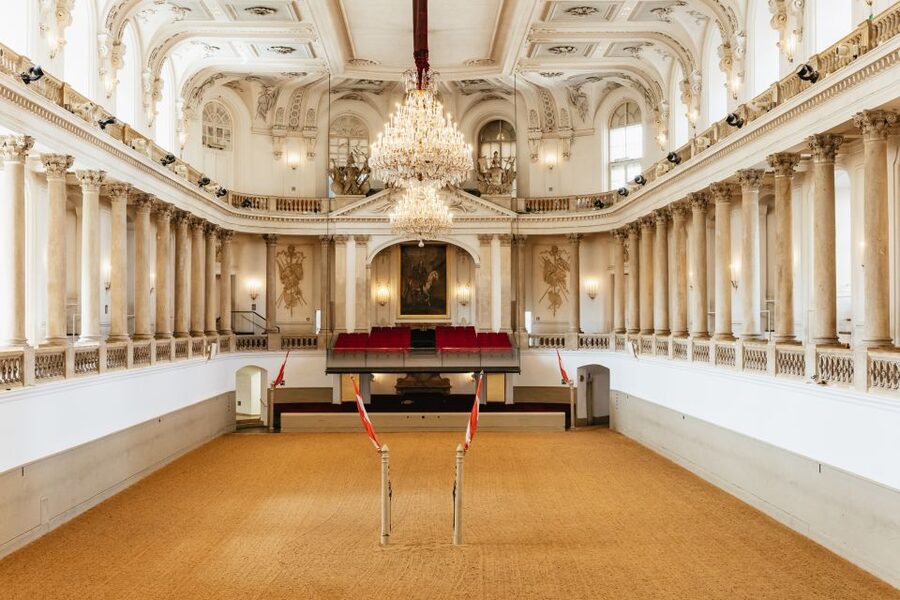
The tour begins at the Winter Riding School, the grand Baroque arena associated with the public side of the Spanish Riding School. Your guide brings the group into the performance area and explains how the room functions, linking its architecture to the equestrian tradition practiced there.
This first stop gives the tour its sense of place. You are not hearing a general talk about horses in an ordinary stable. You are sitting or standing inside one of Vienna’s most formal spaces, where classical riding has been presented and refined over generations.
The guide usually covers the school’s origins, the principles of Haute Ecole, and the training of both horse and rider. The best guides add practical detail rather than reciting dates. Sisi has been praised for combining useful information with humor, while guides such as Natasha, Lorelei, Inga, and Pieta are noted for their enthusiasm and ability to handle questions in English.
The information suits both beginners and experienced riders. If you already work with horses, you will still find useful details about the school’s methods and traditions. If you do not ride, the guide provides enough explanation to show why the performances demand years of preparation.
One practical warning: a large group can make it hard to hear at times. Stay near the guide when possible, particularly during the arena talk. The short duration means there is not much spare time if you miss an explanation.
The Summer Riding School and its giant horse walker
The route continues to the Summer Riding School. This part feels more functional than ceremonial, and that contrast helps you understand how the school operates beyond the show arena.
The major feature here is the world’s largest oval horse walker. The walker provides controlled exercise and is an unusual piece of working equipment to see in the middle of a historic city. Your guide explains how the horses are exercised and how the school balances formal training with the animals’ wider care.
The Summer Riding School may not deliver the same visual impact as the Baroque hall, but I think it adds useful substance. The public performances can make the school seem like a stage set. This stop shows the routine behind the display, where horses need exercise, care, and steady preparation whether or not an audience is watching.
The timing of your visit matters. During summer holidays, many of the stallions may be away from the central stables. You can still see some horses, but the number may vary. Several visitors found the remaining horses more than enough to make the visit worthwhile, while others wished they could attend a performance as well. I would book this tour for the buildings and working operation first, with the horses as the welcome bonus.
Inside the Stallburg’s Renaissance courtyard
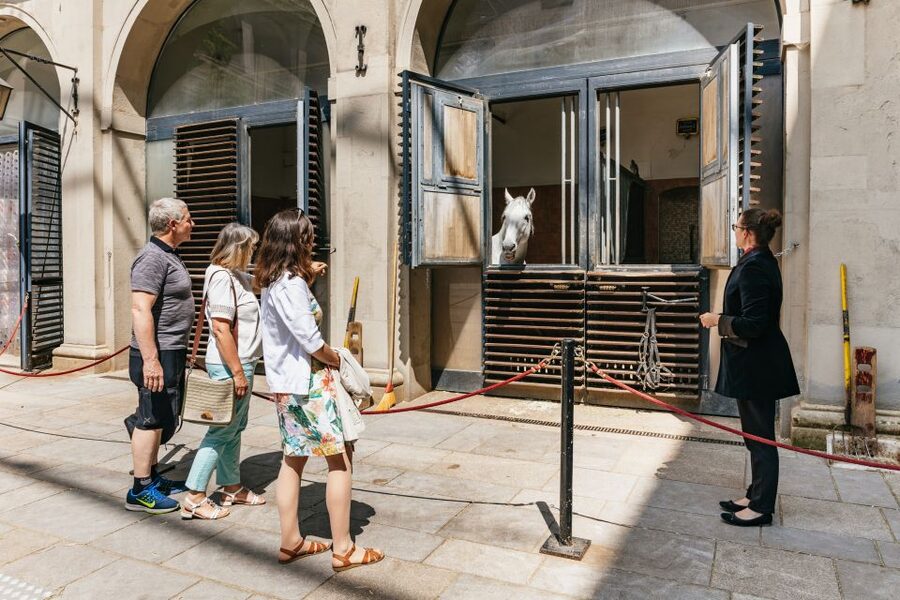
The Stallburg is Vienna’s most significant Renaissance building, and it gives the tour a different architectural flavor. Its arcade courtyard leads you toward the historical stables, where the Lipizzaner stallions are housed.
This is where the tour becomes most personal. You see the horses in their stalls rather than only watching them move across an arena. The setting is close, but controlled. You cannot touch or stroke the horses, and you cannot take photographs or video. Those restrictions can disappoint, particularly if you have imagined a hands-on animal encounter, but they protect the horses and keep the route orderly.
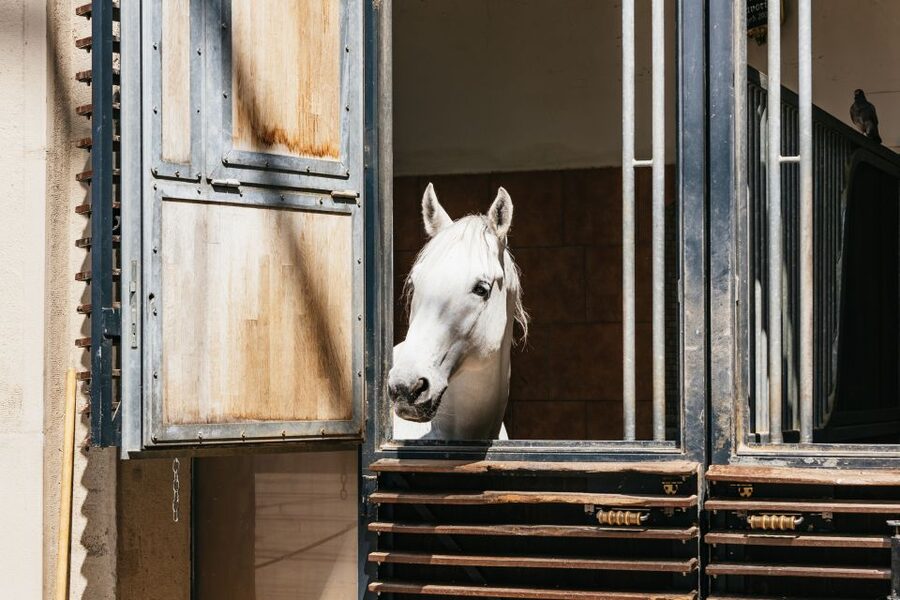
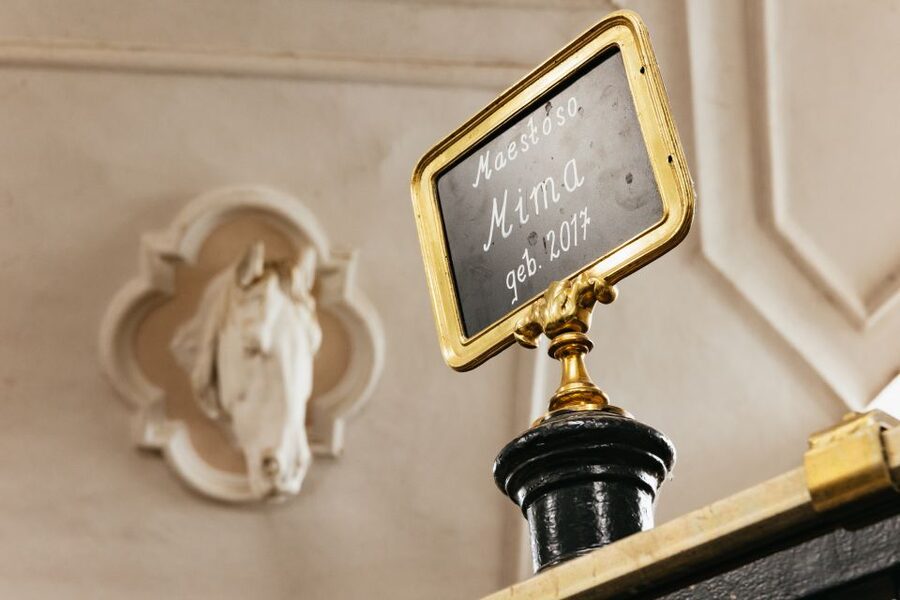
The stable visit is also the place where you learn about the horses as individuals. Guides discuss breeding, lineage, names, ages, and care. The famous white coat does not appear fully at birth, and the school’s horses pass through different stages as they mature. The tour can also include a rare bay horse that never turned white, an unusual sight that adds a small surprise to the visit.
Expect to see the stallions up close, but not necessarily to have every horse visible. Some may be resting, away for seasonal breaks, or positioned inside their stalls. The experience is still much more rewarding than viewing the school from a public corridor because the guide explains what you are seeing.
The horses are treated as working athletes, not props. The tour helps you understand why the school limits contact and photography. You get a clear view, but the visit remains centered on animal care and the institution’s rules.
A few more Vienna half-days to weigh up
- Vienna: Vivaldi’s Four Seasons Concert in Karlskirche
★ 4.7 · 14,951 reviews - Vienna: Skip-the-cashier-desk-line Giant Ferris Wheel Ride
★ 4.5 · 7,859 reviews - Vienna: Schönbrunn Palace & Gardens Skip-the-Line Tour
★ 4.7 · 7,739 reviews - Vienna: Light of Creation Votive Church Immersive Light Show
★ 4.8 · 6,779 reviews
The tack room and the equipment behind the show
The tack room is one of the most useful stops for understanding how the performances come together. You see training equipment and show equipment, and the guide explains how the gear supports the riders and horses.
This is a good moment to ask questions. Guides have explained the daily routines, the training of riders, and the long road required for a horse to become part of the school. One guide, who described himself primarily as a historian rather than a rider, was still able to provide an accurate and engaging account of the institution. That is worth noting if you worry that the tour is only for equestrians. The historical and practical sides are both covered.
You may also see one of the stable’s working cats. They help control mice and, judging by their calm behavior around tour groups, seem to regard the whole business as beneath their notice. It is a small detail, but it adds life to the otherwise formal setting.
Photography is not permitted inside the stables, and the overall rules also prohibit cameras and video recording. Follow the instruction rather than trying to sneak a picture. The guides are careful about respecting the school, and the tour works better when the group does the same.
What the guides add to the experience
The guide is central to the value of this tour. The buildings are impressive on their own, but the route can feel like a quick walk through rooms without context if you do not understand how the school works.
The strongest guides combine facts with a relaxed manner. Sisi has been praised for inviting questions and adding funny remarks. Natasha has been singled out for explaining both history and day-to-day life. Lorelei is known for answering detailed questions from people who work with horses, while Inga has been praised for her enthusiasm and ease with an international group.
Guide assignments change, so you should not book expecting a particular person. Still, the repeated pattern is clear: the guides are expected to explain the horses, riders, training, breeding, equipment, and buildings rather than simply lead you from room to room.
Tours are offered in English and German. If you need English, check the selected departure carefully. Separate language groups may operate, which makes it easier to follow the talk than on a mixed-language tour.
How the tour compares with a performance
This guided visit and a public performance serve different purposes. A performance shows the finished result: trained Lipizzaners moving through precise figures in the Winter Riding School. The guided visit shows the institution that prepares them.
You should choose the tour if you want access to the stables, the Stallburg courtyard, the tack room, and the working areas. It is also the better choice if your schedule does not match the morning exercise or show times. Several people who began with the tour later wanted to find a performance ticket because the background made the riding seem more meaningful.
Choose a performance instead if seeing the horses in motion is your top priority. The guided tour does not include morning exercise tickets, and it does not promise a short demonstration. Some horses may be on seasonal break, too, so the visit is not a substitute for watching a full program.
If your schedule and budget allow, doing both makes sense. The tour supplies the setting and background. The performance then gives you a chance to recognize the training, equipment, and classical movements described by the guide.
Price, timing, and small practical details
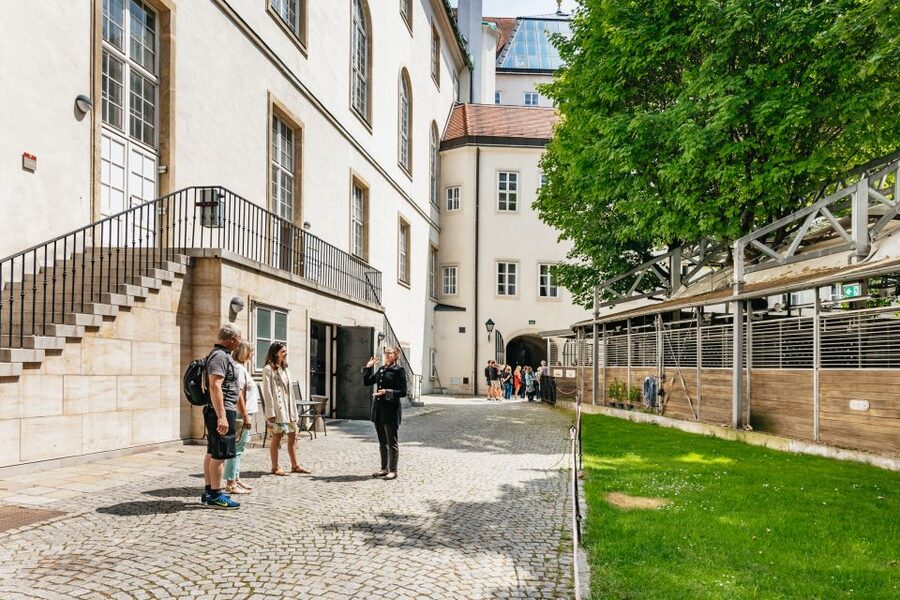
At $28 per person, this is a reasonably priced way to spend an hour in central Vienna. You are paying for access to several distinct spaces and for a live explanation in English or German, not just admission to a building.
The activity lasts 55 minutes. That makes it easy to fit before or after another central Vienna sight, but the pace is fairly fixed. You will move with the group, so do not expect unlimited time at each stall or a long pause in the arena.
Meet at Michaelerplatz 1, at the main entrance of the Spanish Riding School. You must exchange your mobile voucher for a ticket at the cashier’s desk. Ticket pickup is available no earlier than one hour before the activity, so do not arrive several hours early expecting to collect it.
Children under three are not allowed on the guided tour. The route is not accessible to wheelchair users, and wheelchair users should not book this activity. Pets are also not allowed.
Free cancellation is available up to 24 hours before the activity for a full refund. You can also reserve now and pay later, which is helpful if you are arranging several Vienna plans and want to keep the schedule flexible.
Who will enjoy this tour most
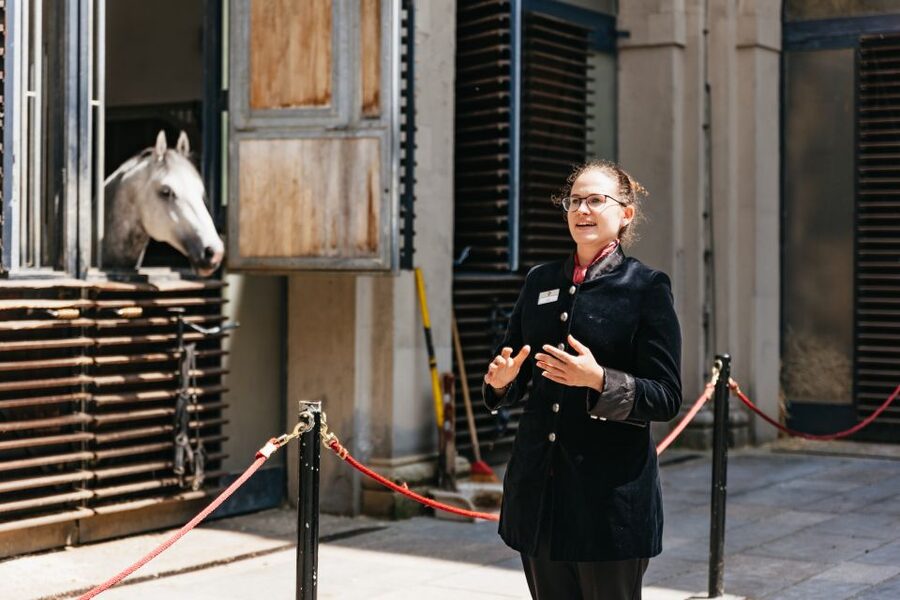
I would recommend the tour to horse lovers, architecture fans, and anyone curious about how a famous performance institution functions from day to day. It works especially well for people who want more than a quick photograph outside the Spanish Riding School.
It is also a good choice for first-time visitors who cannot get performance tickets. The tour explains the school’s traditions without requiring prior equestrian knowledge. You will learn why the horses are selected, how riders train, how the animals are cared for, and how the buildings support the work.
You may want to skip it if you need an accessible route, want to touch animals, or expect nonstop riding action. The tour is guided, structured, and respectful of the school’s rules. The horses are present, but they are not there to perform on demand.
Should you book the Spanish Riding School guided tour?
Book it if you want a close look at Vienna’s famous Lipizzaner institution and care more about the story behind the show than a simple photo opportunity. The Winter Riding School, Summer Riding School, Stallburg courtyard, stables, and tack room make good use of 55 minutes, and a strong guide can turn the visit into a memorable lesson in horses, architecture, and tradition.
For the best value, treat it as the first part of a larger Spanish Riding School experience. If you later attend a performance, you will know what the rooms, equipment, horses, and training represent. If you only have time for one visit, choose the tour for access and explanation, or choose the performance if seeing the famous movements is your main goal.
FAQ
How long does the Spanish Riding School guided tour last?
The tour lasts 55 minutes.
How much does the tour cost?
The price is $28 per person.
What languages are available?
The live guided tour is offered in English and German.
Does the tour include a horse performance?
No. The tour includes a guided visit but does not include morning exercise tickets or a performance.
What locations are included?
You visit the Winter Riding School, Summer Riding School, and the stables in the Stallburg. The route also includes the Stallburg arcade courtyard and the tack room.
Can I take photographs or record video?
No. Photography and video recording are not permitted.
Can I touch the Lipizzaner horses?
No. Touching the horses is not permitted.
Where do I meet the guide?
Meet at Michaelerplatz 1 in Vienna, at the main entrance of the Spanish Riding School. Exchange your mobile voucher at the ticket counter, with pickup available no earlier than one hour before the activity.
Recently added around Vienna
- Vienna: Private tour Mauthausen and Linz★ 4.1 · 3 reviews
- 2-Day Prague Tour from Vienna with private Transfers and Lunches★ 5.0 · 3 reviews
- Vienna Self Guided Sherlock Holmes Murder Mystery Game★ 4.5 · 3 reviews
- Vienna Private Schönbrunn Palace Tour, Extra Rooms and Gardens★ 5.0 · 3 reviews
- Salzburg and Lake Region Private Day Trip from Vienna★ 5.0 · 3 reviews
- Small-group Vienna Wine Tour★ 5.0 · 3 reviews
- True Crime mobile puzzle rally Vienna★ 4.0 · 3 reviews
- Exploring the Gutenstein Alps★ 5.0 · 3 reviews
Spanish Riding School Tickets, compared.
Spanish Riding School 45-Minute Performance Show
Read our review →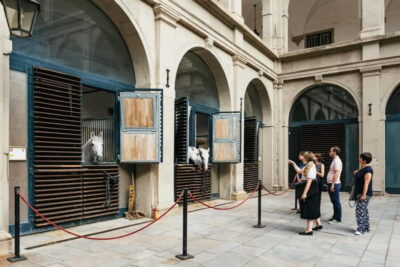
Spanish Riding School Guided Architectural Tour
Read our review →Browse the lists this tour appears in