
Reviewed · VIENNA TOURS
Private Spooky Vienna Tour
Vienna’s grand center has a shadowy side, and this private walk brings it forward through stories of plague, executions, catacombs, devil’s bargains, and mysterious deaths. You’ll move from Helmut-Zilk-Platz through the old center toward St. Stephen’s Cathedral, with the imperial palace and narrow cobbled lanes providing the setting.
I like the small private format, which lets your group hear the guide clearly and ask questions without keeping pace with a large crowd. I also like the focus on storytelling, especially the accounts of Augustin the plague bagpiper, the Blood Countess, and Mozart’s death. The main consideration is the price: $341 is good value for a full group of 25, but costly for only two or three people.
Key points
- A private 90-minute walk through central Vienna: The route links Helmut-Zilk-Platz, the historic center, and Stephansplatz.
- Stories with a distinctly Viennese darkness: Expect catacombs, Blood Alley, plague, death, and medieval deals with the devil.
- Guides Marko and Lisa are noted for lively storytelling: Both bring historical context to the stranger tales.
- A full-group price rather than a per-person fare: $341 works out to about $13.64 each for 25 people, but much more for a small party.
- Rain or shine, with wheelchair access: Plan for outdoor walking on Vienna’s historic streets in all weather.
- English and German tours are available: Confirm the preferred language and final end point when booking.
Vienna’s dark side begins at Helmut-Zilk-Platz
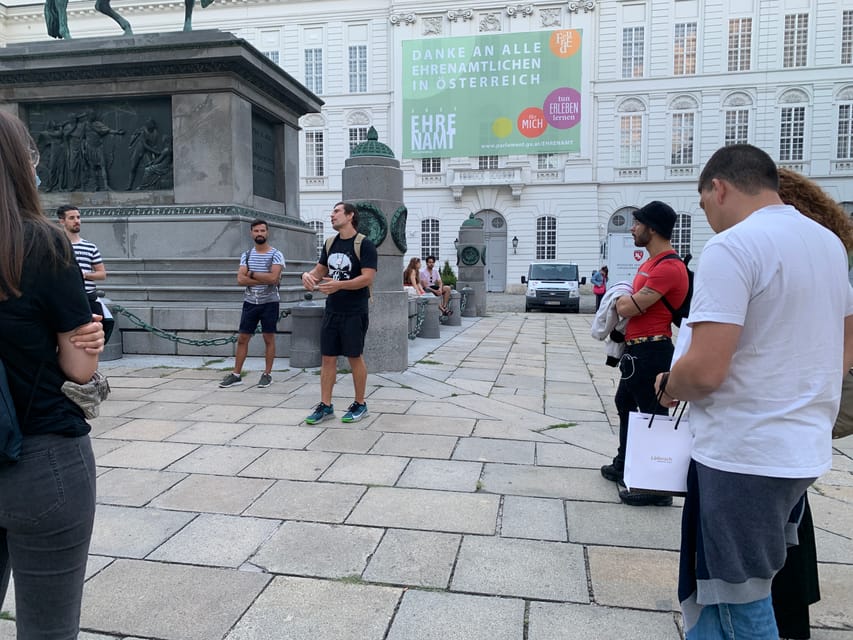
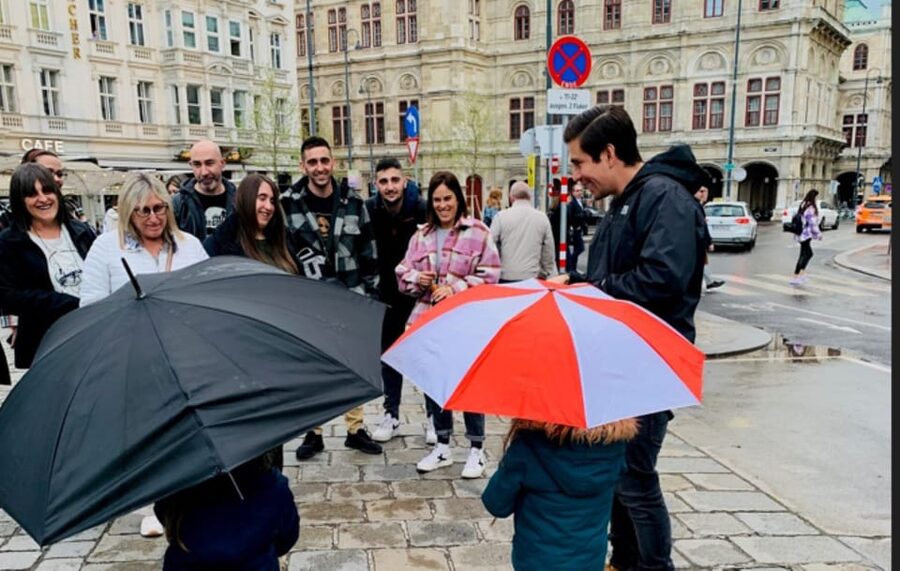
The meeting point is Helmut-Zilk-Platz, in front of the Memorial Against War and Fascism. Look for a guide holding a red-and-white-striped umbrella. That clear visual marker matters in a busy central area, and it saves you from wandering around with your phone out, trying to match street corners to a map.
From here, the tour sets the tone quickly. This is not a general introduction to Vienna’s palaces, museums, and cafés. It is a walk through the city’s less polished stories, the ones involving death, disease, superstition, crime, and fear.
I like this starting point because the memorial gives the first part of the walk a serious mood. The experience is not simply a collection of ghost stories. It connects Vienna’s legends to war, public memory, religion, and the way people once explained events they could not control.
The guide speaks in English or German, and the tour is private. That makes the format especially useful for families, couples, or friend groups who want to ask about a particular story without interrupting a larger public group.
A few more Vienna half-days to weigh up
- Vienna: Vivaldi’s Four Seasons Concert in Karlskirche
★ 4.7 · 14,951 reviews - Vienna: Spanish Riding School Training
★ 3.9 · 9,281 reviews - Vienna: Skip-the-cashier-desk-line Giant Ferris Wheel Ride
★ 4.5 · 7,859 reviews
From imperial grandeur to sinister tales
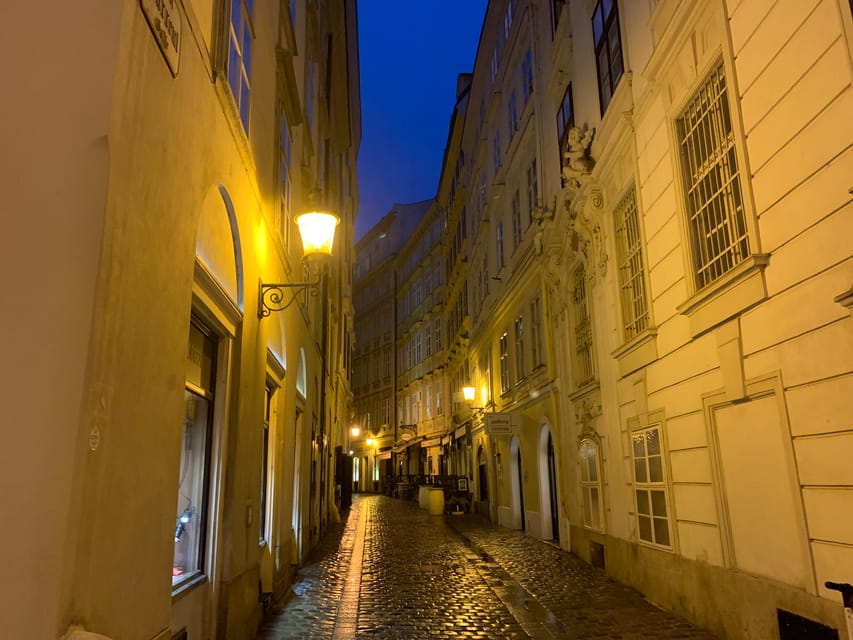
Vienna’s historic center is an excellent setting for this kind of tour. The city’s imperial buildings and church towers suggest power and ceremony, while its side streets and old alleys give the guide room to tell stories about violence, plague, and superstition.
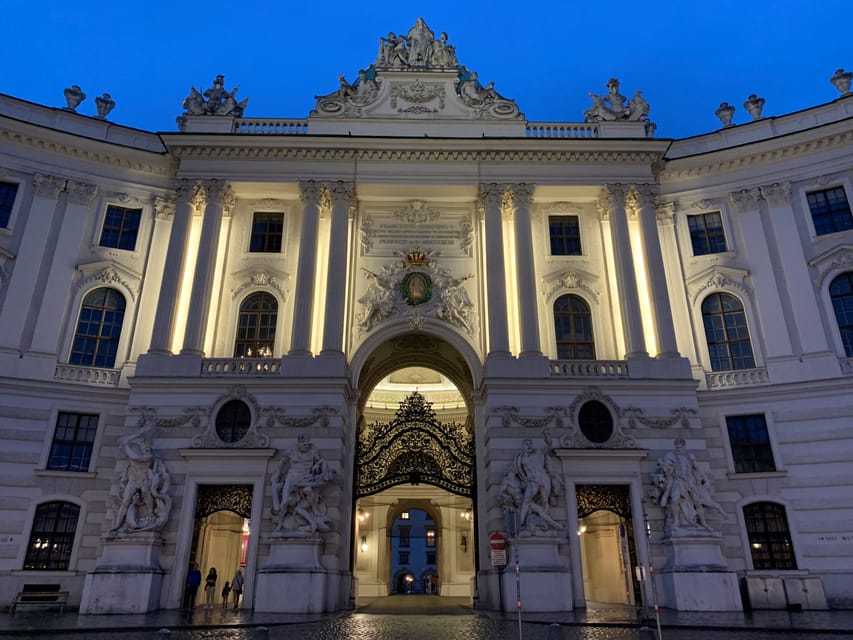
The imperial palace is one of the landmarks included along the way. You will not be taking a full palace tour, so think of this as an atmospheric stop rather than an architectural lecture. The palace helps explain the scale and authority of Vienna, while the darker stories show what life could look like away from courtly ceremony.
The same contrast continues near St. Stephen’s Cathedral. Its importance is easy to see, but the tour uses the area to discuss the catacombs and the city’s long relationship with death. That subject may sound grim, but it gives you a different way to read one of Vienna’s best-known landmarks.
I find this approach more useful than a standard list of dates. You still see famous places, but you also hear how people understood sickness, sin, punishment, and death in earlier centuries. If you have already seen the palace and cathedral on a daytime sightseeing walk, this tour gives familiar places a new mood.
Blood Alley, the Blood Countess, and medieval fear
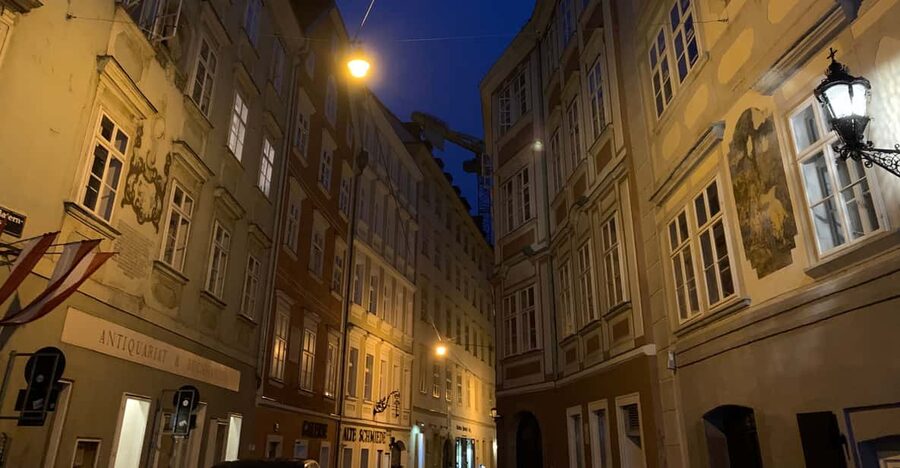
One of the most memorable parts of the route is the story behind Blood Alley. The name alone sounds like a theatrical invention, but the guide explains the history and legends connected with it. This is the kind of detail you might pass without noticing on your own.
The tour also covers the medieval Blood Countess, one of Vienna’s most notorious figures. Her story belongs to the borderland between documented history and later legend, which makes the guide’s explanation important. A good storyteller can keep the tale entertaining while showing you where fact, rumor, and sensational retelling begin to overlap.
That balance is one of the strongest reasons to choose this experience. You are not simply handed a frightening story and told to accept every detail. The best moments come when the guide gives enough historical context to explain why the tale took hold.
Marko is praised for being an excellent storyteller, with a lively and informative presentation. Lisa is also described as fun and clear, with a talent for explaining lesser-known creepy history in a concise way. If you are hoping for a guide who can make old material feel immediate without turning the walk into a stage show, those qualities matter.
Catacombs, plague, and Augustin the bagpiper
The catacombs add a more serious layer to the tour. Vienna’s underground burial spaces are not just a spooky backdrop. They point to the city’s long experience with death and to the limits of sanitation and medicine in earlier times.
The tour does not include a separate catacomb visit. Instead, the subject forms part of the walking conversation. That distinction is important if you are expecting to go underground. You will hear about the catacombs while visiting central landmarks, rather than entering them as a standalone attraction.
The story of Augustin, the bubonic plague bagpiper, provides one of the walk’s more unusual characters. His tale brings personality to a period often reduced to statistics about disease. A name, an instrument, and a dramatic incident are easier to remember than a string of dates, and that is exactly where a strong guide adds value.
The plague material may also appeal to you if you enjoy social history. It shows how ordinary people dealt with fear, rumor, public health, and death. The stories are macabre, but they also explain how Vienna’s citizens responded to crisis.
A different way to spend an afternoon here:
- Vienna: Schönbrunn Palace & Gardens Skip-the-Line Tour
★ 4.7 · 7,739 reviews - Vienna: Light of Creation Votive Church Immersive Light Show
★ 4.8 · 6,779 reviews - Vienna Spanish Riding School Guided Tour
★ 4.7 · 6,765 reviews - Vienna: Classical Concert in the World-Famous Musikverein
★ 4.6 · 6,673 reviews
Devil’s bargains and the city’s stranger beliefs
Another theme asks why apprentices in the Middle Ages were said to make deals with the devil. This is a good example of the tour’s broader subject: not only what happened, but what people believed had happened.
Medieval legends often grew from anxiety about work, status, punishment, and the unknown. An apprentice had limited control over his future, and stories about bargains with the devil gave a supernatural shape to those fears. The guide’s job is to make that connection clear without burying the tale under academic detail.
I like this part because it widens the tour beyond famous villains. The experience is not only about one countess or one murder. It looks at the beliefs that shaped everyday life, including the way people explained sudden death, bad luck, crime, and illness.
The result should suit you if you enjoy history told through human stories. It may not suit you if you want a strictly chronological tour with extensive architectural detail. This walk chooses atmosphere and memorable characters over a full survey of Vienna’s past.
Mozart’s death and the phrase Death must be Viennese
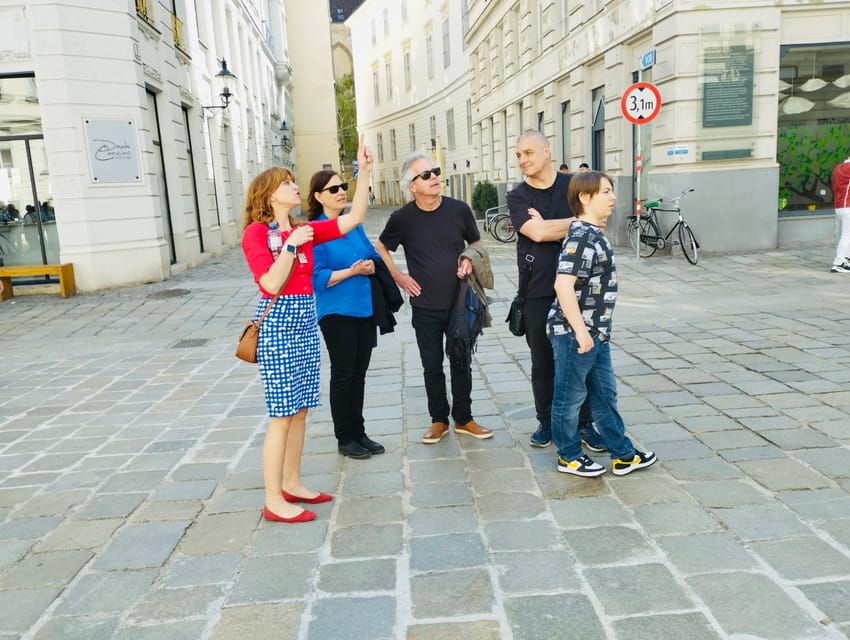
The tour also explores the circumstances and legends surrounding Mozart’s death. Mozart is one of the most familiar names in Vienna, so this subject could easily become a standard music-history stop. Here, the focus is on the darker questions and stories attached to his final days.
A famous poet once described Vienna with the phrase Death must be Viennese. The tour uses that idea to examine why death has such a strong place in the city’s image and culture. Vienna is famous for music, imperial ceremony, coffeehouses, and elegant streets, but its history also contains a long fascination with funerals, burial, disease, and mortality.
This contrast gives the experience its character. You are walking through a polished capital while hearing about the fears and customs that shaped it. I would not book this tour as a replacement for a Mozart concert or museum visit, but it can add an entertaining darker note to a broader Vienna stay.
The route ends near St. Stephen’s Cathedral
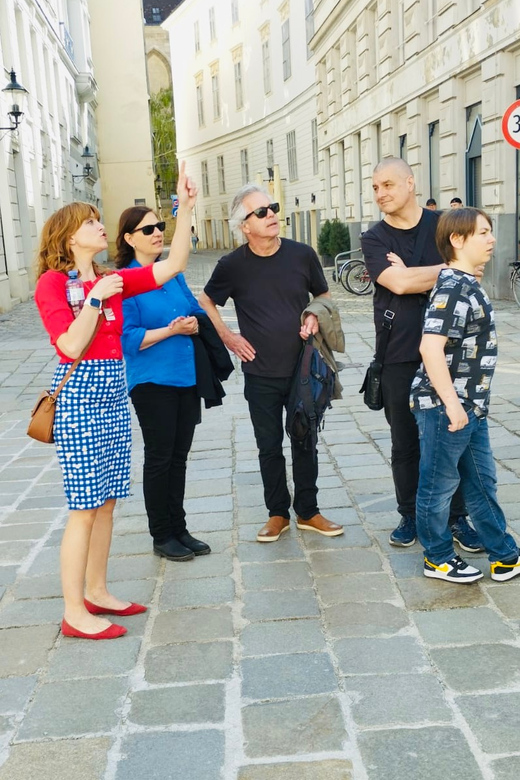
The advertised route finishes at Stephansplatz, beside St. Stephen’s Cathedral. This is a practical ending because you are left in one of the city’s most central areas, close to shops, cafés, public transport, and other major sights.
The walking tour itself lasts about 1.5 hours. That is long enough to cover several connected stories without taking over your day. I would schedule it between larger visits rather than placing it immediately before a timed museum entry. Guides may tell stories at different speeds, and you will want a little breathing room for photographs, questions, and finding your next stop.
There is a small point to confirm before you go. The practical meeting information also describes the activity as ending back at the meeting point, while the route information names Stephansplatz as the finish. Ask Austria Tours & Travel to confirm the exact ending point for your date.
The route is described as wheelchair accessible, but Vienna’s historic center includes cobbled streets. If you use a wheelchair, contact the provider in advance to confirm the precise path and any street conditions expected that day.
What $341 means for your group
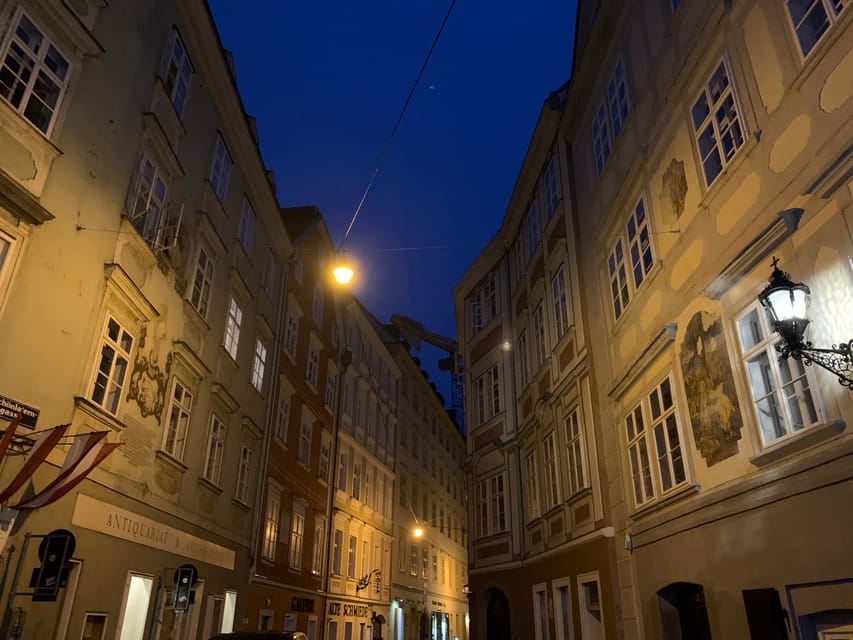
The price is $341 for a private group of up to 25 people. That is not a cheap short walk for a couple, but it can be a fair group purchase.
At the maximum group size, the cost works out to roughly $13.64 per person. For ten people, it is about $34.10 each. For two people, it becomes $170.50 per person, which is a steep price for 90 minutes.
The value comes from privacy rather than length. You are paying for your own guide, your own pace, and the chance to ask questions about the stories or landmarks that interest you most. If your group includes several friends or family members, the fixed group rate becomes easier to justify.
I would compare this with a standard shared walking tour only if budget is your main concern. A shared tour may cost less per person, but it will not give you the same control over the conversation. For a birthday, school group, reunion, or family outing, the private format may be worth the extra cost.
The booking terms also reduce some risk. You can reserve now and pay later, and cancellation is free up to 24 hours before the tour for a full refund. The tour operates rain or shine, so check the forecast and bring suitable shoes and rain protection.
Who will enjoy this Vienna walking tour?
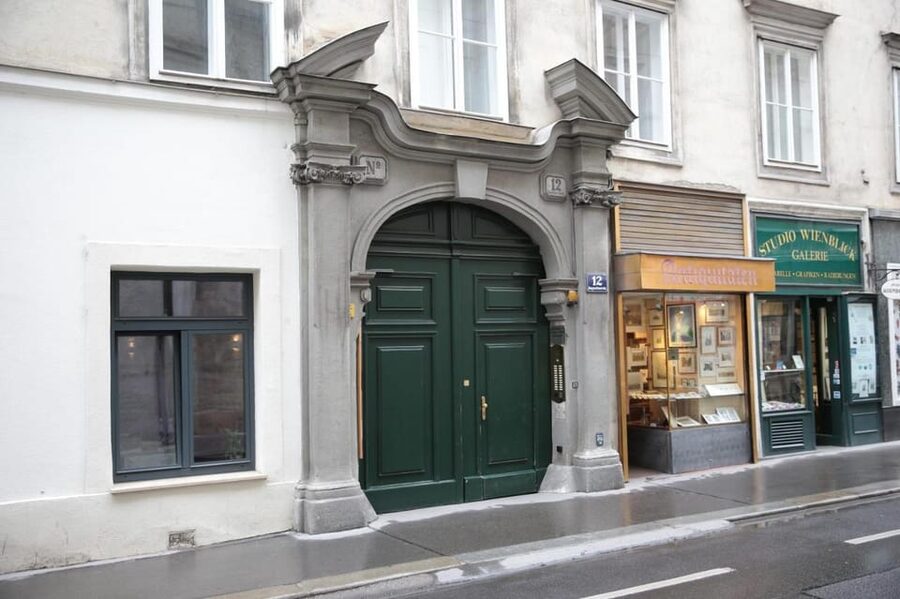
I would recommend it to you if you like:
- Dark folklore mixed with genuine historical context
- Short walking tours with a clear theme
- Famous landmarks seen from an unusual angle
- Private guiding for a family or friend group
- Stories about plague, crime, superstition, and death
- Guides who tell stories with energy and humor
It is a good choice for a first Vienna visit if you want an unusual orientation to the old center. It also works well on a return visit, when you have already seen the main sights and want a different way to experience them.
Families with older children may enjoy it, though the subject matter includes murder, disease, burial, and death. Very young children may find some stories upsetting, and the tour is not designed as a children’s activity.
I would skip it if you want to enter the catacombs, spend a long time inside the imperial palace, or receive a detailed tour of St. Stephen’s Cathedral. Those places appear as settings and subjects, but the main product is the storytelling walk.
Practical advice before you meet the guide
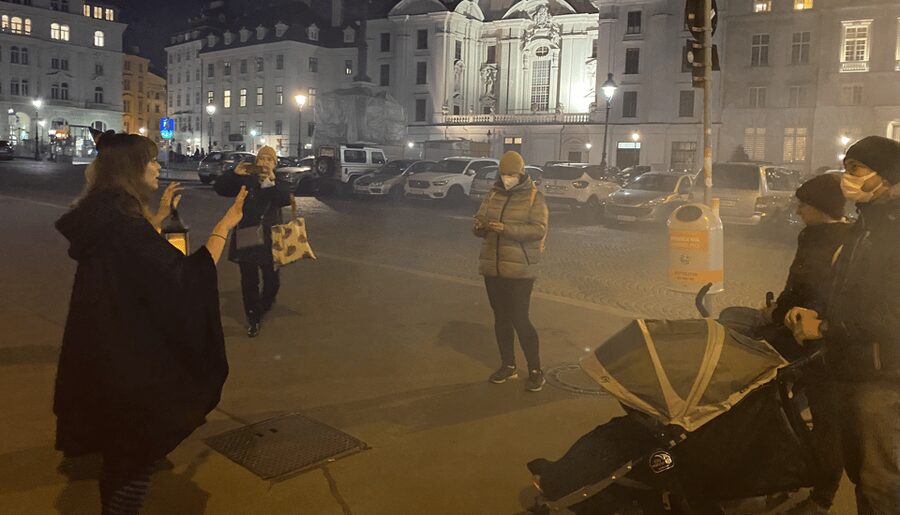
Wear comfortable shoes. The tour covers central Vienna on foot, and historic streets can be hard on feet even when the distance is manageable.
Arrive early at Helmut-Zilk-Platz and look for the red-and-white-striped umbrella in front of the Memorial Against War and Fascism. Since this is a private group, a late arrival could affect the timing of the whole party.
Choose English or German when you book, and make sure everyone in your group is comfortable with the selected language. The tour is offered in both languages, with live guiding rather than an audio recording.
Bring rain protection because the walk operates in all weather. The experience is outdoors, and Vienna’s atmosphere may actually feel more fitting under a gray sky, but wet cobblestones call for careful footing.
Should you book the Private Spooky Vienna Tour?
Book it if you want Vienna’s famous center explained through its darker stories, and especially if you can share the $341 cost across a sizeable private group. The mix of Blood Alley, the Blood Countess, Augustin the plague bagpiper, the catacombs, medieval superstition, and Mozart’s death gives the walk a clear identity.
I would be more hesitant for a couple on a tight budget. The 90-minute length is sensible, but the price per person rises quickly when the group is small. For a family or group of friends, though, the fixed rate, private guide, flexible payment, and lively storytelling make this a useful and entertaining addition to a Vienna visit.
FAQ
Where does the Private Spooky Vienna Tour start?
It starts at Helmut-Zilk-Platz, in front of the Memorial Against War and Fascism. Your guide will hold a red-and-white-striped umbrella.
Where does the tour finish?
The route information lists Stephansplatz as the finish, beside St. Stephen’s Cathedral. Other practical information describes the activity as ending back at the meeting point, so confirm the exact end point when booking.
How long does the walking tour last?
The tour lasts 1.5 hours.
What languages are available?
Live guiding is available in English and German.
Is this a private tour?
Yes. The price covers a private group of up to 25 people.
Is the tour wheelchair accessible?
Yes, the activity is described as wheelchair accessible.
Does the tour operate in bad weather?
Yes. The tour operates rain or shine.
Is hotel pickup included?
No. Hotel pickup and drop-off are not included, so you must make your own way to the meeting point.
Recently added around Vienna
- Vienna: Private tour Mauthausen and Linz★ 4.1 · 3 reviews
- 2-Day Prague Tour from Vienna with private Transfers and Lunches★ 5.0 · 3 reviews
- Vienna Self Guided Sherlock Holmes Murder Mystery Game★ 4.5 · 3 reviews
- Vienna Private Schönbrunn Palace Tour, Extra Rooms and Gardens★ 5.0 · 3 reviews
- Salzburg and Lake Region Private Day Trip from Vienna★ 5.0 · 3 reviews
- Small-group Vienna Wine Tour★ 5.0 · 3 reviews
- True Crime mobile puzzle rally Vienna★ 4.0 · 3 reviews
- Exploring the Gutenstein Alps★ 5.0 · 3 reviews
Vienna Tours, compared.

Vivaldi’s Four Seasons Concert in Karlskirche
Read our review →

Skip-the-cashier-desk-line Giant Ferris Wheel Ride
Read our review →
Schönbrunn Palace & Gardens Skip-the-Line Tour
Read our review →
Light of Creation Votive Church Immersive Light Show
Read our review →

Skip-the-Line Sisi Museum, Hofburg and Gardens Tour
Read our review →