Reviewed · VIENNA TOURS
Vienna: Mythos Mozart Experience
Mozart’s final Vienna address now houses an experience that treats his life less like a museum lesson and more like a stage set. You move through music, light, projections, and interactive displays in the building where he spent his last year and composed The Magic Flute and The Requiem. I especially like the 1,500-candle Requiem room and the chance to play instruments in the Little Night Music room. The main drawback is that you get a mood-rich portrait of Mozart rather than a detailed account of his life and work.
I also like the 360-degree Vienna of 1791, which gives you a quick sense of the city Mozart knew, plus the roof terrace views at the end. The one-hour visit feels easy to fit into a sightseeing day, though some people may find the $27 price high for a relatively short attraction, especially if they want a traditional museum with lots of objects and written detail.
Key points at a glance
- Mozart’s last Vienna home: The experience takes place in the building where Mozart spent the final year of his life and died in 1791.
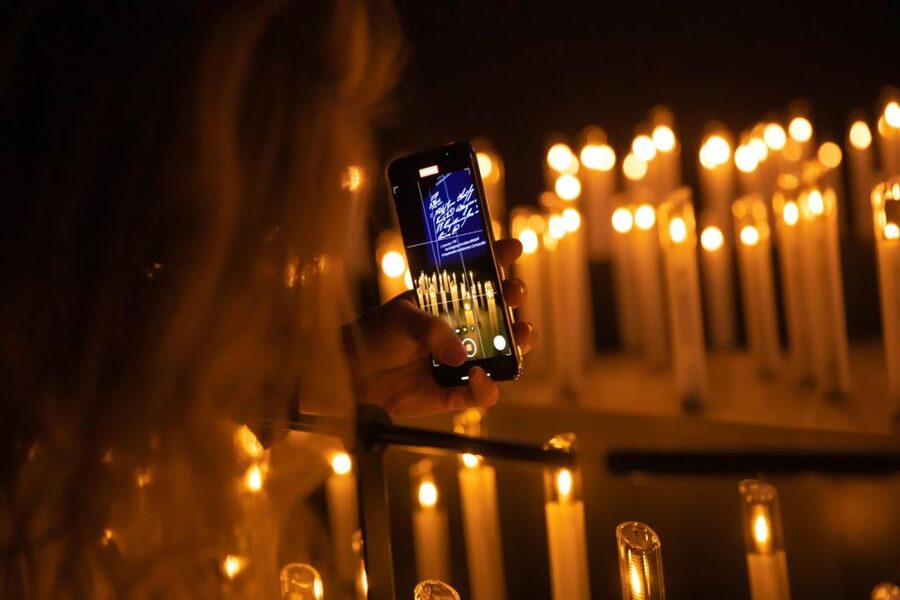
- 1,500 candles in the Requiem room: Moritz Waldemeyer’s lighting design creates the most solemn and memorable part of the visit.
- Vienna seen from above and within: Animated streets, rooftops, balloon views, and 360-degree projections recreate the city of Mozart’s time.
- Hands-on music for all ages: The Little Night Music room lets you try instruments from around the world.
- A modern final chapter: The closing section uses artificial intelligence and contemporary technology to consider Mozart’s creative potential.
- Easy rainy-day activity: The visit lasts about an hour, has lockers and toilets, and is wheelchair accessible.
What Mythos Mozart is trying to do
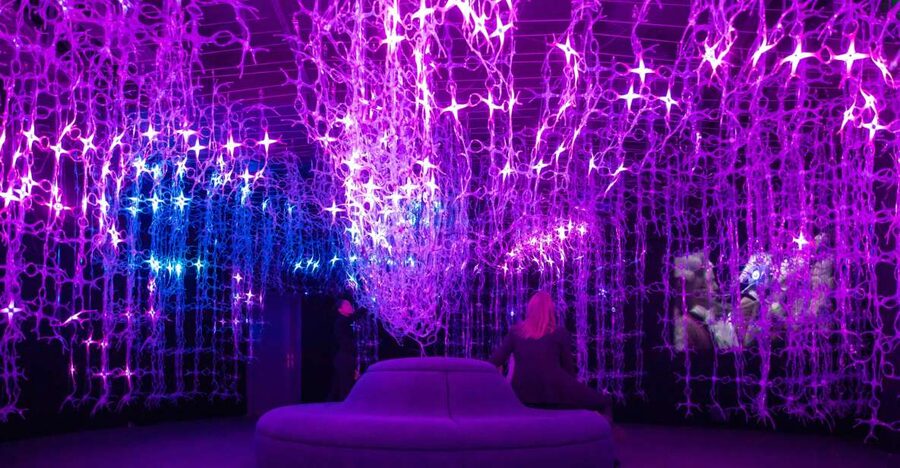
Mythos Mozart is not a house museum filled with Mozart’s furniture, manuscripts, and personal possessions. It is a multimedia art experience built around the place where he lived during his final year.
That distinction matters. If you want a careful chronology of Mozart’s childhood, travels, patrons, compositions, and family life, this will leave gaps. If you want to hear his music while images, lights, and moving scenes create an emotional setting, the format works much better.
The experience is designed for people with little musical training. You do not need to recognize a symphony or understand Classical-era composition to follow it. The music carries the visit, while the rooms provide visual and emotional clues.
I would allow about an hour, which matches the stated duration. The rooms are experienced in sequence, with roughly ten minutes in several sections. You have enough time to look around and listen without feeling pushed along, but this is not an attraction where you can spend half a day studying individual displays.
A few more Vienna half-days to weigh up
- Vienna: Vivaldi’s Four Seasons Concert in Karlskirche
★ 4.7 · 14,951 reviews - Vienna: Spanish Riding School Training
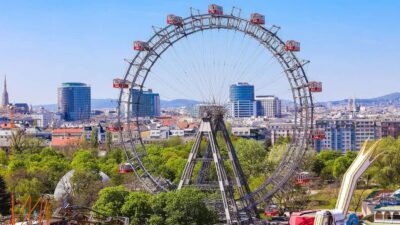
★ 3.9 · 9,281 reviews - Vienna: Skip-the-cashier-desk-line Giant Ferris Wheel Ride
★ 4.5 · 7,859 reviews
Starting with Mozart’s final days
The visit begins in the REQUIEM: MOZART’S DEATH room. This is a deliberate and slightly surprising choice. Rather than starting with Mozart as a child or rising young composer, the experience opens at the end of his life.
The room contains 1,500 candles, arranged as part of a lighting installation by British-German designer Moritz Waldemeyer. The effect is quiet, dark, and serious. Mozart’s Requiem gives the room a strong sense of farewell, and the combination of music and candlelight can feel more like a memorial artwork than a normal museum gallery.
I would not rush this room. It is the place where you are asked to absorb an atmosphere rather than gather facts. Some people may find the opening a little eerie, especially because the subject is death. That is intentional, and it gives the rest of the experience a clear emotional starting point.
The room also connects directly to the location. Mozart died in this building in 1791, and he worked on The Requiem during his final period. You are not simply seeing a projection in an unrelated exhibition hall. The address gives the presentation added weight, even though the displays themselves are modern.
Seeing Vienna as Mozart knew it in 1791
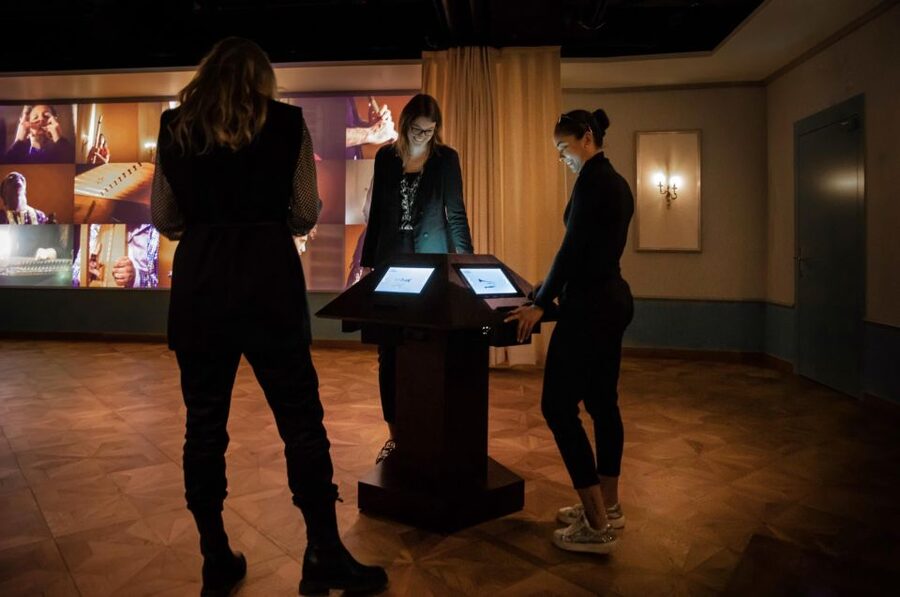
From the candle room, you enter VIENNA 1791: MOZART’S CITY. This section shifts from private grief to the city outside Mozart’s door.
Projected scenes recreate the streets of 18th-century Vienna. You can stroll through animated urban scenes, climb over rooftops in a balloon, and look toward the house where Mozart died. A 360-degree panoramic view surrounds you, so the city is presented as something you enter rather than something you study on a flat wall.
This is one of the best parts for first-time visitors to Vienna. The projection gives you a broad sense of the city’s scale and character before you continue exploring the real First District. It also helps connect Mozart to an actual place. He was not an isolated figure floating through music history. He lived and worked in a busy imperial capital, and this room puts that city around you.
The visuals do most of the teaching here. If you want subtitles or extended commentary for every scene, you may find the information light. One visitor specifically wished for more commentary, and that is a fair criticism. The exhibition favors sensation and movement over long explanations.
An audio guide is available, and the activity is offered in English. Still, do not expect a conventional guided tour led by a named historian. The listed host or greeter is English-speaking, while much of the visit unfolds through the rooms, sound, and projected material.
Playing music in Little Night Music
The Little Night Music room is the most playful stop. Here, you can interact with instruments from around the world rather than simply listening to Mozart’s compositions.
This section helps prevent the experience from becoming too solemn. After the Requiem room and the historical city projections, you get a chance to take part. Children have a clear reason to pay attention, and adults who are not devoted classical music listeners can enjoy the simple pleasure of making sounds and trying something new.
The room also makes an important point about Mozart’s music. Musical ideas can be physical and social, not just something performed by professionals in formal clothing. You do not need a musical background to participate.
I would especially recommend this section for families, mixed-age groups, or couples with different levels of interest in Mozart. One person can enjoy the technology, another can listen closely to the music, and a child can focus on the instruments.
Do not expect a full music workshop. The activity is one part of a larger one-hour route, not a lesson in instrument technique or Mozart’s composing process. Its value comes from the change of pace and the chance to interact.
A different way to spend an afternoon here:
- Vienna: Schönbrunn Palace & Gardens Skip-the-Line Tour
★ 4.7 · 7,739 reviews - Vienna: Light of Creation Votive Church Immersive Light Show
★ 4.8 · 6,779 reviews - Vienna Spanish Riding School Guided Tour
★ 4.7 · 6,765 reviews - Vienna: Classical Concert in the World-Famous Musikverein
★ 4.6 · 6,673 reviews
The visual power of Mozart’s music
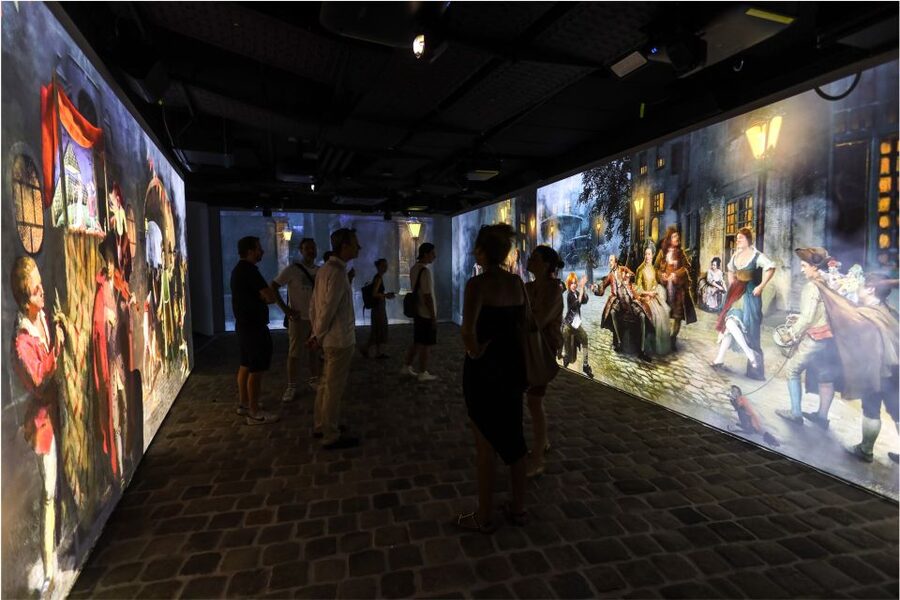
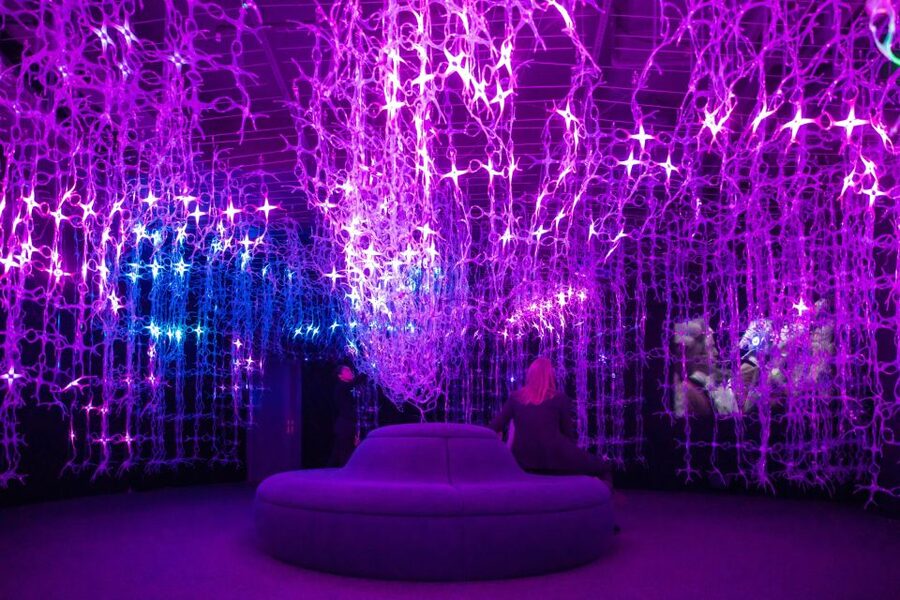
Across the rooms, Mozart’s music is paired with animated images, changing lights, and large LED screens. This is where Mythos Mozart makes its strongest case.
The music is not background decoration. It gives the scenes their rhythm and mood. Calm passages can make the room feel spacious and reflective, while more dramatic sections give the projections a stronger pulse. The result is closer to a concert combined with moving-image art than to a standard exhibition.
I like this approach for visitors who may not normally choose a classical music attraction. Several parts are designed so that you can respond to the sound and visual movement without knowing the names of the pieces. It offers a friendly introduction to Mozart through the senses first.
There is a trade-off. The technology can sometimes overpower the historical content. You may leave remembering the candlelight, projections, and sound design more clearly than specific facts about Mozart’s career. That is not a flaw if you came for a memorable cultural experience, but it matters if your main goal is detailed education.
The exhibition also includes a later section that uses artificial intelligence. It asks you to think about what Mozart might have done with 21st-century tools. Some people find this modern ending exciting and creative. Others may prefer the experience to finish with Mozart’s own period rather than with an experiment in new technology.
I think the idea is worthwhile, especially because it links Mozart’s reputation as an inventive composer with today’s creative tools. Still, it is the least historically grounded part of the visit. Treat it as an artistic question, not a factual reconstruction.
Ending above Vienna
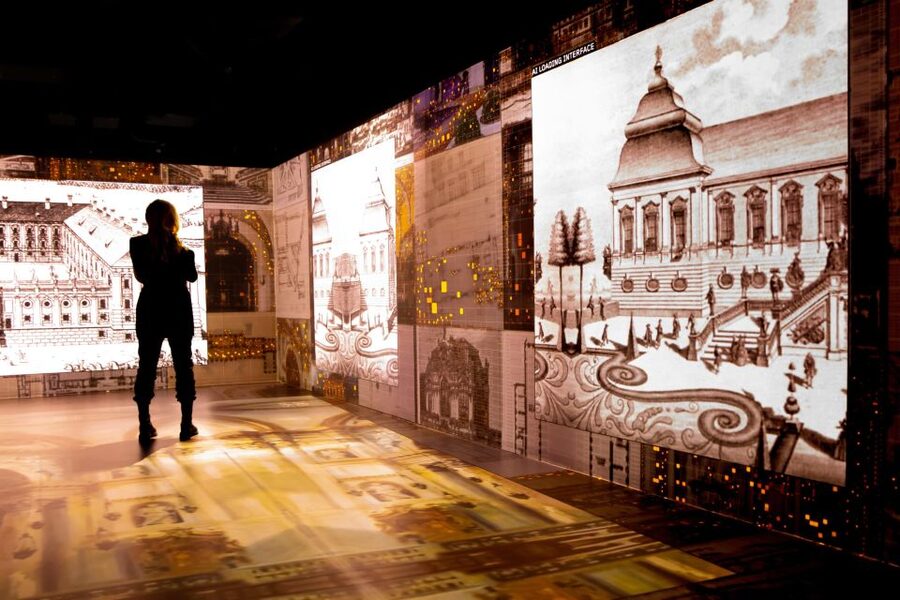
The Sky and Roofgarden provides a welcome change after the enclosed multimedia rooms. From here, you can look across Vienna’s First District, with views toward Karlskirche, the ferris wheel, and St. Stephen’s Cathedral.
The terrace gives the experience a physical ending. You move from projected views of Mozart’s Vienna to the real city around you. That contrast is useful: it reminds you that Mozart’s world is not only an image on a screen. Vienna’s churches, rooftops, and landmarks remain part of the city you can explore on foot.
Food and drinks are available for purchase at the Sky Café and Restaurant, which has a large roof terrace and panoramic views. They are not included in the ticket, so treat the café as an optional add-on rather than part of the admission price.
If the weather is good, allow a little extra time for the terrace. The official duration is one hour, but the café and rooftop may tempt you to linger. In poor weather, the indoor rooms still make Mythos Mozart a useful stop, and several people have found it a particularly good rainy-day choice.
Is $27 a fair price?
At $27 per person, Mythos Mozart is not a bargain basement attraction. It is also more than a quick memorial room or a small historic house visit. You are paying for a timed, purpose-built multimedia production in a significant Mozart location, with lighting design, sound, animated projection, interactive instruments, and rooftop access.
For me, the value depends on what you want from Vienna. If you enjoy concerts, digital art, immersive exhibitions, or visually led museums, the price is reasonable for an hour of carefully staged entertainment and culture. The experience feels especially useful when your schedule has a gap or the weather turns wet.
If you prefer original objects, detailed labels, and long-form historical interpretation, $27 may feel steep. You could learn more about Mozart’s biography from a conventional museum or guided tour, though you would not get the same combination of music, moving images, candles, and participation.
The strongest value comes when you share the experience with someone who is not already a Mozart enthusiast. The exhibition does not require specialist knowledge, so a mixed group can enjoy it together. Children and teenagers can focus on the instruments and visual effects, while adults can pay closer attention to the setting and music.
Practical details before you go
Book a time slot in advance. You should report to the Mythos Mozart Welcome Desk up to 15 minutes before your scheduled start time, where your ticket is exchanged for entry. Spontaneous visits may be possible if the attraction is not full, but I would not rely on that during busy periods.
The English-speaking host or greeter can help at the entrance, but the core experience is not a conventional, continuously narrated tour. If you need every historical point explained, use the available audio guide and pay attention to the displays.
Bring a passport or ID card. A student card is also listed as something to bring, presumably if you are using a student rate or need to verify student status. Pets are not allowed.
The building is wheelchair accessible. Free lockers and toilets are available, which makes the visit easier if you are carrying day bags or planning to continue sightseeing afterward.
Free cancellation is available up to 24 hours before the visit for a full refund. You can also reserve now and pay later, a useful option if your Vienna plans are still changing.
Who will enjoy Mythos Mozart most?
I would recommend it to:
- First-time Vienna visitors who want an easy introduction to Mozart
- Classical music fans who enjoy hearing familiar music in a visual setting
- Families looking for a cultural activity that does not require long reading
- Visitors with a free hour or a rainy afternoon
- People who like digital art, projections, lighting, and interactive displays
- Couples or groups with mixed interest in music and history
I would be more cautious if you want an exhaustive account of Mozart’s life. The exhibition gives you selected themes and moods rather than a full biography. It also does not replace attending a live concert if your priority is musical performance.
The tone changes from solemn to playful to technologically experimental. That variety is part of the attraction, but it may feel uneven if you prefer a single historical style from beginning to end.
Should you book Mythos Mozart?
Book it if you want to experience Mozart through music, light, projection, and atmosphere, especially if you are open to a modern art presentation. The candle room, the city panorama, the hands-on instruments, and the roof views give the visit more range than a simple audio-visual show.
Skip it if you want shelves of original documents, a detailed timeline, or a traditional guided tour. At $27 for about an hour, it asks you to value presentation as much as information.
For most visitors, I think the best reason to go is that you do not need to be a classical music expert. You can arrive knowing very little, follow the route at a relaxed pace, and leave with a stronger feel for Mozart’s sound and his connection to Vienna. Book ahead, arrive 15 minutes early, and save a little time for the rooftop if the weather cooperates.
FAQ
Where is the Mythos Mozart Experience located?
It is located in Vienna, in the building where Mozart spent the last year of his life and died in 1791.
How long does the experience last?
The stated duration is one hour. Several rooms are experienced in sequence, with roughly ten minutes in each part.
What is included in the ticket?
The ticket includes entry to the Mythos Mozart Immersive Experience. Hotel transfers, food, and drinks are not included.
Is the experience available in English?
Yes. The listed host or greeter speaks English, and English is the available language for the activity.
Do I need to reserve a time slot?
Yes. All visitors should book a time slot in advance and report to the Welcome Desk up to 15 minutes before the start time. Spontaneous entry may be possible depending on occupancy.
Is Mythos Mozart wheelchair accessible?
Yes, the experience is wheelchair accessible.
Are food and drinks available on site?
Yes. Food and drinks can be purchased at the Sky Café and Restaurant, which has a large roof terrace and panoramic views.
Recently added around Vienna
- Vienna: Private tour Mauthausen and Linz★ 4.1 · 3 reviews
- 2-Day Prague Tour from Vienna with private Transfers and Lunches★ 5.0 · 3 reviews
- Vienna Self Guided Sherlock Holmes Murder Mystery Game★ 4.5 · 3 reviews
- Vienna Private Schönbrunn Palace Tour, Extra Rooms and Gardens★ 5.0 · 3 reviews
- Salzburg and Lake Region Private Day Trip from Vienna★ 5.0 · 3 reviews
- Small-group Vienna Wine Tour★ 5.0 · 3 reviews
- True Crime mobile puzzle rally Vienna★ 4.0 · 3 reviews
- Exploring the Gutenstein Alps★ 5.0 · 3 reviews
Vienna Tours, compared.
Vivaldi’s Four Seasons Concert in Karlskirche
Read our review →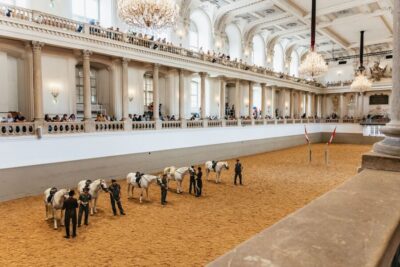
Skip-the-cashier-desk-line Giant Ferris Wheel Ride
Read our review →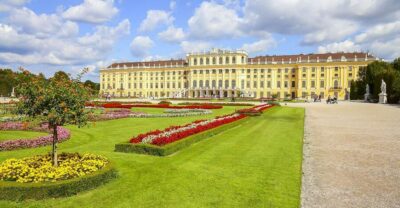
Schönbrunn Palace & Gardens Skip-the-Line Tour
Read our review →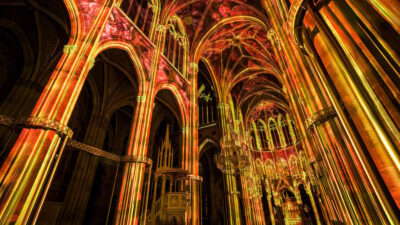
Light of Creation Votive Church Immersive Light Show
Read our review →

Skip-the-Line Sisi Museum, Hofburg and Gardens Tour
Read our review →