
Reviewed · VIENNA TOURS
Vienna: ‘Armenia In The Heart Of Austria’ Tour
Vienna’s Mekhitarist Monastery offers a side of the city most visitors never see. In two hours, you move from the ornate Maria Schutz Church to a library holding more than 2,800 Armenian manuscripts, then finish with a taste of Mechitharine liqueur. It is part church visit, part museum tour, and part introduction to Armenian culture in Austria.
I like the way the experience connects art, faith, scholarship, and everyday life. I also like the small-group format, limited to 10 people, which gives you a better chance to ask questions. The main consideration is its narrow focus: if you want Vienna’s grand imperial sights, this is not the tour for you. If you enjoy unusual cultural stops, it is a rewarding change of pace.
Key points to know
- Maria Schutz Church: See the church built in 1874, including major altar works and the Loretto Chapel.
- Armenian scholarship: Visit a library with more than 2,800 Armenian manuscripts and over 170,000 Armenian publications.
- Rare art and objects: See paintings by Armenian artists, including three works by Ivan Aivazovsky, plus coins, ceramics, and carpets.
- Small-group guidance: The group is limited to 10 people, with tours available in Armenian, English, or German.
- Mechitharine tasting: Finish with a tasting and an explanation of the liqueur’s history, flavor, families, and business.
- Personal welcome: Father Vahan has guided visitors with warmth and a strong sense of connection to Armenian culture.
Why Small Armenia matters in Vienna
The tour begins at the main entrance of the Mekhitarist Monastery. This is where you meet your guide and get an introduction to the Mekhitarist Congregation, an Armenian religious and cultural community with a long connection to Vienna.
The phrase Small Armenia captures the appeal of the visit. You are not simply entering an old church. You are seeing how an Armenian institution preserved language, religion, art, books, and objects far from Armenia. That makes the tour useful even if you have no Armenian background.
You can expect the guide to explain the congregation before leading you through the buildings. The tour is available in Armenian, English, and German. Since the group is capped at 10 participants, the setting should feel more personal than a large city sightseeing tour.
Father Vahan is specifically associated with the warm welcome and thoughtful explanations. He has guided visitors through the church, artworks, library, and museum, answering questions along the way. The tone is not simply academic. It is also personal, with a strong sense of hospitality.
A few more Vienna half-days to weigh up
- Vienna: Vivaldi’s Four Seasons Concert in Karlskirche
★ 4.7 · 14,951 reviews - Vienna: Spanish Riding School Training
★ 3.9 · 9,281 reviews - Vienna: Skip-the-cashier-desk-line Giant Ferris Wheel Ride
★ 4.5 · 7,859 reviews
Maria Schutz Church and its 1874 interior
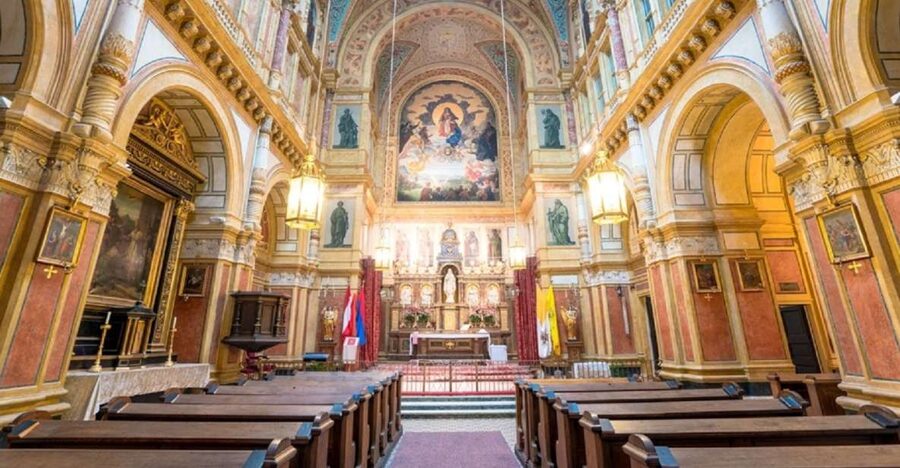
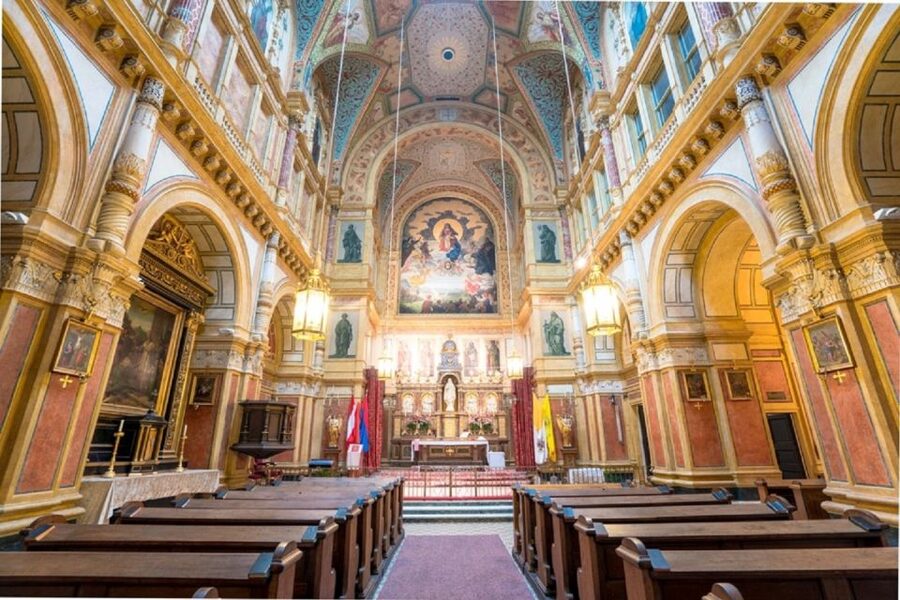
The first major stop is Maria Schutz Church. The present church was built in 1874, replacing an older Capuchin church. Your guide explains that change before taking you inside, where the decoration becomes the main attraction.
The church interior brings together Austrian artistic traditions and Armenian religious themes. One especially important painting shows Saint Mary protecting Armenia. It was painted by Camillo Sitte, and it helps explain how the church presents Armenian identity within a Viennese setting.
Another key work is the altar dedicated to Saint Gregory the Illuminator. The design is by Theophil von Hansen, the architect of the Austrian Parliament in Vienna. That link gives the church an extra point of interest for anyone who has already seen Vienna’s grand public buildings.
I recommend paying attention to the way the guide explains the works rather than simply trying to photograph them. The value here lies in the connection between the artists, the Armenian subjects, and the place where the art is displayed.
The church is not presented as a bare historical shell. It remains the starting point for understanding the Mekhitarist presence in Vienna. For you, that means the tour has a clear thread from worship to scholarship and then to the museum collection.
The Loretto Chapel and a painting spared in 1683
The tour continues to the Loretto Chapel. Its central object is the baroque miraculous image Mary with the Rose.
The painting has a dramatic connection to Vienna’s 1683 siege. It was rescued intact during the dangers of the Turkish siege of the city. That detail adds a human scale to a major historical event. Instead of hearing only about armies and city walls, you are looking at an object that was considered important enough to protect.
This stop is brief compared with the library and museum, but it gives the tour a change of mood. The church interior introduces the institution’s artistic program. The chapel shows how a single devotional image can carry memory across centuries.
If you like religious art, this is one of the more meaningful parts of the visit. If you are less interested in church history, the guide’s explanation of the painting’s survival still gives the stop a clear reason for being included.
The Refectory and The Feeding of the Five Thousand
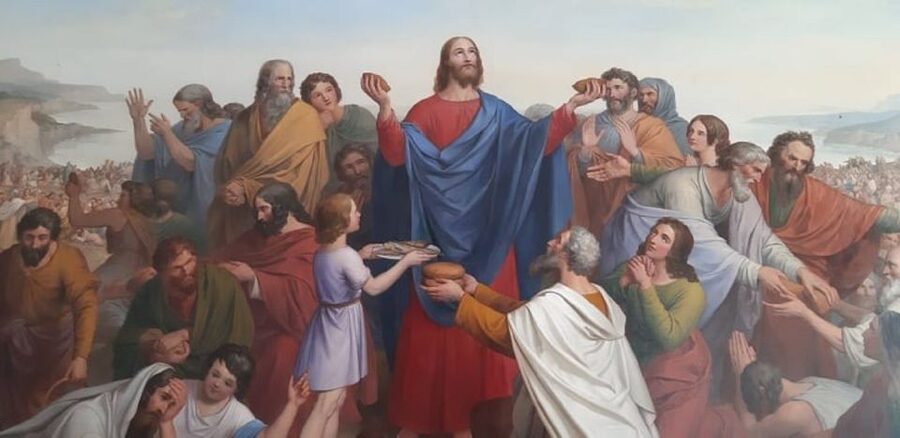
Next comes the refectory, the monastery dining room. Its most impressive feature is a large painting by Ludwig Ferdinand Schnorr von Carolsfeld, The Feeding of the Five Thousand.
The refectory matters because it shifts the tour from formal worship to monastic daily life. You see the room where the community ate, along with a monumental work suited to the space. The painting’s subject also makes sense in a dining room, where religious meaning and ordinary routine meet.
This part of the tour does not require a long time to appreciate. Look at the scale of the painting, then consider how it would have shaped the atmosphere of meals in the monastery. The guide can also place it within the larger story of the building and its religious community.
A different way to spend an afternoon here:
- Vienna: Schönbrunn Palace & Gardens Skip-the-Line Tour
★ 4.7 · 7,739 reviews - Vienna: Light of Creation Votive Church Immersive Light Show
★ 4.8 · 6,779 reviews - Vienna Spanish Riding School Guided Tour
★ 4.7 · 6,765 reviews - Vienna: Classical Concert in the World-Famous Musikverein
★ 4.6 · 6,673 reviews
A library of Armenian manuscripts and publications
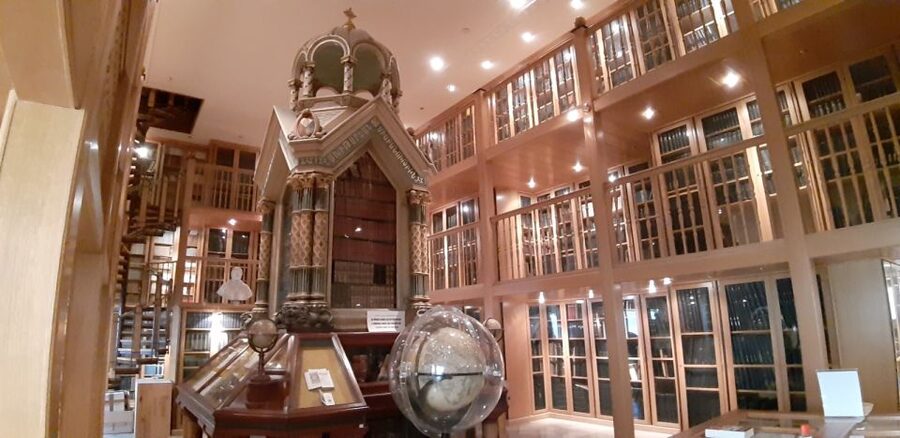
The monastery library is the heart of the experience for many people. It contains more than 2,800 Armenian manuscripts and over 170,000 volumes of ancient and modern Armenian publications.
Those numbers are impressive, but the important point is what they represent. A library like this preserves a language and written tradition across generations. It also shows that the Mekhitarist community was not only a religious order. It became a center for Armenian learning and publication.
You will also find the largest collection of Armenian newspapers and magazines in the Western world. That gives the library a wider scope than a room of medieval manuscripts. It records modern Armenian life as well as older religious and literary works.
The guide leads you through the library and explains its special features. Since the tour is small, you have a better setting for asking about the books, the manuscripts, and the role of the congregation. Still, the amount of material means you will not examine every item in detail during a two-hour visit. Think of this as an introduction to a major collection, not a research appointment.
For readers who enjoy books, archives, or cultural preservation, this may be the strongest reason to book. It offers something Vienna’s major palace tours cannot: a close look at a living Armenian intellectual tradition.
The museum’s coins, carpets, ceramics, and paintings
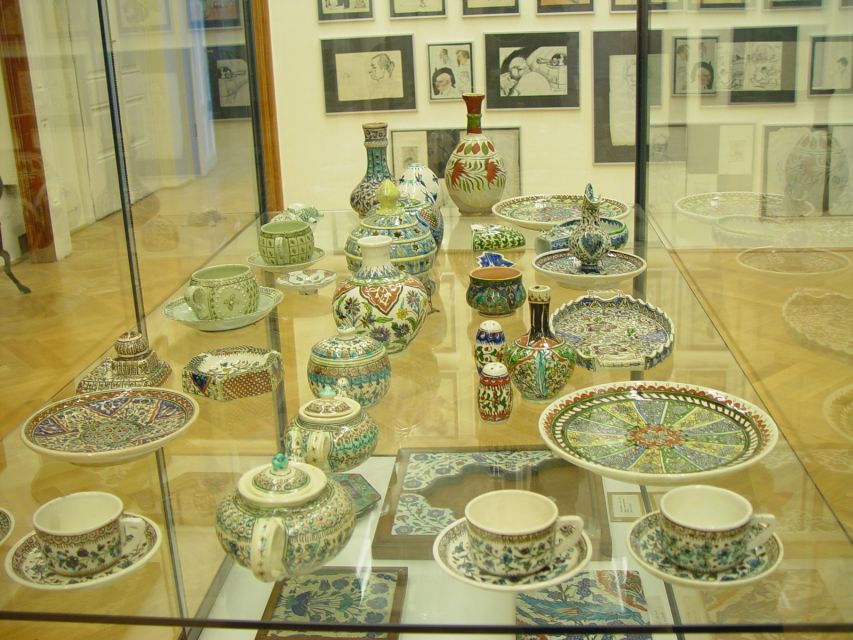
The museum adds objects that make the story more visual and varied. The collection includes Armenian ceramics, carpets, and other items, mainly made in Armenia. These objects help you see Armenian culture beyond church architecture and manuscripts.
The numismatic collection is particularly large. It includes about 10,000 Armenian coins and 20,000 coins from other countries. You will not see every coin in a single guided visit, but the scale helps show the breadth of the monastery’s collecting work.
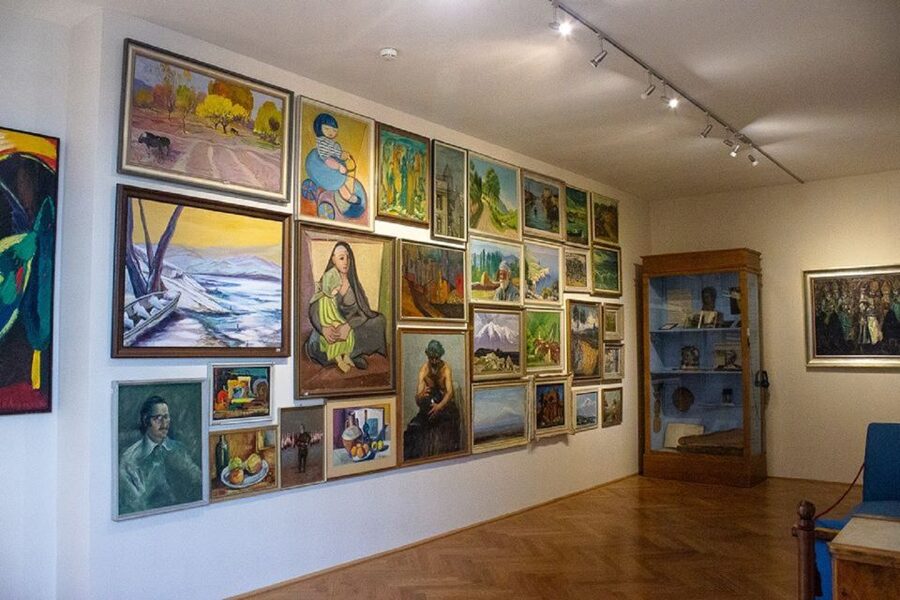
The gallery contains paintings by Armenian artists, including three works by Ivan Aivazovsky. Aivazovsky is best known for his seascapes, so these paintings add a familiar name for art-minded visitors who may not know much about Armenian artists.
The display also gives the guide room to explain how the monastery collected and protected objects over time. The result is not a single-style art museum. It is a working cultural archive with religious pieces, decorative objects, coins, books, and paintings together.
That mix is one of the tour’s strengths. You can move from an illuminated manuscript to a carpet, then from a coin collection to a painting. The variety keeps the visit from feeling like a long lecture.
The Mechitharine liqueur tasting
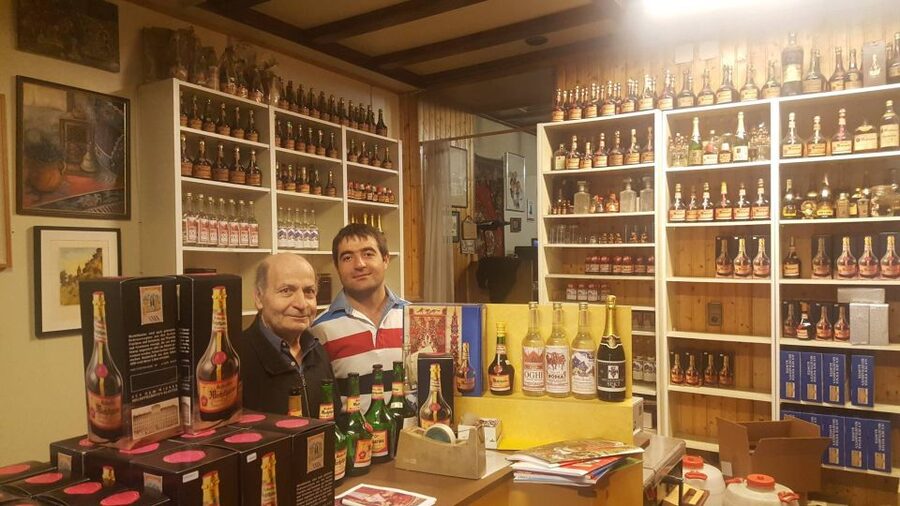
The final part of the tour is a tasting of Mechitharine liqueur. This is not just a quick drink added at the end. You learn about its taste, history, families, and business.
The liqueur gives you a practical link to the monastery’s continuing life. After seeing books, art, and church objects, you get to hear about a product connected with the Mekhitarist tradition. The tasting also helps keep the tour from becoming too solemn.
You should not book the experience solely for the liqueur. The tasting is a small part of a much broader visit, and the main value comes from the church, library, museum, and guide. But it is a pleasant finish and a detail that makes this tour different from a standard church or museum tour.
Is two hours enough?
Two hours is a sensible length for this experience. You have time to see the church, chapel, refectory, library, museum, and liqueur collection without giving up half a day in Vienna.
The schedule is also compact enough to fit around other plans. You could place it between visits to central Vienna sights, but the available starting times vary, so check the schedule before booking.
A two-hour tour also means the guide must choose what to explain in detail. If you want a full academic study of Armenian manuscripts, coins, or church art, you will need more time than this visit provides. If you want a clear introduction with access to important objects, the length works well.
Price, group size, and practical value
At $84 per person, this is not a cheap drop-in museum visit. The price includes admission, guide service, and the liqueur tasting. Its value depends on how much you want a guided look at a collection that is not part of the usual Vienna sightseeing route.
I think the price makes the most sense for you if you care about cultural history, religious art, Armenia, books, or small museums. The guide adds much of the value because the significance of the manuscripts, paintings, and objects is not always obvious from a quick look.
The small group, limited to 10 participants, is another reason the cost can be worthwhile. You are not being moved through in a large crowd. You have a better chance to hear the explanations and ask about the pieces that catch your attention.
The tour includes free cancellation up to 24 hours before the start and allows you to reserve now and pay later. Those terms help if your Vienna plans are still changing.
Who should book this tour?
I would recommend it to anyone who has already seen Vienna’s best-known imperial sights and wants something more local and specialized. It also suits visitors with Armenian family connections, people interested in Christian art, and anyone who enjoys libraries and collections.
It is especially appealing to couples and small groups. One German-Armenian couple found the welcome deeply personal, and Father Vahan’s parting words about the Armenian people gaining another Armenian made a lasting impression on them. You do not need Armenian heritage to appreciate that warmth, but it may make the visit even more meaningful.
Families can also consider it, though the appeal depends on the children. The collection includes visual objects and a tasting, but the tour also involves church history, manuscripts, and explanations that may suit older children better.
I would skip it if you have only a short time in Vienna and want to focus on Schönbrunn Palace, the Hofburg, or the city’s major art museums. This tour is best when you want to trade famous sights for a smaller, more focused cultural experience.
Should you book Armenia in the Heart of Austria?
Book it if you want a personal introduction to Armenian culture in Vienna, a beautiful church interior, access to a remarkable library and museum, and a small-group guide who can explain the connections between them.
The strongest parts are the library, the unusual mix of Armenian art and objects, and the welcome from guides such as Father Vahan. The main limit is that the tour is specialized and the two-hour visit can only introduce such a large collection.
For most culturally curious visitors, that is a fair trade. You leave with a clearer sense of how a monastery can serve as a church, archive, museum, and home for a community. That is a lot of Vienna to find behind one entrance.
FAQ
Where does the tour meet?
Meet in front of the main entrance of the Mekhitarist Monastery.
How long does the tour last?
The tour lasts two hours.
How much does the tour cost?
The listed price is $84 per person.
What does the price include?
The price includes entrance fees, guide service, and a liqueur tasting.
What languages are available?
The tour is available in Armenian, English, and German.
How large is the group?
This is a small-group tour limited to 10 participants.
Who leads the tour?
A learned monk leads the visit. Father Vahan is specifically associated with guiding this experience.
What will I see inside Maria Schutz Church?
You will see the church interior, an altar painting of Saint Mary protecting Armenia by Camillo Sitte, and an altar dedicated to Saint Gregory the Illuminator designed by Theophil von Hansen.
What is in the Mekhitarist Library?
The library contains more than 2,800 Armenian manuscripts, over 170,000 volumes of ancient and modern Armenian publications, and a major collection of Armenian newspapers and magazines.
Can I cancel the booking?
Yes. You can cancel up to 24 hours in advance for a full refund. You can also reserve now and pay later.
Recently added around Vienna
- Vienna: Private tour Mauthausen and Linz★ 4.1 · 3 reviews
- 2-Day Prague Tour from Vienna with private Transfers and Lunches★ 5.0 · 3 reviews
- Vienna Self Guided Sherlock Holmes Murder Mystery Game★ 4.5 · 3 reviews
- Vienna Private Schönbrunn Palace Tour, Extra Rooms and Gardens★ 5.0 · 3 reviews
- Salzburg and Lake Region Private Day Trip from Vienna★ 5.0 · 3 reviews
- Small-group Vienna Wine Tour★ 5.0 · 3 reviews
- True Crime mobile puzzle rally Vienna★ 4.0 · 3 reviews
- Exploring the Gutenstein Alps★ 5.0 · 3 reviews
Vienna Tours, compared.

Vivaldi’s Four Seasons Concert in Karlskirche
Read our review →

Skip-the-cashier-desk-line Giant Ferris Wheel Ride
Read our review →
Schönbrunn Palace & Gardens Skip-the-Line Tour
Read our review →
Light of Creation Votive Church Immersive Light Show
Read our review →

Skip-the-Line Sisi Museum, Hofburg and Gardens Tour
Read our review →