
Reviewed · VIENNA TOURS
Taste and Tour Small Organic Wineries with a Winemaker
The best part of this tour is its close look at small-scale Austrian winemaking. Rather than spending the day at one large estate, you move through several family and micro-wineries near Krems, meeting the people who grow, ferment, age, and bottle the wine. Guide Chris also works with vineyards himself, so the conversation reaches well beyond a tasting-room script.
I like the mix of practical wine lessons and local scenery. I also like the chance to taste wines at different stages, including young wine from fermentation, finished bottles, aged Grüner Veltliner, and experimental sparkling wine. The main consideration is the setting: some cellar visits involve small rooms, and the tour includes walking on vineyard paths, so it is not a good fit if you have trouble walking or dislike tight spaces.
Key points to know before booking
- Four small producers in one private outing: Visit Kapitel Zwei Wine, Mantlerhof, Feldtheorie, and WeinSchach.
- Chris shapes the tour around your interests: His own vineyard work gives him a direct connection to local growers and winemakers.
- Organic and experimental wines take center stage: Expect amphora-aged wines, French grape varieties, organic Grüner Veltliner, and Pet Nat.
- Krems is easy to reach from Vienna: You can arrive by direct train or boat, then meet Chris near the station or boat stop.
- The finish is scenic but active: A seven to ten minute walk leads to a viewpoint over the wine country.
- The price buys access, not just samples: At $114.02 per person, you are paying for a private guide, transport between sites, personal introductions, and a compact look at several producers.
Why this Krems wine tour feels different
Krems is a practical base for discovering Austrian wine. The Danube guides the route, and the nearby Kremstal and Kamptal regions offer a useful contrast between established family estates and newer producers trying fresh methods.
This is not a bus tour built around one famous cellar. It is a private activity for your group, with pickup arrangements that can be adapted to your arrival in Krems. Chris can meet you at Bahnhofplatz 2, near the Krems train station, or coordinate another location. If you are staying in Vienna, the direct train to Krems is a sensible choice, and the ride along the Danube adds scenery before the tasting even starts.
The tour lasts about three hours. Roughly two and a half hours are spent at the wine and sightseeing stops, with about 30 minutes of driving between them. The schedule is fairly full, so you will get a broad introduction rather than a slow, single-estate visit.
Chris is the key to the format. He has personal ties with small producers and works with vineyards in the area, including his own parcels. That makes it easier to ask plain questions about pruning, soil, harvest timing, fermentation, blending, bottling, and the business of making wine on a small scale.
You should also expect an educational tone. Chris can adjust the tasting to your questions and interests, and the winemakers explain why they use a particular grape, field, vessel, or harvest method. You do not need advanced wine knowledge. Curiosity is enough.
A few more Vienna half-days to weigh up
- Vienna: Vivaldi’s Four Seasons Concert in Karlskirche
★ 4.7 · 14,951 reviews - Vienna: Spanish Riding School Training
★ 3.9 · 9,281 reviews - Vienna: Skip-the-cashier-desk-line Giant Ferris Wheel Ride
★ 4.5 · 7,859 reviews
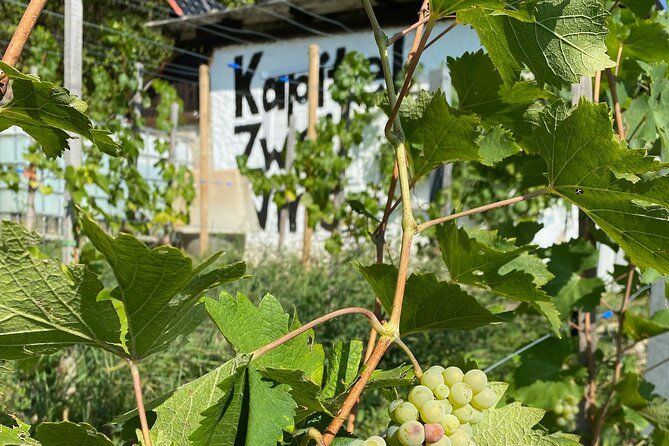
Kapitel Zwei Wine at the replanted Kremsleithen vineyard
The first stop takes you uphill from the Danube plain, through winding wine roads, to Kremsleithen. The elevation rises from near sea level to about 400 meters along the drive, while the vineyard itself sits at roughly 300 meters.
Kapitel Zwei means Chapter Two, an apt name for a project that is starting a new chapter on old ground. The Kremsleithen vineyard had been abandoned for decades and was replanted in May 2022. Its name refers to a steep slope running toward the Krems River. Historical records mention the site as early as 1266, and its soil combines loam, sand, and clay.
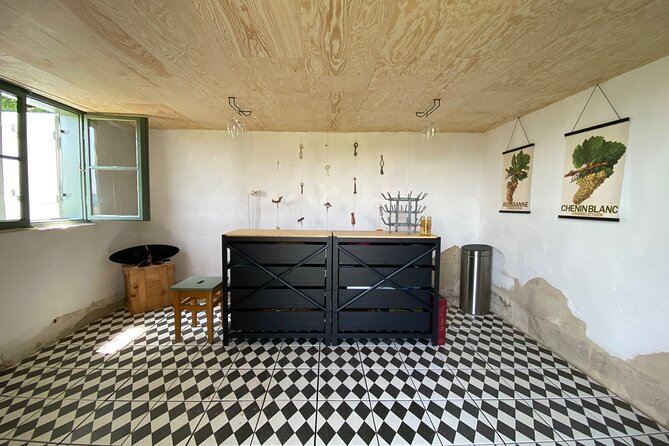
The winery is experimenting with French grape varieties that are less typical of the Austrian classics. Chenin Blanc, Roussanne, and Sémillon are grown organically and aged in amphora and steel tanks. That gives you a chance to consider how the same fruit changes according to its container and stage of development.
This stop is listed at about 20 minutes, so do not expect a long vineyard ramble here. The value is the direct look at a young, small operation and the chance to taste wine connected to a newly replanted site.
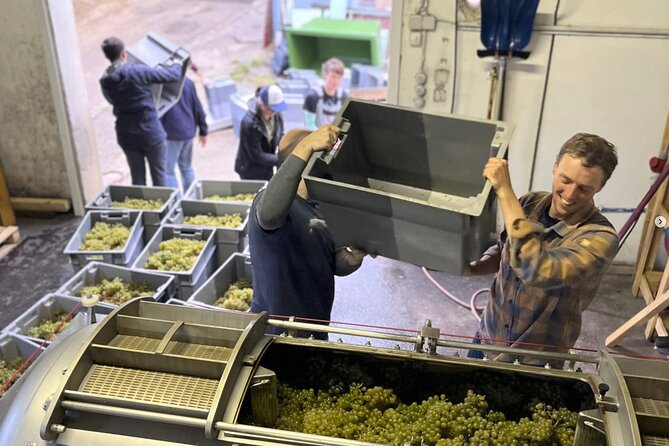
One especially useful feature is the chance to taste across the winemaking process. The visit can include wine at the beginning of fermentation as well as finished wine, helping you connect the smell, texture, and flavor in the glass with what is happening in the cellar.
For a wine beginner, this makes technical subjects easier to understand. For an experienced drinker, the French varieties and amphora work provide something more unusual than a standard Grüner Veltliner tasting.
Mantlerhof and more than 600 years of family winemaking
Mantlerhof brings a different mood. This is a traditional family winery in Brunn im Felde, part of the municipality of Gedersdorf, near where the Kamp approaches the Danube. The property occupies an old manor with an early classical facade beside a village pond.
The Mantler family has worked the estate for more than 200 years, with a winemaking record reaching back to 1365. The property therefore gives you a sense of how wine production fits into village life, family landholding, and a long local tradition.
The winery works 15 hectares of vineyards and focuses on long-lasting organic wines. Grüner Veltliner and Roter Veltliner are the main grapes to look for. Grüner Veltliner is Austria’s best-known white grape, but Roter Veltliner is less familiar to many international visitors, making this a useful chance to compare Austria’s better-known style with a more specialized local variety.
The scheduled visit is about 45 minutes, the longest stop in the first part of the route. You have more time here for the story of the estate, the vineyard methods, and a proper tasting.
I would pay attention to the explanations about soil, harvest dates, and the choice between single-field wines and blends. Those details show how a grower decides what a bottle should express. They also help explain why two wines made from related grapes can taste so different.
Mantlerhof may appeal most to you if you want a link to Austrian history without giving up the wine itself. The manor and village setting are not a separate sightseeing attraction added to the day. They are part of the working winery and help explain the place behind the label.
Feldtheorie in Schönberg am Kamp
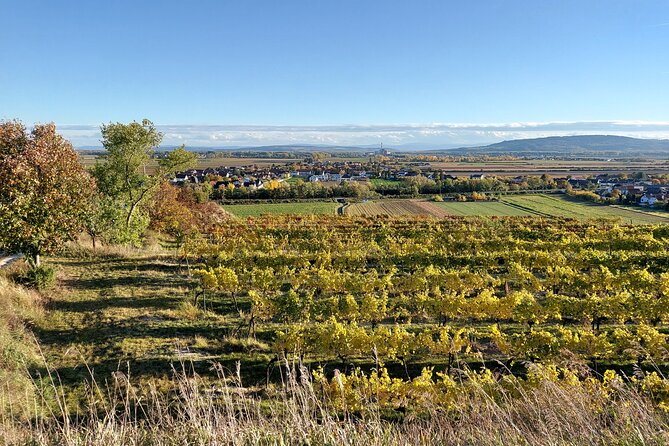
At Weingut Feldtheorie in Schönberg am Kamp, the focus shifts to a newer generation. Ulrike Filp and Robert Bormuth came to winemaking after studying natural sciences and developing an interest in wine during a trip to New Zealand.
They later completed internships in Germany, Australia, and Austria before buying vineyard parcels in the neighboring Kamptal region. They now work in both the vineyards and cellar with a clear goal: to show the character of Kamptal through their wines.
This is a good stop for understanding how modern Austrian producers enter a region with established traditions. Feldtheorie is not presented as a grand estate. It is a personal operation built around a small number of parcels and a hands-on approach.
The visit lasts about 30 minutes. That is enough for an introduction and tasting, but it is another reason to keep your expectations realistic. You will meet several producers in one afternoon, yet no single winery receives the extended treatment of a full-day cellar visit.
The benefit is comparison. After Kapitel Zwei’s French varieties and Mantlerhof’s established organic wines, Feldtheorie gives you another view of what Kamptal can mean to a young producer. You can ask how the winemakers work with their specific parcels and how their scientific backgrounds affect their decisions.
I like this stop because it puts human choices at the center. Wine is not only about climate and grape names. It is also about the people who decide how much to intervene, what to preserve, and how to show a place in the final bottle.
A different way to spend an afternoon here:
- Vienna: Schönbrunn Palace & Gardens Skip-the-Line Tour
★ 4.7 · 7,739 reviews - Vienna: Light of Creation Votive Church Immersive Light Show
★ 4.8 · 6,779 reviews - Vienna Spanish Riding School Guided Tour
★ 4.7 · 6,765 reviews - Vienna: Classical Concert in the World-Famous Musikverein
★ 4.6 · 6,673 reviews
WeinSchach and the pursuit of organic Pet Nat
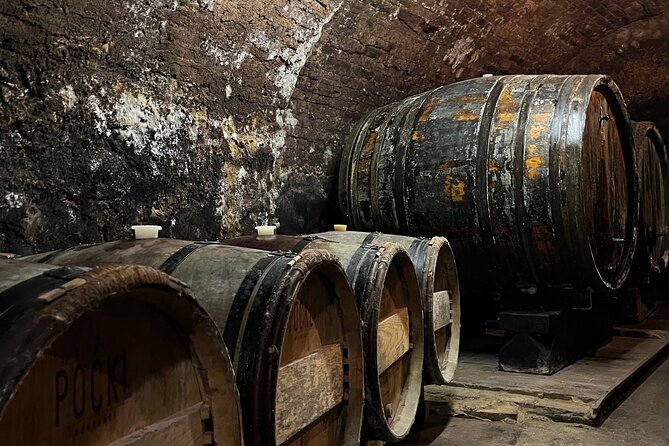
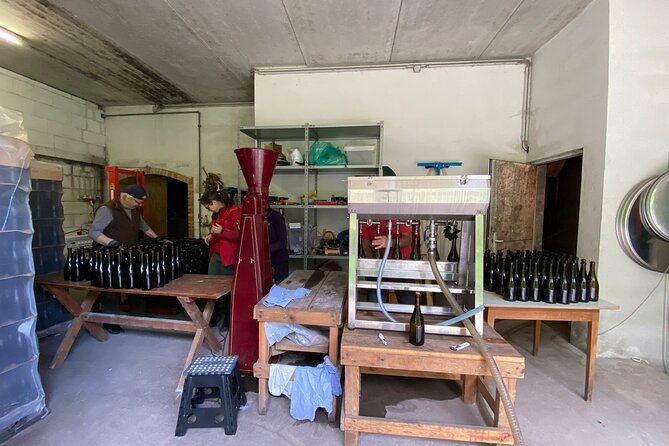
The final winery stop is WeinSchach in Langenlois, where sparkling wine takes the lead. The producers work from the idea that nature supplies what an excellent wine needs, then allow the wine to develop in the bottle.
Their particular goal is a Pet Nat, or pétillant naturel, that can hold its own beside more traditional sparkling wines. Pet Nat is bottled before fermentation is fully complete, allowing natural carbonation to develop in the bottle. The method can produce lively, individual wines, and it also requires careful judgment.
WeinSchach works biologically, harvests by hand, and disgorges its sparkling wines. Disgorgement removes sediment from the bottle, an important step when you want a clearer finished drink.
The visit lasts around 40 minutes. You can expect a conversation about trial, error, fermentation, and the practical decisions behind the bottle. The producers are willing to experiment, including returning to the beginning when an approach does not work as planned.
This is one of the most distinctive stops for anyone who already knows classic sparkling wine and wants to see a less conventional path. It also gives beginners a useful reminder that sparkling wine is not a single style. The bottle, yeast, fermentation stage, and production choices all affect what ends up in your glass.
The stop may be less appealing if you only want familiar, polished wines. The point here is exploration, not a predictable tasting of one standard cuvée.
A short vineyard walk with a Danube view
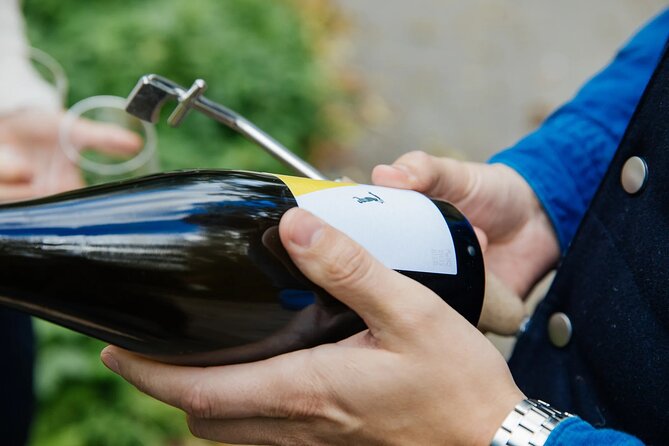
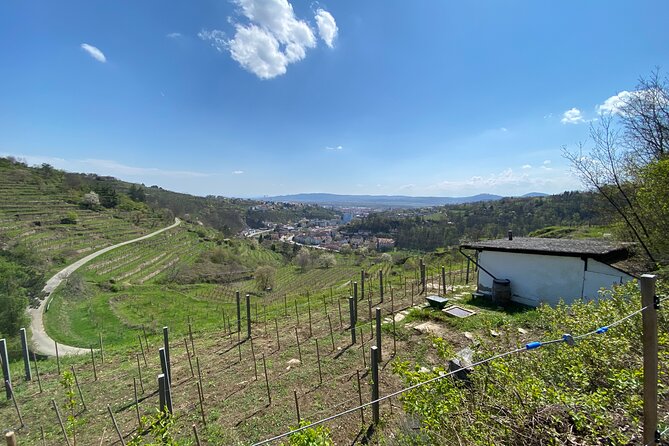
The tour finishes with a seven to ten minute walk through vineyards to Ausblick am Welterbesteig, a viewing point above the region. The scheduled time is about 20 minutes, including the stop at the lookout.
This is a smart ending. After several cellar conversations and tastings, you get outside and see the terrain that shapes the wine. The Danube, vineyard slopes, villages, and nearby towns give you a clearer sense of how close the wine country is to Krems.
The walk is short, but it is still a walk on vineyard ground. Wear shoes you can use on uneven paths, and do not treat the outing as entirely vehicle-based. The physical demand is moderate rather than strenuous, yet the tour specifically calls for some hiking and a moderate fitness level.
The viewpoint also gives Chris a natural place to connect the day’s lessons. You have tasted wines from several producers, and now you can look across the area while thinking about elevation, slopes, river influence, and individual vineyard sites.
What the $114.02 price really covers
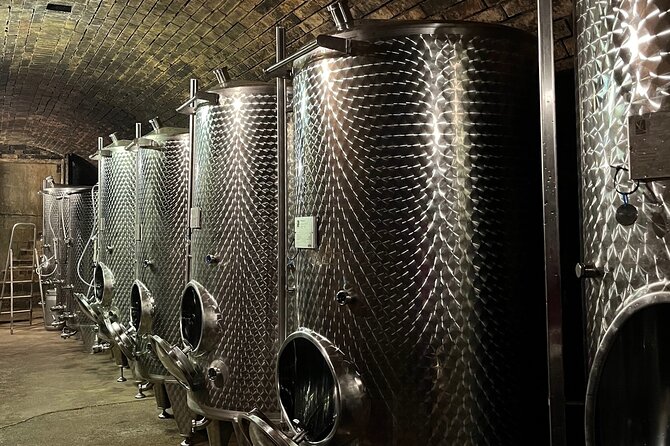
At $114.02 per person, this is not the cheapest way to drink Austrian wine. It can still be a sound value if you want private transport, introductions to several small wineries, and a guide who can explain the wine in context.
You are not simply buying a set number of pours. The price covers a private tour for your group, driving between locations, contact with four producers, and Chris’s time as a guide and working winemaker. Those personal connections are difficult to arrange on your own, especially when small wineries may not operate like regular public attractions.
The value is strongest for a couple, solo visitor, or small group that wants depth and flexibility. It is less compelling if you prefer a large commercial estate with a formal visitor center, a fixed tasting flight, and plenty of free time at one location.
The exact number of wines is not specified, but the tasting can be generous. The stops may include young and finished wines, aged Grüner Veltliner, Riesling, single-vineyard bottles, blends, and sparkling wines. You should pace yourself and tell Chris what you enjoy. The format is designed for questions, not for rushing through a printed list.
The tour is often reserved well ahead of time, with an average booking lead time of 55 days. That suggests you should plan early if your Vienna dates are fixed, though confirmation is subject to availability and is sent within 48 hours of booking.
Getting from Vienna to Krems
The meeting point is Bahnhofplatz 2 in Krems an der Donau. If you are based in Vienna, you can take a direct train to Krems. The journey along the Danube is part of the appeal, and meeting at the train station keeps the start simple.
You can also arrive by boat from Vienna and meet Chris at the boat station. Pickup is offered, and the meeting point can be adjusted by arrangement. Since the activity ends back at the meeting point, check your return timing before you book a late departure.
The listed operating period is November 1, 2025 through October 31, 2026, Monday through Saturday, from noon to 7 p.m. The tour itself lasts about three hours, so you should leave room around it for the journey to and from Vienna.
For a Vienna-based day, the train is likely the cleanest plan because it avoids arranging a car and lets you enjoy the river route. The activity information does not promise a specific Vienna pickup point, so confirm the exact meeting arrangement before setting your schedule.
Who will enjoy this private wine outing
I would recommend this tour to you if you enjoy meeting producers, asking questions, and tasting wines that do not all follow the same pattern. It is particularly useful if you want to understand Austrian wine beyond the most familiar labels.
You will get the most from it if you are open to organic farming, low-intervention ideas, unusual grape varieties, and sparkling wine experiments. The tour also suits people who want countryside, history, and a scenic walk alongside the tasting.
It is a good match for a solo visitor or small group. A private format makes conversation easier, and Chris can tailor some of the tasting discussion to your interests. Several visits take place in intimate cellar spaces, so you should be comfortable stepping down into a cellar and spending time in a small room.
I would think twice if you want a leisurely full-day winery visit, extensive free time, or a tour with no walking. The schedule moves through four producers in roughly two and a half hours of touring, so the experience favors variety over a slow pace.
Service animals are allowed, and the area is near public transportation. Free cancellation is available if you cancel at least 24 hours before the start time. Changes or cancellations made later are not accepted for a refund.
Should you book the Krems organic winery tour?
Book it if you want an intimate look at Austrian wine made by small producers, not a polished display built for mass tourism. The strongest reasons are Chris’s direct ties to the winemaking community, the chance to compare four very different operations, and the unusual tasting subjects: amphora-aged French grapes, organic Veltliner, young fermentation samples, and Pet Nat.
The tour also makes a good day outside Vienna because Krems is reachable by train or boat, and the final vineyard viewpoint adds a sense of place. At $114.02, the value depends on your interest in personal access and conversation. For a serious wine enthusiast, it is a fair price for the range and private format. For someone who only wants a few familiar glasses and a quick photo, it may be more than necessary.
If you can handle the walking and cellar spaces, and you are willing to let the producers guide you beyond standard wine vocabulary, I would book this outing. Plan your transport carefully, wear sensible shoes, and arrive ready to taste with curiosity.
FAQ
Where does the tour begin?
The standard meeting point is Bahnhofplatz 2, 3500 Krems an der Donau, Austria.
Can I join the tour from Vienna?
Yes. You can take a direct train from Vienna to Krems, and Chris can meet you at the train station. You can also arrive from Vienna by boat and meet at the boat station.
Does the tour offer pickup?
Pickup is offered, and the meeting location can be arranged flexibly with the provider.
How long does the experience last?
The tour lasts approximately three hours. About two and a half hours are spent on the tour, with about 30 minutes of driving between locations.
Which wineries are visited?
The planned stops are Kapitel Zwei Wine at Kremsleithen, Weingut Mantlerhof, Weingut Feldtheorie in Schönberg am Kamp, and WeinSchach in Langenlois.
Is this a private tour?
Yes. Only your group participates in the activity.
Is walking required?
Yes. Some hiking is required, including a seven to ten minute walk through vineyards to a viewing point.
Is the tour suitable for someone with limited mobility?
The activity requires moderate physical fitness and is not recommended for people who cannot walk down into a cellar. It is also not recommended if you do not enjoy small rooms.
What is the cancellation policy?
You can cancel at least 24 hours before the local start time for a full refund. Cancellations or changes made less than 24 hours before the start time are not accepted for a refund.
Recently added around Vienna
- Vienna: Private tour Mauthausen and Linz★ 4.1 · 3 reviews
- 2-Day Prague Tour from Vienna with private Transfers and Lunches★ 5.0 · 3 reviews
- Vienna Self Guided Sherlock Holmes Murder Mystery Game★ 4.5 · 3 reviews
- Vienna Private Schönbrunn Palace Tour, Extra Rooms and Gardens★ 5.0 · 3 reviews
- Small-group Vienna Wine Tour★ 5.0 · 3 reviews
- Salzburg and Lake Region Private Day Trip from Vienna★ 5.0 · 3 reviews
- True Crime mobile puzzle rally Vienna★ 4.0 · 3 reviews
- Exploring the Gutenstein Alps★ 5.0 · 3 reviews
Vienna Tours, compared.

Vivaldi’s Four Seasons Concert in Karlskirche
Read our review →

Skip-the-cashier-desk-line Giant Ferris Wheel Ride
Read our review →
Schönbrunn Palace & Gardens Skip-the-Line Tour
Read our review →
Light of Creation Votive Church Immersive Light Show
Read our review →

Skip-the-Line Sisi Museum, Hofburg and Gardens Tour
Read our review →