
Reviewed · SCHONBRUNN PALACE TOURS
Schönbrunn Palace and Gardens Tour
Schönbrunn’s great appeal is the way it links imperial ceremony with family life. In one visit, you’ll see the grand Hall of Ceremonies, Franz Joseph’s private rooms, Maria Theresa’s personal spaces, and the music room where six-year-old Mozart played before royalty. The palace tells a human story, not just a list of dates.
I like the small-group format, which is limited to a maximum of eight people and may be smaller. I also like having a historian guide who can explain why each room mattered, point out royal gossip and odd details, and adjust the pace. The main drawback is that admission is not included, and the garden portion may feel brief if you expect a full tour of the entire park.
Key points to know before booking
- Mozart’s childhood performance: Visit the music room where six-year-old Mozart performed for the imperial family.
- Small English-speaking group: The group has a maximum of eight people, with the experience often operating on a more personal scale.
- Two major stops: Spend about 30 minutes in the formal gardens, then roughly 2 hours and 30 minutes with the palace and its apartments.
- Admission costs extra: Your guide helps buy the Schönbrunn Palace and Park ticket, but it is not part of the tour price.
- Strong guide-led history: Guides such as Biljana, Katarina, Kristina, Elisabeth, Selin, Stephan, Wolfgang, Annelie, and Edward Mueller have been praised for clear storytelling and personal attention.
- Convenient timing: Choose a 10 a.m. or 2 p.m. departure, then remain at Schönbrunn after the tour if you want more time in the grounds.
Why Schönbrunn deserves a place in your Vienna plans
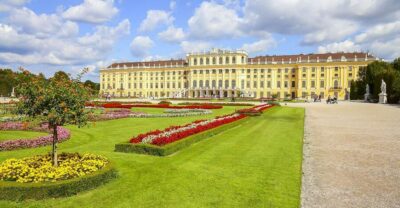
Schönbrunn was the Habsburg family’s summer residence, but that description hardly captures its scale. The palace was built in the High Baroque style to rival Versailles, and its grounds were designed as a formal display of power, order, and taste.
I find the setting especially useful for understanding Vienna. The Hofburg shows the Habsburgs at the heart of the city, surrounded by government and court life. Schönbrunn shows another side: summer ceremonies, family routines, children growing up under royal rules, and long stretches of imperial display.
This guided visit is aimed at people who want more than a quick walk through decorated rooms. You’ll hear about Franz Joseph and Elisabeth, better known as Sisi, as well as Maria Theresa and her large family. The guide’s job is to connect the furniture, portraits, rooms, and ceremonies to the people who used them.
The tour costs $181.41 per person before palace admission. That is a serious price for a two-and-a-half to three-hour outing, so the value depends on what you want. If you would be happy with an audio guide and a self-guided visit, this will feel expensive. If you want a small group, a historian’s explanation, help with the ticket process, and room-by-room context, the price makes more sense.
The tour is offered in English and begins at 10 a.m. or 2 p.m. You receive confirmation when you book, and free cancellation is available up to 24 hours before the start time.
More ways into Schonbrunn Palace:
- Vienna: Schönbrunn Palace & Gardens Skip-the-Line Tour
★ 4.7 · 7,739 reviews - Vienna: Skip-the-Line Schönbrunn Palace & Gardens Tour
★ 4.8 · 5,411 reviews - Vienna: Bus & Schönbrunn Palace Skip-the-Line Guided Tour
★ 4.3 · 2,802 reviews
Starting at the formal gardens and the Gloriette
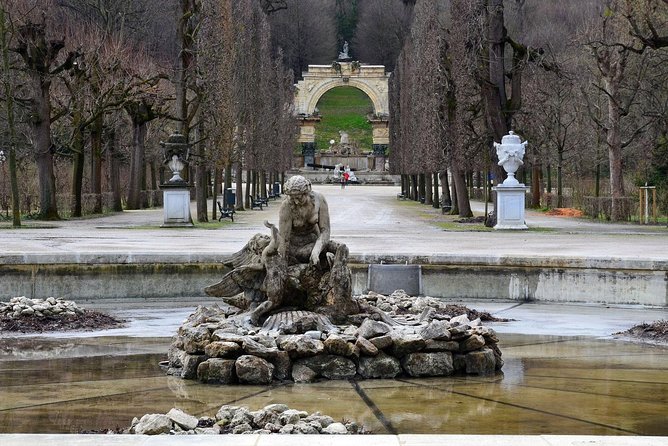
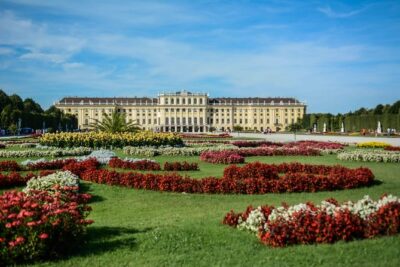
The first part takes you through Schönbrunn’s formal gardens. The gardens are not simply a pleasant green space beside the palace. Their layout reflects Baroque planning, where nature is arranged to frame architecture, views, and royal authority.
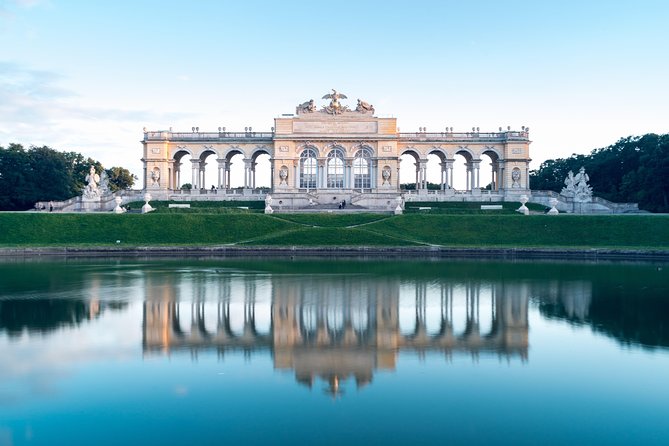
The route includes a view toward the Gloriette, the large triumphal arch on the hill above the palace. From there, you can look across Vienna’s wooded surroundings. The climb gives this part of the visit a clear reward, though it may be less appealing in very cold weather or if you have limited walking stamina.
The garden portion is listed at about 30 minutes. That makes it an introduction rather than a complete exploration of the park. You’ll get the broad idea of the design, the purpose of the Gloriette, and the connection to Maria Theresa’s reign, but you should not expect to see every path, fountain, and outlying feature.
This short garden walk is one of the tour’s useful features because it gives the palace a setting. You understand that Schönbrunn was planned as a grand imperial residence, not merely a building filled with beautiful furniture. Still, if gardens are your main interest, plan to return after the guided portion. The tour ends inside the palace, leaving you free to spend more of the day on your own.
Maria Theresa opened the park to the public in 1779. That choice helped present the imperial family as connected to its subjects, even while the palace itself displayed enormous wealth and rank. The guide can use details such as this to show how architecture and politics worked together.
Entering the Rococo state rooms
Inside, the tour moves through the palace’s Rococo state rooms and apartments. The rooms are lavish, but the guide helps keep them from becoming a blur of gold, paint, mirrors, and carved decoration.
You’ll see the Great Gallery, the Yellow Salon, and Franz Joseph’s private suite. Each represents a different part of court life. The Great Gallery was built for formal gatherings and ceremonies. The Yellow Salon offers a more intimate scale, while Franz Joseph’s rooms bring the story closer to the daily life of the emperor.
Franz Joseph ruled for decades and married Elisabeth of Bavaria in 1854. Their marriage is often remembered through the glamorous image of Sisi, but Schönbrunn allows you to see the strain behind the public story. Elisabeth disliked court rituals and the ornate world surrounding her. Franz Joseph was tied to the duties of government, and the couple lived under very different pressures.
That personal angle is where a good guide makes a real difference. Guides including Kristina and Biljana have been praised for explaining not only dates and titles, but also how members of the family used their rooms and handled court life. Katarina has also been praised for making the royal stories easy to follow and lively without losing the historical framework.
The palace route covers around 40 rooms, according to the tour details. That is a lot to absorb, especially if you have already visited the Hofburg or plan to see it later. The advantage is variety. Schönbrunn’s interiors combine ceremonial rooms, apartments, offices, salons, and rooms associated with music and family life.
The risk is information overload. You will see one decorated room after another, and a guide who speaks too quickly or too softly could make the visit harder. One past experience raised difficulty hearing as a concern, so stand near the guide and say something early if you are having trouble. The small group should make this easier than a large coach tour.
Maria Theresa’s rooms and the family story
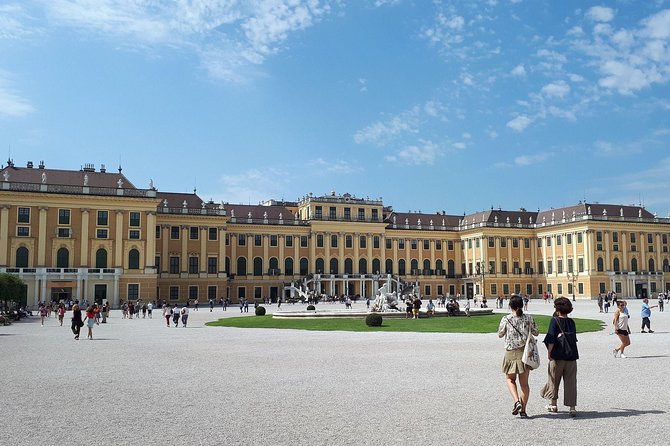
Maria Theresa is central to the palace’s story. She ruled from 1740 to 1780 and made Schönbrunn a focus of political and court life. She also raised a family of 16 children, though several did not survive to adulthood.
The tour visits rooms associated with Maria Theresa, including the Hall of Ceremonies, the Gobelin Salon, and the Feketin Room. These spaces show the contrast between public ritual and private routine. The Hall of Ceremonies presents the court at its most formal, while the other rooms help explain how the palace operated beyond major celebrations.
The Hall of Ceremonies hosted events such as the wedding of Crown Prince Joseph. Court painter Martin van Meytens recorded scenes from these grand occasions, giving you a visual sense of how the Habsburgs wanted their ceremonies remembered.
The Porcelain Room is another memorable stop. It served as Maria Theresa’s office and was decorated to imitate precious china, with drawings made by the imperial children. This is exactly the sort of detail that can disappear on a self-guided visit. The room is beautiful, but its real interest is the mixture of royal work, family activity, and deliberate decoration.
You may also enter the Millions Room, named for the enormous price paid for its decoration in gold ducats. Indo-Persian miniatures, Rococo frames, and carved rosewood from the Antilles combine European and Oriental design. The room is a showpiece, but it also reveals the global reach of imperial luxury and the high cost of maintaining a court image.
I like this section because it moves beyond the familiar Sisi story. Elisabeth is an important figure, but Maria Theresa shaped Schönbrunn on a much larger scale. The tour gives both women a place in the story and shows that the palace changed as different generations used it.
A few more Vienna half-days to weigh up
- Vienna: Vivaldi’s Four Seasons Concert in Karlskirche
★ 4.7 · 14,951 reviews - Vienna: Spanish Riding School Training
★ 3.9 · 9,281 reviews - Vienna: Skip-the-cashier-desk-line Giant Ferris Wheel Ride
★ 4.5 · 7,859 reviews - Vienna: Light of Creation Votive Church Immersive Light Show
★ 4.8 · 6,779 reviews
The room where Mozart performed
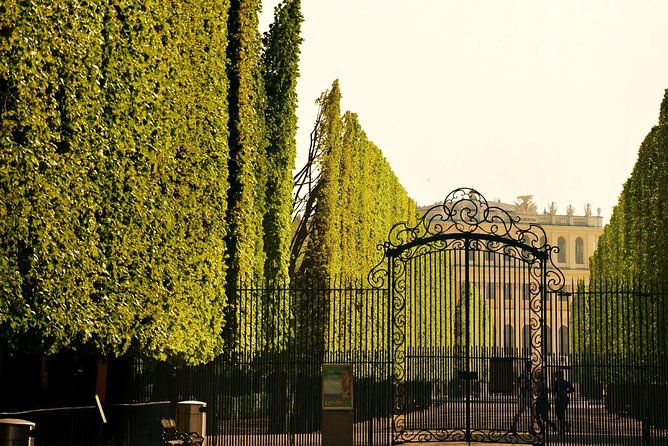
The music room connected with Mozart is one of the tour’s most appealing details. At six years old, Mozart performed there before royalty. You are not simply looking at a famous name on a plaque. You are standing in a room tied to the early public life of a musician who later became one of Vienna’s great cultural figures.
The moment also helps explain how the imperial court used music. A performance before the royal family was entertainment, but it was also part of court culture and social display. A guide can place the event within the palace’s wider world of ceremonies, introductions, and patronage.
This is a good example of why the guided format can be worth paying for. An audio guide may tell you that Mozart performed in the room. A historian can help you picture the young prodigy, the royal audience, and the expectations surrounding such a performance.
What the small group changes
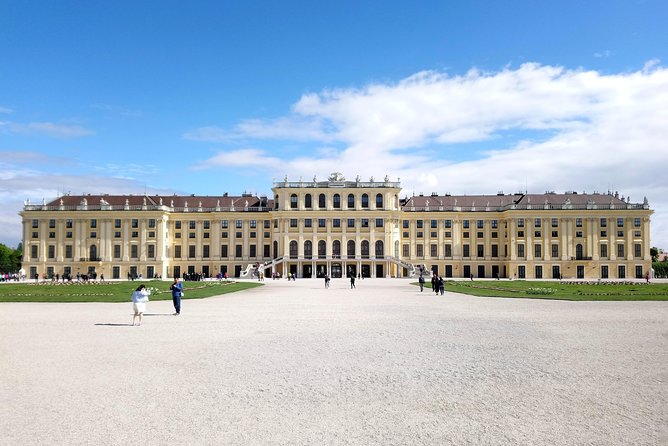
The group maximum is eight people, while the tour is promoted as a small-group experience limited to six. In practice, you should expect a group that is much smaller than the standard palace crowds, though the exact number can vary.
Small groups matter inside a palace. You can usually stay closer to the guide, ask questions without holding up a large party, and hear personal explanations more easily. Guides have been praised for adjusting their pace for older participants, checking the group’s interests at the start, and using extra photos, maps, or drawings to explain the past.
That personal approach appears to be one of the tour’s strongest features. Annelie, for example, has been praised for asking about interests at the beginning and shaping the explanation around the group. Wolfgang was praised for bringing extra historical material and adding a stop at a local cafe, though you should not assume every departure includes that extra stop.
Guide quality can vary from one departure to another, as it does with any guided activity. The guide names associated with particularly strong experiences include Biljana, Katarina, Kristina, Elisabeth, Selin, Stephan, Wolfgang, Annelie, and Edward Mueller. The common thread is clear: the best guides add family stories, explain the use of rooms, and connect architecture to political life.
One practical point: the meeting point is the Group Center Schönbrunn at Schloss, 1130 Vienna. The brown building can be difficult to identify from across the street, and the pickup instructions may feel less obvious than expected. Arrive early and confirm that you are at the group center before the departure time.
Tickets, timing, and the real price
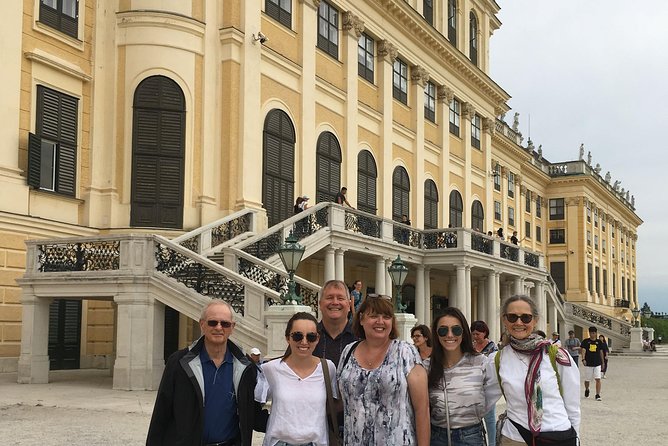
The tour price does not include admission to Schönbrunn Palace and Park. Your guide assists with buying the entrance tickets, so do not treat the $181.41 price as the complete cost of the visit.
Pay close attention to the ticket instruction. If you have a Vienna Card or another discount card, do not buy a separate ticket in advance without checking how the group reservation works. A separate purchase may give you a later palace entry time and cause you to miss the beginning of the guided visit.
The 10 a.m. departure gives you the rest of the day after the tour. The 2 p.m. option can work well if you want a slower morning, but it leaves less daylight for the gardens, particularly in winter. The palace visit itself ends inside the building, so you can continue exploring afterward if opening conditions and your ticket allow.
The experience is near public transportation, and hotel pickup and drop-off are not included. Most people can participate, but the garden section includes walking and the Gloriette sits on a hill. If you move slowly, tell the guide at the start. The small group format makes a sensible pace more realistic.
Who will get the most from this tour
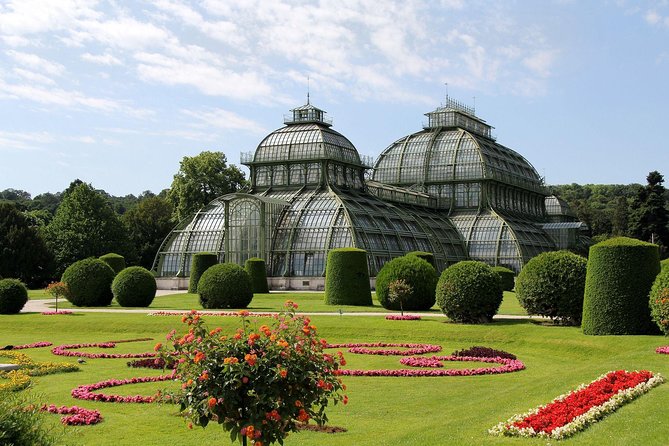
I would choose this experience if you want the Habsburg story explained by a person rather than delivered through headphones. It suits first-time visitors to Schönbrunn, history fans, families who enjoy stories, and anyone who wants to understand why the rooms look the way they do.
It also works well for older adults when the guide pays attention to pace. Biljana was specifically praised for adapting the visit for seniors, and several guides have been described as patient and attentive.
Families can benefit from the stories about the imperial children, Mozart, royal routines, and palace folklore. The tour is not aimed only at specialists. One guide was praised for keeping a 21-year-old engaged, while another gave the right amount of history for people who did not consider themselves history enthusiasts.
I would hesitate if you prefer a very independent visit, want a long garden walk, or are watching every euro. Admission costs extra, the price is high, and the garden introduction is short. You may prefer a standard palace ticket and audio guide if you mainly want to see the rooms at your own pace.
Should you book Schönbrunn Palace and Gardens Tour?
Book it if you want a personal, story-led visit and can accept the extra admission cost. The strongest part is the guide’s ability to explain the people behind the rooms, from Maria Theresa and her children to Franz Joseph, Sisi, and young Mozart.
Before paying, decide how much garden time you want. This tour gives you the formal design and the Gloriette viewpoint, but it does not replace an extended walk through the park. Arrive early at the Group Center, follow the guide’s ticket instructions, and speak up if you cannot hear clearly.
For a small group, an English-speaking historian, and a focused visit to one of Vienna’s most important imperial sites, this is a strong choice. For a low-cost or self-directed palace visit, it is harder to justify.
FAQ
How long does the Schönbrunn Palace and Gardens Tour last?
The experience lasts approximately 2 hours and 30 minutes, although the overview describes it as a three-hour tour. The garden portion takes about 30 minutes, followed by the palace visit.
What departure times are available?
You can choose a 10 a.m. or 2 p.m. departure.
Is Schönbrunn Palace admission included?
No. Palace and Park admission is not included in the tour price. Your guide will help you purchase the entrance ticket.
What language is the tour offered in?
The tour is offered in English.
How large is the group?
The tour is designed as a small-group experience. The maximum listed size is eight people, while the tour description refers to groups limited to six.
Where does the tour begin and end?
It begins at the Group Center Schönbrunn, Schloss, 1130 Vienna, Austria. The activity ends back at the meeting point, although the guided palace portion concludes inside the palace.
Can I cancel for a full refund?
Yes. You can cancel up to 24 hours before the experience start time for a full refund. Cancellations or changes made less than 24 hours before the start time are not accepted for a refund.
Recently added around Vienna
- Vienna: Private tour Mauthausen and Linz★ 4.1 · 3 reviews
- 2-Day Prague Tour from Vienna with private Transfers and Lunches★ 5.0 · 3 reviews
- Vienna Self Guided Sherlock Holmes Murder Mystery Game★ 4.5 · 3 reviews
- Vienna Private Schönbrunn Palace Tour, Extra Rooms and Gardens★ 5.0 · 3 reviews
- Small-group Vienna Wine Tour★ 5.0 · 3 reviews
- Salzburg and Lake Region Private Day Trip from Vienna★ 5.0 · 3 reviews
- True Crime mobile puzzle rally Vienna★ 4.0 · 3 reviews
- Exploring the Gutenstein Alps★ 5.0 · 3 reviews
Schonbrunn Palace Tours, compared.
Schönbrunn Palace & Gardens Skip-the-Line Tour
Read our review →
Skip-the-Line Schönbrunn Palace & Gardens Tour
Read our review →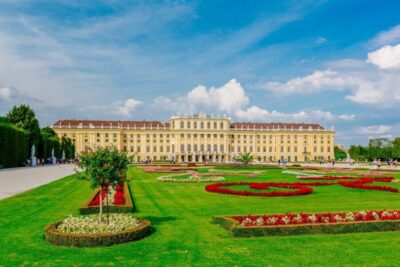
Bus & Schönbrunn Palace Skip-the-Line Guided Tour
Read our review →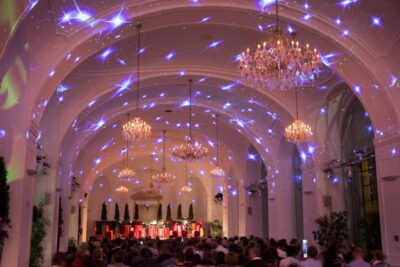
Skip the Line Schönbrunn Palace and Gardens Guided Tour
Read our review →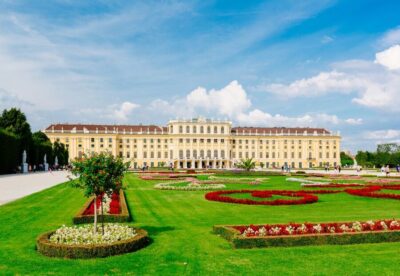
Schönbrunn Palace & Garden Skip-the-Line Guided Tour
Read our review →
Panorama Train Tickets to explore Schönbrunn Palace
Read our review →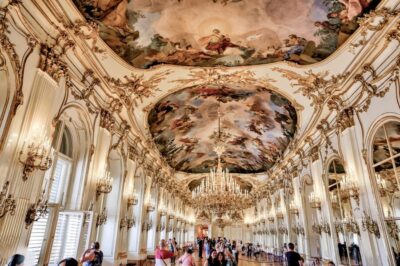
Skip-the-Line Schönbrunn Palace and Gardens Tour
Read our review →Browse the lists this tour appears in