Reviewed · VIENNA TOURS
Mozarthaus Vienna Admission Ticket
Mozart’s most important Vienna home is the heart of this visit. At Mozarthaus Vienna, you walk through the only Mozart apartment in Vienna that remains intact, the place where he wrote The Marriage of Figaro and three of his six Haydn Quartets. It is a powerful connection to the composer, even though the rooms do not look fully furnished as they did in his day.
I like the three-floor layout, which gives you more than a quick look at one old room. I also like the flexible audio guide, with 13 languages for adults and eight for children, because you can set your own pace and spend extra time with the music, manuscripts, and personal details. The main drawback is that the museum contains relatively few original furnishings, so visitors expecting a fully restored historic apartment may feel let down.
Key things to know before you go
- Mozart’s 1784 to 1787 apartment: See the largest, most elegant, and most expensive home he ever occupied.
- Three floors of context: The exhibition covers Mozart’s personal life, social world, musical colleagues, and major Vienna collaborations.
- The Marriage of Figaro connection: Learn how Mozart’s work with librettist Lorenzo da Ponte shaped one of his best-known operas.
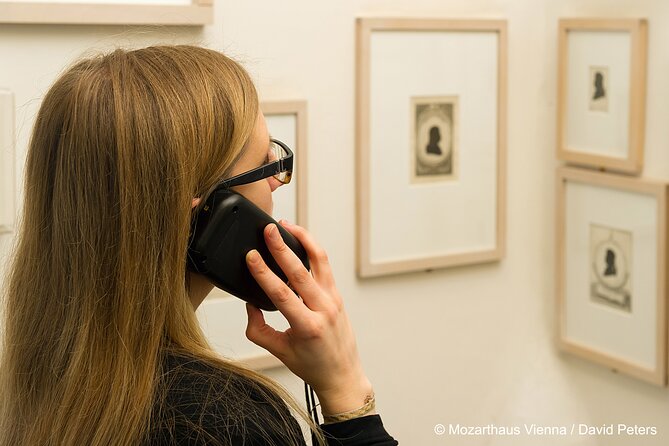
- Self-guided audio tour: Listen in 13 adult languages or eight children’s languages, and move through the museum at your own speed.
- Central Vienna location: Mozarthaus is near St. Stephen’s Cathedral and close to public transportation.
- Allow one to two hours: Music lovers may want the full two hours, while a focused visit can take about one hour.
Why Mozart’s Vienna apartment matters
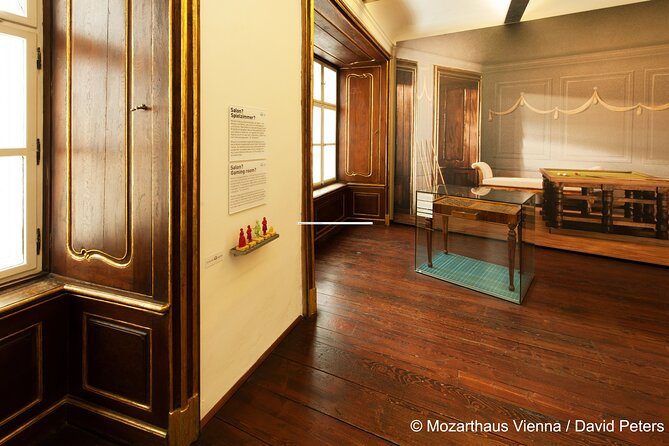
Mozart spent several years moving between homes in Vienna, but this apartment at Domgasse is the one that matters most for a visit. He lived here with his family from 1784 to 1787, during a period when his career and creative output were at their peak.
This was not a modest musician’s room. It was the biggest and most expensive apartment Mozart ever rented. That detail helps you picture his position in Vienna at the time. He was not yet the struggling, romantic figure often imagined from later stories. He was a successful composer living in a substantial home and working in a demanding social and musical world.
The apartment is also important because it is the only Mozart residence in Vienna that remains intact. That does not mean every chair, bed, and table belonged to Mozart. The rooms have been adapted for museum use, and much of what you see is interpretive rather than personal property.
That distinction matters. I find the space moving because of what happened there, not because every object has a direct link to Mozart. You are standing in the rooms where he composed, entertained, and managed family life. The building itself gives the visit its strongest sense of place.
A few more Vienna half-days to weigh up
- Vienna: Vivaldi’s Four Seasons Concert in Karlskirche
★ 4.7 · 14,951 reviews - Vienna: Spanish Riding School Training
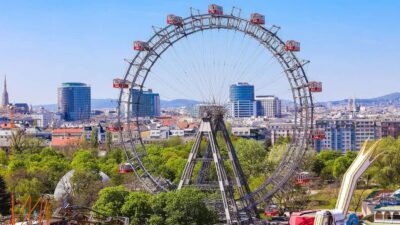
★ 3.9 · 9,281 reviews - Vienna: Skip-the-cashier-desk-line Giant Ferris Wheel Ride
★ 4.5 · 7,859 reviews
The first floor and the rooms where Mozart worked
Start with the first-floor apartment, the centerpiece of the museum. This is where you get closest to Mozart’s daily surroundings, and it is the part most music lovers come to see.
The rooms help explain the scale of his household and his social standing. They also give physical shape to a period that can otherwise feel abstract. Mozart’s Vienna years are often reduced to a list of works, but the apartment reminds you that those works came from a real home, with family, visitors, financial pressures, and a busy professional life around them.
The connection to The Marriage of Figaro is especially strong. Mozart composed the opera during this period, working with Lorenzo da Ponte, who wrote the libretto. Their partnership also produced Don Giovanni, so the museum uses the Vienna apartment to connect Mozart’s domestic setting with the larger world of opera production.
You may find the rooms less visually dramatic than a restored palace interior. There are not many original pieces of furniture, and the apartment does not recreate every detail of Mozart’s household. Still, the lack of theatrical decoration can have an advantage. You are encouraged to think about the composer’s work and circumstances rather than simply admire a period room.
Plan to pause here instead of rushing through. The audio guide adds facts about Mozart’s life and helps explain why this apartment was so significant. If you listen to every section, the visit can easily stretch toward two hours.
The second floor, Da Ponte, and Mozart’s working circle
The second floor shifts attention from home life to Mozart’s musical network in Vienna. This is useful because Mozart did not create his major works in isolation.
The displays discuss his principal musical and composing colleagues, along with his cooperation with Lorenzo da Ponte. The Marriage of Figaro and Don Giovanni receive particular attention, giving you a clearer idea of how opera depended on collaboration between composer, librettist, singers, musicians, and theater culture.
This floor is less about standing in an original room and more about following the connections behind the music. If you know the operas well, you will likely appreciate the extra background. If you are new to Mozart, the audio guide helps you understand how the works fit into his Vienna career.
The museum also uses audiovisual material to connect its displays with later performances. You might encounter clips from major opera productions, including performances associated with the Metropolitan Opera. These elements help bridge the gap between eighteenth-century documents and the music as it is performed today.
The presentation includes some contemporary design, so do not expect a purely old-fashioned museum. That modern approach may appeal to you if you like sound, video, and interpretation alongside objects. If you prefer rooms filled with original artifacts, this section may feel lighter than expected.
The third floor and Mozart’s personal world
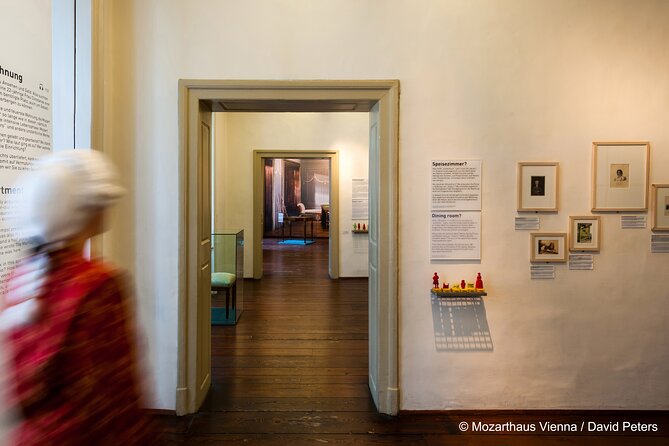
The third floor looks at Mozart’s personal and social situation in Vienna. It provides background for the apartment below and helps place his work within the life he was building in the city.
The focus is not simply on famous compositions. You get a broader picture of Mozart as a person working, socializing, corresponding, and dealing with the expectations of his time. This is one reason the museum can appeal to people who know only a few pieces of his music.
The exhibition begins with Mozart’s description of his Vienna home as a magnificent place. That idea frames the upper-floor material and points you back toward the apartment itself. The museum wants you to understand both the pride Mozart took in his position and the pressures that came with it.
For me, this floor works best when you take your time with the audio guide. Text panels alone may not hold your attention for long, but the spoken explanation adds structure. You can listen, look closely at the displays, and skip sections that are less relevant to your interests.
A different way to spend an afternoon here:
- Vienna: Schönbrunn Palace & Gardens Skip-the-Line Tour
★ 4.7 · 7,739 reviews - Vienna: Light of Creation Votive Church Immersive Light Show
★ 4.8 · 6,779 reviews - Vienna Spanish Riding School Guided Tour
★ 4.7 · 6,765 reviews - Vienna: Classical Concert in the World-Famous Musikverein
★ 4.6 · 6,673 reviews
What the audio guide adds
The audio guide is included, and you do not need to bring your own headphones. It is available in 13 languages for adults and eight languages for children, making the museum practical for mixed-language families and international visitors.
The self-guided format is a real advantage. You are not tied to a guide’s pace or a fixed group schedule. You can linger in Mozart’s apartment, move quickly through a section you already know, or stop to watch performance clips.
The audio guide also keeps the visit from becoming a silent sequence of labels. It explains the people around Mozart, the role of Da Ponte, and the importance of the works written during these years. For many people, this will be the difference between seeing an old apartment and understanding why it matters.
The experience is offered in English, and the audio system supports additional languages. Since the museum is compact, you can make the tour as short or detailed as you wish. A one-hour visit is possible, but I would allow closer to two hours if Mozart is a serious interest.
Original objects, copies, and realistic expectations
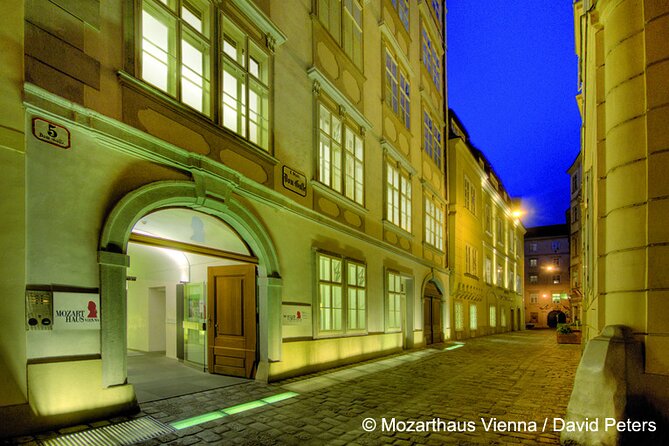
Set your expectations before you enter. This is not a room-by-room reconstruction filled with Mozart’s personal possessions. Some documents and displays are reproductions or interpretive material, and the number of original furnishings is limited.
That does not make the visit unimportant. Historic apartments often survive as spaces rather than complete time capsules. Here, the most meaningful object is the apartment itself, along with the documented connection to Mozart’s work.
The exhibition includes manuscript material and visual displays that help you connect the composer’s life with his music. You may see material related to works such as the Requiem, but do not assume that every page or object is an original Mozart possession.
Photography is not allowed inside the house, so prepare to experience the rooms without taking interior pictures. You can still look out from the windows and consider the street and surroundings Mozart would have known. That small act can make the visit feel more personal than a quick photograph would.
If you want a large collection of original objects, this may not be your best Vienna museum. If you want to stand in Mozart’s surviving home and learn how his Vienna career developed, the limitations are easier to accept.
Location near St. Stephen’s Cathedral
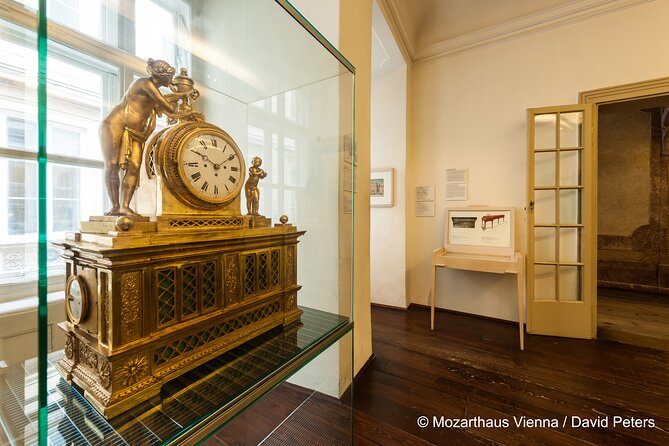
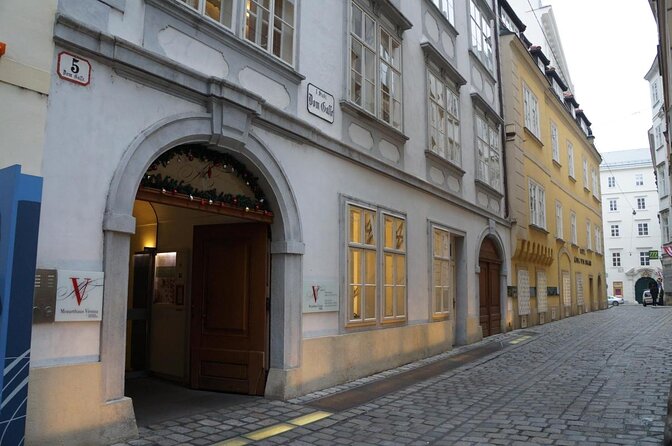
Mozarthaus Vienna is in central Vienna, near St. Stephen’s Cathedral. That makes it easy to pair with a walk through the old city rather than treating it as a separate day trip.
The location adds to the experience. You can visit the cathedral area, walk through the surrounding streets, and then come to Mozart’s former home with the city center still around you. The house is also near public transportation, so you do not need a car or a complicated transfer.
I would place this visit on a day when you are already exploring central Vienna. The museum takes one to two hours, leaving plenty of time for nearby sights, a café stop, or a concert later in the day.
The central setting also helps you picture Mozart as a working resident of Vienna rather than a figure sealed away in a museum. His home was part of the city’s daily life, not an isolated country retreat.
How much time and money should you allow?
The listed price is about $19.27 per person. That is reasonable if you use the audio guide fully and spend time across all three floors, but it is less convincing if you rush in for only 30 minutes.
At one hour, the ticket buys a focused look at the apartment and the main exhibition. At two hours, you get better value, especially if you listen to the background on Da Ponte, The Marriage of Figaro, Don Giovanni, and Mozart’s social world.
The price also reflects the location and the rare chance to see Mozart’s only intact Vienna residence. It does not buy a grand collection of personal belongings, so the value depends heavily on your interest in the composer and the importance of place.
The museum is open daily from 10 a.m. to 7 p.m. That long schedule gives you useful flexibility. You can visit in the morning, stop by during an afternoon walk, or go later in the day. Since the ticket is mobile, you can keep it on your phone.
The experience is generally suitable for most people, and service animals are allowed. The listed maximum is 10 participants, though the visit itself is self-guided rather than a traditional guided group tour.
Who will enjoy Mozarthaus most?
I would recommend this museum first to people who already enjoy Mozart’s music, especially his operas and chamber works. The connection to The Marriage of Figaro and Don Giovanni gives familiar music a physical setting.
It also suits curious visitors who want more than a concert. The museum explains the composer’s personal world, his colleagues, and the social setting of his Vienna years. Families can use the children’s audio guide languages, though younger children may not stay interested for the entire two hours.
You should think twice if your main goal is to see original furniture, personal possessions, or a fully recreated eighteenth-century interior. The house is meaningful, but its presentation is partly modern and interpretive.
A music lover may find the visit worth the full two hours. A casual sightseeing visitor might prefer a shorter, focused stop centered on the apartment and the best-known works.
Practical advice for a smoother visit
Keep your mobile ticket ready when you arrive. There has been occasional confusion at the entrance when third-party mobile tickets were not recognized immediately, so allow a few extra minutes rather than arriving just before another appointment.
Use the audio guide. The displays carry useful information, but the spoken tour gives the three floors a clearer shape and fills in details that are easy to miss.
Do not plan on photographing the interior. Photography is not allowed inside, and the experience works better if you accept that from the start.
Give yourself room to pause. The apartment is the emotional center, while the second and third floors provide the explanation. Skipping the upper levels may leave you with the address but not the story.
If you need to cancel, free cancellation is available up to 24 hours before the start time. Changes or cancellations made less than 24 hours in advance are not accepted for a refund, and the cut-off follows local Vienna time.
Should you book Mozarthaus Vienna?
Book it if you want to connect Mozart’s music with a real place, especially the rooms where he lived from 1784 to 1787 and wrote The Marriage of Figaro. The multilingual audio guide, central location, flexible hours, and one to two-hour length make it easy to fit into a Vienna sightseeing day.
Skip it if you expect a lavishly furnished home or a large collection of personal artifacts. You will find copies, modern exhibition elements, and relatively few original furnishings.
For most Mozart fans, the apartment alone justifies the visit. For everyone else, the ticket makes sense when you have enough time to use the audio guide and explore all three floors rather than treating Mozarthaus as a five-minute photo stop.
FAQ
Where is Mozarthaus Vienna located?
Mozarthaus Vienna is in central Vienna, near St. Stephen’s Cathedral and close to public transportation.
How long does the visit take?
The visit takes approximately one to two hours, depending on how closely you follow the audio guide and how long you spend with the displays.
What is the main highlight of the museum?
The main highlight is Mozart’s apartment, where he lived with his family from 1784 to 1787.
Which important works did Mozart write there?
Mozart wrote The Marriage of Figaro and three of his six Haydn Quartets while living in the apartment.
Is the apartment fully furnished as it was in Mozart’s time?
No. The apartment remains intact as a historic space, but it contains limited original furniture and should not be expected to look exactly as it did during Mozart’s residence.
Is an audio guide included?
Yes. An audio guide is included with the admission ticket.
What languages are available for the audio guide?
The adult audio guide is available in 13 languages, and the children’s version is available in eight languages.
Can I use a mobile ticket?
Yes. The experience includes a mobile ticket.
What are the opening hours?
Mozarthaus Vienna is open daily from 10 a.m. to 7 p.m.
Can I cancel for a full refund?
Yes, you can cancel for a full refund up to 24 hours before the experience start time. Cancellations made less than 24 hours before the start time are not refundable.
Recently added around Vienna
- Vienna: Private tour Mauthausen and Linz★ 4.1 · 3 reviews
- 2-Day Prague Tour from Vienna with private Transfers and Lunches★ 5.0 · 3 reviews
- Vienna Self Guided Sherlock Holmes Murder Mystery Game★ 4.5 · 3 reviews
- Vienna Private Schönbrunn Palace Tour, Extra Rooms and Gardens★ 5.0 · 3 reviews
- Salzburg and Lake Region Private Day Trip from Vienna★ 5.0 · 3 reviews
- Small-group Vienna Wine Tour★ 5.0 · 3 reviews
- True Crime mobile puzzle rally Vienna★ 4.0 · 3 reviews
- Vienna: Wachau Valley Private Kayak and Wine Tour★ 5.0 · 3 reviews
Vienna Tours, compared.
Vivaldi’s Four Seasons Concert in Karlskirche
Read our review →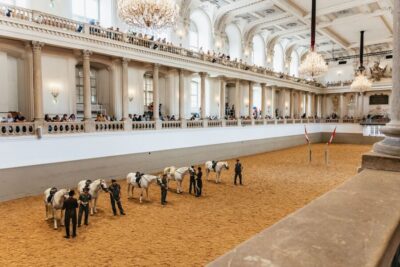
Skip-the-cashier-desk-line Giant Ferris Wheel Ride
Read our review →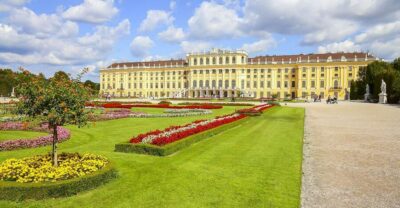
Schönbrunn Palace & Gardens Skip-the-Line Tour
Read our review →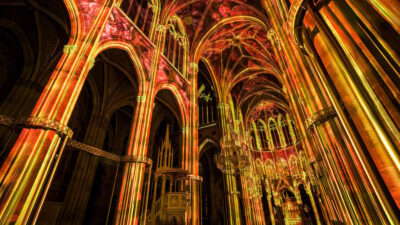
Light of Creation Votive Church Immersive Light Show
Read our review →

Skip-the-Line Sisi Museum, Hofburg and Gardens Tour
Read our review →