
Reviewed · VIENNA TOURS
Italian VIENNA
Vienna’s Italian side is easy to miss if you focus only on palaces, waltzes, and coffeehouses. This walking tour changes the angle. With Mario Casalone, you follow Italian artists, architects, composers, preachers, adventurers, and military figures through the center of Vienna, seeing familiar streets with a new set of connections.
I like two things right away: the route links Italian art and culture to major Viennese sights, and Mario’s storytelling mixes facts, odd details, and everyday observations rather than delivering a dry lecture. The main consideration is time. At about two and a half hours, this is a substantial walk, and the experience is outdoors, so poor weather can affect the schedule.
Key points about Italian Vienna
- Italian roots at Minoritenkirche: Begin at Vienna’s church for the Italian community, a fitting place to set the theme.
- The Hofburg from a new angle: Connect the imperial palace and the world of Franz Joseph and Sisi with Italian artistic influence.
- Story-led guiding: Mario Casalone uses anecdotes, historical connections, and humor to keep the walk moving.
- A central finish: The tour ends at Stephansplatz, beside St. Stephen’s Cathedral.
- Good value for a long city walk: At $33.20 per person, the price works best for anyone who wants context rather than a quick landmark checklist.
- Small enough to remain personal: The maximum group size is 30, though the actual group can be smaller.
Why Vienna feels unexpectedly Italian
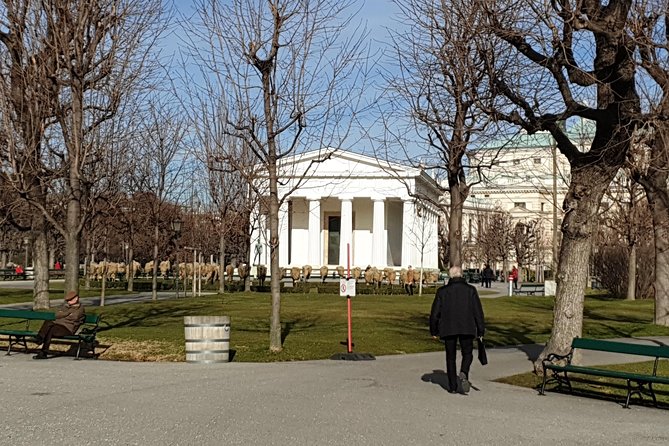
Vienna is usually presented as the capital of the Habsburg Empire, the home of grand music, imperial ceremony, and ornate Baroque buildings. That is all true, but it leaves out the many Italians who helped shape the city’s appearance and public life.
Italian architects and master builders played an important part in the look of central Vienna. Italian artists contributed to churches, palaces, and decorative projects. Italian composers and musicians also formed part of the city’s cultural story, while Italian preachers, soldiers, adventurers, and political figures passed through the imperial capital.
That is the central idea here. You are not simply walking to a church, palace, and cathedral. You are learning to ask who designed these places, who decorated them, who worshipped there, and how Vienna’s links with Italy shaped what you see.
I find this approach especially useful if you have already visited Vienna’s major sights. The route can make familiar places feel fresh because the guide gives you a different question to carry through the city: where is the Italian connection?
A few more Vienna half-days to weigh up
- Vienna: Vivaldi’s Four Seasons Concert in Karlskirche
★ 4.7 · 14,951 reviews - Vienna: Spanish Riding School Training
★ 3.9 · 9,281 reviews - Vienna: Skip-the-cashier-desk-line Giant Ferris Wheel Ride
★ 4.5 · 7,859 reviews
Starting at Minoritenkirche in Minoritenplatz
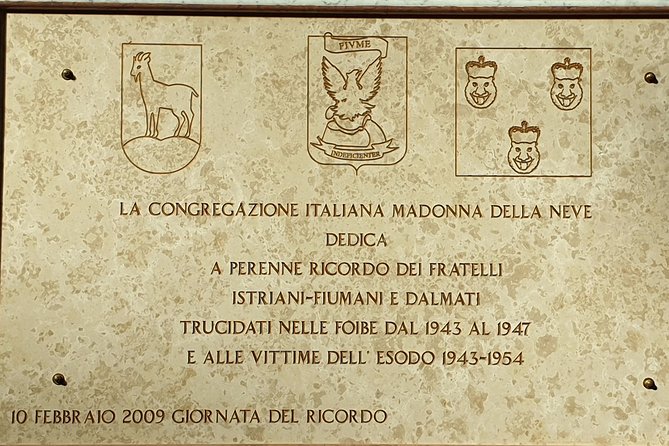
The tour begins at Wiener Minoritenkirche, at Minoritenplatz 2A in Vienna’s first district. This church is associated with Vienna’s Italian community, making it a logical opening point rather than just a convenient meeting spot.
You spend about 15 minutes here, and admission is free. That short stop sets the cultural frame for the walk. Instead of beginning with a famous imperial building, the tour starts with a community and its place in the city.
Minoritenkirche is also useful for visitors who want more than the standard Vienna story. It introduces the idea that the city was shaped by people from beyond the German-speaking world. Italian influence was not limited to a few imported paintings or decorative flourishes. It was tied to worship, migration, court life, and artistic work.
I would arrive a little early. The meeting point is specific, but central Vienna has several large squares and busy streets, and it is easier to begin calmly if you are not searching for the church at the last minute.
The free admission is helpful, though this is primarily a walking and storytelling experience rather than a church interior visit. If your main goal is to spend a long time examining religious art inside the building, the 15-minute stop may feel brief. If you want the church as the first chapter in a wider story, the timing makes sense.
The Hofburg and Vienna’s imperial center
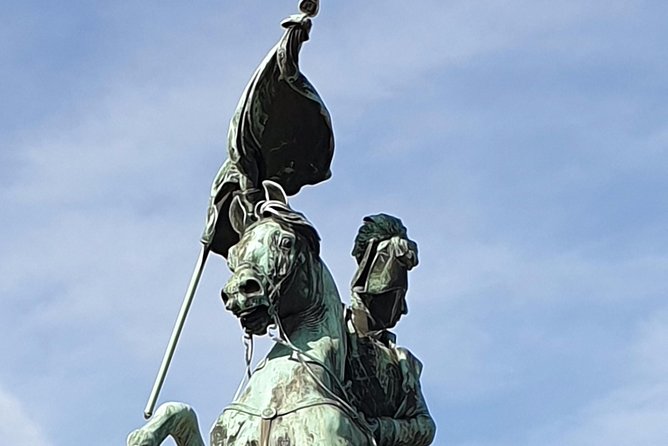
The next listed stop is the Hofburg, about a 15-minute visit from the route. This was the imperial palace of the Habsburg family, and it is associated with the apartments of Franz Joseph and Sisi.
The Hofburg gives the Italian theme a much larger stage. Here, art and architecture meet power. The imperial court needed residences, churches, ceremonial rooms, monuments, and decoration, and that demand brought many talented people to Vienna. Looking at the palace through this lens helps you see how international the Habsburg capital really was.
You should not expect admission into the imperial apartments as part of this walking tour. The stop is listed with free admission, and the activity is built around outdoor guiding and city interpretation. If you want to visit the apartments of Franz Joseph and Sisi inside, plan that separately and allow extra time.
That distinction matters when comparing this tour with a palace ticket. You are paying for the guide’s route and explanation, not for a full museum visit. The strength is the connection between places. The limitation is that the tour does not replace a detailed interior tour of the Hofburg.
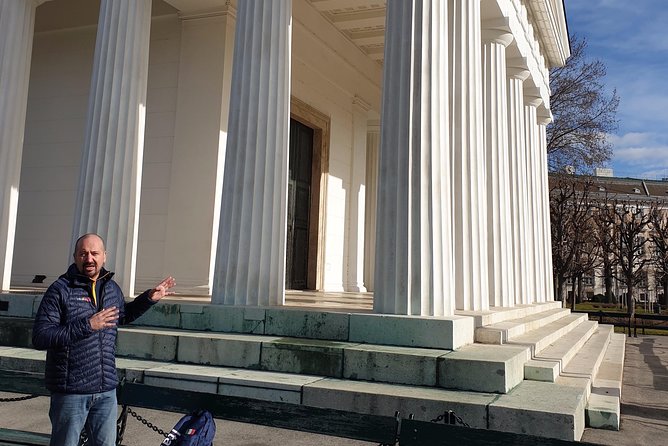
Mario’s style appears to suit people who like stories with a human touch. His explanations are described as lively, clear, and easy to follow, with a mix of factual material, trivia, and personal observations. He also seems willing to stop and answer questions, which can make a short palace stop feel more useful than a simple photo break.
From imperial power to Stephansplatz
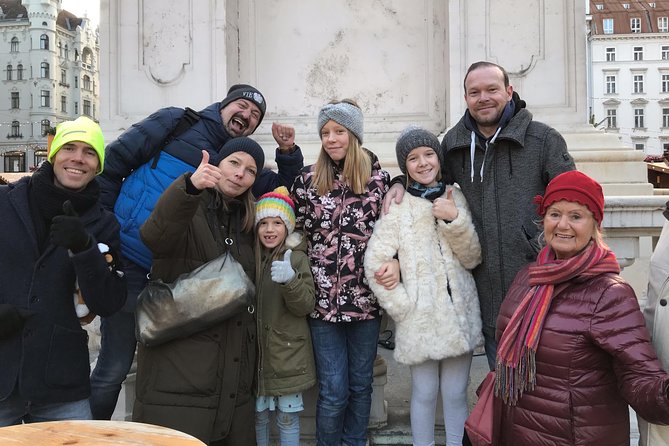
The walk ends at Stephansplatz, the cathedral square beside St. Stephen’s Cathedral. This gives the tour a strong central finish and leaves you in one of Vienna’s most useful locations for the rest of your day.
Stephansplatz is a practical ending point. From here, you can continue exploring the cathedral area, find a café, shop in the pedestrian center, or make your way back toward other sights. The tour does not return to Minoritenplatz, so keep that in mind when planning your schedule.
The final stop also completes the shift from one kind of Vienna to another. You begin with the Italian community at Minoritenkirche, move through the Habsburg imperial center, and finish beside the city’s best-known cathedral. The route is short in geographic terms, but the historical links give it a wider reach.
You may already know Stephansplatz from another city walk. That is not a problem. One of the tour’s strongest features is its ability to reframe places you have seen before. The value comes from the explanation, not from checking off an unknown monument.
A different way to spend an afternoon here:
- Vienna: Schönbrunn Palace & Gardens Skip-the-Line Tour
★ 4.7 · 7,739 reviews - Vienna: Light of Creation Votive Church Immersive Light Show
★ 4.8 · 6,779 reviews - Vienna Spanish Riding School Guided Tour
★ 4.7 · 6,765 reviews - Vienna: Classical Concert in the World-Famous Musikverein
★ 4.6 · 6,673 reviews
Mario Casalone’s guiding style
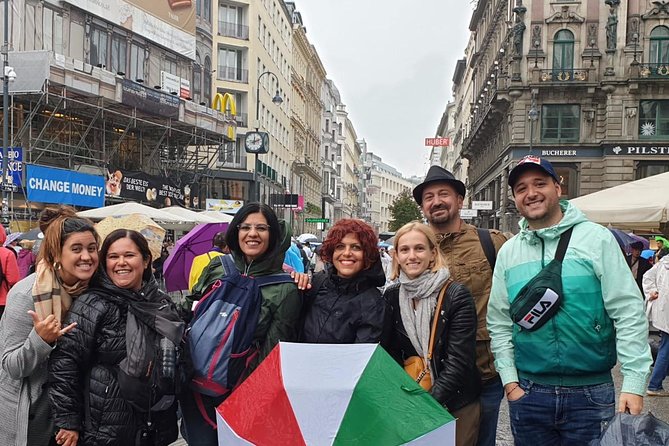
Mario Casalone is the guide and experience provider behind MarioViennaGuide. His approach is the main reason to choose this walk over an unguided stroll through central Vienna.
The available feedback presents him as friendly, welcoming, patient with questions, and skilled at making complex subjects easy to follow. His storytelling is said to include humor, anecdotes, and useful detail without becoming too formal. That balance matters on a two-and-a-half-hour walk, when a stream of names and dates can quickly become tiring.
Several comments also point to his ability to connect Italian art and culture with Austrian daily life. That is a useful distinction. You are not getting a narrow lecture about Italian painters in isolation. You are being shown how Italian influence fits into Vienna’s buildings, court culture, religious life, and public identity.
The multilingual response to the tour is also notable. Feedback appears in Italian and German, but the supplied information does not state the scheduled language or guarantee a particular language for every departure. Check the booking details before you commit if language is important to you.
Mario’s enthusiasm seems to be a real part of the experience. That can be a major plus if you enjoy a guide who gestures, jokes, and brings personality to the walk. It may be less appealing if you prefer a silent audio guide or a strictly academic presentation.
What the two-and-a-half-hour length means
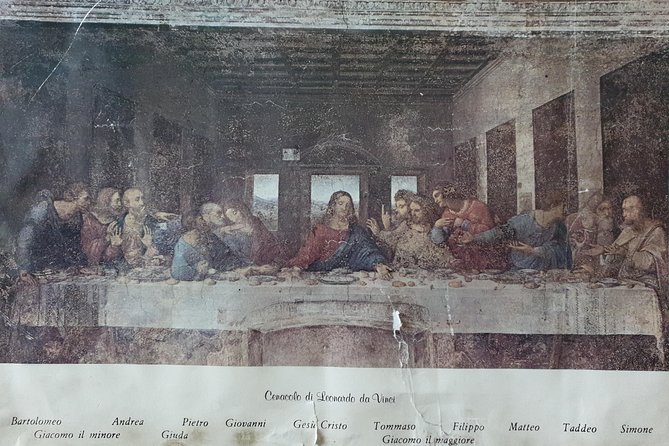
The listed duration is approximately 2 hours and 30 minutes. That is long enough to build a proper story, but short enough to fit into a day of sightseeing.
I like this length for a first or second day in Vienna. It gives you a focused introduction without taking up an entire morning or afternoon. You can book it before another central Vienna activity, but do not schedule anything with a tight start time immediately afterward. Walking tours often run a little longer when questions are lively or when the group needs time to move between stops.
The route includes only two named stops, each with about 15 minutes listed, so much of the time is likely spent walking and discussing other central locations along the way. That is important when setting expectations. This is not a stop-and-enter tour with long visits inside each building. It is a guided city walk built around connections among places.
Wear comfortable shoes. The activity takes place in the city center, and you should expect to spend most of the time on foot. The practical upside is that no special transport is needed during the walk, and the meeting point is near public transportation.
Group size, weather, and comfort
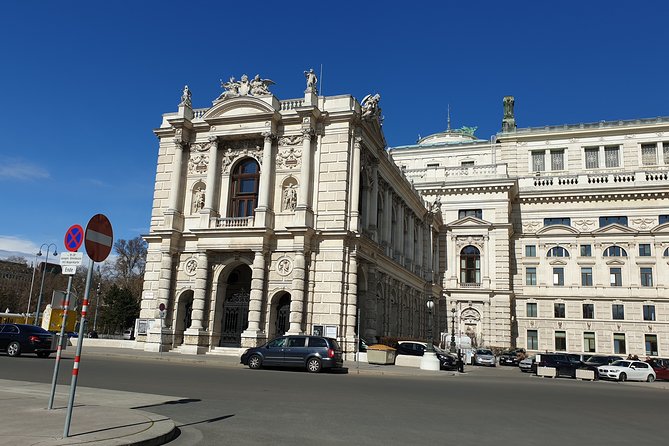
The maximum group size is 30 people. That is not an intimate private tour, but it is also not a giant crowd. The guide should be able to keep a group of this size moving through central Vienna, though your experience will depend partly on how many people actually attend.
A 30-person limit also affects listening. In a quiet square, you may hear every detail easily. On a busy street, you may need to stay close to Mario. I would choose a position near the guide and avoid drifting behind the group, especially during transitions between sights.
The activity requires good weather. If poor weather causes cancellation, you are offered another date or a full refund. This is worth taking seriously because the route depends on being outdoors for a long stretch. Vienna rain, wind, or cold can make even an excellent talk hard to enjoy.
The cancellation terms are straightforward: cancel at least 24 hours before the local start time for a full refund. Changes or cancellations made less than 24 hours ahead are not accepted for a refund. The tour also requires a minimum number of participants, and if that minimum is not reached, you are offered another date or experience, or a full refund.
Is $33.20 a fair price?
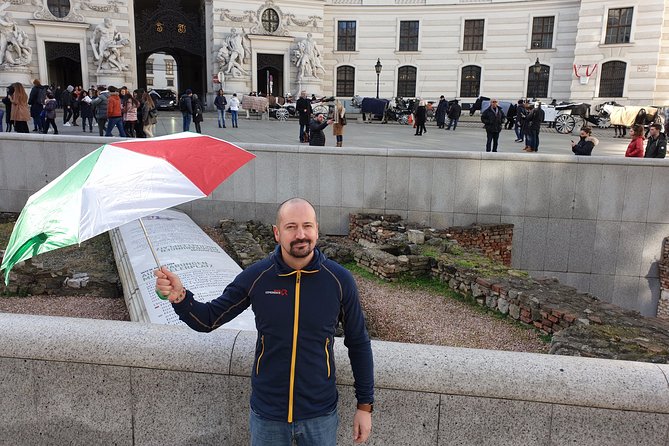
At $33.20 per person, the tour sits in a reasonable range for a guided central-city walk lasting roughly two and a half hours. The value depends on what you want from Vienna.
If you only need directions and landmark names, the price may not appeal. You can walk between Minoritenkirche, the Hofburg, and Stephansplatz on your own. But finding the Italian connections, identifying the relevant figures, and placing them in a useful story would take research and careful preparation.
The price also includes a mobile ticket, which keeps the booking simple. The major purchase here is not admission. It is the guide’s interpretation and the time spent connecting the city’s visible details.
I would consider it good value for a visitor who is curious about architecture, music, art, or the Habsburg period. It is also a smart choice if you have already taken a general Vienna walk and want a more focused theme. The value is weaker for someone looking for a long interior visit at the Hofburg or a detailed examination of one church.
Who will enjoy Italian Vienna most
This tour should suit you if you like seeing a famous city through a less familiar angle. It is especially useful for:
- Visitors with an interest in Italian art, architecture, and culture
- People who enjoy stories about artists, composers, preachers, and court figures
- Repeat visitors who have already seen central Vienna’s main sights
- First-time visitors who want historical context before exploring on their own
- Anyone who prefers a personable guide to an app or printed guidebook
Families and older visitors may also find the route manageable because most travelers can participate, but the information does not specify the distance, seating, or accessibility arrangements. If mobility is a concern, ask before booking rather than assuming every part of the route will suit you.
This is not the best match if you want a food tour, a museum visit, a private walk, or a tour focused only on the Sisi story. It is also not ideal if rain would ruin your day, since good weather is required.
Practical planning for the day
Book this early in your Vienna stay if you can. The route may give you names, buildings, and connections worth returning to later. You can then revisit a church, palace, or square with a better sense of what you are looking at.
Keep the rest of the day flexible. The tour finishes at Stephansplatz, so it pairs naturally with time around St. Stephen’s Cathedral and central Vienna. You could also use the end point as a launch pad for lunch or another city-center visit.
Bring your mobile ticket and dress for the forecast. Since the walk depends on good weather, a light rain layer or warm clothing may make a big difference even when the tour is not canceled.
Do not confuse the free admission at the listed stops with a full set of included museum entries. The tour’s format is a guided walk, and any separate interior visits should be treated as additional plans.
The final verdict
I would book Italian Vienna if you want a focused, story-driven walk that explains how Italian people and ideas helped shape the Austrian capital. Mario Casalone’s friendly, energetic style appears to be the heart of the experience, and the route gives you a fresh way to read central Vienna.
The best reason to choose it is the theme. You are not simply visiting the Hofburg again. You are learning to see Vienna as a meeting point between Austrian power and Italian artistic, religious, and cultural influence.
Skip it if you want extensive time inside the Hofburg, a private group, or a tour protected from bad weather. For everyone else, $33.20 buys a useful two-and-a-half-hour introduction to a side of Vienna that many standard sightseeing routes leave out.
FAQ
Where does the Italian Vienna tour begin?
The tour begins at Wiener Minoritenkirche, Minoritenplatz 2A, 1010 Vienna, Austria.
Where does the tour end?
The tour ends at Stephansplatz, the cathedral square beside St. Stephen’s Cathedral in central Vienna.
How long does the tour last?
The experience lasts approximately 2 hours and 30 minutes.
Is admission included at the stops?
The listed stops at Minoritenkirche and the Hofburg have free admission as part of the tour information. The activity is a walking tour, and separate interior visits should not be assumed.
What is the maximum group size?
The tour accepts a maximum of 30 participants.
Can I cancel for a full refund?
Yes. You can cancel at least 24 hours before the experience start time for a full refund. Cancellations or changes made less than 24 hours before the start time are not refunded or accepted.
Recently added around Vienna
- Vienna: Private tour Mauthausen and Linz★ 4.1 · 3 reviews
- 2-Day Prague Tour from Vienna with private Transfers and Lunches★ 5.0 · 3 reviews
- Vienna Self Guided Sherlock Holmes Murder Mystery Game★ 4.5 · 3 reviews
- Vienna Private Schönbrunn Palace Tour, Extra Rooms and Gardens★ 5.0 · 3 reviews
- Salzburg and Lake Region Private Day Trip from Vienna★ 5.0 · 3 reviews
- Small-group Vienna Wine Tour★ 5.0 · 3 reviews
- True Crime mobile puzzle rally Vienna★ 4.0 · 3 reviews
- Exploring the Gutenstein Alps★ 5.0 · 3 reviews
Vienna Tours, compared.

Vivaldi’s Four Seasons Concert in Karlskirche
Read our review →

Skip-the-cashier-desk-line Giant Ferris Wheel Ride
Read our review →
Schönbrunn Palace & Gardens Skip-the-Line Tour
Read our review →
Light of Creation Votive Church Immersive Light Show
Read our review →

Skip-the-Line Sisi Museum, Hofburg and Gardens Tour
Read our review →