
Reviewed · VIENNA TOURS
Future Bus Tours – Vienna’s highlights bus tour with virtual reality
Vienna’s grand center gets a modern twist on this one-hour virtual reality bus tour. You ride a small, air-conditioned shuttle through the Ringstrasse area, then use a headset at four stops to see historic figures and places as acted 3D scenes. It is a quick way to connect the Hofburg, Rathaus, Votivkirche, and Opera without walking the full circuit.
I like two things here: the tour covers a lot of ground in little time, and the VR scenes give dry historical facts a human face. The compact group, limited to 18 people, should also feel more manageable than a large sightseeing coach. The main caution is the language information. One section lists seven audio languages, another says nine, while a Japanese-speaking customer found only German and English available, so confirm your language before paying.
Key points to know before booking
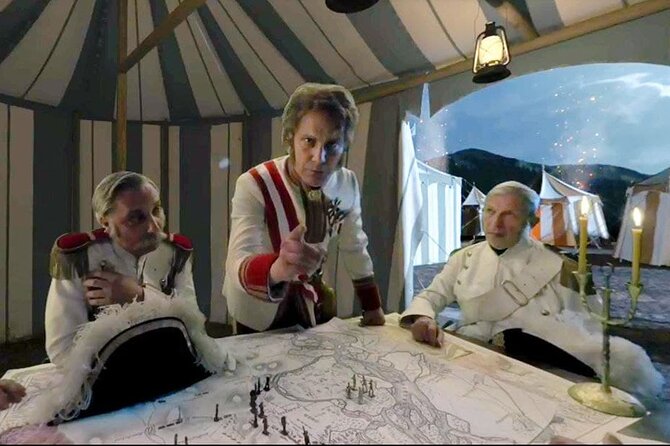
- Four VR stops turn landmarks into short historical scenes, including Austrian rulers, an assassination attempt, and an opera performance.
- The route packs in central Vienna sights, from Heldenplatz and Maria Theresia Square to the Ringstrasse, Rathaus, MuseumsQuartier, Votivkirche, and State Opera.
- The ride lasts about one hour, making it useful for a first look or a short sightseeing window.
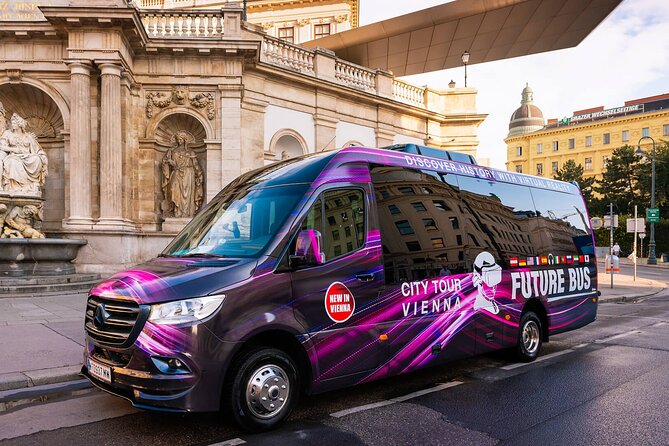
- The vehicle is air-conditioned and limited to 18 people, a practical choice if you want a smaller group and less walking.
- The audio language count needs checking, since the supplied information gives different totals and one experience was available only in German and English.
- The price is $32.10 per person, reasonable if you value transport, commentary, and the unusual VR element in one compact outing.
Why this short VR tour works in Vienna

Vienna can feel like a city best understood one grand building at a time. The trouble is that the grand buildings are spread along a broad ring road, and a first visit can leave you choosing between walking a long circuit, taking public transport, or paying for a conventional sightseeing ride.
This tour offers a fourth option. You sit back while the minibus links several major sights, and the headsets add brief visual scenes at selected stops. I like that combination because the bus handles the distance while the VR gives you something more focused than a passing view from a window.
The experience is not a full museum visit or a long guided walk. You get about 10 minutes at each scheduled stop, with the rest of the hour spent moving through the city and listening to the audio guide. That makes it best for orientation and atmosphere, not for detailed exploration of every building.
The most praised feature is the unusual use of actors and 3D scenes. One especially positive reaction described the headsets as a way to see actors portray the past, while another found that the historical material became more exciting and easier to follow. That is the real point of the tour: history is presented as a short visual performance, not just a list of dates.
A few more Vienna half-days to weigh up
- Vienna: Vivaldi’s Four Seasons Concert in Karlskirche
★ 4.7 · 14,951 reviews - Vienna: Spanish Riding School Training
★ 3.9 · 9,281 reviews - Vienna: Skip-the-cashier-desk-line Giant Ferris Wheel Ride
★ 4.5 · 7,859 reviews
Starting at Operngasse 4 near Albertinaplatz
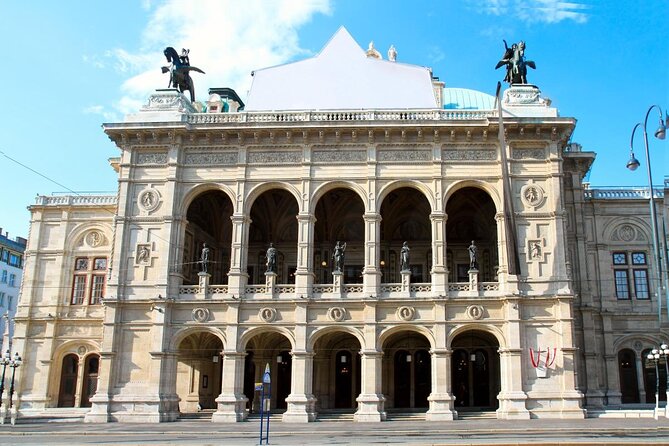
You begin at Operngasse 4, beside Albertinaplatz in Vienna’s central 1st district. The meeting point is close to the State Opera and near public transportation, so it fits easily into a day based around the inner city.
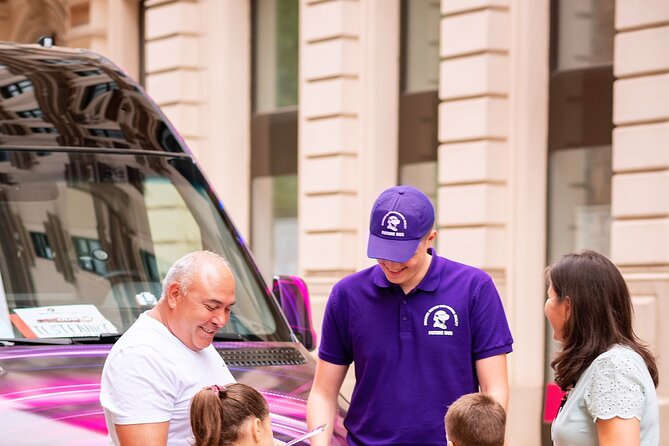
At the start, you receive instructions for the audio and VR equipment. This matters because the tour moves quickly. You are not spending a long time learning the controls at every stop, so pay attention to the opening explanation and handle the headset with care.
The start and finish are at the same place. That is convenient if you are planning to visit the Albertina area, the Opera, or other central sights before or after the ride. It also means you do not need to figure out a return route from an unfamiliar neighborhood.
The group size is capped at 18 people. That does not guarantee a silent ride, but it should be more intimate than a large open-deck bus. Since the VR moments require everyone to follow instructions, a smaller group can make the process less awkward and easier to manage.
Heldenplatz and the Hofburg’s powerful figures
The first major stop is Heldenplatz, or Heroes Square, with the entrance to the Hofburg nearby. This is one of the best places in Vienna to begin a historical tour because the broad square is closely tied to the imperial center of the city.
The VR sequence introduces three important Austrian rulers: two generals and an empress. The provided details identify Maria Theresia as the empress, and the nearby Maria Theresia Square gives the scene an obvious visual connection. Her monument sits across from Heldenplatz, between major museums, so you can connect the headset presentation with what is directly in front of you.
I like this stop because the VR does something a regular bus view cannot. Instead of seeing only palace walls and a monument, you get a short dramatization involving people who shaped Vienna and Austria. The effect is designed to make the square feel connected to decisions, power, and personalities.
The limitation is time. Ten minutes is enough for the presentation and a look around, but not enough for a proper visit to the Hofburg or its museums. Admission to any attraction is not included, so treat this as an exterior introduction. If you want imperial apartments, museum collections, or a longer look at the palace, you will need a separate visit.
Rathaus, the theatre, and the Ringstrasse
The route then carries you along the Ringstrasse, Vienna’s famous boulevard of monumental public buildings. You see the State Opera, Parliament, Rathaus, the University of Vienna, churches, and other major structures from the moving vehicle.
This is where the bus format earns its keep. The Ringstrasse is broad, and the buildings are impressive but scattered. You can walk it, but a bus gives you a fast first pass while the audio guide explains what you are seeing.
At the Rathaus stop, the focus shifts toward Vienna’s city hall and nearby cultural buildings. The stop is also connected with another historic personality whose office was nearby and whose favorite café was across the street. The supplied information does not identify that person by name, so do not book this expecting a named biographical lecture. Instead, expect a short historical connection tied to the buildings around the square.
The second VR stop is next to Vienna’s famous theatre, near the Rathaus and Volksgarten. Café Landtmann is on the other side of the park. This location gives you a cluster of classic Vienna sights in a very small area: city hall, theatre, roses in the Volksgarten, and one of the city’s best-known cafés.
You may find this stop more about atmosphere than sightseeing access. The bus pauses near the buildings, but the experience does not include admission to the theatre, Rathaus, or café. You see the setting and use the headset for the historical presentation, then continue.
A different way to spend an afternoon here:
- Vienna: Schönbrunn Palace & Gardens Skip-the-Line Tour
★ 4.7 · 7,739 reviews - Vienna: Light of Creation Votive Church Immersive Light Show
★ 4.8 · 6,779 reviews - Vienna Spanish Riding School Guided Tour
★ 4.7 · 6,765 reviews - Vienna: Classical Concert in the World-Famous Musikverein
★ 4.6 · 6,673 reviews
Votivkirche and the assassination story
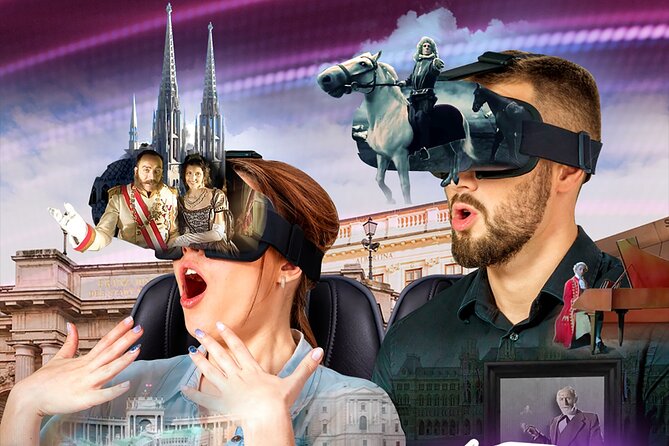
The third VR stop is at Votivkirche, a striking Neo-Gothic church that is often missed by quick city visits. Its twin towers and ornate exterior offer a change from the imperial palaces and civic buildings along the Ringstrasse.
The historical hook here is an assassination attempt. The tour uses the church to explain how the building connects to that event, giving the stop a story beyond architecture. This is a smart choice for a short tour because the building catches your eye immediately, and the historical episode gives you a reason to remember it.
The visit is still brief. You should expect to see the church from the tour stop and receive the VR presentation rather than spend a long time studying the interior. No admission is included. If Votivkirche interests you, note the location and return later at your own pace.
The church stop also shows the limits of a tightly scheduled route. You get a useful introduction, but the tour cannot pause for every photograph, interior detail, or question. I would bring a camera or phone ready before the vehicle stops, especially if you want a quick exterior shot.
MuseumsQuartier and Vienna beyond the Ring
After the Ringstrasse section, the minibus leaves the boulevard and passes MuseumsQuartier, one of Vienna’s modern cultural areas and home to several museums. The route also passes other sights before returning toward the Opera.
This part helps keep the tour from becoming only a parade of imperial buildings. Vienna has a strong modern arts scene too, and MuseumsQuartier gives you a glimpse of that side of the city. The experience does not include museum admission, so think of this as a visual introduction that may help you decide where to spend more time later.
Because the bus is moving, some views will be quick. The audio guide matters here, since you may not have enough time to identify every building from the window. I would not rely on the ride alone for detailed architectural study, but it is useful for building a mental map of central Vienna.
The Opera finale and the last VR scene
The route returns to the State Opera near Albertinaplatz for its fourth and final VR stop. This closing sequence introduces one of Vienna’s iconic emperors and his wife, followed by a private virtual concert inside the opera house.
That ending suits the route. You begin near the Opera, pass through the city’s political and religious landmarks, and return to Vienna’s best-known performance venue. The VR concert gives the final stop a more theatrical feel than a standard exterior commentary.
The wording private virtual concert describes the headset experience, not entry to an actual performance. You should not expect a seat inside the Opera or a live concert ticket. The value is in seeing the interior and performance concept through the VR presentation while remaining on the sightseeing route.
If you already plan to visit the Opera separately, this scene may work as a preview rather than a substitute. If you have limited time, it offers a way to experience the idea of the building without committing to a full tour or performance.
What the $32.10 price gets you
At $32.10 per person, the price sits in a sensible range for a one-hour city sightseeing experience, provided you want more than transportation. You are paying for the air-conditioned ride, the route through central Vienna, the audio commentary, and the VR equipment at four stops.
The value is strongest for first-time visitors with only a short window. In one hour, you get an overview of several places that would take longer to connect on foot. The bus also gives you a break from walking, which can be welcome during a packed city day.
The price is less convincing if you want long stops or interior visits. Admission tickets are not included, and the tour does not replace a visit to the Hofburg, Rathaus, Votivkirche, museums, or Opera. You are buying orientation and presentation, not a complete cultural program.
The booking pattern suggests that people often reserve about 34 days ahead. That does not guarantee every departure sells out, but it is a useful sign to plan ahead if your Vienna dates are fixed. The mobile ticket is convenient, and confirmation is provided at booking.
Free cancellation is available if you cancel at least 24 hours before the start time. Changes or cancellations inside that window are not accepted for a refund, and the cut-off uses Vienna local time.
Language, comfort, and the VR equipment
The audio guide is advertised in several languages, but the supplied details conflict. One section says seven languages, while another says nine. A Japanese-speaking customer booked expecting Japanese audio and found only German and English when the tour began.
That is the clearest practical warning in the available information. If language access affects your decision, confirm the exact language for your departure before booking. The historical content may be much less useful if you cannot follow the narration.
The vehicle is air-conditioned, which is helpful in warm weather and during a busy sightseeing day. You remain seated for much of the tour, with short stops for the VR scenes. Most people can participate, according to the supplied information, but no more detailed accessibility information is provided.
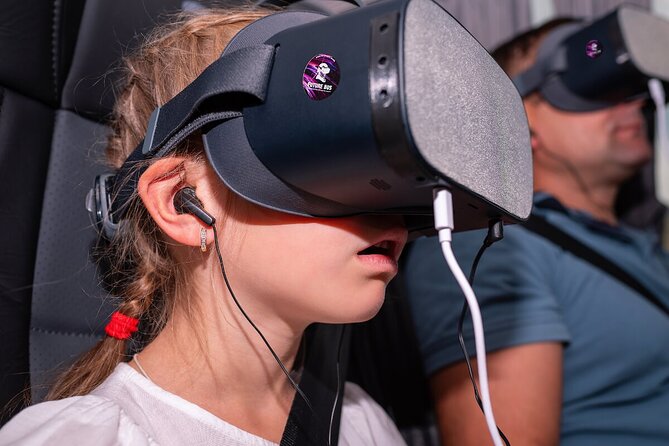
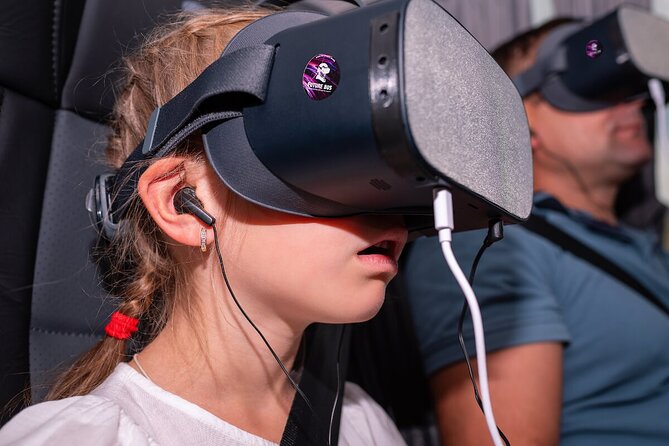
The headsets are central to the experience. One German-language account describes sitting on the bus, putting on the glasses, and seeing the past in spatial 3D. That gives you a good sense of the format: this is not a constant VR ride, but a regular city route with several short headset moments.
Who should book this experience
I would choose this tour for a first visit to Vienna, a short stay, or a day when you want a quick orientation before exploring on foot. It also suits families and mixed-age groups who may respond better to acted scenes than to a long traditional lecture.
It is a good match for anyone curious about technology, imperial history, and Vienna’s central monuments. The unusual format gives you conversation points and may help younger visitors connect the Hofburg, Maria Theresia, the assassination story, and the Opera.
I would be more cautious if you prefer quiet, slow sightseeing. The one-hour schedule leaves little room for lingering, and the moving bus cannot give every building the attention it deserves. It may also disappoint you if you expect full access to palaces, churches, museums, or the Opera.
Check the audio language first, especially if you booked because a particular language was advertised. That single detail can determine whether the tour feels lively and clear or difficult to follow.
Should you book Vienna’s VR bus tour?
Book it if you want a fast, comfortable overview with a genuinely different history format. The route covers major central sights, the group is small, and the four VR scenes give the ride more personality than a standard drive-by audio tour.
Skip it if your priority is entering Vienna’s famous buildings or spending serious time at each stop. For $32.10, the experience offers good value as an introduction, but it is not a replacement for museums, palace interiors, or a live opera visit. Confirm the language, reserve ahead if your schedule is firm, and use the tour as a map for what you want to explore next.
FAQ
How long does the Vienna VR bus tour last?
The tour lasts approximately one hour.
Where does the tour begin?
It begins at Operngasse 4, 1010 Vienna, beside Albertinaplatz.
Where does the tour finish?
The activity ends back at the starting point near Operngasse 4.
Which Vienna sights are included on the route?
The route includes Heldenplatz, the Hofburg entrance, Maria Theresia Square, Rathaus, the Ringstrasse, the State Opera, Parliament, the University of Vienna, Votivkirche, MuseumsQuartier, Volksgarten, and nearby landmarks.
How many VR stops are included?
There are four VR stops. They take place around Heldenplatz, the Rathaus theatre area, Votivkirche, and the State Opera.
Is the vehicle air-conditioned?
Yes. The tour uses air-conditioned transportation.
How many people can join the tour?
The maximum group size is 18 people.
Is the audio guide available in multiple languages?
Yes, the tour information says the audio guide is available in several languages. However, the supplied details give different totals, seven and nine, and one customer found only German and English available. Confirm your language before booking.
What is the cancellation policy?
You can cancel for a full refund up to 24 hours before the experience start time. Cancellations or changes made less than 24 hours before the start are not accepted for a refund.
Recently added around Vienna
- Vienna: Private tour Mauthausen and Linz★ 4.1 · 3 reviews
- 2-Day Prague Tour from Vienna with private Transfers and Lunches★ 5.0 · 3 reviews
- Vienna Self Guided Sherlock Holmes Murder Mystery Game★ 4.5 · 3 reviews
- Vienna Private Schönbrunn Palace Tour, Extra Rooms and Gardens★ 5.0 · 3 reviews
- Salzburg and Lake Region Private Day Trip from Vienna★ 5.0 · 3 reviews
- Small-group Vienna Wine Tour★ 5.0 · 3 reviews
- True Crime mobile puzzle rally Vienna★ 4.0 · 3 reviews
- Exploring the Gutenstein Alps★ 5.0 · 3 reviews
Vienna Tours, compared.

Vivaldi’s Four Seasons Concert in Karlskirche
Read our review →

Skip-the-cashier-desk-line Giant Ferris Wheel Ride
Read our review →
Schönbrunn Palace & Gardens Skip-the-Line Tour
Read our review →
Light of Creation Votive Church Immersive Light Show
Read our review →

Skip-the-Line Sisi Museum, Hofburg and Gardens Tour
Read our review →