
Reviewed · SALT MINE TOURS
Salzburg: Salt Mine Entrance Ticket
The best part of this experience is that it turns 2,600 years of salt mining into a lively underground journey. You move from modern salt production back through the Middle Ages and into the Iron Age, crossing the hidden border between Austria and Germany along the way.
I like the mix of history and physical fun: the short mine-train ride and two miners’ slides keep the tour moving, while the subterranean salt lake adds a strange, beautiful moment with its light display. The ticket also covers the Celtic Village and salt manufactory, so you get more than a simple tunnel walk.
The main drawback is getting there without a car. Public transport can be awkward, with buses running only once an hour according to one detailed experience, so leave a generous buffer before your booked time. The mine is also not suitable for wheelchair users or children under four.
Key points to know before you go

- Two miners’ slides carry you farther into the mountain, including one that can measure your speed.
- A raft ride across the salt lake combines still underground water with a Baroque-style light display.
- The tour crosses the Austria-Germany border underground, an unusual detail that adds character to the route.
- Celtic Village and salt manufactory admission are included, giving you extra history and a look at salt crystal production.
- English and German guides lead the tour, with guides such as Nicolaus and Kristina praised for clear explanations and warm presentation.
- The $36 price is reasonable if you want a compact activity with transport-like rides, history, and several included sights.
A 2,600-year story inside the Dürrnberg mountain
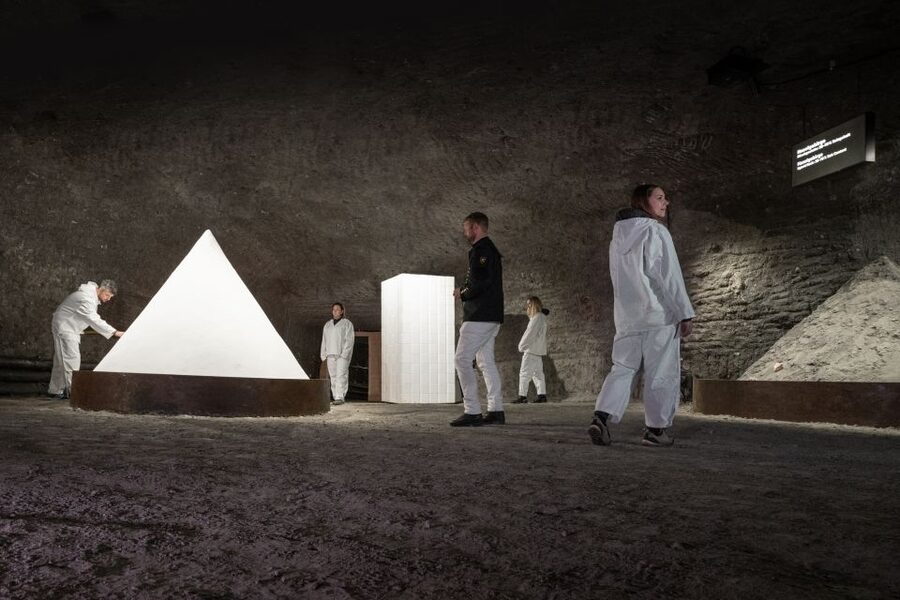
At Hallein Salt Mine, the mountain itself becomes the museum. Salt, once called white gold, shaped work, trade, wealth, and daily life here for thousands of years. Rather than asking you to study displays in a quiet room, the tour takes you through the place where the salt was found and worked.
Your route begins with salt production in the present day. From there, the story moves backward through the Middle Ages and toward the Celtic miners of the Iron Age. That backward journey gives the visit a clear shape, and it helps you understand that the mine was not just a workplace. It was part of the wider story of the region.
The tour lasts about 1.5 hours, which is long enough to feel substantial without becoming tiring for most people who can manage the walking, train ride, and slides. The guide speaks in English or German. If your group includes both languages, explanations may be repeated, so the pace can vary a little.
Guides named Nicolaus and Kristina have been especially memorable for their friendly, clear style. You should expect a guided experience rather than a self-led wander, with the guide connecting the machinery, tunnels, films, and activities to the mine’s past.
More salt mine visits:
- Bavarian Salt Mine Tour and Berchtesgaden
★ 4.6 · 353 reviews - Salzwelten Altaussee: Salt Mine Entrance Ticket
★ 4.6 · 60 reviews - Alpine Majesty: Eagle’s Nest, Salt Mine Salzburg & Berchtesgaden
★ 5.0 · 15 reviews
White overalls, cool tunnels, and a real sense of work
Before entering the mine, you change into white miners’ overalls. They are practical clothing for the underground setting and give the tour a playful visual touch, especially for families. Bring warm clothing underneath, since the mountain is cool even when Salzburg is warm outside.
Comfortable clothes matter because the visit is active. You will walk through the mine, ride a small train, use two slides, and take part in the salt-lake crossing. This is not a good choice if you want a completely passive sightseeing hour.
The overalls also set the tone. You are not simply looking at an old mine from behind a barrier. You are being placed, at least in a small way, into the working world of miners. The activities are designed for fun, but they also suggest how movement through a confined mine required skill, balance, and nerve.
The tour is not suitable for children under four, and it is not suitable for wheelchair users. Older children and teenagers should find the slides and train rides appealing. Families with children aged 11, 14, and 18 have found the mix of information and activity a good fit, while adults traveling with grown children can enjoy it just as easily.
The mine train starts the underground adventure
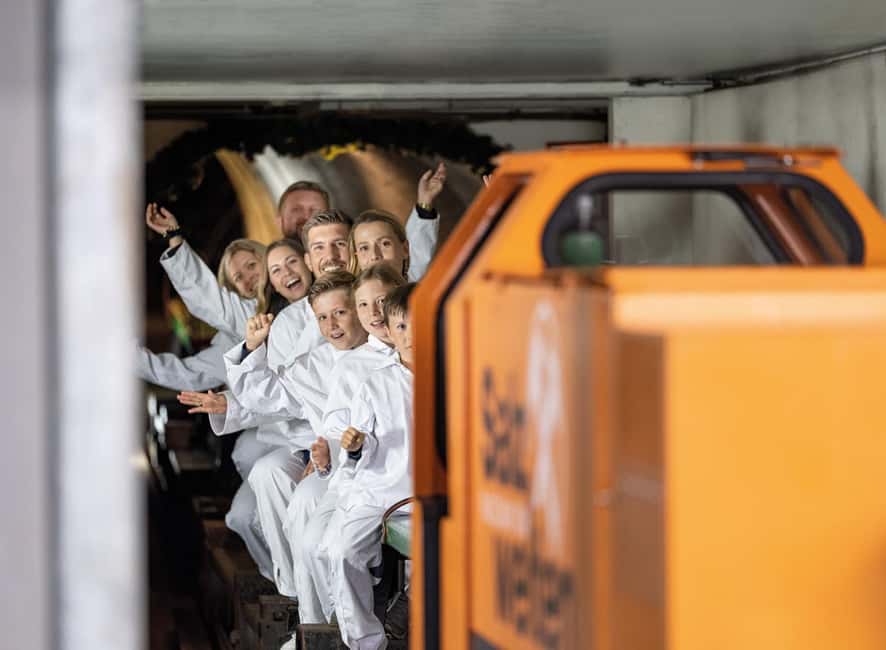
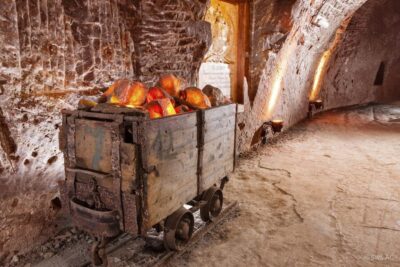
One of the first memorable sections is the mine-train ride. The journey lasts about two minutes, according to the available practical details, but it gives you an immediate sense of entering a working tunnel rather than simply walking into an exhibit.
The train is part of the appeal because it changes the pace. After meeting the guide and hearing the opening explanation, you are carried into the mountain in a compact line of mine cars. The ride is brief, but it helps make the setting feel real.
From there, the route links short explanations with visual displays and small activities. Informational films add context without taking over the tour. The strongest feature is the variety: you are rarely standing still for long, and each section offers a different way to understand the mine.
A very early morning time slot can be a smart choice. The 9 a.m. departure has proved quiet at times, with one small group describing an almost private experience and a return to town by noon. That will depend on the day, but an early booking can also leave the rest of your day free for Salzburg or Hallein.
Two miners’ slides make the history physical
The two miners’ slides are the tour’s biggest dose of fun. They take you farther down into the mountain, and one can record your speed as you descend. You will not need to treat them like an extreme sporting activity, but they add a genuine sense of movement and give the mine visit a story to tell afterward.
The slides also make the tour work well for families and mixed-age groups. A teenager may remember the speed reading more than the historical dates, while an adult may appreciate how the slides connect with the practical problem of moving between levels underground.
You should wear comfortable clothing and be ready for a hands-on visit. If you dislike enclosed spaces, steep slides, or a tour that keeps changing direction, this may feel less relaxing than a standard museum. The supplied information does not specify slide restrictions, so ask the staff if you have concerns about mobility or comfort.
The activities never replace the history. They are spaced through the route, allowing the guide to explain how salt was extracted and why it mattered. That balance is the reason the tour can appeal to people who would not normally choose a mine museum.
A few more Salzburg half-days to weigh up
- The Original Sound of Music Tour in Salzburg
★ 4.5 · 6,129 reviews - Salzburg: Original Sound of Music Tour
★ 4.8 · 5,059 reviews - From Salzburg: Half-Day Tour to Hallstatt
★ 4.6 · 3,596 reviews - Salzburg: Mozart Concert at Mirabell Palace
★ 4.8 · 3,498 reviews
The salt lake and its Baroque light show
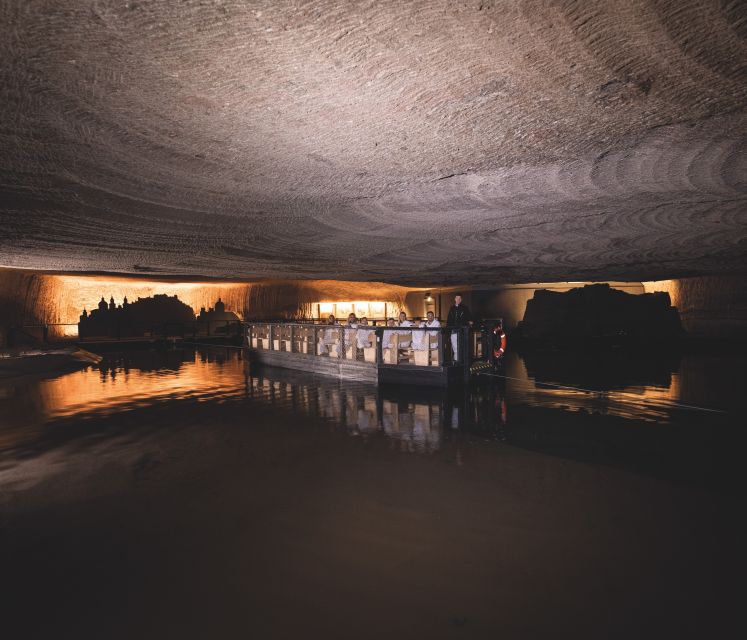
The raft ride across the underground salt lake is the most atmospheric part of the visit. The water is set below ground, and an iridescent light display gives the crossing a slightly unreal quality. It is short, with the available details describing a boat ride of about 80 meters, but the setting makes it memorable.
This is also where the tour shifts from physical fun to visual drama. After the train and slides, the raft offers a quieter few minutes. The lighting refers to the world of Baroque Salzburg, tying the mine to the city above rather than treating the underground site as an isolated attraction.
One small point for those seeking a more stark experience: the mine is not presented as total darkness. At least one visitor wished the lights had been turned off completely for a moment of primordial darkness. If you are expecting a raw, unlit cave, the polished light show may feel more theatrical than natural.
I think the presentation is a fair trade. You get a clear, controlled introduction to an underground environment, and the lighting helps you see the lake and understand the route. It is less about wilderness and more about history presented with a touch of showmanship.
Crossing the hidden Austria-Germany border
The route includes an underground crossing between Austria and Germany. It is a small detail, but it gives the tour a memorable geographical twist. You are not just moving between chambers. You are passing beneath a modern national border while following a much older story of mining.
The border also helps place the Dürrnberg mine in its regional setting. Salt production did not develop inside a neat modern boundary, and the underground route reminds you that history often ignores the lines printed on today’s maps.
Your guide brings the different periods together as you move through the mountain. The present-day operation comes first, followed by the Middle Ages and then the Celtic miners of the Iron Age. That structure is easy to follow, even if you arrive knowing very little about salt mining.
Celtic Village and the salt manufactory
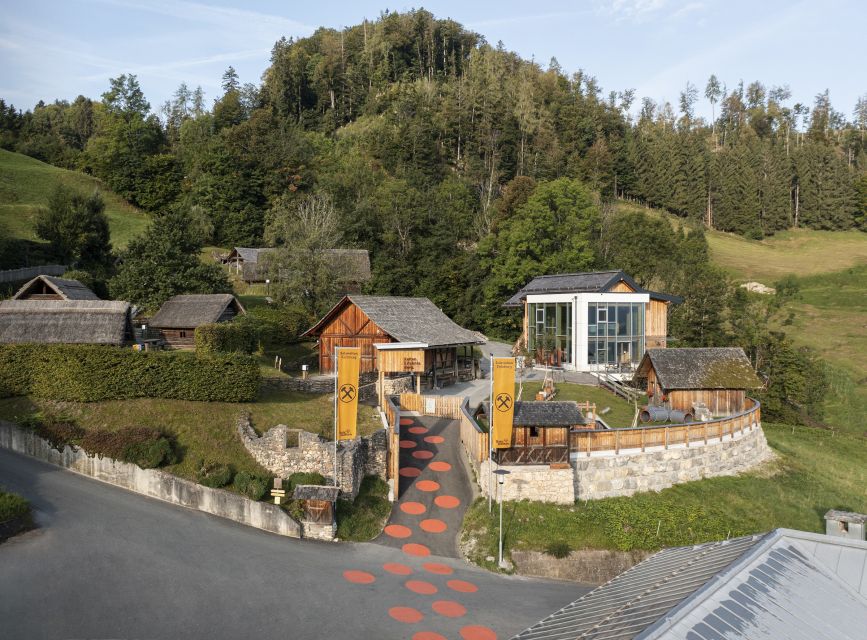
The ticket includes entry to Salina Celtic Village, located on the Celtic Mountain. This part extends the experience beyond the mine tunnels and gives you a better sense of the people who worked the salt deposits during the Iron Age.
The Celtic section is particularly useful because the underground tour ends with those early miners. Instead of hearing about them only as a distant final chapter, you get a separate place to consider their lives and work. Allow extra attention here if ancient history interests you.
Admission to the salt manufactory is included as well. This is Austria’s only showcase saltworks, where natural Dürrnberg brine is turned into Bad Ischler Salzzart. A master salt-maker forms pyramid-shaped salt crystals, and you can watch the process rather than simply buying a packet in a shop.
That craft element adds value to the ticket. You see salt as a finished product and as a material with a distinct production method. The salt shop and souvenir area also offer a chance to take some of the experience home, though shopping is optional.
What $36 gets you, and where it earns its keep
At $36 per person, this is not a bargain basement attraction, but the price covers several separate elements: the guided mine tour, entrance to the Celtic Village, and the salt manufactory. You also get the train ride, two slides, the lake crossing, films, and the guide’s interpretation.
I consider it good value if you want an activity with variety. A basic historic site can feel expensive when you spend most of the visit reading signs, but this ticket includes several short, distinct experiences. The combination is especially useful on a family day out, when different ages may want different kinds of stimulation.
The value is weaker if you are interested only in quiet industrial archaeology. Much of the visit is built around movement and presentation, not long stretches of independent study. You are paying for an organized sequence with transport-like rides and theatrical moments.
English-speaking visitors should confirm the language at booking, since tours are offered in English and German. Guides may repeat information in English when needed. Clear delivery matters here because the tour moves quickly from one feature to the next.
Getting to the meeting point at Hallein

You meet at the Hallein Salt Mine ticket window 15 minutes before your booked time. All tours leave from there, and the activity ends back at the same meeting point.
Transportation is not included. This is the practical issue most likely to spoil an otherwise good plan. If you rely on buses, check the current timetable carefully and allow more than 90 minutes from nearby places such as Anif when needed. One detailed account describes a bus arriving only once an hour and a €20 taxi from Hallein being necessary to avoid missing the slot.
The same caution applies after the tour. The bus stop is directly outside the mine car park, but service may also be once per hour. If two or more people are traveling together, compare the taxi cost with the value of your time. A late arrival is a poor way to begin a timed tour.
The booking terms are flexible: you can cancel up to 24 hours in advance for a full refund, and you can reserve now and pay later. Those options help if your Salzburg plans are still changing, but they do not remove the need to arrive on time.
Who will enjoy this mine visit most
You should book this if you want history with a physical element. Families with children over four, teenagers, couples, and adults traveling with grown sons or daughters can all find something to enjoy. The activities are not childish, and the historical content is not so heavy that the tour becomes a lecture.
It is also a strong choice for anyone who has already seen Salzburg’s palaces and churches and wants a different side of the region. The salt mine shows how work, natural resources, and local wealth shaped the area beneath the grand architecture above.
You may want to skip it if you use a wheelchair, are uncomfortable with enclosed spaces, or prefer to set your own pace. The tour follows a fixed route, and the slides, train, and raft crossing are central parts of the experience.
Should you book the Hallein Salt Mine tour?
I would book this tour if you have the time and can solve the transport question. The guide-led route is compact, unusual, and well balanced, with enough history to give the activities meaning and enough activity to keep the history moving.
The strongest reasons to go are the two miners’ slides, the underground lake crossing, the Celtic Village, and the salt manufactory. At $36, the ticket makes sense when you use all those included parts rather than treating it as a simple entrance to a mine.
Choose an early slot if possible, pack warm clothes, arrive 15 minutes early, and check the bus schedule twice. Do that, and this becomes one of the more distinctive half-day additions to a Salzburg-area visit.
FAQ
Where does the salt mine tour begin?
Meet at the Hallein Salt Mine ticket window 15 minutes before your booked time. All tours leave from this meeting point, and the activity ends there.
How long does the salt mine experience last?
The guided experience lasts about 1.5 hours. Check the available starting times when booking.
What is included in the ticket?
The ticket includes entrance to the Salt Mine, Salina Celtic Village, and Salt Manufactory, along with a guided tour of the mine.
Is transportation included?
No. Transportation to and from the Hallein Salt Mine is not included.
Are English tours available?
Yes. Tours are offered in English and German, with a live guide.
What should I wear?
Bring warm clothing and wear comfortable clothes. The mine is underground, and the route includes walking, a train ride, slides, and a raft crossing.
Are young children allowed?
The experience is not suitable for children under four years old.
Is the mine accessible to wheelchair users?
No. The experience is not suitable for wheelchair users.
Can I cancel my booking?
You can cancel up to 24 hours in advance for a full refund. You can also reserve now and pay later.
Recently added around Salzburg
- From Vienna: Austrian Lakes and Salzburg Private Tour★ 5.0 · 3 reviews
- Salzburg On the Traces of Mozart Private Tour★ 4.5 · 3 reviews
- Salzburg & “The Sound of Music” Full Day Driver-Guided Tour★ 5.0 · 3 reviews
- Salzburg für Salzburger★ 5.0 · 3 reviews
- Salzburg “Sound of Music” Private Driver-Guided Tour★ 5.0 · 3 reviews
- Private Tour: Discover Salzburg and the Stunning Lake District★ 5.0 · 3 reviews
- Private Bavarian Mountain Tour★ 4.3 · 3 reviews
- MONDSEE: The Strudelgirl – bake your Apple Strudel Dream★ 5.0 · 3 reviews
Salt Mine Tours, compared.
Alpine Majesty: Eagle’s Nest, Salt Mine Salzburg & Berchtesgaden
Read our review →
Private guided tour from Vienna to Hallstatt with Skywalk & Salt Mine Experience
Read our review →
Hallstatt Tour with Visit of the 5fingers Viewing Platform or the Salt Mine
Read our review →
Private Konigssee and Salt Mine Day Trip from Salzburg
Read our review →
Private tour from Vienna to Hallstatt, Skywalk & Salt Mine
Read our review →Browse the lists this tour appears in