
Reviewed · CONCERTS IN SALZBURG
Salzburg Cathedral: Organ Concert at Midday
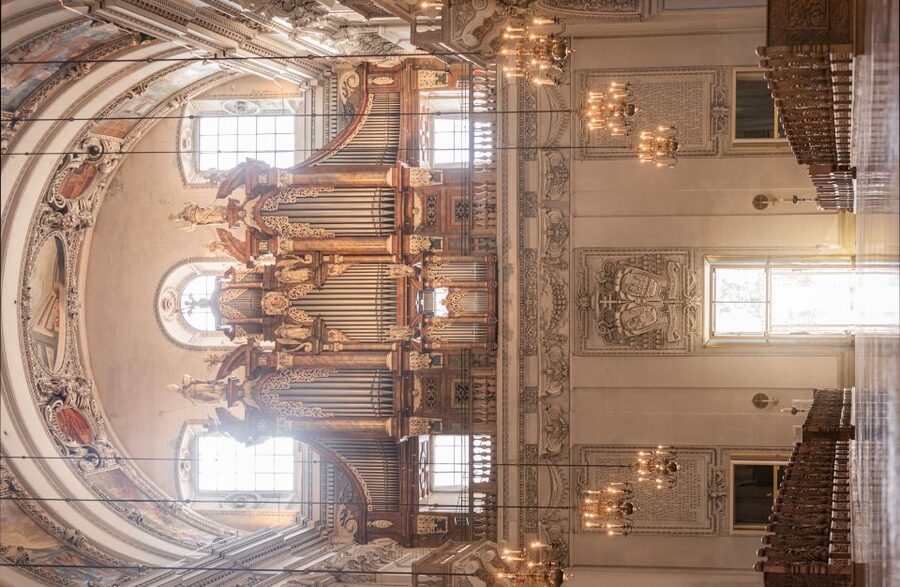
Salzburg Cathedral’s midday concert turns a quick sightseeing stop into a 30-minute musical journey through several organs. Two organists perform from different instruments, sometimes with violin or singing, while the cathedral’s vast acoustics carry the sound across the nave. I like the clever format and the chance to hear the famous Great Organ alongside smaller instruments.
I also like the $10 price, which is modest by Salzburg concert standards, and the fact that the recital fits neatly into a busy day. The main drawback is its short length. Think of it as a sampler rather than a full concert, and arrive early if you care about your seat because reservations are not included.
Key points to know before you go
- Seven organs in one cathedral: The program uses several of Salzburg Cathedral’s instruments, often four to six, with some performances featuring more.
- Two organists, changing sounds: Moving between organs lets you hear clear differences in tone, power, and musical character.
- A grand setting for $10: The price offers an inexpensive way to experience one of Salzburg’s major sights with live music.
- Only 30 minutes: It is long enough for a rewarding pause, but too brief if you want a full-length recital.
- English and German introductions: A narrator explains the instruments and music in both languages.
- No reserved seats: Come early for the best choice of places, and bring an extra layer since the cathedral can feel cold.
Why the organs make this short concert special
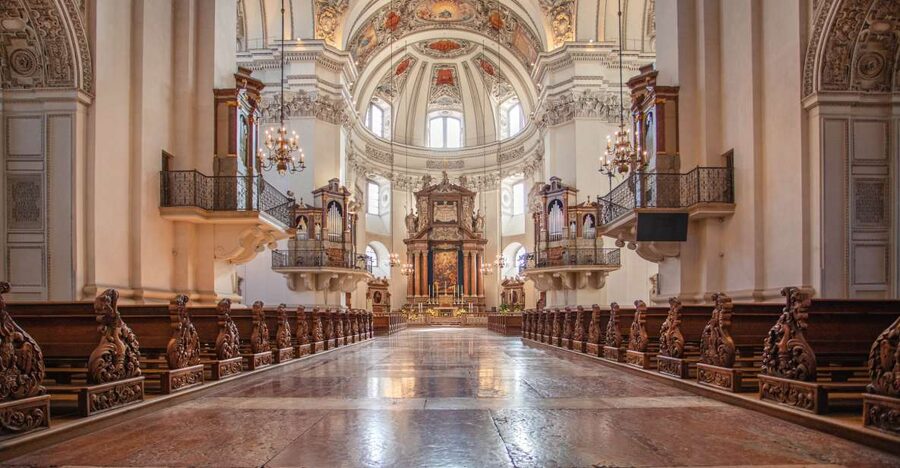
Many cathedral concerts give you one organ, one performer, and a fixed view from the pews. Salzburg’s midday recital has a different idea. The cathedral contains seven organs, and the program shifts between several of them.
That change matters even if you are not an organ expert. One instrument can sound bright and precise, while another fills the church with a heavier, more powerful tone. Hearing the music come from different parts of the building helps you understand the cathedral as an instrument in its own right.
The exact number used can vary. Some programs feature four organs, while others include five or six. A few performances have been described as featuring all seven. The Great Organ is often part of the program, but you should think of the concert as a selection from the cathedral’s collection rather than a guaranteed performance on every instrument.
Two organists share the recital. Their movement between instruments creates a natural rhythm, with short introductions explaining what you are about to hear. Those explanations are given in German and English, which makes the program easier to follow if you do not know much about organ music.
The music itself is connected to the cathedral’s setting and Salzburg’s musical tradition. The experience points back toward the age of Wolfgang Amadeus Mozart without pretending to recreate a historical performance. You get period-flavored music, grand church acoustics, and the visual drama of a Baroque cathedral.
More Concerts in Salzburg
- Salzburg: Mozart Concert at Mirabell Palace
★ 4.8 · 3,498 reviews - Salzburg: Best of Mozart Fortress Concert and Dinner
★ 4.5 · 1,424 reviews - Salzburg: Mozart Concert with Dinner
★ 4.8 · 835 reviews
Entering Salzburg Cathedral at midday
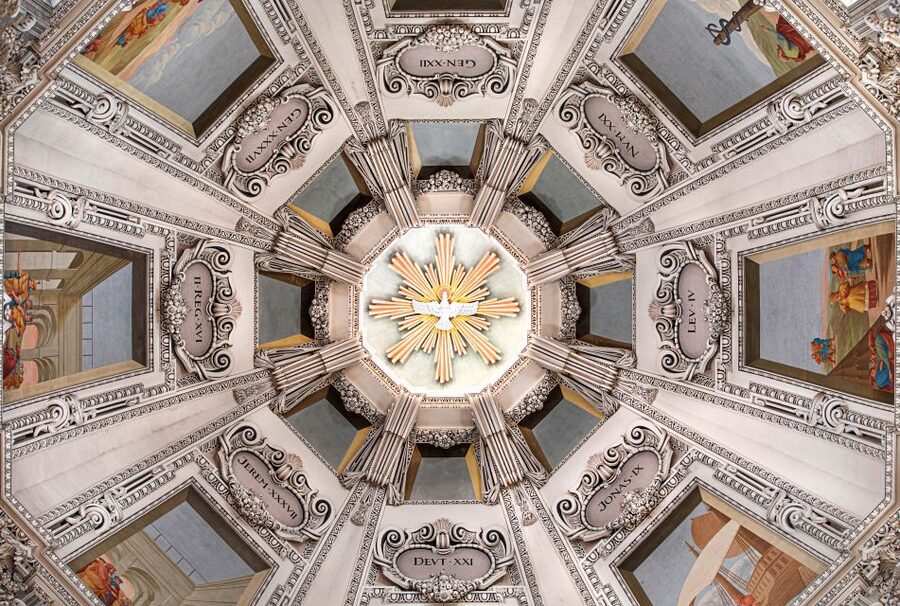
The concert begins with the cathedral itself. Before the music starts, take a moment to look at the marble facade and the enormous dome. The building dominates the surrounding city and is hard to miss, but the interior is where the concert earns its keep.
Inside, the style is notably clean and unified. The nave, dome, marble surfaces, and restrained light give the space a calm, almost theatrical quality. During a normal sightseeing visit, you may spend only a few minutes looking around. Sitting through the recital gives you time to notice how the light changes across the interior and how the architecture shapes the sound.
The noon bells are part of the experience. Their toll helps set the scene before the organ music begins, making the recital feel tied to the daily life of the cathedral rather than simply inserted into a tourist schedule.
I like this opening because it gives you a proper transition from Salzburg’s busy streets to the quiet of the church. You do not need to understand sacred music or know the names of the organs. The setting does much of the work.
If you are visiting on a tight schedule, the timing is useful. A half-hour concert can fit between a morning walk through the old town and an afternoon museum or fortress visit. It also works well as a rest stop. You sit down, look up, and let the building take your attention for a while.
Hearing four, five, or more of the seven organs
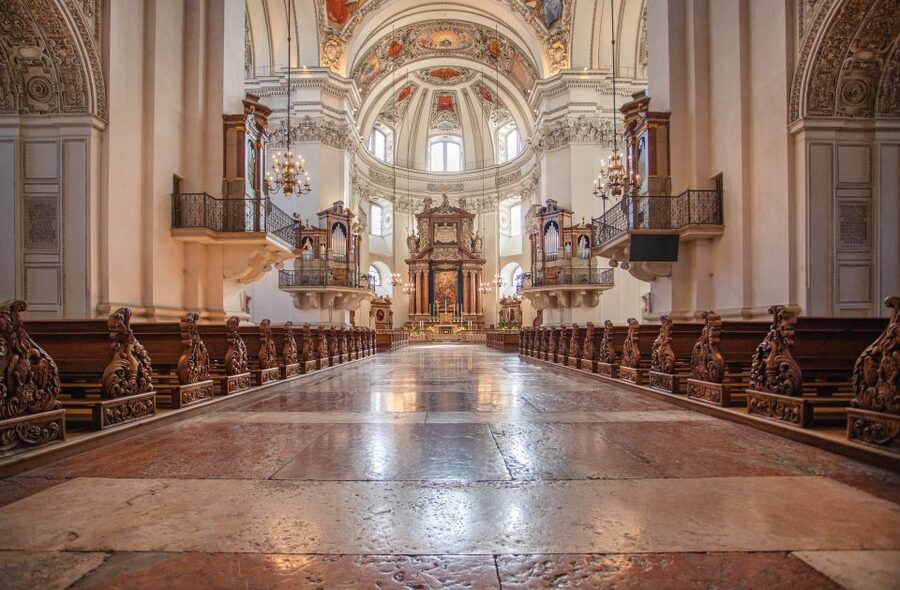
The central feature is the movement from one organ to another. The performers do not simply play a single long piece. Instead, the program offers a series of shorter selections that show off the cathedral’s instruments.
Some programs have included four organs. Others have featured five or six, and a few descriptions indicate that all seven were played. The exact mix is not something to treat as fixed, but the changing instruments are always the point.
You may hear the Great Organ, which provides the big, commanding sound most people expect from a cathedral recital. The smaller organs offer contrast. Their tones can feel more focused and distinct, and the change becomes especially clear when one selection follows another.
The narration helps you listen. Rather than sitting through an anonymous stream of music, you receive some context about the organ, the cathedral, and the piece. The introductions are offered in German and English. This is a small detail, but it makes the program feel more welcoming and gives the recital a sense of shape.
At times, violinists or a singer may join the program. These additions are not the main feature and may not appear in every performance, but they can add color to the organ sound. The contrast between a human voice or strings and the large pipe organs makes the music feel less uniform.
The final piece is often the most forceful part of the recital. After hearing several instruments separately, the closing sound can feel like the cathedral gathering itself together. That is the moment when the short format makes the most sense: you receive a series of contrasts, then a strong finish.
The acoustics are part of the performance
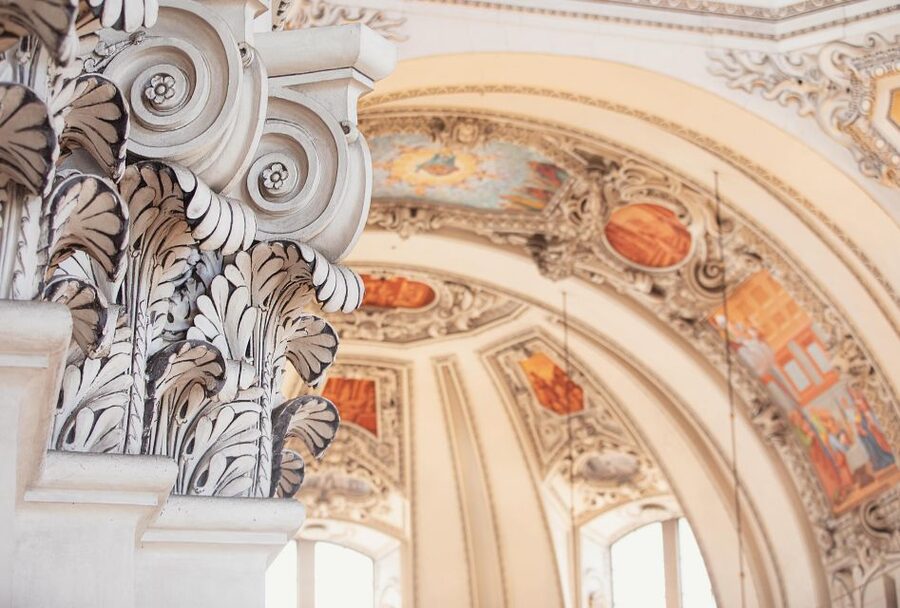
The cathedral’s acoustics are one of the biggest reasons to book this experience. Sound does not stay close to the organ console. It rolls through the nave and hangs in the air, giving even a short selection a sense of scale.
This can be thrilling, especially when the Great Organ is played. It can also blur some of the finer details. In a large church, reverberation is part of the character, but it means you may not hear every fast passage as clearly as you would in a concert hall.
I would not choose this recital if your main goal is close musical analysis. I would choose it if you want to feel what organ music does in a monumental sacred space. The building, the echoes, and the music work together.
The volume can be powerful, especially from the larger instrument. At other points, the music is peaceful and restrained. That range keeps the 30 minutes from feeling flat.
Photography and video recording are allowed, according to the available information. Still, I would keep your phone away for most of the performance. Screens and raised cameras can distract you and the people around you, and the best part of the concert is the sound spreading through the room.
A different way to spend an afternoon here:
- The Original Sound of Music Tour in Salzburg
★ 4.5 · 6,129 reviews - Salzburg: Original Sound of Music Tour
★ 4.8 · 5,059 reviews - From Salzburg: Half-Day Tour to Hallstatt
★ 4.6 · 3,596 reviews - Salzburg: Hohensalzburg Fortress Admission Ticket
★ 4.6 · 2,236 reviews
What the 30-minute schedule really means
The half-hour length is both an advantage and a limitation.
I like it for a first introduction to organ music. You get several instruments, some explanation, and a complete musical experience without giving up half your afternoon. If classical music is not usually your thing, 30 minutes is a friendly commitment.
It is also practical for a day trip. You can add the concert to a Salzburg itinerary without rebuilding your entire schedule around it. The midday timing makes it especially easy to place between other sights.
On the other hand, you may wish it lasted longer. The setting is so impressive that the end can arrive just as you have settled into the sound. If you regularly attend organ recitals or want a slower, more sustained program, this will feel like an introduction rather than the main event.
The recital is best understood as a musical tasting menu. You hear several styles and instruments, learn a little about the cathedral, and leave with time to explore more. That is a strength for most sightseeing plans, but it is worth knowing before you pay.
Seats, timing, and the cathedral visit
Seat reservations are not included. This means your position depends on the available seating when you arrive. If you want a particular view or simply prefer to sit near the front, arrive early.
Arriving early has another benefit: you can look around before the music begins. The dome, marble facade, nave, and muted light deserve more than a quick glance. The recital gives you a reason to remain inside rather than rushing straight through.
One practical issue is temperature. The cathedral can feel cold, even when the weather outside is pleasant. I would bring a light sweater or jacket, especially in cooler months.
After the concert, allow time to see more of the building. The crypt is specifically worth adding to your visit, and you should go down the stairs if it is open as part of your cathedral access. The concert and the architecture work best together, so do not treat the recital as a stand-alone music ticket only.
Some visitors combine the concert with a cathedral admission ticket. If you plan to look around before or after the performance, check the cathedral’s own combination options before booking. Depending on the day and ticket availability, buying a combined option directly from the cathedral may cost less than purchasing the concert alone and admission separately.
There is also a small entry detail to watch for. You may need to show the QR code at the door so staff can issue or scan the correct concert ticket. The code may not work directly in the door scanner, so have it ready on your phone and follow the staff instructions.
The venue is wheelchair accessible. The activity offers free cancellation up to 24 hours in advance, and reserve-now, pay-later booking may be available. These policies are useful if your Salzburg plans are still shifting.
Is the $10 price good value?
At $10 per person, this is one of the easier Salzburg cultural purchases to justify. You are not paying only for a brief organ performance. You are also spending half an hour inside a major cathedral, with access to a distinctive musical program built around several organs.
The value is strongest if you already plan to visit Salzburg Cathedral. In that case, the concert changes a standard sightseeing stop into something more memorable. Instead of viewing the interior in silence for a few minutes, you experience the acoustics, the bells, and the organs in action.
It is also good value compared with many formal music performances in Salzburg, which usually require more time and a larger budget. The $10 price makes this a sensible choice for couples, families with older children, and anyone trying to keep a day trip affordable.
The calculation changes if you want a full concert or reserved seating. You do not get a seat reservation, and the recital ends after 30 minutes. For a serious music fan, the program may feel too brief. For most sightseeing visitors, that short length is exactly what makes it workable.
Who will enjoy this most?
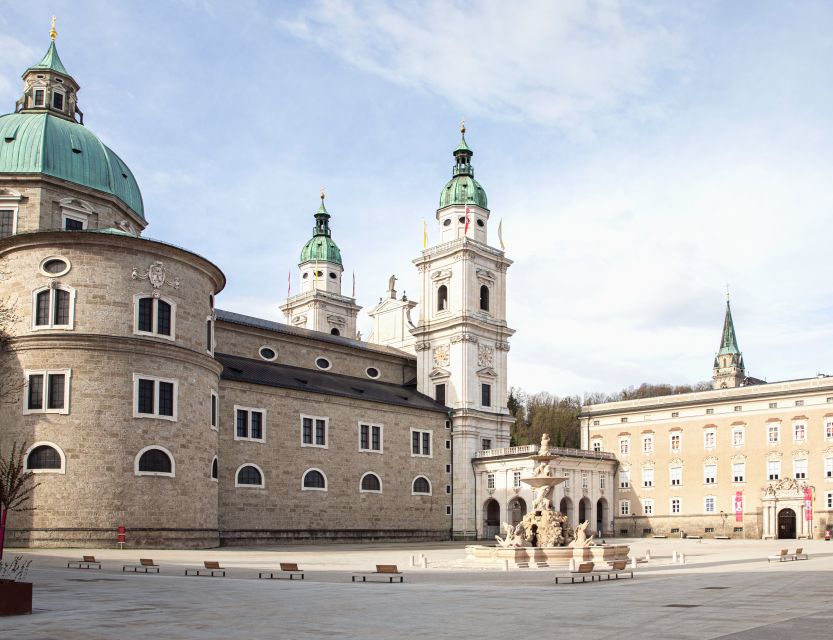
I would recommend the concert to anyone who appreciates architecture, music, or quiet places with a strong sense of atmosphere. You do not need to be religious or musically trained. The cathedral is open as a cultural and historical space, and the music gives you another way to understand it.
It suits:
- First-time visitors who want to experience Salzburg beyond its streets and museums
- People with only a few hours in the city
- Classical music newcomers who prefer a short introduction
- Organ enthusiasts interested in hearing several instruments in one building
- Visitors seeking a peaceful midday break
- Anyone looking for an inexpensive cultural activity
It may not suit you if you dislike formal seating, need a guaranteed seat location, or expect a long recital. It may also feel slow if you want an active sightseeing stop every minute of the day.
For families, the 30-minute duration is helpful. The music is atmospheric, but the program does not demand a full afternoon of quiet. Children who enjoy big sounds and grand buildings may find the organs memorable, though the cathedral setting calls for respectful behavior.
My practical verdict on the experience
The strongest part is the combination of several organs and exceptional acoustics. Hearing the instruments one after another gives the recital a clear purpose, while the cathedral supplies the scale that a regular concert hall cannot match.
The main weakness is simply that you may want more. Thirty minutes passes quickly, especially when the final piece arrives. Still, the short running time keeps the experience easy to fit into a Salzburg visit and prevents it from becoming a major time commitment.
I would arrive early, bring a warm layer, keep your phone tucked away, and allow extra time for the cathedral and crypt. If you plan to tour the building as well, compare combination ticket options with the cathedral directly.
Should you book the Salzburg Cathedral organ concert?
Yes, if you want a low-cost, memorable way to experience Salzburg Cathedral. The $10 price, 30-minute schedule, bilingual introductions, and changing organs make this an easy addition to a busy itinerary.
Book it with realistic expectations. You are getting a compact recital, not a full evening concert, and the exact number of organs used can vary. If that sounds right for your day, this is one of Salzburg’s best small cultural experiences: grand music, an unforgettable setting, and very little strain on your time or budget.
FAQ
How long is the Salzburg Cathedral organ concert?
The concert lasts 30 minutes.
How much does the concert cost?
The listed price is $10 per person.
How many organs are played during the recital?
Salzburg Cathedral has seven organs. The recital uses several of them, with programs described as featuring four, five, six, and sometimes all seven instruments.
Are the introductions available in English?
Yes. Introductions are given in both German and English.
Is a seat reservation included?
No. Seat reservations are not included, so arriving early is useful if you want a better choice of seats.
Is the experience wheelchair accessible?
Yes, the activity is wheelchair accessible.
Recently added around Salzburg
- From Vienna: Austrian Lakes and Salzburg Private Tour★ 5.0 · 3 reviews
- Salzburg On the Traces of Mozart Private Tour★ 4.5 · 3 reviews
- Salzburg & “The Sound of Music” Full Day Driver-Guided Tour★ 5.0 · 3 reviews
- Salzburg für Salzburger★ 5.0 · 3 reviews
- Salzburg “Sound of Music” Private Driver-Guided Tour★ 5.0 · 3 reviews
- Private Tour: Discover Salzburg and the Stunning Lake District★ 5.0 · 3 reviews
- Private Bavarian Mountain Tour★ 4.3 · 3 reviews
- MONDSEE: The Strudelgirl – bake your Apple Strudel Dream★ 5.0 · 3 reviews
Concerts in Salzburg, compared.
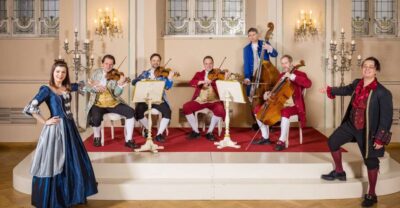
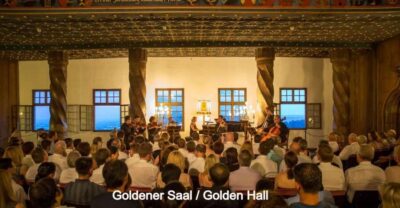

Best of Mozart Concert and Dinner or VIP Dinner at Fortress Hohensalzburg
Read our review →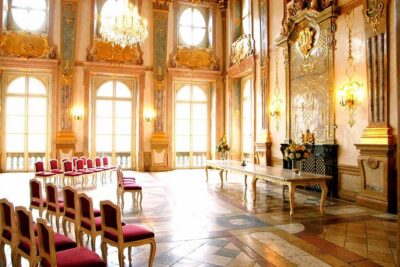
Palace Concert at the Marble Hall of Mirabell Palace
Read our review →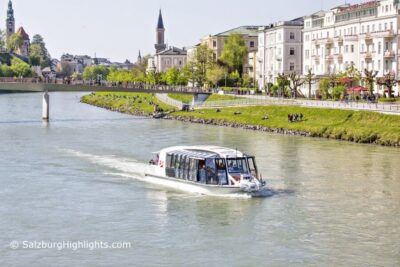
Mozart Concert and Dinner or VIP Dinner at Fortress Salzburg with River Cruise
Read our review →Browse the lists this tour appears in