
Reviewed · FOOD TOURS IN VIENNA
Austrian Wine Tasting
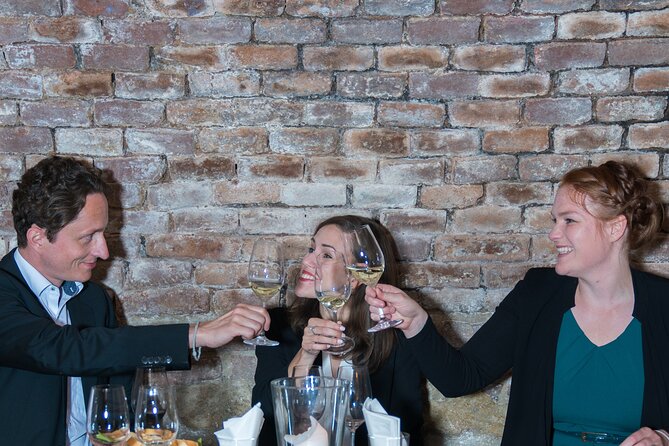
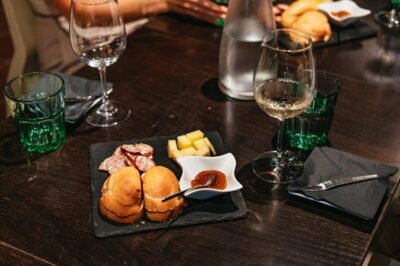
Austria’s wine story comes into focus over six glasses in a restored Wilhelminian-era building in Vienna’s 2nd district. Sommelier Stylianos leads the English-language session, explaining local grapes, wine regions, production methods, and the place of wine in Austrian life. I like the small cap of eight people, and I like that the tasting includes a proper board of local cheese, cured meat, and bread rather than a few token crackers.
The two-hour format gives you time to ask questions and compare styles without turning the evening into a rushed pour-and-move-on exercise. My only caution is the price: at $141 per person, this is a serious tasting investment, especially if you already know Austrian wine or mainly want a casual drink. It makes the most sense if you value instruction, quality pours, and a personal setting.
Key points to know before booking
- Six Austrian wines: You taste a broad selection from the country’s leading wine areas and styles.
- Stylianos leads the session: Expect clear explanations, open discussion, and help with unfamiliar Austrian wine lists.
- A real food pairing: Local cheese, cured meat, and bread are included in generous portions.
- Eight-person limit: The small group allows the tasting to adjust to your interests and questions.
- Central Vienna setting: The session takes place at Hollanstraße 10/1-3 in the 2nd district, inside a restored traditional building.
- Two hours in English: This suits visitors who want useful wine knowledge without spending a full day outside Vienna.
Why Austrian wine deserves two hours of your Vienna trip
Vienna is one of the few European capitals with a serious wine culture right on its doorstep, but you do not need to travel out to vineyards to get an introduction. This tasting brings the country’s main wine ideas into one room and lets you compare six bottles in a sensible order.
That matters because Austrian wine labels can feel unfamiliar at first. Grape names, regional references, and German-language terms may not tell you much if you usually buy French, Italian, or New World wine. A good guide can turn those names into practical information: what a wine tastes like, what food suits it, and what to look for on a restaurant list.
I like the focus on Austria rather than a scattered tour of international bottles. You get a clearer picture of the country’s own styles, production choices, and grape varieties. The point is not simply to decide which glass you prefer. You leave with a better sense of how Austrian wines differ from one another and how to order them later in your trip.
The setting also helps. You are not tasting in a large commercial hall or rushing between wineries. The session takes place in a restored traditional Viennese building from the Wilhelminian era, giving the experience a local architectural setting without requiring a long excursion.
More Food Tours in Vienna
- Vienna: Chocolate Workshop in Chocolate Museum w/ Tasting
★ 4.5 · 1,802 reviews - Vienna for Food Lovers: Cafés, Markets & Austrian Cuisine
★ 5.0 · 1,063 reviews - Wachau Valley Wine Tasting Bike Tour from Vienna
★ 5.0 · 829 reviews
Arriving at Hollanstraße 10 in Vienna’s 2nd district
The meeting point is Hollanstraße 10/1-3, 1020 Vienna. The entrance is to the left of the main door, next to the Italian restaurant SoFare. This is worth noting because the tasting room is not described as having a prominent street-facing sign, so check the address and entrance instructions before you arrive.
The 2nd district gives the tasting a change of pace from Vienna’s grand central sights. You are still in the city, but the experience feels more like entering a private local venue than joining a large sightseeing operation. That is a good fit for a late afternoon or evening plan, particularly if you want something more focused than another museum or palace interior.
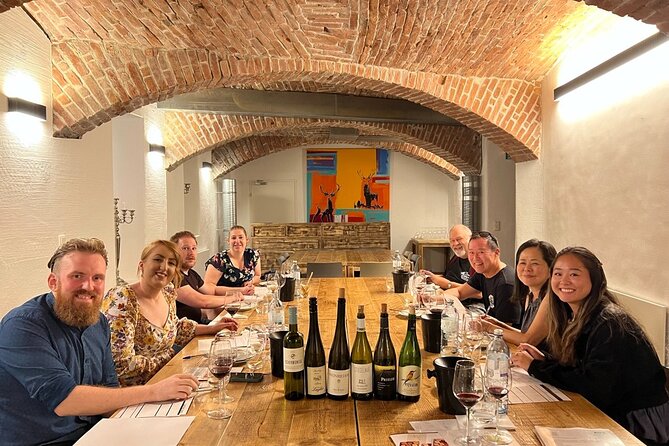
The building itself is part of the appeal. A restored Wilhelminian-era setting gives the tasting a sense of place, while the room has been described as cozy and well lit. I would not book this expecting a vineyard view or cellar tour. You are here for the wines, the conversation, and the urban Viennese setting.
The first glasses: getting oriented to Austrian wine
The tasting lasts two hours and includes six Austrian wines. That works out to enough time for a proper look at each pour, with room for the guide to explain why the wine was selected and how it fits into Austria’s wider wine culture.
You can expect the session to cover prominent Austrian wine regions, local grape varieties, production methods, and the country’s wine past and present. The exact order and bottle selection are not specified, so you should treat the tasting as a guided sample of Austrian wine rather than a fixed list of labels promised in advance.
That flexibility can be useful. The host has adjusted explanations around what people want to learn and what they enjoy drinking. If you are curious about white wine, red wine, production, or how to read Austrian wine lists, say so early. The small group makes that kind of conversation possible.
The session is conducted in English by a trained wine professional. You do not need to arrive as a wine expert. The best use of the two hours is to ask direct questions, compare your own reactions with the group, and note the names or styles that you would like to seek out later.
Six wines, six chances to find your Austrian favorite
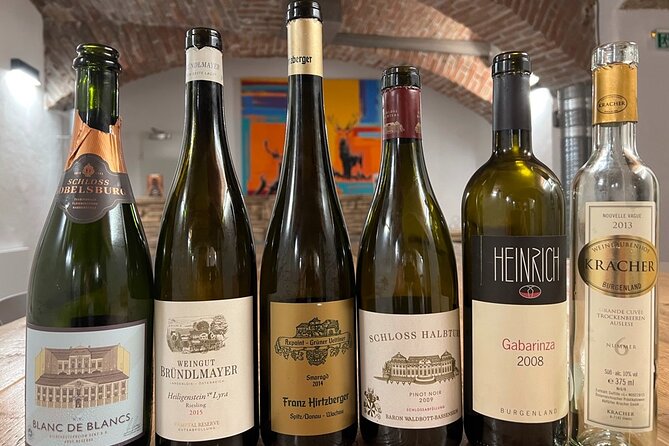
Six wines is a strong number for a two-hour tasting. Fewer samples could leave you with only a narrow view of Austrian wine, while many more might blur together. Here, each glass has a chance to make an impression.
I especially value tastings that show range rather than serving six near-identical bottles. The experience is built around Austria’s acclaimed wine regions and varied production methods, so you should expect differences in style and character. The available information does not name each wine or guarantee a specific grape, which means you should not book it expecting a particular bottle.
For a first-time drinker, this is a practical way to discover what you actually like. You may prefer a crisp style, a fuller white, or a red that you would not have ordered from an unfamiliar list. If one wine catches your attention, ask about its region and production. That is how a tasting becomes useful beyond the room.
The teaching also reaches beyond flavor notes. The guide connects the wines to Austrian wine history and current practice, giving you context for why local varieties and regional names matter. I find that more helpful than a string of technical tasting terms. You want information you can use at dinner, not a vocabulary test.
More Wine Tours in Vienna:
- Vienna: Swarovski House Tour with Champagne and Gift
★ 4.7 · 787 reviews - Countryside Half Day Wine Tour near Vienna
★ 5.0 · 545 reviews - Wachau Valley Small-Group Tour and Wine Tasting from Vienna
★ 5.0 · 540 reviews - From Vienna: Half-day Countryside Wine Tour with Meal
★ 4.7 · 526 reviews
Cheese, cured meat, and bread make the tasting more complete
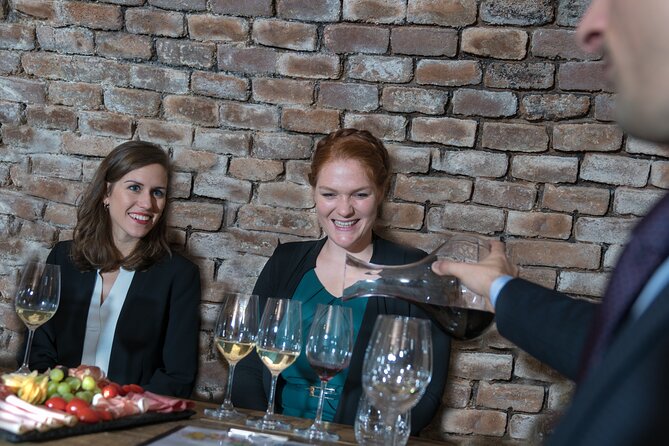
The included food is a charcuterie board with locally sourced cheese, cured meat, and bread. Still water is also provided. This is not just a pleasant extra. Food changes the way wine tastes, and a proper bite between pours helps you judge how the wines work with a meal.
The portions have been described as generous, which makes the pairing more substantial than a garnish. You should still think of it as tasting food rather than a full dinner, since no full meal is promised. If you need a large evening meal, plan another stop before or after the session.
I like that the food is tied to the local setting. Austrian wine makes more sense when tasted alongside regional-style foods rather than isolated from anything edible. Cheese, cured meat, and bread also give you simple reference points: notice which wines feel fresher with salty food, which become softer with cheese, and which are best enjoyed on their own.
There is no need to know formal pairing rules. Let the guide explain, then trust your own palate. If you find a combination that works for you, make a note of it. That may be more useful than memorizing a set of official pairings.
A small group where questions actually matter
The group is limited to eight participants. That is one of the strongest practical features of the experience. In a large tasting, you may spend more time listening to a prepared speech and less time getting answers that match your interests. Here, the format supports conversation.
One especially useful detail is that the session can still go ahead as an enjoyable experience with only one booking. That means you should not assume a small group will feel awkward or underfilled. Stylianos has been praised for being personable, easy to talk to, and comfortable shaping the session around the people present.
The guide’s manner is important in wine tastings. Some hosts make newcomers feel as if they should already know the difference between every grape and region. This experience aims for a relaxed tone, while still offering serious information. You can ask basic questions about serving, labels, or production without feeling out of place.
The best audience is a couple, solo visitor, or small group of friends who enjoy learning through conversation. It is less suitable if you want a loud social night, a quick tasting with no instruction, or a broad international wine tour.
What Stylianos adds to the experience
Stylianos is repeatedly singled out for his expertise, friendliness, and ability to explain wine without making the room uncomfortable. The most useful praise centers on his answers to questions and his skill at making the evening both informative and relaxed.
That balance matters. Technical detail has value only when you can follow it. The session covers wine regions, history, production, and grapes, but the strongest approach is one that connects those subjects to what is in your glass.
You can also expect stories about wine production and Austria’s current wine scene, not just a list of tasting notes. That wider context helps you understand why Austrian wine has its own identity and how to make better choices after the tasting.
The instruction is in English. If you are traveling with people at different levels of wine experience, this should work well because the format allows discussion rather than relying only on a formal lecture. Still, if you want a session in another language, this is not the right choice.
Is $141 per person good value?
At $141 per person, this is not a budget wine stop. You are paying for six high-quality Austrian wines, food, a two-hour session, an English-speaking sommelier, and a small group in a distinctive Vienna setting.
The value depends on what you want. If you only want to sample Austrian wine, you can likely spend less at a wine bar. But a bar will not necessarily give you six carefully selected pours, a structured lesson on regions and production, or the chance to ask a specialist why one bottle differs from another.
The price looks more reasonable for travelers who would otherwise spend time and money arranging a trip to several wineries outside the city. One visitor specifically valued the tasting as a way to try Austrian wines without having time to visit vineyards. You get a compact introduction while staying in Vienna.
I would also count the food and small group in the value calculation. The cheese, meat, and bread make the session feel like a complete activity rather than six isolated sips. At the same time, the cost remains high enough that wine beginners on a tight budget should compare it with a less formal tasting before booking.
Who should book this Vienna wine tasting?
I would choose this experience if you want to understand Austrian wine, not merely drink it. It is especially useful early in a Vienna visit, when you can use what you learn to make better choices at restaurants and wine bars for the rest of your stay.
It also suits solo visitors. A group capped at eight gives you a better chance to talk with the host and other participants without needing to arrive with a full party. Couples and friends will find plenty to discuss, especially if they have different tastes.
The experience is not suitable for children under 16. It is also not a full winery visit, so do not expect vineyard walks, cellar work, or transport into the countryside. This is an indoor city tasting with a food board and instruction.
You should also contact the provider if you are interested in availability for a private event. Private arrangements are mentioned, but no specific private pricing or format is provided.
Timing, cancellation, and small practical details
The activity lasts two hours, with starting times shown according to availability. Because no exact daily schedule is provided here, check the time before you plan dinner, a concert, or another fixed booking.
Cancellation is free up to 24 hours in advance for a full refund. You can also reserve now and pay later, which helps if your Vienna plans are still shifting.
The address is easy to get wrong if you rely only on a general map pin, so use the full location: Hollanstraße 10/1-3, 1020 Vienna. Look for the entrance left of the main door, beside SoFare.
Wear whatever you would normally wear for a relaxed indoor wine evening. No special equipment is listed. Still water is included, and the tasting is held in English.
Should you book Austrian Wine Tasting?
Book it if you want a serious but friendly introduction to Austrian wine and appreciate having a sommelier explain what you are drinking. The six-wine format, local food, small group, and clear teaching make this more useful than a quick bar flight.
I would hesitate only if $141 feels too high for two hours, or if you prefer a countryside vineyard visit over an indoor Vienna activity. For everyone else, particularly visitors who find Austrian wine labels unfamiliar, this is a practical way to gain confidence and discover bottles worth ordering later.
FAQ
Where does the Austrian Wine Tasting take place?
It takes place at Hollanstraße 10/1-3, 1020 Vienna, in Vienna’s 2nd district. The entrance is to the left of the main door, next to the Italian restaurant SoFare.
How long does the wine tasting last?
The tasting lasts two hours. Starting times depend on availability.
How many wines are included?
You will taste six high-quality Austrian wines from acclaimed Austrian wine regions and styles.
Is food included?
Yes. The tasting includes a charcuterie board with locally sourced cheese, cured meat, and bread. Still water is also included.
What language is the tasting conducted in?
The session is conducted in English by a wine professional.
How large is the group?
The activity is limited to eight participants, making it a small-group tasting with time for questions and discussion.
Can children join the experience?
No. The tasting is not suitable for children under 16.
What happens if I need to cancel?
You can cancel up to 24 hours in advance for a full refund. The activity also offers a reserve-now, pay-later option.
Recently added around Vienna
- Vienna: Private tour Mauthausen and Linz★ 4.1 · 3 reviews
- 2-Day Prague Tour from Vienna with private Transfers and Lunches★ 5.0 · 3 reviews
- Vienna Self Guided Sherlock Holmes Murder Mystery Game★ 4.5 · 3 reviews
- Vienna Private Schönbrunn Palace Tour, Extra Rooms and Gardens★ 5.0 · 3 reviews
- Salzburg and Lake Region Private Day Trip from Vienna★ 5.0 · 3 reviews
- Small-group Vienna Wine Tour★ 5.0 · 3 reviews
- True Crime mobile puzzle rally Vienna★ 4.0 · 3 reviews
- Exploring the Gutenstein Alps★ 5.0 · 3 reviews
Food Tours in Vienna, compared.
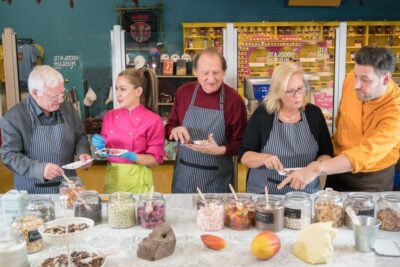
Chocolate Workshop in Chocolate Museum w/ Tasting
Read our review →
Vienna for Food Lovers: Cafés, Markets & Austrian Cuisine
Read our review →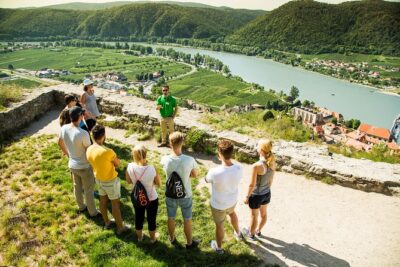
Wachau Valley Wine Tasting Bike Tour from Vienna
Read our review →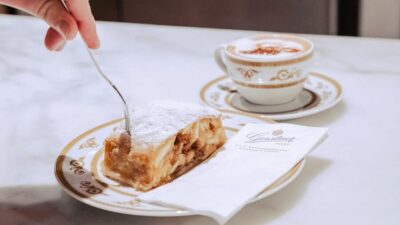
Gerstner KuK Hofzuckerbäcker Baking Show & Tasting
Read our review →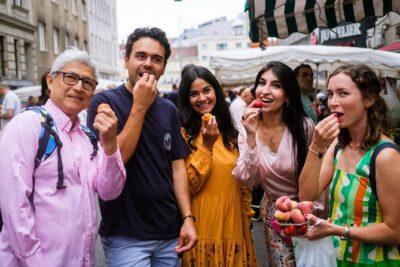
Authentic Vienna Food Tour inc. lunch, street food, 3 drinks
Read our review →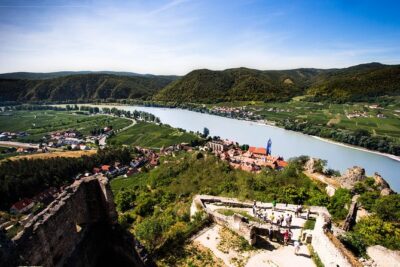
Wachau Valley Small-Group Tour and Wine Tasting from Vienna
Read our review →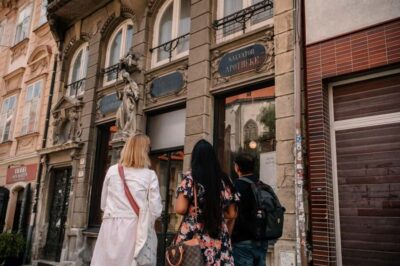
Wine Tasting Experience in a Private Wine Cellar
Read our review →Browse the lists this tour appears in